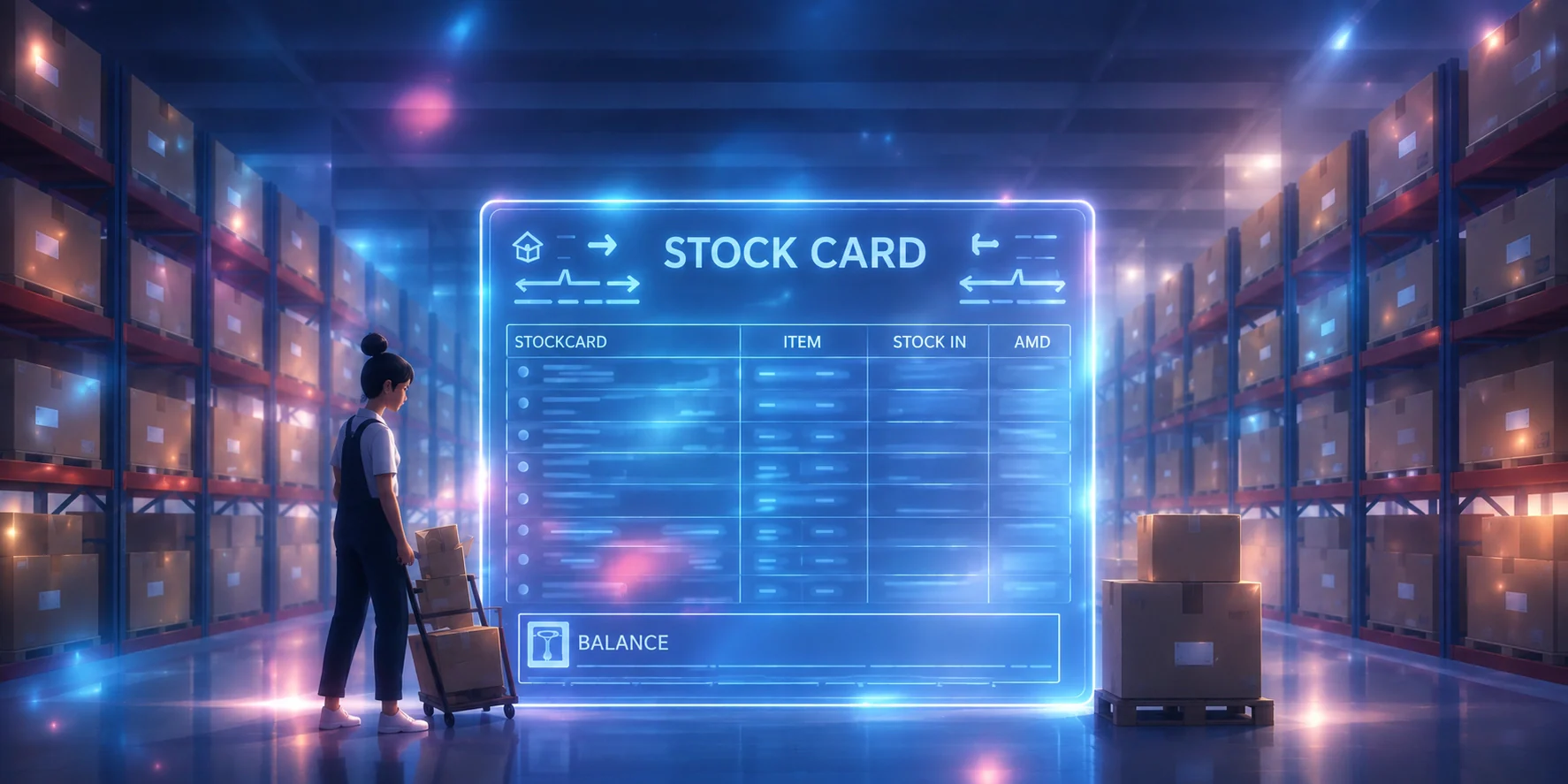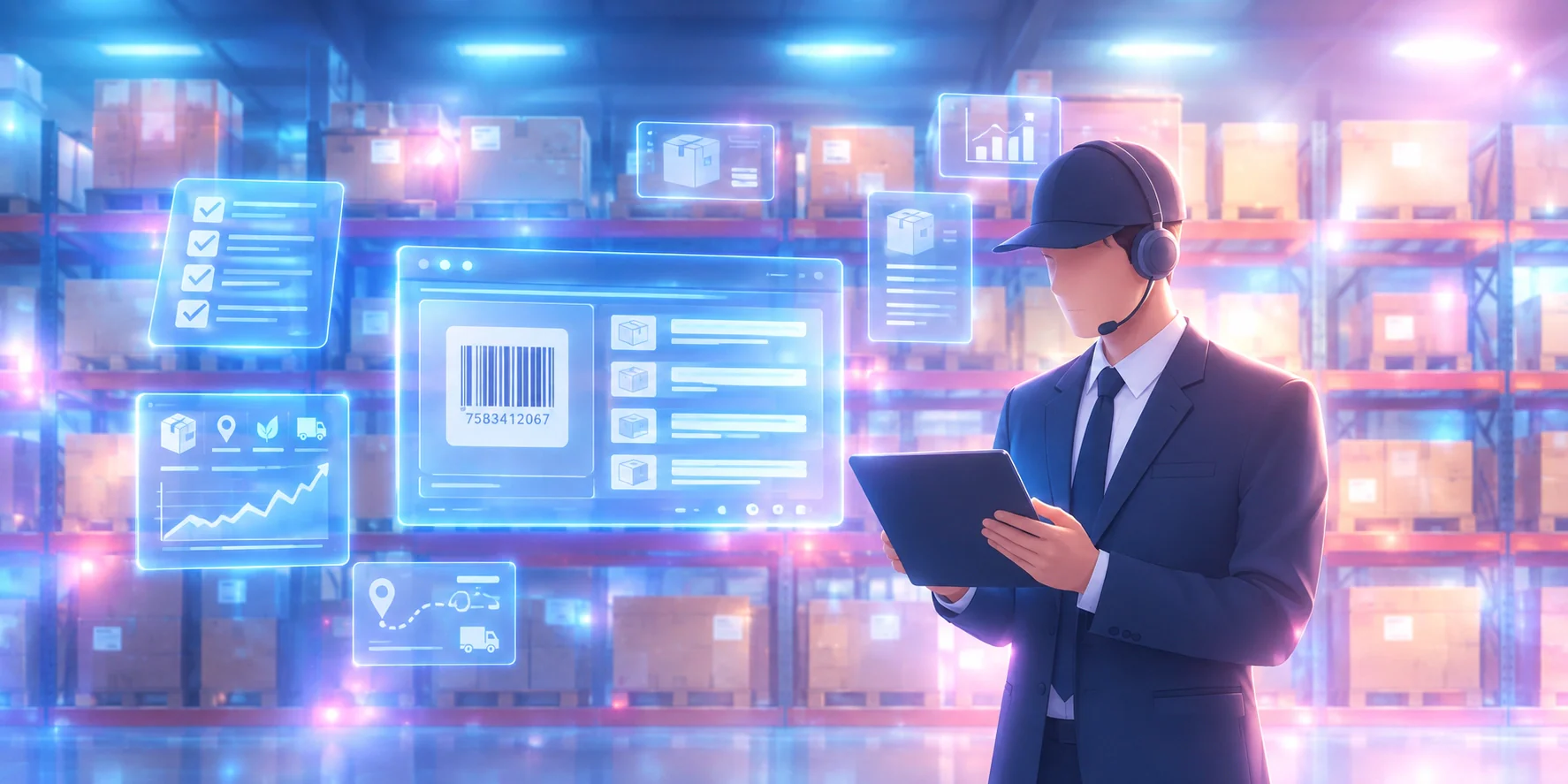







In today’s competitive business world, efficient inventory management is crucial for smooth operations and customer satisfaction. A popular strategy to achieve this is Vendor Managed Inventory (VMI). But what is VMI, and how does it help businesses? VMI fosters a collaborative relationship between vendors and companies, utilizing technology to optimize inventory processes, improve order precision, and minimize rework.
This article delves into the basics of VMI and its benefits, helping businesses succeed in today’s fast-paced market.
Key Takeaways
Vendor Managed Inventory (VMI) is a supply chain strategy where the vendor is responsible for monitoring and replenishing the customer’s inventory.
Implementing VMI can bring numerous benefits, such as strengthening long-term partnerships with suppliers and improving customer experience by preventing stock outs.
VMI works by sharing real-time sales and inventory data between companies and suppliers, allowing suppliers to create replenishment plans, generate purchase orders, and handle restocking decisions more accurately and efficiently.
What is Vendor Managed Inventory?
 Vendor Managed Inventory (VMI) is a supply chain method where the supplier monitors the customer’s stock and handles replenishment based on shared inventory data. Instead of waiting for the customer to place orders, the vendor decides when to restock and how much to send.
This approach helps keep inventory at healthier levels, reduces stock-outs, and makes replenishment more consistent. It also improves coordination between suppliers and customers while lowering holding costs and supporting better supply chain performance.
How Vendor Managed Inventory Works
Vendor Managed Inventory (VMI) works by integrating data from both suppliers and customers, including sales figures and inventory levels. Here’s a straightforward explanation of the process:
- The distribution partner submits a Product Activity Report to the vendor inventory management system, detailing sales, product transfers, and inventory levels.
- The vendor inventory management system processes this information and creates inventory replenishment recommendations based on predetermined targets and factors.
- The supplier reviews and gives approval for the recommendations.
- The VMI system electronically sends a purchase order (PO) to the supplier using the EDI format, while also sending a PO confirmation to the distribution partner.
- Once the distribution partner approves the PO, the supplier proceeds with shipping the order.
Implementing another software, like manufacturing inventory software, can help the vendor to integrate sales figures and inventory levels.
Benefits of Implementing Vendor Managed Inventory for Companies
You already know how Vendor Management Software mostly works. So, what about the benefits it offers? Below are some of the benefits companies can gain from implementing VMI:
- Enables suppliers to manage downstream decisions, contributing to more efficient transportation management.
- Strengthens long-term partnerships with suppliers.
- Enhances customer experience by preventing stockouts, reducing potential frustration.
- Increases transparency by offering insight into product origin and manufacturing processes, boosting customer trust.
Although VMI provides many advantages, businesses should be mindful of potential challenges, including communication issues, cultural resistance, and unclear responsibility boundaries. To support VMI more effectively, many companies use construction inventory management software to track stock, monitor material movement, and improve inventory control.
How to Make Vendor Managed Inventory More Effective
 Vendor Managed Inventory works better when both sides agree on clear rules from the start. Suppliers and companies should align on stock targets, reorder points, lead times, delivery schedules, and each party’s responsibilities so the replenishment process stays consistent and avoids confusion.
It also depends on accurate data and regular communication. Suppliers need reliable stock and sales information to make the right replenishment decisions, while businesses need to review performance, discuss demand changes, and track results such as stock availability and delivery timing.
Disadvantages of Vendor Managed Inventory
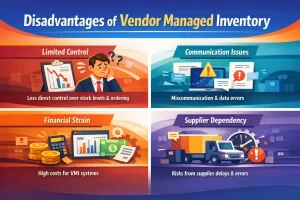 Indeed, we previously explained that vendor inventory management can help improve factory productivity. However, this does not mean that vendor-managed inventory has no drawbacks. In its implementation, VMI has some drawbacks that you should be aware of.
Below are the disadvantages of VMI that you should pay attention to:
1. Limited control
In VMI, the supplier manages inventory decisions, reducing the company’s direct control over stock levels and ordering processes.
2. Communication issues
Successful vendor inventory management relies on clear communication and data sharing between the company and supplier. Any disruptions can result in misalignment and inventory errors.
3. Financial strain
vendor inventory management tools can incur significant administrative costs, including investments in software, data analysis tools, and communication systems, potentially affecting a company’s working capital and limiting funds for other essential operations.
4. Supplier dependency
Relying on the supplier for inventory management means that any inefficiencies or problems on their end, such as delayed shipments or inaccurate forecasts, can negatively affect the company’s operations.
Conclusion
Vendor Managed Inventory (VMI) helps businesses maintain better stock levels by letting suppliers handle replenishment, improving coordination and reducing stock issues when supported by accurate data .
However, it still requires clear communication, defined responsibilities, and regular monitoring to avoid risks such as misalignment, added costs, or supplier dependency.
FAQ About Vendor Managed Inventory (VMI)
Vendor Managed Inventory (VMI) is a supply chain method where the supplier monitors and replenishes the customer’s stock based on shared inventory and sales data.
VMI works by sharing inventory and sales data with suppliers, who then analyze the information, create replenishment plans, and send purchase orders to restock items as needed.
VMI helps reduce stock-outs, improve supplier relationships, increase transparency, and maintain more stable inventory levels across the supply chain :contentReference[oaicite:0]{index=0}.
Common risks include reduced control over inventory, communication issues, higher system costs, and dependency on supplier performance.
Businesses should ensure accurate data sharing, set clear inventory rules, maintain regular communication, and monitor supplier performance to keep the system running properly.