







Efficient inventory management is the backbone of any successful business, influencing everything from operational costs to customer satisfaction. Stock rotation is a strategic method of organizing inventory to ensure that older stock is sold before newer items, minimizing waste and maximizing profitability.
Without effective stock rotation, businesses risk product spoilage, obsolescence, and unnecessary financial losses. By mastering this essential practice, you can optimize your inventory strategy and improve overall operational efficiency.
Key Takeaways
Stock rotation is an inventory management strategy designed to ensure that older products are sold before newer ones.
Stock rotation reduces waste, improves cash flow, and protects product quality. It is best implemented when it has clear labeling, regular audits, and trained staff.
Cloud inventory management software simplifies stock rotation with automated tracking, real-time updates, and customizable methods tailored to your business needs.
What is Stock Rotation?
Stock rotation is an inventory management strategy designed to ensure that older products are sold before newer ones. This method helps businesses maintain product quality, minimize waste, and reduce the risk of obsolescence.
By systematically organizing stock so that items with earlier expiration dates or older manufacturing batches are prioritized, companies can avoid unnecessary financial losses and enhance customer satisfaction.
Implementing effective stock rotation not only optimizes storage space but also supports better cash flow management and overall profitability.
The Importance of Stock Rotation for Businesses

Understanding the importance of stock rotation is crucial for businesses aiming to optimize their inventory management.
By implementing this strategy effectively, companies can gain several advantages that contribute to operational efficiency and profitability. Here are some key reasons why this approach is essential for business success.
1. Reducing dead stock and product spoilage
Businesses can prevent products from becoming outdated or expired by ensuring that older inventory is sold before newer items. This approach not only minimizes waste but also helps maintain product quality and customer satisfaction. As a result, companies can avoid unnecessary financial losses and make better use of their storage space.
A real case study that shows why proper stock rotation matters in daily operations is the 2025 MDPI study on fresh milk retail. They found that 27% of shrinkage came from improper FIFO practices. Older stock stayed unsold in the backroom, then expired before sale.
2. Maximizing inventory efficiency
Maximizing inventory efficiency involves maintaining the right balance between supply and demand. By implementing effective stock rotation, businesses can avoid overstocking and understocking, ensuring that products move smoothly through the supply chain.
This approach reduces storage costs and minimizes the risk of obsolete inventory. As a result, companies can optimize their cash flow and maintain a more agile and responsive inventory system.
3. Improving customer satisfaction
Effective stock rotation is essential for enhancing customer satisfaction, as it guarantees that products remain fresh and in optimal condition. When customers receive high-quality goods with longer shelf lives, their trust in the brand grows, leading to repeat purchases and positive word of mouth.
By consistently meeting customer expectations, businesses can build strong customer loyalty and enhance their market reputation.
Methods of Stock Rotation

Businesses can implement effective stock rotation using several methods. The right approach depends on the type of products being managed and the company’s specific operational needs. Here are some of the most common and effective methods:
1. First In, First Out (FIFO)
First In, First Out (FIFO) is a stock rotation method that ensures the oldest inventory is sold first. This approach is particularly effective for perishable goods, as it reduces the risk of product spoilage and waste.
By consistently moving older stock to the front and placing newer items behind, businesses can maintain product freshness and quality, ultimately enhancing customer satisfaction.
2. Last In, First Out (LIFO)
Last In, First Out (LIFO) is a stock rotation method where the most recently added inventory is sold first. This approach is commonly used for non-perishable goods or products that do not lose value over time.
The LIFO method can be beneficial in industries where prices are rising, as it allows businesses to sell higher-cost inventory first, potentially increasing profit margins. However, careful management is required to prevent older stock from becoming obsolete or damaged.
3. First Expired, First Out (FEFO)
First Expired, First Out (FEFO) is a stock rotation method that prioritizes selling products with the earliest expiration dates first. This approach is especially useful for perishable goods, pharmaceuticals, and other items with limited shelf lives.
By organizing inventory based on expiration dates, businesses can minimize waste, ensure product safety, and maintain high-quality standards. Implementing FEFO effectively helps companies comply with health regulations while also enhancing customer trust and satisfaction.
Benefit of Stock Rotation

Implementing an effective system offers numerous advantages that can significantly impact a company’s profitability and operational efficiency. By strategically managing inventory flow, businesses can optimize their resources and improve overall performance. Here are some key benefits:
- Reduced Waste and Obsolescence: Stock rotation helps ensure that older products are sold before they expire or become obsolete. This minimizes waste, reduces financial losses, and maximizes the value of inventory investments.
- Improved Cash Flow Management: By maintaining a steady inventory turnover, businesses can avoid overstocking and understocking issues. This balance enhances cash flow, allowing companies to reinvest in other critical areas.
- Enhanced Product Quality and Customer Satisfaction: This consistency builds customer trust, leading to increased brand loyalty and repeat purchases.
- Optimized Storage Space: Proper inventory rotation prevents stockpile buildup and makes better use of storage space. This efficiency reduces storage costs and helps maintain an organized warehouse.
- Compliance with Safety and Regulatory Standards: Stock rotation ensures that expired products are not sold, especially in industries dealing with perishable goods or pharmaceuticals. This compliance helps businesses avoid legal issues and maintain consumer safety.
Implementation of Stock Rotation and Common Mistakes
Despite the best of intentions, companies still make mistakes when implementing a stock rotation system. Thus, you need to know and understand the most frequent mistakes:
- Proper Inventory Organization and Labeling: This practice enables staff to easily identify which items need to be sold first, minimizing the risk of stock mismanagement.
- Regular Inventory Audits and Updates: Consistent inventory checks help maintain accurate records and identify slow-moving products. Conducting regular audits ensures that no item is overlooked.
- Training Staff on Practices: Employees responsible for inventory management should be well-trained on stock rotation methods such as FIFO, LIFO, and FEFO. Proper training reduces errors and enhances overall operational efficiency.
- Neglecting Expiration Dates: One of the most frequent mistakes is overlooking expiration dates, leading to waste and financial losses. To avoid this, businesses should prioritize systems that organize inventory based on shelf life.
- Inconsistent Stock Checks: Inconsistent inventory checks can lead to inaccurate records and stock mismanagement.
By implementing these strategies and avoiding common mistakes, reduce waste and enhance overall profitability.
Simplify Stock Rotation with a Cloud Inventory System
Managing stock rotation manually takes time and often creates costly errors. A cloud inventory system helps businesses track stock more accurately and manage product movement with less effort.
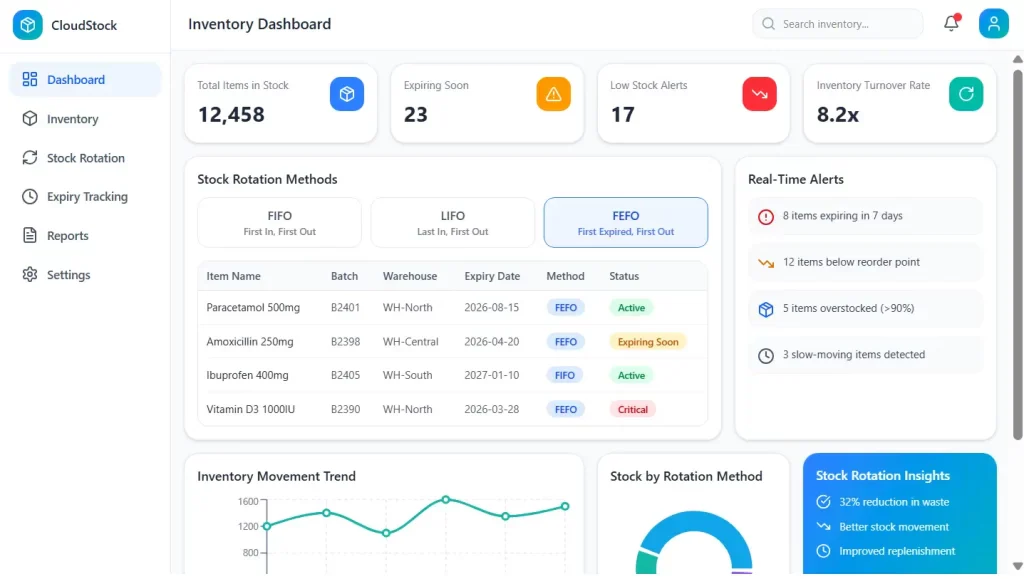
It also helps teams maintain product quality and respond faster to inventory issues. With better visibility, businesses can reduce waste, avoid stock imbalances, and support smoother daily operations.
- Automated inventory tracking: The system records stock levels, expiration dates, and product movements automatically. This process helps teams move older stock first and reduce waste.
- Real-time updates and alerts: Real-time visibility helps businesses monitor inventory without waiting for manual reports. Automated alerts also warn teams about low stock or nearing expiration.
- Flexible stock rotation methods: A cloud inventory system can support FIFO, LIFO, and FEFO based on business needs. This flexibility helps companies manage different product categories more effectively.
- Clear reporting and analysis: The system generates reports on stock turnover, product performance, and inventory movement. These insights help businesses improve decisions and strengthen stock rotation strategies.
A cloud inventory system helps businesses reduce errors, improve efficiency, and maintain better stock control. To maximize these benefits, companies should evaluate their needs and choose a system that fits their operations.
Conclusion
Effective inventory management is essential for maintaining product quality, reducing waste, and maximizing profitability. By understanding and implementing the right stock rotation methods, such as FIFO, LIFO, and FEFO, businesses can optimize inventory control and improve customer satisfaction. However, managing this process manually can be complex and time-consuming.
Henceforth, it is paramount to utilise advanced inventory management system to simplify stock rotation with automated tracking, real-time updates, and customizable methods tailored to your business needs.
FAQ for Stock Rotation
Businesses track expiration dates more accurately by using batch tracking, barcode systems, and real-time inventory software that records expiry data and triggers alerts.>
FEFO works better for perishable goods because it prioritizes expiration dates, while FIFO suits non-perishable items with stable shelf life.>
Perishable products such as food, beverages, pharmaceuticals, cosmetics, and chemicals require strict stock rotation to prevent spoilage and compliance issues.>
Batch numbers help businesses track product origin, expiry dates, and movement, enabling accurate rotation, faster recalls, and better inventory control.>