













Have you ever wondered how businesses in the Philippines manage to offer a diverse range of products without bearing the cost and burden of storing large quantities upfront? Or how local suppliers can grow their market presence without significant financial risks? The answer is consignment inventory, a strategy that allows both suppliers and retailers to share the responsibilities of stock management, making it a popular approach in the Philippine business landscape.
In this article, we’ll explore what consignment inventory is, its advantages, the common challenges faced by businesses in the Philippines, and the best practices for managing consigned goods effectively. By the end, you’ll understand how this model can help both retailers and suppliers optimize inventory and increase sales in the local market.
What is Consignment Inventory?
Consignment inventory is a system where the supplier retains ownership of goods until the retailer sells them. The retailer does not pay for the goods upfront, which reduces their financial burden. At the same time, the supplier benefits from broader distribution and potential sales. This arrangement is particularly useful in industries with unpredictable or seasonal sales, allowing retailers to stock more items without overextending their resources.
Here’s a quick comparison to clarify the difference between consignment inventory and traditional inventory models:
- Traditional Inventory: The retailer buys goods from the supplier upfront and owns the stock once the transaction is complete.
- Consignment Inventory: The supplier retains ownership of the goods, and the retailer only pays for what is sold.
Key Elements of the Consignment Inventory Model

Successful consignment partnerships rely on precise inventory control management, which involves continuous tracking of stock levels, sales performance, and returns. This ensures both the consignor and consignee have clear insights into the flow of goods and can maintain accurate records.
At the heart of the partnership is a contract that outlines the critical terms of the agreement, including:
- Commission structure: Details if the retailer will earn a commission and, if so, the percentage of revenue they’ll keep for each sale.
- Consignment period: Specifies the timeframe within which the retailer must sell or return the unsold items to the supplier.
- Payment conditions: Defines when and how the retailer will transfer payments to the supplier for goods sold, including the preferred method and payment intervals.
To handle the complexities of modern consignment practices, businesses often rely on specialized software. These tools help streamline everything from inventory tracking to managing supplier relationships and financial transactions, offering scalable solutions that can enhance efficiency and precision for businesses of all sizes.
Key Benefits of Consignment Inventory
The consignment inventory model provides significant advantages for both suppliers and retailers. The main appeal lies in how it distributes the risk, making it a mutually beneficial arrangement.
| Aspect | Benefits for Suppliers | Benefits for Retailers |
|---|---|---|
| Market Expansion | Expands product reach without requiring upfront payment from retailers | Offers a wider variety of products without tying up capital |
| Sales Opportunity | Increases likelihood of sales by placing products in multiple locations | Adapts to market demand by adjusting stock levels with minimal financial impact |
| Product Testing | Tests new products and gauges market demand before large-scale production | Introduces new products without significant financial risk |
| Financial Risk | Retains ownership, reducing losses from unsold goods | No upfront purchasing cost, reducing financial exposure |
| Cash Flow Impact | Maintains inventory control while expanding distribution | Frees up capital for other operational needs and business growth |
Common Challenges in Consignment Inventory
While the consignment inventory model is beneficial, it does come with its own challenges that businesses must navigate. The main challenges include:
- Balancing risk and responsibility: Suppliers bear the cost of unsold goods, while retailers manage the goods in-store, which can lead to confusion if roles aren’t clearly defined.
- Accurate demand forecasting: If demand fluctuates, retailers may end up with excess or unsold stock, leaving suppliers to handle the returns.
- Managing unsold goods: Retailers may face difficulties in managing stock, as overstocking leads to wasted space, and understocking results in missed sales opportunities.
Overcoming these challenges requires strong collaboration and clear communication between suppliers and retailers. Although they may seem tricky, having solid management strategies in place will help you handle them smoothly. Let’s see how to manage consignment inventory effectively.
How to Manage Consignment Inventory Effectively
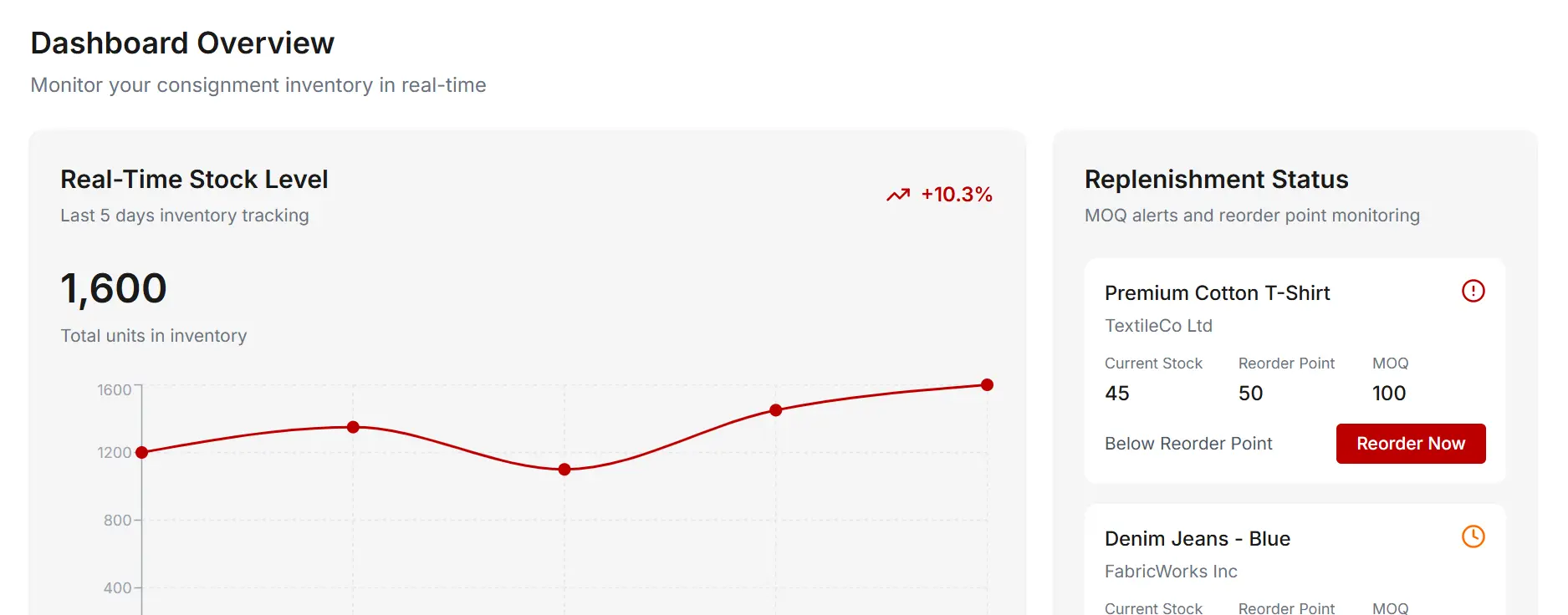
To manage consignment inventory effectively, businesses need the right tools and strategies in place. Here are the key steps:
- Automate replenishment: Invest in automated systems that replenish inventory such as MOQ to avoid stockouts and ensure products are always available.
- Build strong supplier retailer relationships: Regular communication ensures that both parties are aware of stock levels, sales performance, and any potential issues.
- Use consignment inventory platforms: This allows businesses to track sales and stock levels in real-time, helping both suppliers and retailers stay updated. Manufacturing inventory software can offer similar real time tracking features for factory and production stock.
With the right tools and clear communication, businesses can efficiently manage their consignment inventory. Now that we’ve covered the essentials, let’s move on to best practices that will optimize your consignment strategy.
Best Practices for Consignment Inventory Management
To truly optimize your consigned inventory, following best practices is essential. Here’s how you can do that effectively:
- Create transparent contracts: Clearly define the roles, responsibilities, and payment terms between suppliers and retailers. This helps prevent misunderstandings and ensures smoother operations from the start.
- Review inventory performance regularly: By analyzing sales trends and adjusting stock levels, you can avoid the common pitfalls of overstocking or understocking, keeping your inventory lean and efficient.
- Leverage inventory management software: Tracking consigned goods manually creates gaps in visibility. Using a dedicated platform allows both parties to monitor stock movement, automate reorder points, and generate performance reports with minimal effort.
Conclusion
Consignment inventory offers a practical middle ground for businesses that want to grow their product range without overcommitting capital. When suppliers and retailers align on clear contracts, maintain steady communication, and use the right tools to track stock movement, the model becomes a reliable part of a broader inventory strategy.
For businesses looking to evaluate how consignment fits into their overall approach, exploring the leading software options for managing inventory available today is a useful next step.
Frequently Asked Questions
-
What is a consignment stock contract?
A consignment stock contract is an agreement between a supplier and a retailer outlining terms such as ownership, payment, and duration. The supplier retains ownership of the goods until they are sold by the retailer.
-
Do you include consignment in inventory?
Consignment goods are not included in a retailer’s inventory until sold. The supplier retains ownership, so the retailer doesn’t list them in their inventory records until the sale occurs.
-
How do you handle consignment inventory?
Handling consignment inventory involves regular tracking of stock levels, sales, and returns. Using inventory management software simplifies this process, ensuring both parties have accurate, real-time data.
-
What are two reasons some industries have inventory on consignment?
Industries use consignment inventory to reduce financial risk for retailers and test new products without committing to large purchases upfront. This allows flexibility and reduces excess stock issues.