








Managing a warehouse demands accuracy and efficiency, yet many businesses still rely on manual systems that slow operations and increase errors. A Warehouse Management System (WMS) helps automate inventory processes and optimize storage space.
Research published on ResearchGate notes that La Ruche Logistique increased its order processing capacity by over 230% after implementing warehouse management software, demonstrating how digital systems boost productivity.
In the Philippines, outdated warehouse practices often lead to disorganized data, wasted time, and higher operational risks. Implementing a WMS helps businesses gain better visibility, streamline workflows, and improve overall warehouse performance.
Key Takeaways
|
Table of Contents
Top Warehouse Management Systems in 2026



Best Because
Best for retail and wholesale inventory management


Best Because
Best for seamless integration with Microsoft Products Ecosystem

Best Because
Best for multi-location inventory management





The Definition of Warehouse Management Systems
A warehouse management system (WMS) is software to manage warehouse operations from inbound receiving to outbound shipping. It helps manage warehouses, distribution center (DC), or logistics fulfillment center (FC) operations by providing real-time visibility inventory across storage units.
According to the 2023 Zebra Technologies global warehousing study, 58% of warehouse decision-makers plan to adopt RFID or similar tracking tech by 2028 to improve inventory visibility and prevent stockouts.
By providing a single, unified interface, WMS enables seamless management of these activities. Additionally, WMS integrates with various other tools and technologies, such as barcode scanning, RFID labeling, robotics, and augmented reality wearables.
Key Functions of Warehouse Management Systems
Warehouse Management Systems support smooth and accurate warehouse operations by coordinating multiple activities in one connected platform. These systems help businesses maintain control over goods.
1. Coordinating inbound activities
WMS tools manage the arrival of goods by checking quantities, verifying purchase orders, and registering items into the system. This ensures that all received products are recorded correctly before entering storage.
2. Tracking and organizing inventory
Warehouse Management Systems continuously monitor stock levels and item locations, giving real-time visibility across the warehouse. This function prevents stock discrepancies and supports timely replenishment.
3. Structuring storage and retrieval
WMS solutions guide where items should be stored based on size, movement frequency, or handling requirements. By placing products in strategic areas, the system helps streamline both storage efficiency and retrieval speed.
4. Supporting accurate picking operations
The system assists workers in selecting items for orders by recommending the most efficient route or sequence. This reduces picking errors and speeds up order preparation.
5. Managing packing and outbound shipping
Warehouse Management Systems help confirm that items are packed correctly, labeled accurately, and prepared for shipment. They also track dispatch details to ensure orders reach the correct recipients.
6. Optimizing workforce and resource usage
WMS platforms help assign tasks according to staff availability, skill level, and warehouse priorities. They also help manage equipment usage and storage space to keep operations running smoothly.
5 Benefits of Warehouse Management Systems
A robust digital warehouse management system is vital for any business managing on-hand inventory, helping to reduce costs and improve efficiency in multiple areas. Here are the benefits of WMS:
1. Optimizes warehouse flow and space
A WMS improves warehouse flow by placing items in optimal locations through smart slotting based on demand and storage needs. It also supports FIFO, LIFO, or FEFO rotation to reduce waste for perishable or date-sensitive items.
2. Real-time visibility
A warehouse automation software provides real-time visibility by using barcodes, RFID, and sensors to track inventory at every stage. With clearer stock data, businesses can forecast demand more accurately and support just-in-time replenishment.
3. Improves labor management
Warehouse management software helps assign tasks based on skill, equipment, and location, allowing teams to work more efficiently. It reduces unnecessary travel within the warehouse so employees can focus on higher-value tasks. As a result, overall labor productivity improves.
4. Traceable materials
A WMS assigns lot, batch, or serial numbers to each item, creating full traceability from receiving to dispatch. Every movement is logged automatically, building a clear audit trail. This is essential for quality control, recall handling, and meeting compliance requirements.
5. Improved operational efficiency
A WMS boosts efficiency by automating tasks from receiving to shipping and reducing process delays. Additionally, a study dissecting the cost-benefit analysis of ERP use in Philippine shoe factories shows a strong benefit of WMS, reporting a benefit-cost ratio of 1.85 in the first month and 10.4 in the months after.
Need to know!
AI-driven warehouses move faster and smarter! Hashy AI automates stock updates, prevents overstocking, and ensures seamless order fulfillment. Say hello to efficiency and try it now!

Get a Free Demo Now!
18 Top Warehouse Management Systems in the Philippines
Choosing the best warehouse management software for your business can be difficult, given the number of systems on the market. Therefore, to solve your confusion, we present a list of the best warehouse management software in the Philippines.
Below, you’ll find a list of the 18 top warehouse management systems in the Philippines, which cover their features, strengths, and weaknesses.
1. HashMicro WMS
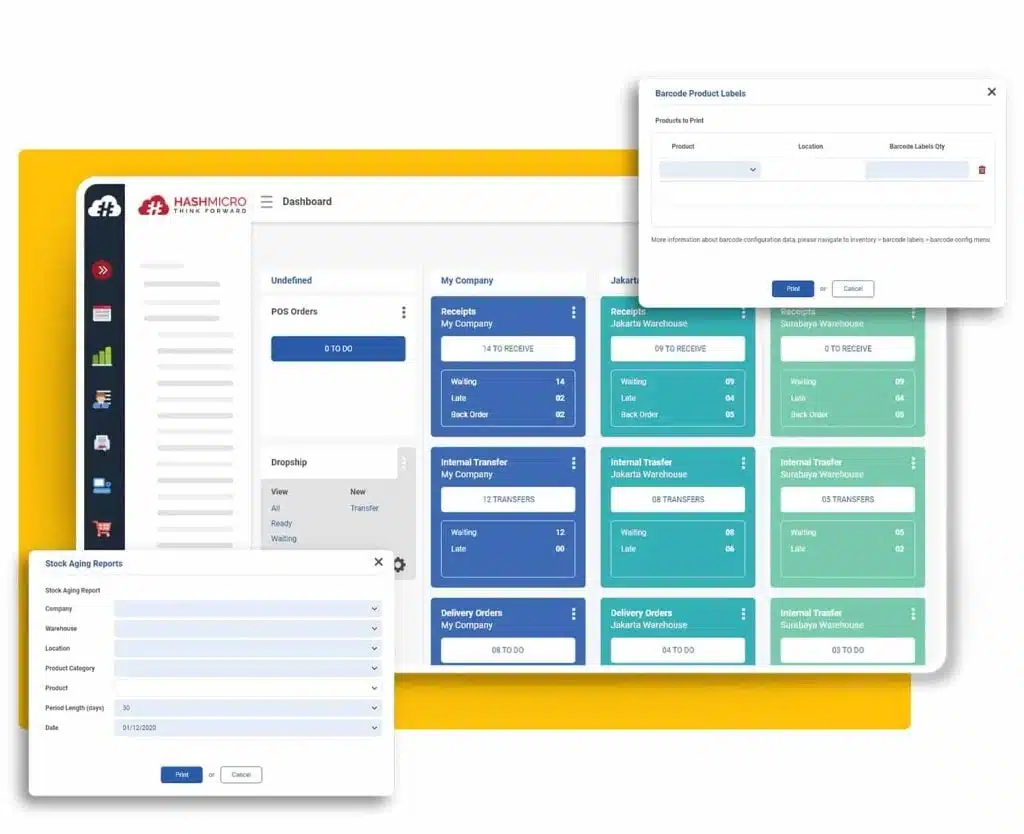
HashMicro is the top choice for a web-based warehouse management system (WMS) for businesses in the Philippines. This system can provide a significant boost for warehouse management, thanks to its advanced features and robust integration capabilities.
Why we recommend it: HashMicro helps optimize inventory and storage workflows while complying with Philippine warehouse regulations, such as those in the Customs Modernization and Tariff Act (Republic Act No. 10863).
Key Features
- RFID warehouse rack stock automation
- Barcode, lot, and serial number tracking
- Cycle time analysis
- Stock optimizer per warehouse
- 3D view of stock location
- Removal strategy management
- Pick, pack, and delivery 3-step route warehousing
- Comprehensive Reporting/Analytics
In addition to these features, HashMicro can connect with other modules and systems in the company, from accounting and finances to procurement management, to stock management.
| Pros | Cons |
|
|
Suitable for
HashMicro’s Warehouse Management System in the Philippines offers a comprehensive ERP solution that covers end-to-end business operations, helping businesses enhance efficiency, manage multiple branches, and increase profitability.
Pricing
HashMicro offers customized pricing based on your business’s specific needs and size. Click the banner below to discover the pricing scheme.

2. Brightpearl WMS
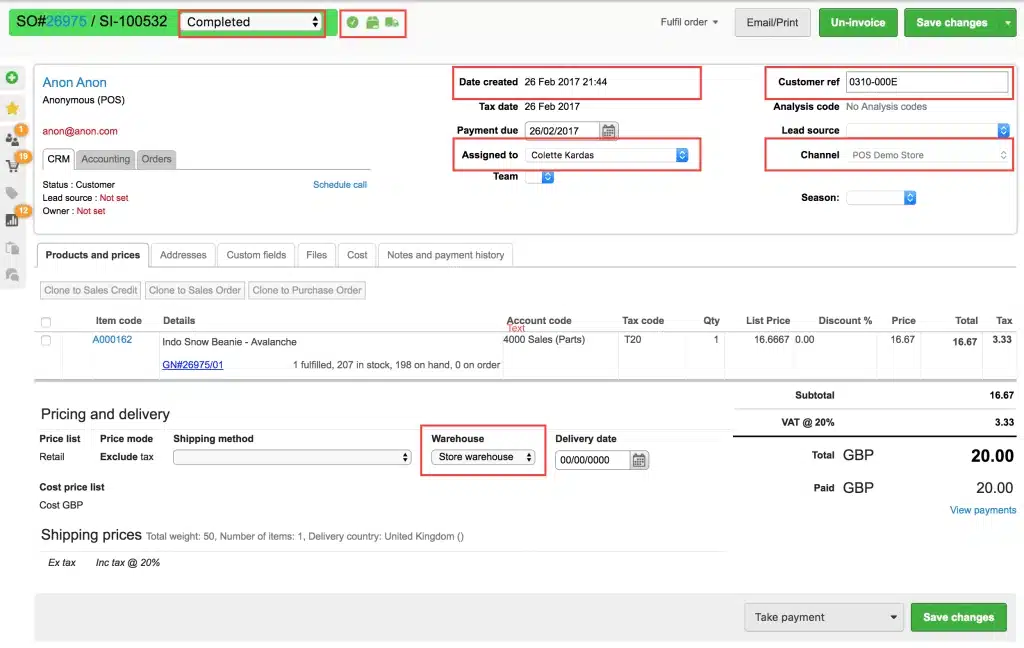
Brightpearl is a WMS designed for e-commerce, retail, and wholesale businesses looking to optimize warehouse operations. It offers barcode scanning, automated workflows, real-time inventory tracking, and efficient returns management.’
It ensures accurate stock tracking with partial counts by zone and real-time updates across sales channels. However, pricing details aren’t available, so anyone interested should contact Brightpearl directly.
Key Features
- Order processing
- Receiving & put-away
- Picking and packing
- Warehouse management
- Reporting/Analytics
| Pros | Cons |
|
|
Pricing
Brightpearl offers a subscription-based pricing model, with costs varying based on factors such as the number of users, sales channels, and monthly order volume.
Suitable for
Brightpearl is perfect for omnichannel retailers, wholesalers, and e-commerce businesses needing a unified system for orders, inventory, and accounting.
3. Infor WMS
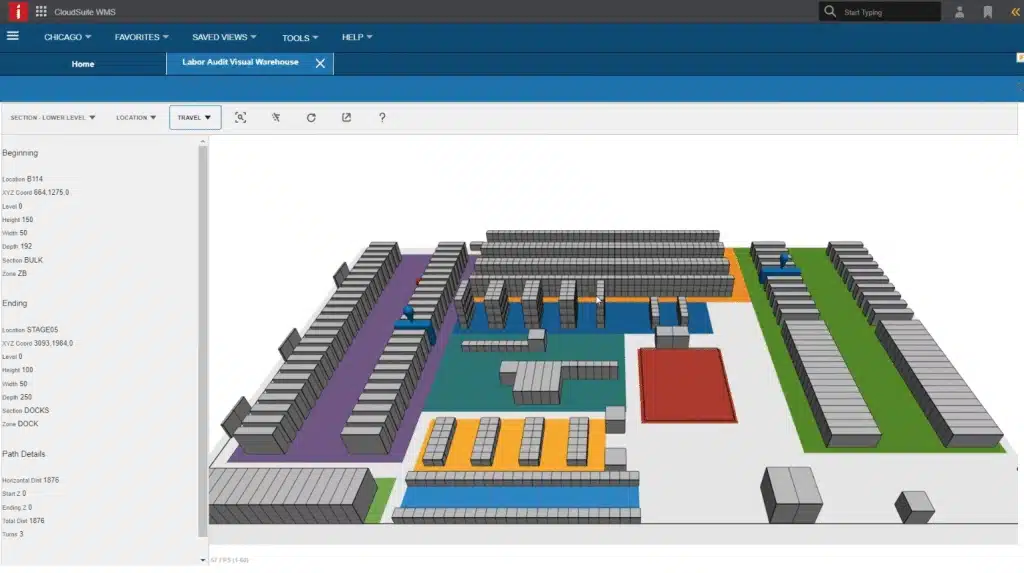
Infor is a cloud-based WMS software solution designed to optimize warehouse operations with AI, 3D visualization, and voice processing. Moreover, configurable rotation rules help reduce obsolescence, while LPN tracking enhances visibility.
This platform also schedules and manages B2B, B2C, and 3PL waves from a single warehouse. Businesses can enhance services with kitting, bundling, and custom labeling.
Key Features
- Label printing
- Inspection management
- Labor management
- Backorder management
- Barcode
| Pros | Cons |
|
|
Pricing
Pricing for Infor WMS varies based on factors such as company size, specific requirements, and chosen deployment model.
Suitable for
Infor is designed for high-volume industries like food and beverage, manufacturing, logistics, and retail, requiring customizable software.
4. Microsoft Dynamics 365 WMS
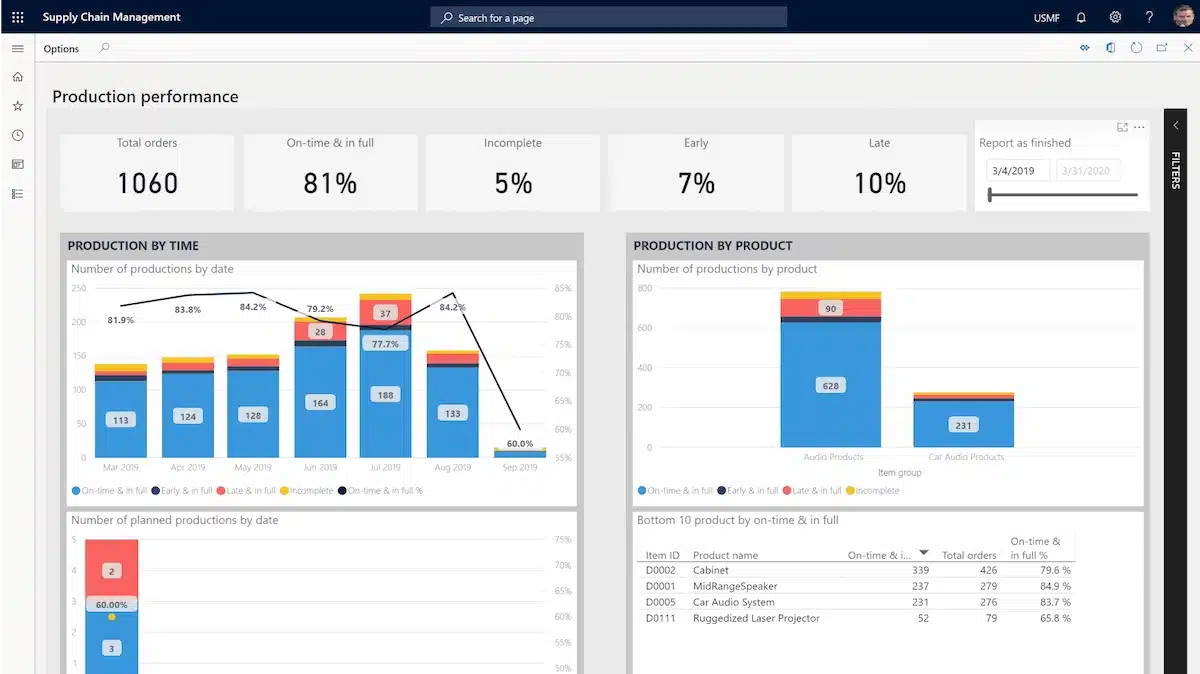
It offers a variety of features to ensure efficient facility management at all times. Fully integrated with key business processes, it connects seamlessly with transportation, manufacturing, quality control, purchasing, transfers, sales, and returns.
Key Features
- Full batch and serial item support
- Multiple picking strategies
- Nex-gen barcode scanner
- Pallet/container types for warehouse processes
- Label printing and label routing with Zebra ZPL support
- Business intelligence integration into Power BI
| Pros | Cons |
|
|
Pricing
Microsoft’s Warehouse Management System is part of the Dynamics 365 Supply Chain Management suite. Pricing is subscription-based, starting at $180 per user per month. Additional costs may apply depending on specific requirements and add-ons.
Suitable for
Organizations with a mobile workforce benefit from Microsoft Dynamics 365’s cloud-based productivity tools and real-time collaboration.
5. Zoho WMS
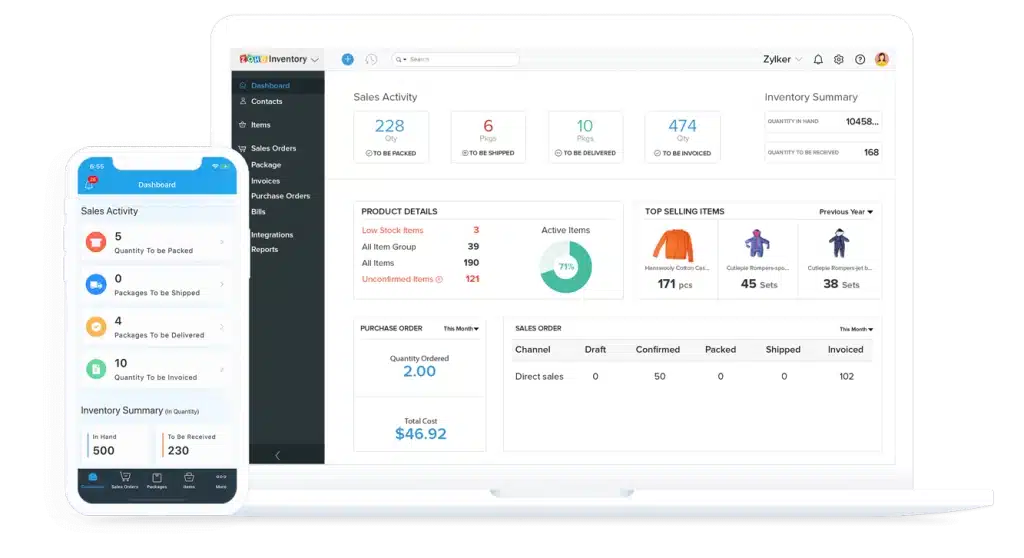
Zoho is a comprehensive Warehouse Management software System designed to streamline and optimize warehouse operations for businesses in the Philippines. Its comprehensive features help businesses manage their warehouses and generate reports for better insights.
Key Features
- Purchasing
- Invoicing
- Warehouse management
- Order fulfillment
- Barcoding
| Pros | Cons |
|
|
Pricing
Zoho Inventory offers a range of pricing plans to accommodate businesses of various sizes and needs. They provide a free plan suitable for startups and small businesses, as well as several paid plans with additional features and higher usage limits.
Suitable for
Zoho Inventory is ideal for e-commerce businesses on Shopify, Amazon, or eBay, and retailers with multiple locations needing real-time order, stock, and shipping management.
6. Focus Softnet WMS
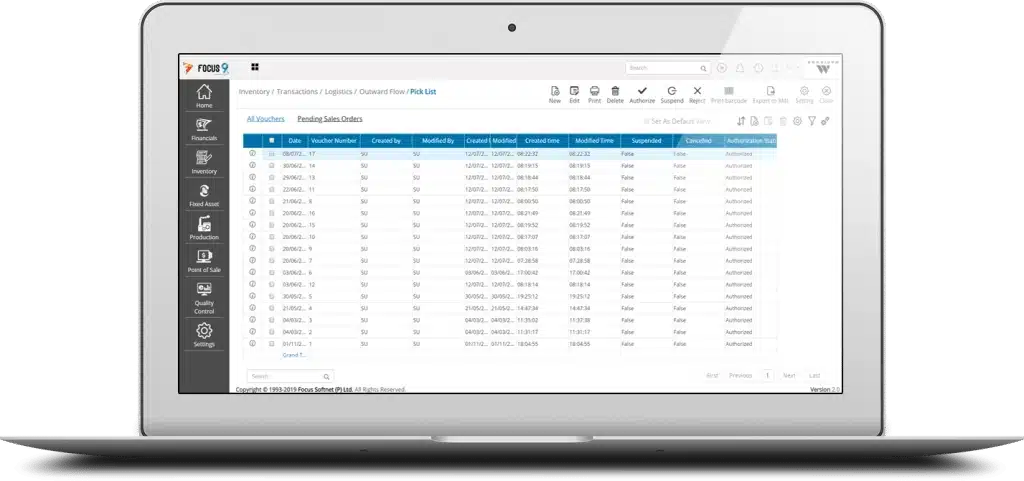
Focus WMS is a warehouse management system for businesses in the Philippines for planning and overseeing storage, logistics, distribution, and supply chain. The software’s user-friendly interface, speed, accuracy, and cost-effectiveness improve logistics performance.
Additionally, it is equipped with advanced technology to support warehouse operations of all sizes.
Key Features
- Warehouse management
- Order processing
- Labor management
- Receiving & put-away
- Picking & packing management
| Pros | Cons |
|
|
Pricing
Focus Softnet offers customized pricing for its Warehouse Management System (WMS) solutions, tailored to meet the specific needs of each business.
Suitable for
Focus WMS is ideal for high-volume 3PL providers in food, automotive, pharma, and electronics needing advanced warehousing.
7. Oracle WMS
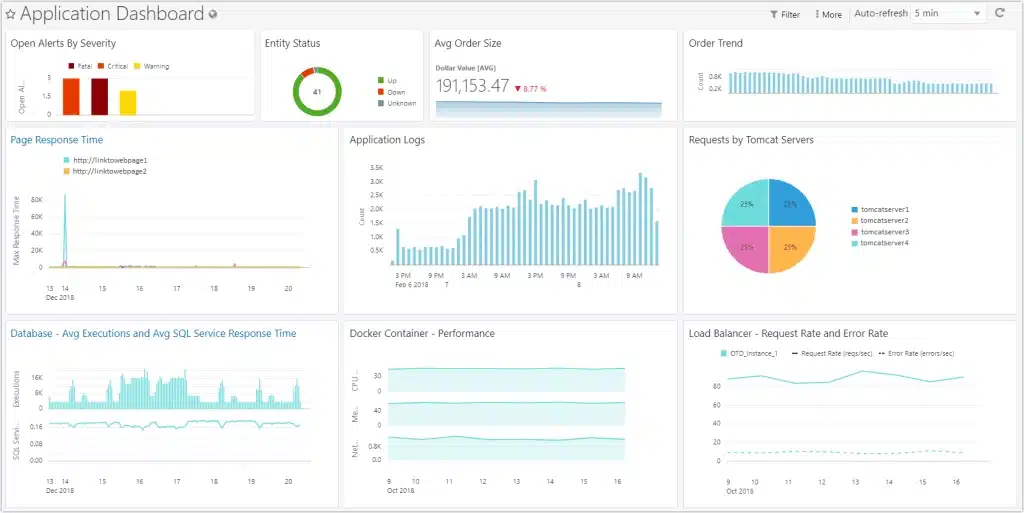
Oracle Warehouse Management (WMS) software is designed to optimize and automate Philippine warehouse operations. It provides real-time visibility into stock levels, locations, and movements, thereby helping businesses streamline their supply chain processes.
Key Features
- Procurement management
- Materials management
- Order processing
- Purchasing
- Maintenance management
| Pros | Cons |
|
|
Pricing
Oracle Fusion Cloud’s pricing varies based on the specific services and modules selected, as well as the size and requirements of your organization. While some sources indicate that pricing starts at approximately $2,000 per month.
Suitable for
Oracle Fusion Cloud Warehouse Management is ideal for large B2B and B2C enterprises needing an integrated warehousing solution.
8. Logiwa WMS
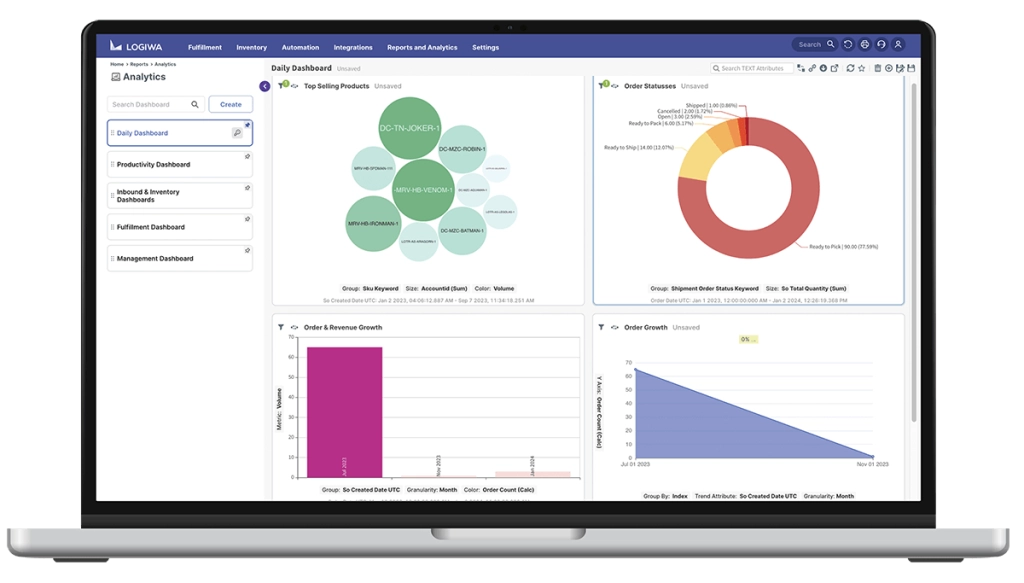
Logiwa logistic management system is supply chain management software tailored for e-commerce businesses, offering connectivity with various third-party tools including e-commerce platforms, accounting software, and marketplaces.
It ensures real-time synchronization, order routing, and features an open API and automated routing. Logiwa’s built-in automation rules facilitate efficient order fulfillment, and rapid picking, packing, and shipping.
Key Features
- Warehouse management
- Reorder management
- 3PL management
- Order fulfillment
- Barcode / RFID
| Pros | Cons |
|
|
Pricing
Logiwa offers tailored pricing plans to accommodate various business needs, including options for B2C, DTC, and 3PL fulfillment operations.
Suitable for
Logiwa WMS is designed for DTC companies, 3PL providers, and e-commerce fulfillment with high-volume, high-velocity needs.
9. Epicor Kinetic WMS
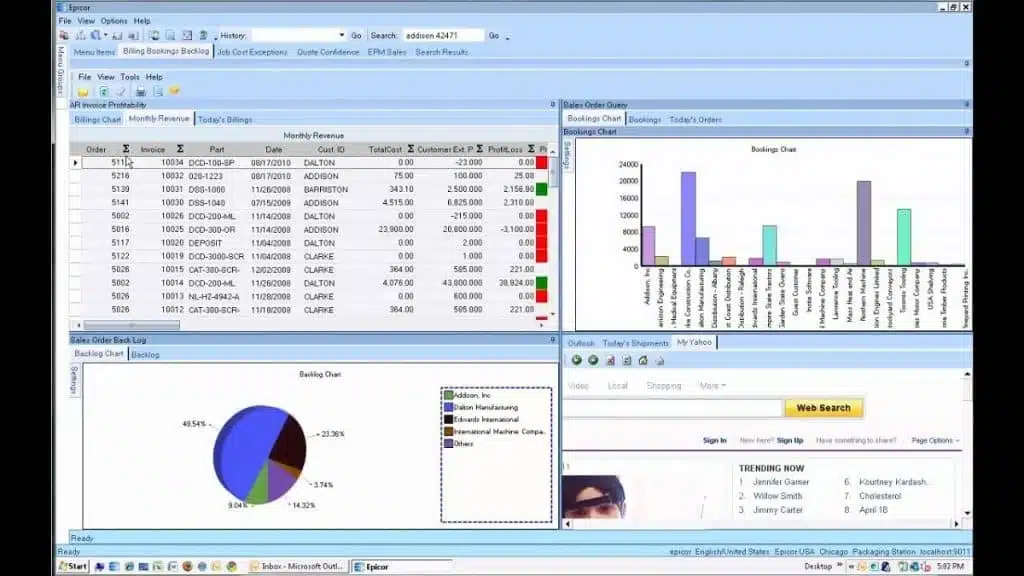
Epicor Kinetic is a cloud-based Warehouse Management System (WMS) for managing nonperishable products in warehouse environments. It offers a range of features, including supply tracking, order processing, and warehouse optimization.
Moreover, Epicor Kinetic provides real-time visibility into stock levels and locations, helping businesses enhance efficiency and accuracy in their operations.
Key Features
- Barcode / RFID
- Order management
- Picking & packing
- Receiving & putaway
- Workforce management
| Pros | Cons |
|
|
Pricing
Epicor Kinetic offers flexible pricing tailored to the specific needs of each organization.
Suitable for
Manufacturing and distribution companies seeking efficient inventory management and streamlined supply chain operations.
10. PALMS WMS
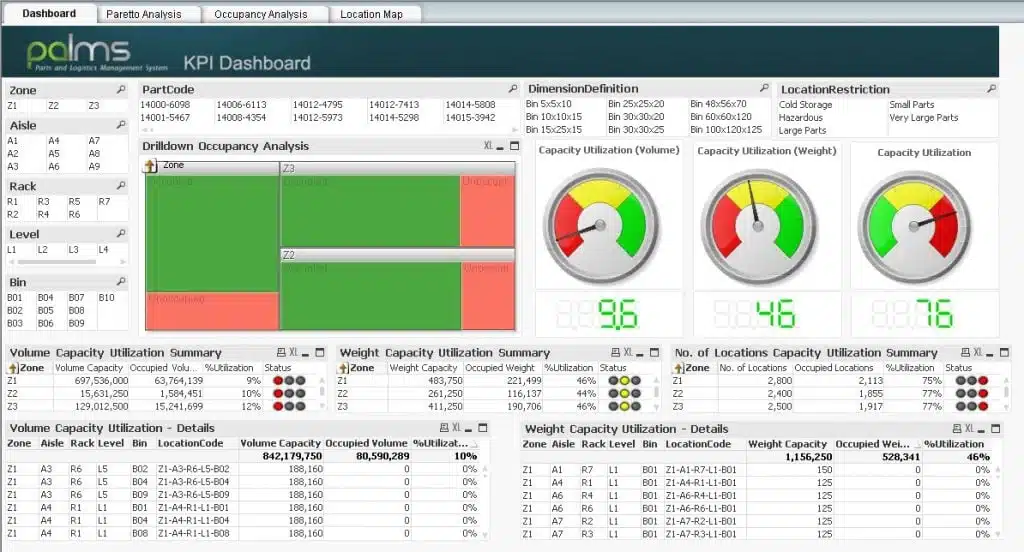
PALMS™ Smart WMS is a comprehensive warehouse management system developed by Technoforte that enhances warehouse operations and boosts stock accuracy. Its efficient space and resource utilization, along with increased customer retention, have made it a top pick for businesses managing stock and distribution centers.
Additionally, the software offers advanced functionalities such as automated location management, specified put-away and pick strategies, and real-time stock visibility.
Key Features
- 3PL Management
- Warehouse Management
- Cross Docking
- Picking & Routing
- Order Fulfillment
| Pros | Cons |
|
|
Pricing
PALMS Smart WMS offers flexible deployment options, including on-premises and cloud-based solutions, to cater to diverse business needs.
Suitable for
Businesses of all sizes that seek efficient inventory management and streamlined warehouse operations.
11. WASP Barcode Technologies WMS
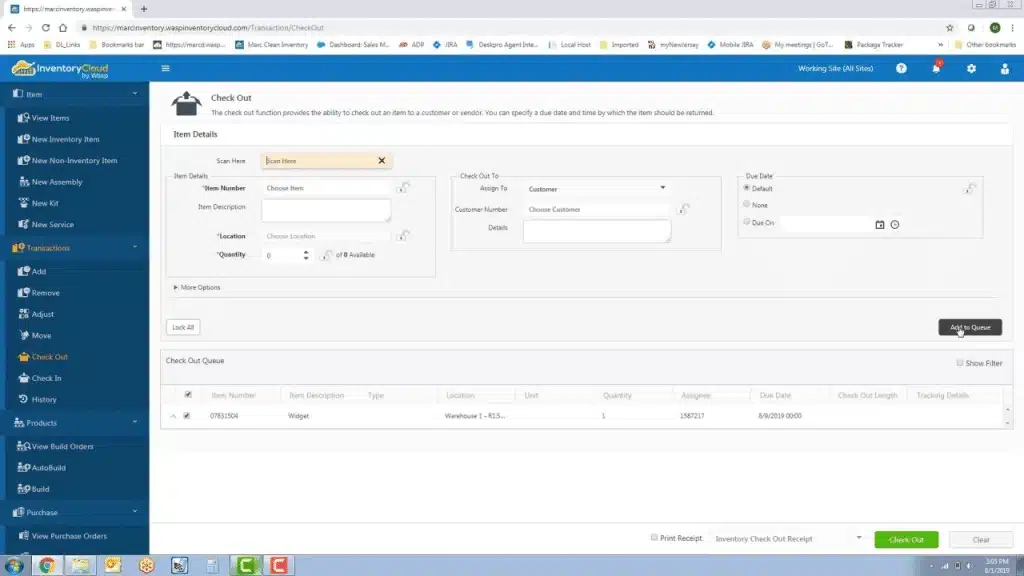
Wasp Barcode Technologies provides a cloud-based system for managing stock that supports multiple sites and is compatible with iOS and Android devices. It sends real-time alerts for low stock and expiring items.
It is recognized for its customizable reports and detailed control over stock. Additionally, it provides mobile applications for iOS and Android devices, enabling users to perform stock audits from anywhere.
Key Features
- Supplier management
- Reporting / Analytics
- Warehouse management
- Retail stock management
- Reorder management
| Pros | Cons |
|
|
Pricing
WASP Barcode Technologies offers a range of products, including barcode scanners, printers, and inventory management software. Pricing varies depending on the specific product and its features.
Suitable for
Small to mid-sized businesses looking for efficient inventory tracking and warehouse management solutions.
12. Aptean WMS

Aptean Warehouse Management Software offers flexible solutions for Philippine businesses seeking comprehensive supply chain visibility. Available in the cloud or on-premise, Aptean WMS software provides real-time, 360-degree views of warehouse operations.
Key Features
- Work order management
- Barcode / RFID
- Purchasing
- Invoicing
- Financial management
| Pros | Cons |
|
|
Pricing
Aptean offers customized pricing for its Warehouse Management System (WMS) solutions, tailored to meet the specific needs of each business.
Suitable for
Mid-sized to large enterprises seeking scalable warehouse management solutions to optimize inventory control and order fulfillment.
13. Fishbowl WMS
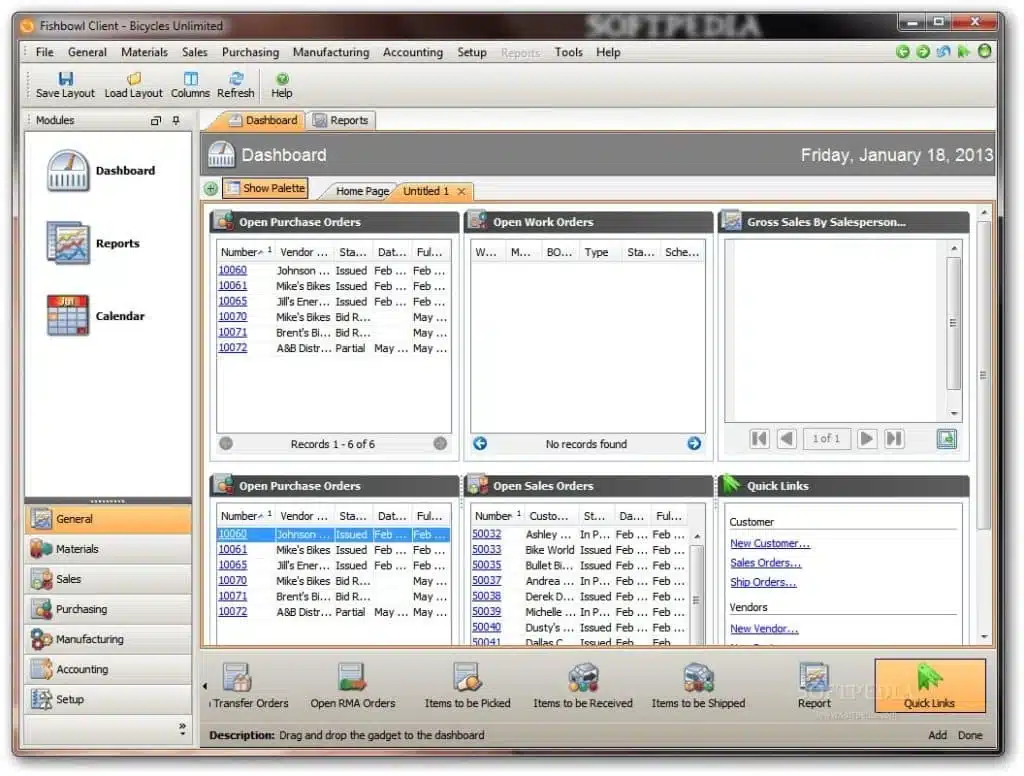
Fishbowl Warehouse management system is a solution designed for QuickBooks, empowering businesses to manage their order processes efficiently. It integrates with software and hardware solutions to automate diverse operations, enabling manufacturers to closely track product levels in each of their locations.
Key Features
- Purchasing
- Location control
- Reorder management
- Order entry
- Warehouse management
| Pros | Cons |
|
|
Pricing
Fishbowl offers various product bundles to cater to different business needs.
Suitable for
Growing businesses that need streamlined inventory control and efficient order management.
14. Acumatica WMS
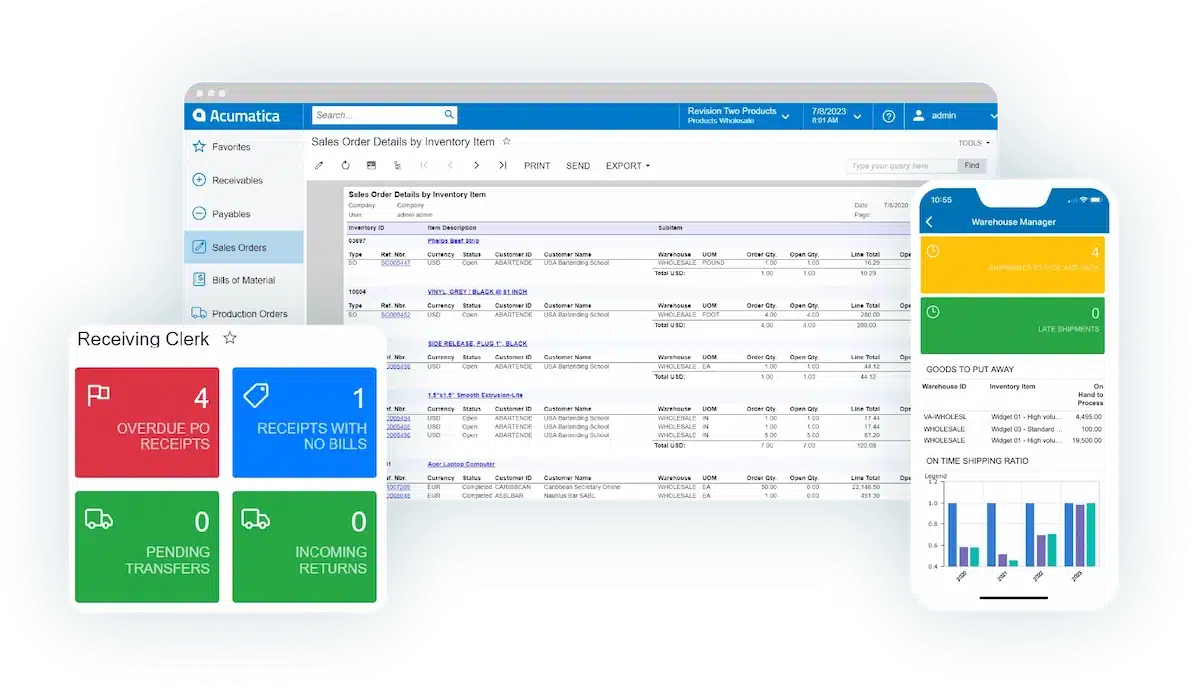
Acumatica software is a versatile system for managing advanced warehouse needs across various industries in the Philippines. It offers efficient control over operations like stock control and order fulfillment.
With real-time visibility and advanced reporting, Acumatica Philippines warehouse management software helps streamline processes and make informed decisions. As a result, it is an ideal choice for businesses seeking efficient warehouse management.
Key Features
- Order fulfillment
- Automatic tracking
- Stock movement
- Barcodes and labels
- Warehouse management
| Pros | Cons |
|
|
Pricing
Acumatica’s pricing model is tailored to your business needs, focusing on the applications you require and your projected resource consumption, rather than charging per user.
Suitable for
Medium to large businesses seeking scalable solutions for inventory management, order processing, and real-time visibility.
15. Cin7 WMS

Cin7 is a cloud-based WMS known for its seamless integration capabilities with various sales channels. Established in 2012, Cin7 has grown rapidly, offering a unified platform for inventory management, order processing, and warehouse control.
Key Features
- Multi-warehouse management
- Real-time inventory tracking
- Automated order processing
- Integration with e-commerce platforms
| Pros | Cons |
| User-friendly interface | Learning curve for advanced features |
| Excellent integration options | Limited customization in reports |
| Reliable customer support | Occasional sync delays |
| Detailed inventory analytics | Higher cost for advanced modules |
Pricing
Cin7 Core starts at $349 per month, while Cin7 Omni offers customized pricing for advanced enterprise needs. For a detailed quote, contact Cin7 directly.
Suitable for
Retailers, wholesalers, and e-commerce businesses that look to streamline inventory management and order fulfillment across multiple sales channels.
16. ShipHero WMS
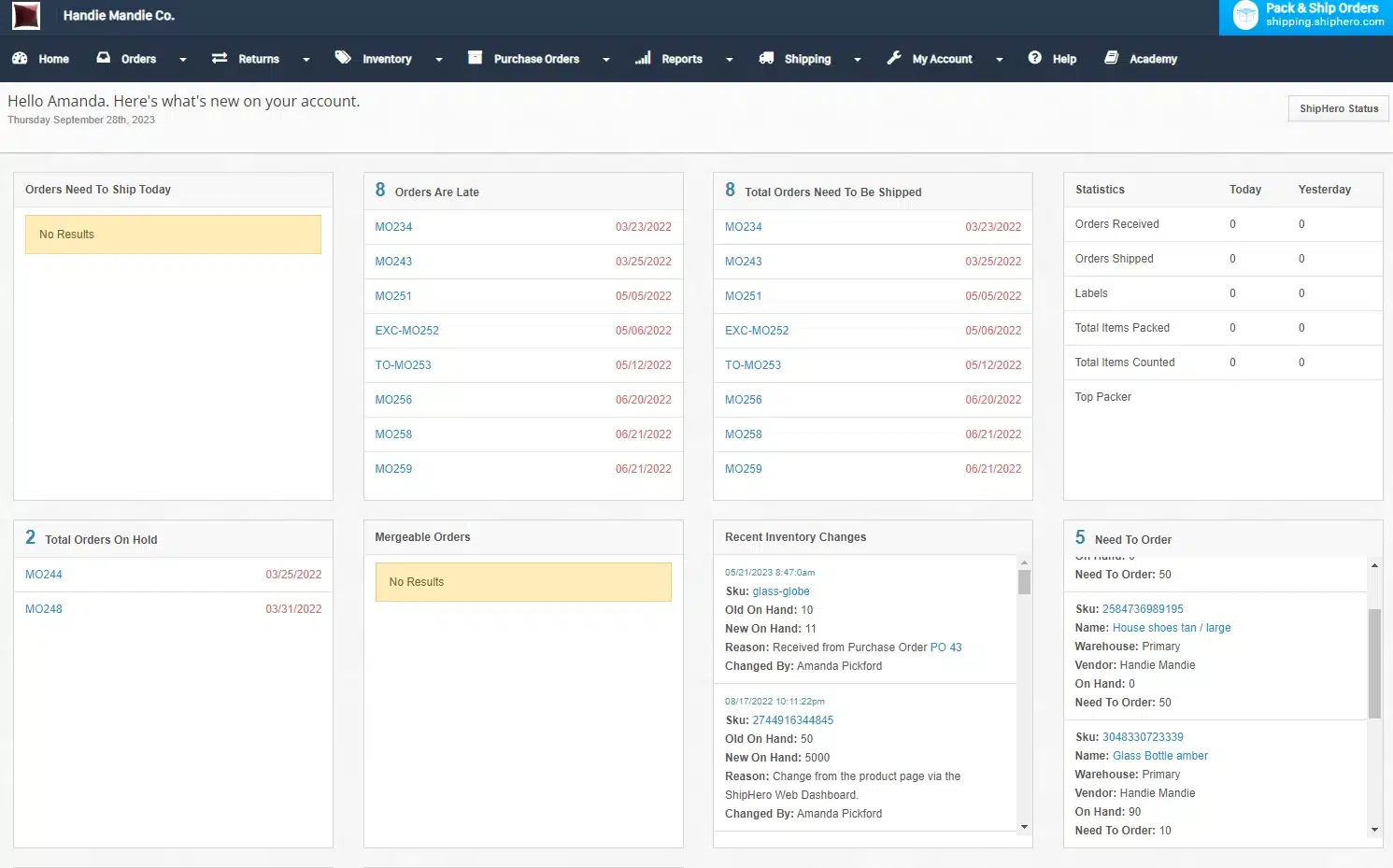 ShipHero, founded in 2013, offers a flexible logistic management system tailored for fast-paced e-commerce environments. Its platform supports end-to-end warehouse management, enabling companies to streamline order fulfillment, automate processes, and gain full visibility into operations.
Key Features
- Automated shipping and order management
- Real-time inventory sync
- Batch picking and packing
- Returns management system
| Pros | Cons |
| Highly intuitive UI | Limited offline capabilities |
| Seamless integration with major platforms | Limited advanced reporting options |
| Responsive customer support | Complex setup for multi-location warehouses |
| Strong automation capabilities | No on-premise version available |
Pricing
ShipHero’s pricing starts at $1,995 per month for the Standard Plan and $2,145 per month for the 3PL Plan. Customized pricing is available for enterprise solutions. For the most accurate details, contact ShipHero directly.
Suitable for
E-commerce retailers and 3PL providers seek efficient order fulfillment and inventory management solutions.
17. Blue Yonder WMS
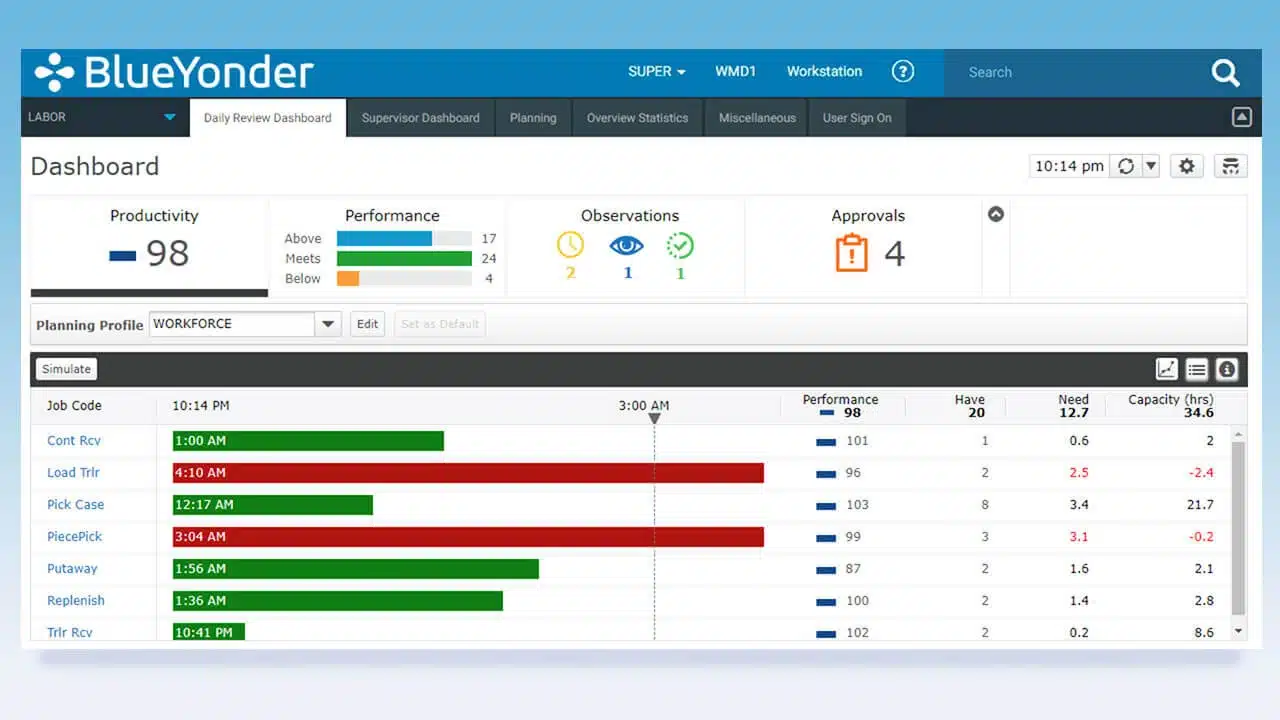 Blue Yonder is a well-established warehouse inventory management provider with decades of experience in the logistics industry. Its AI-driven platform supports complex warehouse operations, providing businesses with unparalleled insights and control.
Key Features
- AI-driven demand forecasting
- Flexible workflow management
- Real-time labor and task management
- Advanced analytics and reporting tools
| Pros | Cons |
| Extensive customization options | Steep learning curve for new users |
| Strong integration with ERP systems | Requires dedicated IT support for setup |
| Robust analytics and forecasting | High resource consumption |
| Scalable for large operations | Lengthy implementation time |
Pricing
Blue Yonder offers customized pricing for its Warehouse Management System (WMS), tailored to the specific needs and scale of each business.
Suitable for
Large enterprises and retailers seek advanced supply chain and warehouse management solutions to optimize inventory, logistics, and order fulfillment.
18. Manhattan Associates WMS
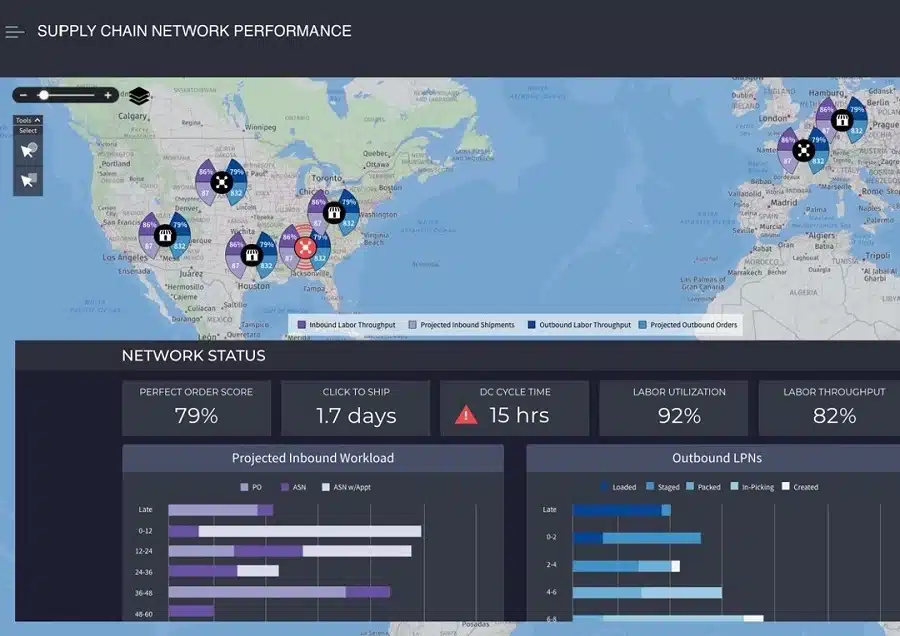 Manhattan Associates is a warehouse inventory management provider, known for its supply chain solutions. With over 30 years of experience, Manhattan offers comprehensive warehouse inventory management capabilities tailored for large enterprises.
Key Features
- Advanced WMS systems labor
- AI-driven order fulfillment
- Cross-docking capabilities
- Multi-channel distribution support
| Pros | Cons |
| Highly customizable workflows | Complex interface for beginners |
| Extensive third-party integrations | Lengthy training required |
| Scalable to accommodate growth | Expensive support packages |
| Detailed tracking and analytics | High initial investment |
Pricing
Manhattan Associates offers tailored pricing for their Warehouse Management System (WMS) solutions, designed to meet the specific requirements of each business.
Suitable for
Large enterprises and retailers that need advanced supply chain and warehouse management solutions.
Comparison of Best WMS Software
| Brand | Best for | Pros | Cons |
|---|---|---|---|
| 1) HashMicro | The best end-to-end solution for all types of business needs | 1) Unlimited users 2) User-friendly 3) Scalable 4) Comprehensive features 5) Strong integrations | Custom Pricing |
| 2) Brightpearl | Best for retail and wholesale inventory management | 1) Real-time customer data 2) Smooth syncing 3) Efficient order management | Subscription-based |
| 3) Infor | Best for scalable solutions in complex supply chains | 1) Remote access 2) Easy to use 3) Automated approval flow | Custom Pricing |
| 4) Microsoft Dynamics 365 | Best for seamless integration with Microsoft Products Ecosystem | 1) Strong suite integration 2) Frequent updates 3) Scalable | $70 — $210 / Month |
| 5) Zoho | Best for small to mid-sized businesses needing customizable WMS | 1) Free trial 2) Intuitive dashboard 3) Supports warehouse processes | Free & Paid Options |
| 6) Focus Softnet | Best for multi-location inventory management | 1) Flexible and customizable 2) Easy to use 3) Convenient document handling | Custom Pricing |
| 7) Oracle | Best for large enterprises with global supply chain needs | 1) Predictive analytics 2) Easy navigation 3) Customizable | Custom Pricing |
| 8) Logiwa | Best for high-volume e-commerce and 3PL fulfillment | 1) Flexible payments 2) Strong routing tools 3) Fast response | Custom Pricing |
| 9) Epicor Kinetic | Best for manufacturing and distribution efficiency | 1) Good system integration 2) Real-time tracking 3) Tracks raw materials | Custom Pricing |
| 10) Palms | Best for businesses of all sizes seeking efficient inventory management | 1) Improved logistics accuracy 2) Smooth system integration | Varies (by deployment) |
| 11) Wasp | Best for small to mid-sized businesses looking for efficient inventory tracking | 1) Easy to use 2) Low learning curve 3) Intuitive mobile app | Varies (by features) |
| 12) Aptean | Best for comprehensive supply chain visibility | 1) Easy to learn 2) Customizable 3) Supports financial & operational workflows | Custom Pricing |
| 13) Fishbowl | Best for growing businesses needing streamlined inventory control | 1) Strong stock management 2) Automated purchase orders 3) Smooth integrations | Bundle Pricing |
| 14) Acumatica | Best for medium to large businesses seeking scalable solutions | 1) Flexible 2) Scalable 3) Simplifies workflows | Based on Resource |
| 15) Cin7 | Best for retailers, wholesalers, and e-commerce businesses | 1) User-friendly 2) Excellent integrations 3) Strong analytics | Start at $349/Month |
| 16) ShipHero | Best for e-commerce retailers and 3PL providers | 1) Intuitive UI 2) Strong automation 3) Responsive support | Start at $1995/Month |
| 17) Blue Yonder | Best for large enterprises and retailers seeking advanced supply chain | 1) Highly customizable 2) Strong ERP integrations 3) Robust analytics | Custom Enterprise Pricing |
| 18) Manhattan Associates | Best for large enterprises and retailers needing advanced supply chain | 1) Highly scalable 2) Strong forecasting 3) Detailed analytics | Custom Enterprise Pricing |
Recommendation for Various Business Needs
- For businesses needing an end-to-end inventory and warehouse solution integrated with ERP and multiple departments → HashMicro
- For retail and wholesale businesses prioritizing order accuracy and real-time inventory visibility → Brightpearl, Cin7, Fishbowl
- For enterprises managing complex, multi-location, or global supply chains → Oracle, Infor, Blue Yonder, Manhattan Associates
- For manufacturers and distributors requiring real-time tracking and production-linked inventory → Epicor Kinetic, Aptean, Acumatica
- For e-commerce and 3PL operations handling high-volume fulfillment → Logiwa, ShipHero
- For small to mid-sized businesses seeking simple, user-friendly inventory control → Zoho, Wasp, Palms
- For companies operating within the Microsoft ecosystem or needing flexible enterprise workflows → Microsoft Dynamics 365, Focus Softnet
Key Features to Look For When Choosing a WMS

With so many warehouse management software options available, it’s crucial to choose the right one for your warehouse or on the demand warehouse operations. Picking the wrong WMS systems can lead to inefficiencies, failure to meet operational requirements, delays, and reduced productivity.
A good warehouse management system should have these features to help you get the most out of your warehouse operations:
- Receiving & Put-Away: WMS streamlines the receiving and put-away process using business rules and warehouse flow optimization. It integrates with RFID and barcode technology to reconcile incoming items against digital purchase orders.
- Inventory Management: Provides real-time inventory visibility across warehouses, in transit, and in-stores. It uses barcodes and RFID for tracking, supports cycle counting, and offers insights to forecast demand and optimize stock levels.
- Order Picking, Packing & Fulfillment: WMS optimizes storage, retrieval, and packing through RF scanning, robotics, and algorithms. It supports picking techniques like batch, zone, and cross-docking.
- Shipping: Integrates with logistics tools to automate bills of lading, packing lists, and shipment notifications. Real-time tracking ensures deliveries are accurate and timely.
- Labor Management: Tracks worker productivity and costs in real time. Supports task interleaving to reduce travel and dead time, helping plan and schedule efficiently.
- Yard & Dock Management: Guides truck drivers to the correct docks and supports cross-docking for faster order fulfillment, especially for perishable goods.
- Warehouse Metrics & Analytics: Automatically collects data for accurate reporting on shipping times, inventory accuracy, and operational costs. Visual analytics provides actionable insights for performance improvement.
- Lot or batch number tracking: For Philippine companies operating in the pharmaceuticals and food distribution sectors, warehouse management requires thorough recording and management of lot/batch numbers and expiration dates.
Why is Warehouse Management Systems Important?
Businesses need Warehouse Management Systems (WMS) to streamline their operations and boost efficiency. Here’s why:
- Better inventory control: Real-time tracking prevents overstocking and errors.
- Faster operations: Logistic management system automates picking, packing, and shipping.
- Cost savings: Efficient space use reduces storage costs and prevents losses.
- Improved order fulfillment: Accurate processing leads to quicker deliveries.
- Informed decisions: Data insights from warehouse management system software help optimize warehouse performance.
Conclusion
Warehouse management is not a standalone process, as it is closely connected with procurement, inventory control, and financial operations. Therefore, an effective WMS should integrate seamlessly with these modules to ensure a smooth supply chain.
With many warehouse management solutions available in the Philippines, choosing the right system depends on your operational complexity and business needs. A well-integrated and flexible WMS can help streamline workflows and improve data accuracy.
To determine the most suitable system for your operations, you may consider starting with a free consultation. This allows businesses to assess their requirements and explore solutions that best align with their warehouse management goals.
FAQ About Warehouse Management Systems
-
What is the warehouse management system?
A software solution that helps manage and optimize all daily operations within a warehouse, from receiving goods to picking, packing, and shipping them out.
-
What are the types of warehouse management systems?
There are four main types of Warehouse Management System (WMS) solutions, each designed to meet specific business needs: Standalone, ERP Module, Cloud-Based, and Supply Chain Module. These solutions differ in their features, integration capabilities, and suitability for various industries and business sizes.
-
What distinguishes a WMS from an ERP?
Warehouse management software is tailored to enhance your warehouse operations, while ERP software is intended to automate processes throughout your entire business, including marketing and sales, human resources, customer service, procurement, inventory, and financial management.
-
What is the latest trend in WMS?
The latest trends in warehouse management encompass robotics, inventory transportation, fleet management, and the Internet of Things (IoT).