














Employee Value Proposition (EVP) is not just a buzzword; It’s a strategic tool that can attract, engage, and retain top talent. The traditional assumption that salary alone attracts top talent is no longer true; they also seek culture, values, and growth opportunities. The elements that align with their personal and professional aspirations.
A strong EVP can help you communicate these elements in a way that resonates with the right talent. As we say, “Sa tamang hakbang, tagumpay ang kapalit”—everything has value when done right. In this article, we’ll break down how to create an EVP that aligns with your company’s values and resonates with potential employees.
Key Takeaways
|
Table of Contents
What is an Employee Value Proposition (EVP)?
An Employee Value Proposition (EVP) is your company’s unique value to employees in exchange for their skills, experience, and commitment. It includes tangible benefits like salary, incentives, and work-life balance while offering them your company’s values, mission, and culture.
Your EVP tells potential and current employees what they can expect from working at your company. Also, it highlights everything that makes your workplace a great fit for people who share your company’s values, goals, and vision for the future.
The employee value proposition may differ between current employees and potential candidates. What you emphasize to attract top talent may differ from what you focus on for those already within the organization.

Difference between Employee Value Proposition and Employer Brand
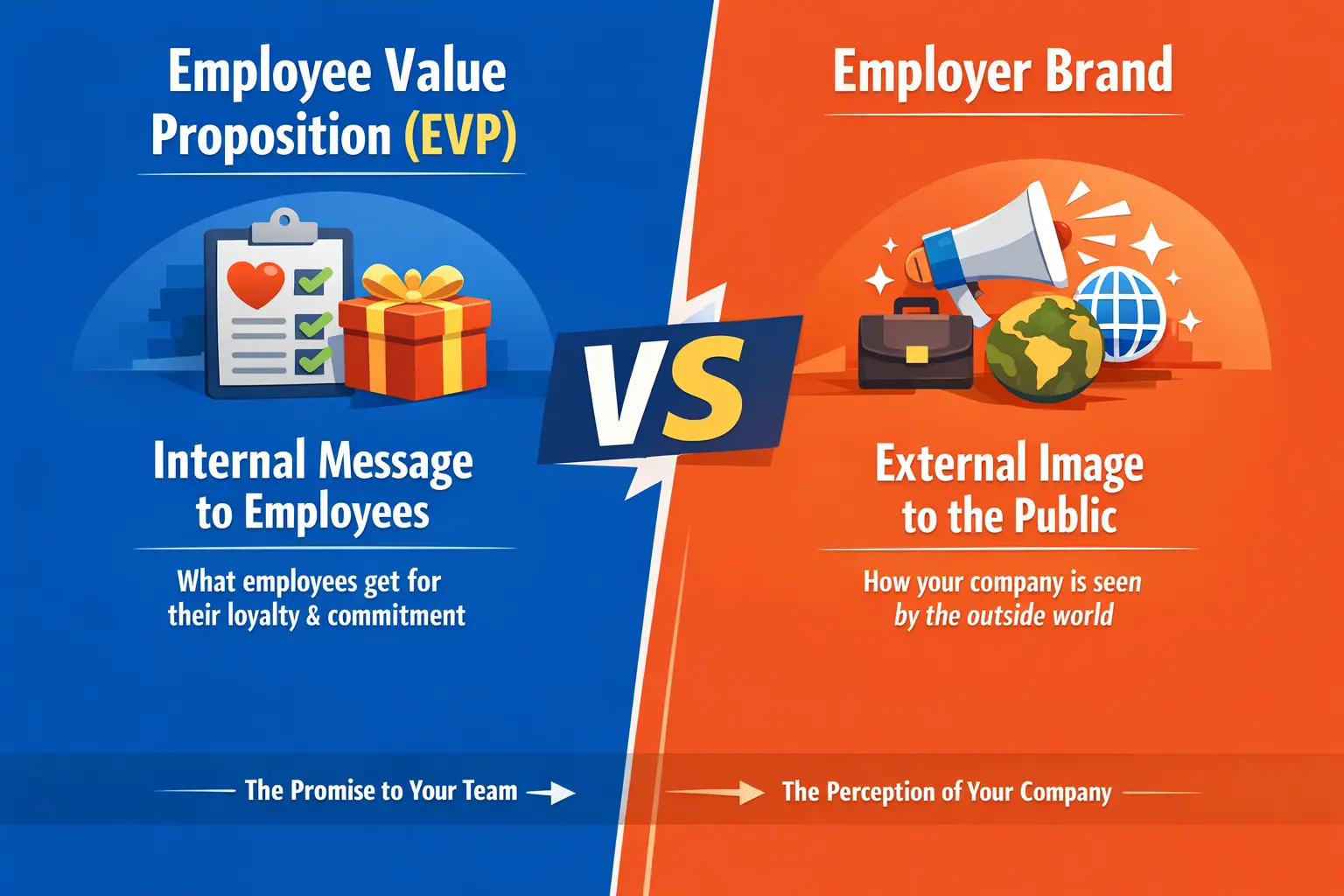
An employee value proposition (EVP) is an internal message that communicates to employees what they will receive in exchange for their loyalty and commitment. It’s essentially the promise you make to your team.
On the other hand, the employer brand is external and reflects the perception of your company by the outside world, particularly potential employees. It’s how you present your company’s mission, values, culture, and what it’s like to work with you.
While they are distinct, the two are connected. Your employer brand is the public-facing expression of your EVP. The EVP defines the benefits employees gain, while your employer brand shares those benefits with a wider audience. In essence, your EVP forms the foundation of your employer brand, as it shapes its substance and highlights what makes your company unique.
Why Does a Good Employee Value Proposition Matter?
Every business is unique, and when you present a clear and authentic proposition to high-quality candidates and employees, you’re more likely to attract and retain top talent, fostering a positive and productive workplace.
The benefits and return on investment (ROI) of a strong employee value proposition (EVP) include:
1. Reduced employee turnover
Employee turnover is a major drain on resources. For example, employee attrition for companies in the Philippines can increase to 18% annually.
However, a compelling EVP helps attract the right-fit employees who are passionate about their work and are more likely to stay longer. Organizations that effectively deliver on their EVP can reduce annual employee turnover by up to 69%, therefore contributing to maintaining employee retention.
2. Improved employee engagement
When employees understand what they’re working toward and how the company supports their mission and values, they become more invested in their work. Gallup highlights that highly engaged teams can boost profitability by 23% and increase customer loyalty by 10%.
In addition, happy employees mean increased employee retention—and that’s something any high-quality company is proud of having.
3. Boosted performance, profitability, and growth
Research from the University of Warwick found that happiness increases productivity by 12%. Engaged employees, who are also happier, tend to be more productive, improving business performance and driving profitability and growth.
4. Cost savings
Attracting the right people through a strong EVP means lower recruitment and training costs, as employees are more likely to stay longer. Gartner found that organizations with strong EVPs see nearly 30% greater commitment from new hires.
5. Greater transparency
Gallup found that employees who trust their managers are 4 times more likely to be engaged in their roles. A strong EVP fosters transparency by clearly outlining expectations and rewards, building trust and mutual respect between employer and employee.
Employee Value Proposition Components

Your Employee Value Proposition (EVP) is at the heart of what makes your business attractive to both current and potential employees. It’s the promise you make to your team, outlining the rewards, culture, and experiences they can expect in return for their skills, commitment, and passion.
While each company’s EVP is unique, several core elements should be part of every EVP to create a compelling offer:
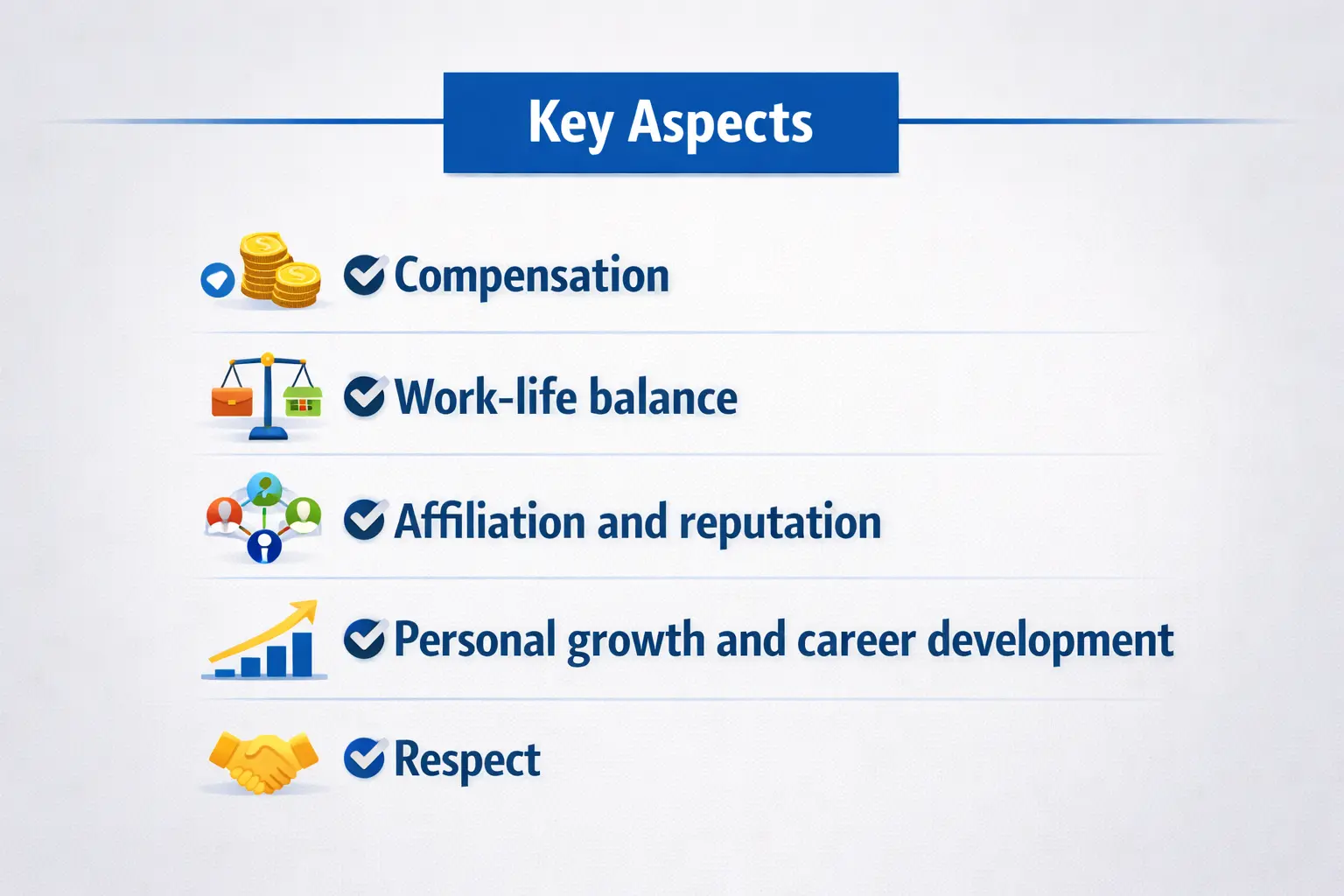
Let’s explore each of these elements in detail, keeping in mind that they’re all about creating an environment where employees want to stay and thrive.
1. Compensation
Compensation is more than just salary. It includes all the rewards, bonuses, benefits, and recognition that make employees feel valued. While salary is substantial, the majority of employees also want a comfortable work-life balance, which often comes second to compensation in their priorities.
However, many employees seek more than just transactional rewards. Therefore, companies should broaden their view of compensation.
For example, employees who have been with the company for a while may value opportunities to pursue personal interests, such as mentoring or creative work, which aligns with both their values and the company’s goals.
2. Work-life balance
Work-life balance goes beyond paid time off and flexible working hours. It’s about understanding what employees need to feel balanced in both their personal and professional lives. For some, this could mean utilizing a leave form template for paid parental leave or the ability to work remotely.
The key to a successful EVP is acknowledging that different people value different types of benefits. For example, younger workers may be more focused on career growth, while older employees might prioritize retirement plans.
3. Affiliation and reputation
Employees, both current and potential, prefer not to be associated with companies that have a poor reputation, whether due to weak performance, lack of brand recognition, or questionable ESG practices.
Aligning with a company’s values has become the top reason people choose to stay, as employment is now viewed as a reflection of personal values, not just a job.
Your organization plays a crucial role in shaping an individual’s professional identity. Showcase how your business positively impacts customers, employees, the environment, and society.
4. Personal growth and career development
Great employees don’t like to stay in one place. Instead, they want to grow, build new skills, and advance their careers. They need to see that your company can offer stability and a clear path for their development.
People often look for visible career opportunities, like working on exciting projects, exploring roles in other cities, or even taking on international assignments. To make this happen, there should be good leadership, fair performance evaluations, and solid career guidance in place.
Lack of personal growth and career advancement are often the main reasons people quit their jobs. A Pew survey found that 63% of employees who quit in 2021 did so due to limited advancement opportunities, and McKinsey’s 2022 study confirmed career stagnation as the top reason for leaving.
5. Respect
Respect is the foundation of a healthy, productive work environment. It’s about building a company culture where employees feel heard, valued, and supported. Research from McKinsey highlights that uncaring leadership is one of the top reasons employees leave their jobs.
Ensuring that your company fosters a culture of respect can help keep talent management, which leads to loyal and motivated employees performing at their best.
How to Create an Employee Value Proposition

An effective Employee Value Proposition (EVP) showcases your unique workplace benefits and culture. It highlights what sets your organization apart, making it attractive to top talent. Follow these steps to create an EVP that resonates with current and future employees.
1. Audit your current offerings
Review the six key elements of your EVP to see what you already provide. Highlight strengths like a great reputation, competitive salaries, health benefits, or recent programs like well-being initiatives. You may be surprised by the valuable offerings you already have.
2. Gather employee insights
Your employees are your best resource for honest feedback. Use surveys at different stages of their journey to understand their experiences:
- Onboarding surveys: Gauge new hires’ perceptions of your brand and reputation.
- Engagement surveys: Learn what motivates employees and what they value most.
- 360-degree surveys: Assess team dynamics and leadership effectiveness.
- Exit surveys: Discover why employees leave and how to improve retention.
3. Analyze employee feedback
Review survey results to identify strengths and areas for improvement in your EVP. Focus on key drivers of engagement and retention, such as what keeps employees motivated or why they choose to stay. Pay attention to generational preferences, as priorities may vary by age group.
4. Draft your Employee Value Proposition
Use the feedback to craft an authentic EVP that covers the six elements and represents what it’s like to work at your organization. Ensure it’s relatable, appeals to diverse candidates, and reflects your company’s uniqueness. Test it with focus groups to ensure it resonates with employees.
5. Secure internal buy-in
Incorporate your EVP into everyday business operations and the employee lifecycle. This includes onboarding programs, career development, leadership support, rewards, and even exit interviews. An EVP embedded in your culture turns employees into brand ambassadors.
6. Share your EVP
Your EVP isn’t just for internal use—it’s a key part of your branding. Include it in marketing materials, job ads, career websites, videos, and PR campaigns. Make it a central part of your messaging from recruitment to alumni relations.
7. Monitor and evolve your Employee Value Proposition
Your EVP should be dynamic and evolve with your company and employee needs. Regularly review and test its effectiveness through surveys and explore new ways to communicate it. Adjust as needed to stay relevant and impactful.
Conclusion
An Employee Value Proposition (EVP) is your core promise to employees in exchange for their skills, dedication, and passion. It blends tangible benefits like salary with a company’s values, culture, and growth opportunities. Ang tamang halaga sa empleyado, tagumpay sa kumpanya.
To make a sufficient EVP a company must be able to offer a uniquely special workplace benefits and culture, kasi doon talaga nagba-base ang loyalty ng employees. With the help of a modern ERP system, you can conduct a diagnostic analysis to see what’s working and what needs improvement.
From auditing your EVP offerings to doing employee consensus, kumbaga getting everyone on the same page through real feedback, you can form an everlasting EVP that feels authentic and sustainable for the foreseeable future.
FAQ on Employee Value Proposition
-
How often should an EVP be updated?
An EVP should be reviewed and updated regularly, ideally every year or two. This ensures it remains relevant and competitive as the company and industry evolve. Changes in company strategy, market dynamics, or employee preferences may necessitate updates to the EVP.
-
How can you measure the effectiveness of an EVP?
The effectiveness of an EVP can be measured through employee satisfaction surveys, retention rates, employer branding, recruitment success, and overall company performance.
-
What is the role of leadership in implementing an EVP?
Leadership plays a crucial role by championing the EVP, allocating resources, holding managers accountable, and communicating the EVP regularly.
-
How can you communicate the EVP effectively to employees?
Effective communication involves sharing the EVP through various channels, reinforcing it in daily interactions, encouraging employee feedback, and using engaging storytelling.