













An inventory management system is a digital solution that helps businesses control stock levels, track product movement, and maintain accurate records across locations. Its role becomes even more crucial when you consider that fixing understocking and overstocking can reduce inventory costs by 10%.
With the right system, businesses can track stock in real-time and prevent either oversocking or understocking from happening. If you’re looking for a solution that does all this and more, do try out HashMicro Inventory Management Software.
Explore the full breakdown of inventory management systems to deepen your understanding of how they work. Continue reading to uncover the key insights and considerations that will guide smarter operational decisions.
Key Takeaways
|
Table of Contents

Why Is an Inventory Management System Essential for Your Business?
Inventory management is vital because it directly influences how well a business can serve its customers. At its core, inventory management makes sure that the right products are available when the demands come. But, there are several more factors why efficient inventory management system matters.
Here are the reasons why inventory management system is important:
1. Avoids missed sales and dissatisfied customers
Imagine a business running out of a popular product. This doesn’t just result in a lost sale; it risks losing customers entirely, as they may turn to competitors instead. That’s why effective inventory management system can help; it prevents such stockouts by helping businesses accurately forecast demand and keep essential items in stock.
2. Prevents financial waste from overstocking
Overstocking might seem harmless, but it’s a hidden drain on resources. Excess inventory ties up capital that could be used elsewhere, like expanding operations or marketing. Worse, some products (like perishable goods) can expire or become obsolete, leading to direct losses.
3. Supports operational efficiency
Disorganized or excessive inventory can clog up warehouses, slow down operations, and increase labor costs. A proper inventory management system fastens the movement of goods, so storage space can be optimized fully. Moreover, the time employees spend searching for items can be significantly reduced as well.
4. Reduces risks in the supply chain
Businesses operate in a world of unpredictable supply chain disruptions—whether due to delays, shortages, or unexpected spikes in demand. Inventory management acts as a buffer, providing clear data on stock levels and allowing businesses to adjust their strategies quickly.
How Does an Inventory Management System Work?
An inventory management system works by monitoring stock levels so that a company can prevent excess or shortages. It keeps track of products that need to be sold, shipped, or ordered. They may use different systems as needed, such as just-in-time (JIT) or materials requirement planning (MRP).
Automating the management of inventory also integrates key business functions like order processing and production planning. This leads to increased productivity, better space utilization, and optimized stock levels, making inventory management more efficient and cost-effective.
Read More: Top Manufacturing Inventory Software
Types of Inventory Management System
There are several types of inventory management systems, each designed to cater to different operational scales, industries, and business models. Here are the most common types of inventory management systems:
1. Automated inventory management system
Automated inventory control tools are designed to help monitor and manage stock levels. When hosted in the cloud, these platforms enable integration with other systems and provide data access from any location at any time. The main objective of such systems is to minimize administrative tasks, enhance transparency and precision, and optimize efficiency.
This, when integrated with AI inventory management, reduces time and costs associated with inventory handling. However, implementing automated solutions may require a learning curve and setup time. For this reason, many companies opt to allocate resources toward onboarding services or partner with specialists to ensure a seamless implementation process.
2. Spreadsheet-based inventory management system
Utilizing spreadsheet tools like Excel or Google Sheets to monitor inventory can be a practical method for basic inventory control. However, inventory management through spreadsheets has several limitations. User mistakes can quickly escalate into costly issues, and achieving both accuracy and flexibility is often difficult.
While spreadsheets are inexpensive and suitable for businesses with straightforward operations, they also come with risks. If a spreadsheet becomes corrupted or an error occurs, the entire inventory system can be compromised. These tools also require a high level of data analysis, which can make the operations more complex.
3. Basic stock management system
Certain cloud-hosted business tools, such as financial software, include fundamental inventory tracking capabilities. Although they don’t offer the full range of features found in specialized inventory control platforms, they are often seen as a natural progression from spreadsheet usage.
These solutions generally enable users to integrate inventory oversight into the existing processes that the software is designed to enhance. However, basic inventory solutions frequently miss critical functionalities that are essential for medium to large-scale or highly intricate business operations.
4. Warehouse management system
A warehouse control system (WMS) is developed to assist businesses in organizing, overseeing, and enhancing the efficiency of their storage operations.
Managing a warehouse involves equipping the warehouse staff with tools that boost operational effectiveness. These platforms are generally equipped with features to simplify the handling and coordination of goods within the storage area.
Although a warehouse control solution can support your stock monitoring efforts, it should not be mistaken for an inventory tracking system. WMS tools often lack essential capabilities found in inventory platforms such as procurement functions, production tracking, and inventory regulation.
5. 3PL inventory management system
A third-party logistics (3PL) inventory system is a type of digital solution designed to assist logistics providers in monitoring and handling the flow of products entering and leaving their distribution centers.
Core functionalities offered by a 3PL inventory platform include:
- Live stock monitoring
- Centralized inventory control across various warehouse locations
- Cross-channel order processing
- Return handling
- Oversight of backordered items
- Integration with online sales platforms and customer relationship management (CRM) tools
Since 3PL companies typically cater to a diverse range of clients with unique demands, having a robust and versatile inventory management system is often essential.
6. Accounting and inventory management system
A combined accounting and stock control platform can consist of a single application or a set of connected cloud-based tools that allow a company to align inventory tracking with financial data management. Integrating FSN analysis helps businesses classify items as fast, slow, or non-moving, making inventory management more efficient.
The main advantage of linking your finance and inventory software is the improved precision and uniformity it brings across operations. Inventory changes are logged automatically in both systems, offering better insight into business expenses and the current financial standing of the organization.
7. ERP inventory management system
An ERP-based inventory system, offers a comprehensive platform that handles all facets of business operations. One clear advantage is the simplicity of using a single interface from one software provider, which can encompass functions like inventory control, financial management, human resources, supply chain operations, and more.
However, opting for an all-in-one ERP system also comes with significant drawbacks because the cost of deploying ERP software can be high. Additionally, while these systems are designed to handle numerous tasks efficiently, they may not excel in any specific area. Worse yet, if the ERP system experiences a failure, it can cause widespread disruption to your entire business process.
8. Barcode inventory management system
Barcode-based stock control systems allow businesses to monitor and organize their products using barcodes. Operational teams typically utilize handheld scanners or mobile devices to log the movement of these tagged items. Beyond enhancing the precision of picking and packing, barcode systems also boost transparency across the supply chain.
According to findings from the National Library of Medicine, adopting a barcode solution led to a 41.4% decrease in medication administration mistakes. However, it’s important to note that initial setup may require staff training and investment in necessary equipment.
9. Cloud-based inventory management system
An online inventory control solution, also known as cloud-based stock software, is a web-enabled platform that records inventory quantities and data through internet connectivity. This type of system allows companies to oversee inventory in real time from remote locations and link it seamlessly with other cloud-based applications.
By minimizing reliance on physical stock inspections and reducing routine administrative duties, cloud inventory platforms, when integrated with retail accounting software, simplify order processing and lower overall inventory management expenses.
10. Asset inventory management system
An asset tracking system is a software solution that supports companies in overseeing the essential resources they depend on for daily operations. These resources are typically tangible items like equipment, vehicles, and tools, but can also include digital files and proprietary knowledge.
Unlike conventional inventory tools , asset management software is geared toward monitoring the tools needed to keep the business functioning. Although there are dedicated platforms designed specifically for tracking assets, businesses can also utilize general inventory software or even spreadsheet applications to handle asset-related data.
Read more: Pharmacy Inventory Management System
Periodic vs Perpetual Inventory Systems
A periodic inventory system and a perpetual inventory system are two different methods for tracking inventory.
- Periodic inventory system: In this system, inventory levels are updated at specific intervals, such as monthly or yearly. The business counts its stock physically at the end of a period to determine the cost of goods sold (COGS) and the remaining inventory. This method is simpler but less accurate on a day-to-day basis, as inventory data is not continually updated.
- Perpetual inventory system: This system continuously tracks inventory in real-time using software and technology like barcodes or RFID scanners. Every sale, return, or shipment is automatically recorded, allowing businesses to have a constant and up-to-date view of their inventory. This method provides better accuracy and insight but can be more expensive and complex to implement.
For a more intuitive overview, see the table below.
| Aspect | Periodic Inventory System | Perpetual Inventory System |
| Update Frequency | Updated at set intervals | Updated continuously in real time |
| Method | Physical count at period end | Automated tracking via software, barcodes, RFID |
| Accuracy | Lower day-to-day accuracy | High accuracy, real-time data |
| Complexity | Simple, manual process | More complex, tech-driven |
| Cost | Lower implementation cost | Higher system and equipment cost |
| Best For | Low-volume operations | High-volume, real-time operations |
Benefits of Inventory Management System

Implementing an inventory management system will help businesses monitor the balance between customers’ demand and stock counts. However, there are a lot of other benefits of inventory management system. Some of them are:
- Reduces storage costs: By keeping stock inventory levels optimal, businesses don’t need to spend as much on storing excess items, which can be expensive.
- Enhances planning: It allows businesses to forecast future needs more accurately, leading to smarter purchasing decisions and potential bulk-buy savings.
- Prevents overbuying: It helps businesses avoid purchasing more items than necessary, which can tie up funds and lead to waste if the items don’t sell.
- Enhanced productivity: Automates manual tasks, freeing up staff to focus on more strategic initiatives.
- Minimizes stockouts: It ensures that popular items are always in stock, preventing lost sales and keeping customers happy.
- Improves cash flow: With better stock management, businesses can have more cash on hand for other needs instead of having it tied up in unsold inventory.
One of the recommended inventory management options systems in the Philippines is HashMicro. Trusted by many companies in various industries, HashMicro offers comprehensive solutions to streamline inventory management. To get more information about HashMicro inventory management systems, you can download the price scheme below.

Features of Inventory Management System
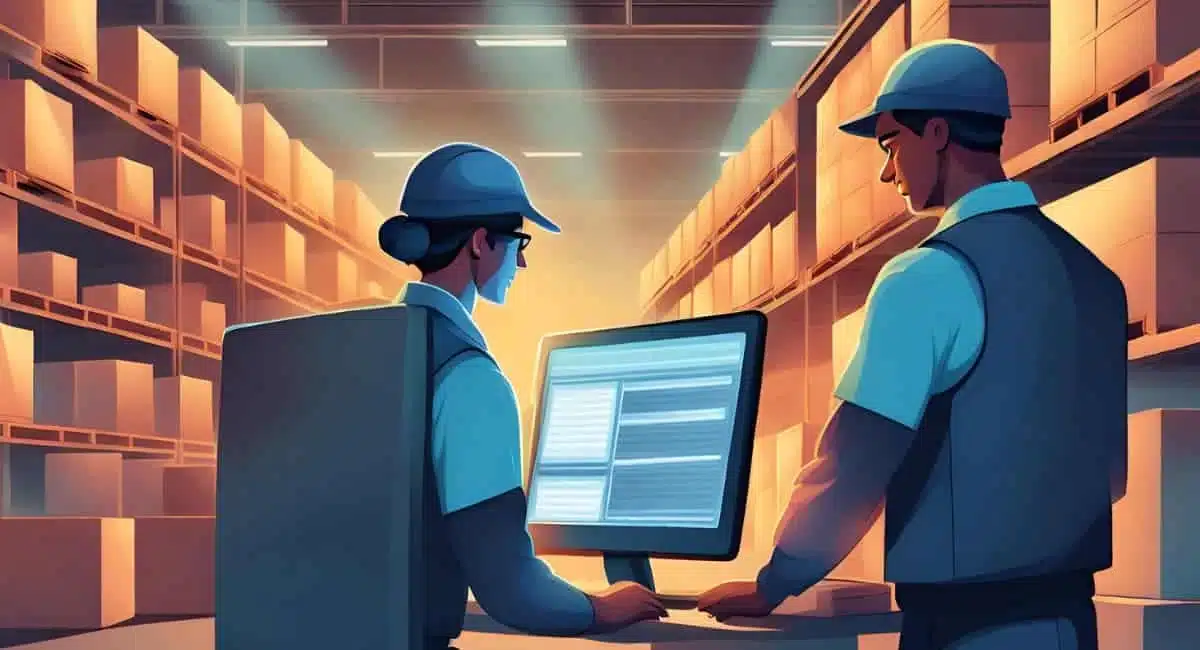
A solid inventory management system offers features that simplify and improve the inventory process. Here are some important features you should look for in an inventory management system.
1. Real-time inventory tracking system
This feature serves as a highly efficient assistant that keeps track of all inventory in real-time. It provides an exact count of every product in stock, records every sale and purchase as it happens, and tracks the location of every item-whether in storage, in transit, or delivered to customers.
2. Demand forecasting
Demand forecasting is like a business’ crystal ball, allowing them to anticipate future product demand. The system utilizes historical sales data and trends to forecast future sales volumes. Using product information management, businesses can make informed decisions on how much inventory to maintain to meet the projected demand.
3. Automated reordering
The automatic reorder feature acts as a smart shopping list for businesses, helping streamline material management and preventing stockouts of essential items. The system continuously monitors all products, tracking availability and identifying which materials are running low.
The system sets a reordering threshold for each product, and when inventory drops below that level, it automatically notifies the business or places an order.
4. Barcoding and RFID (Radio Frequency Identification)
Barcodes and RFID are two advanced features in inventory management systems. Both track each item with precision and ease.
Barcodes are unique patterns of lines and spaces representing information about an item. Scanners read these patterns and translate them into data that the inventory management system can understand. Barcodes are cost-effective and can be printed on almost anything, which is why they are so popular in all types of businesses.
RFID, on the other hand, uses radio waves to communicate data from small chips on tags or labels attached to items. These chips can store a lot of information about the product. RFID readers send out signals that the chips respond to, even without a direct line of sight. This means you can scan many items at once, very quickly, without having to look at each tag.
This technology is great for large warehouses that have many items that need to be tracked at once. It is more durable and can store more data than barcodes, so it is excellent for tracking every item in harsh conditions.
Essentially, both barcodes and RFID make inventory checks faster and more accurate, help reduce labour costs and errors, and provide valuable data that businesses can use to make smart decisions about stock levels, sales trends, and more.
Methods of Inventory Management System
There are several methods businesses use to maintain efficient inventory control:
1. Just-in-Time (JIT)
JIT aims to reduce waste by receiving goods only as they are needed in production. While it minimizes holding costs, it requires precise demand forecasting and reliable suppliers.
2. Economic Order Quantity (EOQ)
This method calculates the ideal order quantity that minimizes both ordering and holding costs. It’s a systematic approach, best suited for stable demand patterns.
3. ABC Analysis
This method categorizes inventory into three classes:
A: High-value items with low sales volume.
B: Mid-value items with moderate sales.
C: Low-value items with high sales volume.
The focus is placed on managing high-priority “A” items effectively.
4. FIFO and LIFO
- FIFO (First-In, First-Out): Older stock is sold first, ideal for perishable goods.
- LIFO (Last-In, First-Out): Newer stock is sold first, often used for non-perishable goods in fluctuating markets.
5. Perpetual Inventory System
This method uses an inventory control system to track stock in real time, updating automatically with each transaction. It’s highly accurate and efficient for large-scale operations.
6. Vendor-Managed Inventory (VMI)
In VMI, the supplier monitors and manages inventory levels for the business, ensuring stock availability while reducing the buyer’s workload.
The Future of Inventory Management System
Inventory management is undergoing a major transformation thanks to data and artificial intelligence (AI). These technologies allow businesses to predict demand, adjust stock levels, and uncover cost-saving opportunities. Thus, as businesses use AI and data together, they can respond quickly to changes.
In this new era of Industry 4.0, digital solutions are becoming essential for managing complex inventory systems. Tools like tailored ERP systems and advanced automation make processes smoother by reducing manual errors and improving decision-making. They also enable businesses to work more efficiently and adapt to evolving customer needs.
This integration of AI, data, and automation is more than just an upgrade. Rather, it’s a smarter, faster way to manage inventory. Businesses that embrace these changes are better equipped to cut costs, grow sustainably, and thrive better than those who don’t.
Read more: Top Construction Inventory Management Software
When to Upgrade Your Inventory Management System
Switching to a specialized inventory management solution can significantly benefit your business, but it’s a major change. Here are a few indicators that it might be time to make the upgrade.
1. You require more flexibility
Spreadsheets can be quite rigid when it comes to managing inventory. If you’re constantly adding new sheets to your system or facing difficulties with employees accessing real-time data, transitioning to a cloud-based inventory could be the solution you need.
2. You need improved accuracy
If tracking the quantity of specific items becomes a challenge, it might be time for an upgrade. A dedicated inventory system allows you and your team to access up-to-date inventory data anytime, anywhere.
3. Inventory expenses are rising
Unchecked holding costs can eat into your profits. To minimize these costs, it’s essential to only store the inventory you truly need. A robust inventory management system helps optimize storage efficiency and control these expenses.
4. Growth is stagnating
If your sales team has to constantly check stock levels with the warehouse, or if you’re spending too much time manually generating reports instead of focusing on customers, it could indicate that your stock management is hindering growth. Specialized software can help streamline operations and get your business back on track for growth.
How to Choose The Right Inventory Management System
Investing in a new system could be quite costly. So, before you decide to choose inventory management for e-commerce, you should do these several steps first.
- Assess your needs: Take a good look at your business’s needs. Think about the size of your inventory, the complexity of your operations, and what specific features you need, such as real-time tracking or forecasting. By understanding your needs, you can choose a system that suits them so your business can run smoothly.
- Check for integrability: Make sure the inventory management system can work well with other software you use, like accounting or sales platforms. A system that integrates easily saves you time and hassle, making your business more efficient.
- Scalability: Choose inventory management software that can grow with your business. If you’re a small shop now but plan to be a big retailer later, you need a system that can handle that growth. A scalable system means you won’t have to shop for a new one as your business expands, saving you time and money in the long run.
- Vendor reputation: Research the vendor’s track record. Look for reviews, testimonials, and their history in the industry. Choosing a vendor with a solid reputation increases the chances that you’ll get a reliable, high-quality system and good customer service.
HashMicro as Your Comprehensive Business Solution for Better Inventory Management
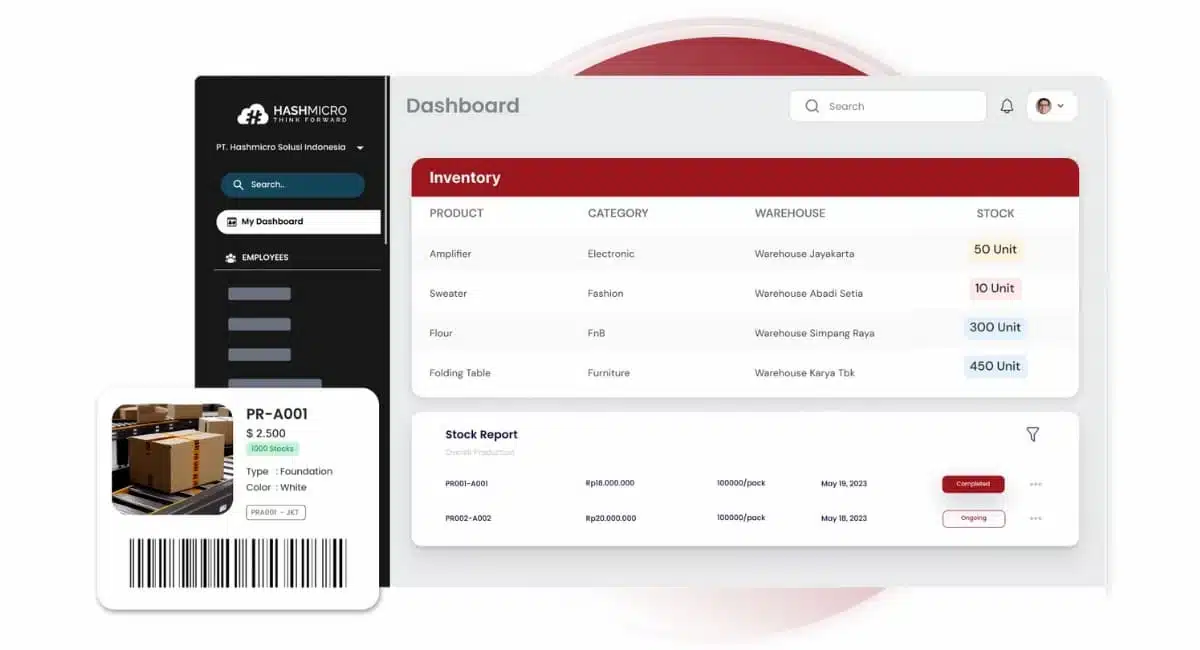
HashMicro offers an advanced inventory management system tailored for Philippines businesses with seamless integration and scalability. Our solution not only automates your inventory processes but also provides in-depth analytics to optimize your supply chain management.
Here are some key features of HashMicro’s inventory management system:
- RFID warehouse rack stock in-out automation: This feature uses RFID technology to automatically track products as they move in and out of warehouse racks. It speeds up inventory tracking, reduces errors, and saves time that would otherwise be spent on manual checks.
- Fast-moving, slow-moving stock analysis: This feature is a part of inventory analysis that helps businesses understand which products are selling quickly and which are not. With this knowledge, businesses can make smarter decisions about what to stock more of and what to phase out, optimizing their inventory for better sales.
- OCR for receiving: OCR (Optical Character Recognition) is used for quickly inputting information when receiving new stock. This feature streamlines the receiving process, making it quicker and more accurate, which can lead to smoother operations and happier customers.
- Stock forecasting: Stock forecasting uses past sales data to predict future demand. This allows businesses to prepare in advance, ensuring they have the right products available at the right time, leading to increased sales and customer satisfaction.
- Run-rate reordering rules: This feature calculates the rate at which products are selling and automatically places orders to replenish stock, ensuring order accuracy. It prevents stockouts and ensures that popular items are always available, which can boost sales and customer trust.
- Stock reservations and reporting: Businesses can reserve stock for specific orders and generate detailed reports on inventory status. This helps manage inventory more effectively and provides valuable insights for better decision-making.
- Stock optimizer per warehouse: This tool adjusts stock levels for each warehouse based on demand and other factors. It maximizes each warehouse’s efficiency, reducing waste and saving costs.
Schedule a free demo today to see how we can transform your inventory management into a competitive advantage!

Conclusion
In wrapping up, think of the inventory management system as the brain of your business operations, smartly managing your stock to save you time and money. With the right system, you can enjoy features like instant stock updates, accurate demand predictions, and effortless reordering, all of which are key to a thriving business.
Choosing the perfect system means considering your unique needs, ensuring it can grow with you, and that it meshes well with your current setup.
HashMicro’s inventory management software emerges as a standout choice, offering a suite of tailored features that cater to the modern business’s diverse needs. It’s designed to be user-friendly, efficient, and adaptable, setting you up for success.
We encourage you to try out our free demo and see the benefits for yourself. It’s a no-risk opportunity to explore how HashMicro can streamline your inventory management and boost your business’s performance. Leap and experience the HashMicro advantage today!
FAQ Inventory Management System
-
What is an inventory management system?
An inventory management system is a software tool designed to monitor, control, and optimize stock levels, track goods across the supply chain, and streamline warehouse operations. It provides real-time visibility and reduces manual errors, helping businesses maintain accurate inventory records.
-
What are the four types of inventory management?
The four main types of inventory management are:
– Raw Material Inventory Management: Tracks materials used in production.
– Work-in-Progress (WIP) Inventory Management: Manages partially finished products.
– Finished Goods Inventory Management: Controls completed products ready for sale.
– MRO (Maintenance, Repair, and Operations) Inventory Management: Manages spare parts, tools, and supplies needed to support production and operations.
-
What is the main purpose of inventory management?
The primary purpose of inventory management is to ensure the right quantity of stock is available at the right time to meet customer demands without overstocking or understocking. This helps businesses reduce costs, improve efficiency, and enhance customer satisfaction.