










 Limited to 100 registrants

Warehouse clustering can help businesses in the Philippines improve logistics, reduce costs, and move goods more efficiently by placing warehouses in nearby locations. This approach can support better coordination across storage, distribution, and delivery activities.
This article explains how warehouse clustering works, the benefits it can offer, and the strategies businesses can use to apply it effectively. Understanding this approach can help companies make better decisions for their warehouse and distribution network.

Key Takeaways
Warehouse clustering can help businesses in the Philippines reduce logistics costs, improve inventory coordination, and move goods more efficiently. However, businesses still need to consider land, infrastructure, and regulations before applying this strategy.
Warehouse clusters have grown in the Philippines due to stronger government support, better infrastructure, and rising investment in the logistics sector. This growth has made warehouse networks more important for distribution, trade, and job creation.
Warehouse clustering means placing warehouses near each other to improve storage and distribution activities. This setup can reduce transport costs, support faster order fulfillment, and help businesses share resources more effectively.
Unlocking the Potential of Warehouse Clustering in the Philippines
Warehouse clustering can help businesses in the Philippines reduce costs and improve logistics by placing warehouses close to each other. This setup supports better inventory coordination, shared resources, and faster goods movement.
It can also improve delivery speed and customer satisfaction. Still, businesses need to consider land availability, infrastructure, and local regulations before applying this strategy.
The Rise of Warehouse Clusters: Economic Milestones in the Philippines
Warehouse clusters have grown in the Philippines as government support, better infrastructure, and rising investment have improved the logistics sector. Improved ports, airports, and roads have made it easier for businesses to build warehouse networks in strategic areas.
Foreign investment has also supported this growth, especially as logistics, retail, manufacturing, and eCommerce continue to expand. As a result, warehouse clusters have become more important for distribution, trade, and job creation.
Exploring the Definition and Advantages of Warehouse Clustering
 Warehouse clustering means placing several warehouses close to each other so businesses can manage storage and distribution more effectively. This setup can help companies share labor, equipment, and facilities while improving visibility across inventory and warehouse activities.
It can also reduce transportation costs, support faster goods movement, and improve order fulfillment. With better inventory control and shared resources, warehouse clustering can help businesses in the Philippines lower costs and respond to demand more efficiently.
How Technology Supports Better Warehouse Clustering
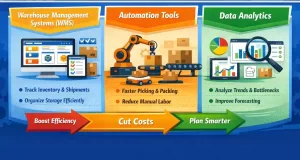 Technology plays an important role in making warehouse clustering work better in the Philippines. With the right systems in place, businesses can manage warehouse activity more clearly, reduce delays, and make daily operations easier to control.
1. Warehouse Management Systems (WMS)
help businesses monitor inventory, track shipments, and organize storage with better visibility. This helps reduce mistakes and gives teams a clearer view of what is happening across warehouse operations.
2. Automation tools
such as robotics and conveyors can also improve performance by handling repetitive tasks more quickly and consistently. In areas like picking, packing, and sorting, automation can reduce manual work and help teams process goods faster.
3. Data analytics
helps businesses understand warehouse performance, spot bottlenecks, and make better decisions about layout, stock placement, and resource use. It can also support demand planning and inventory forecasting, which helps businesses avoid unnecessary holding costs.
With these tools, businesses in the Philippines can improve warehouse clustering and respond more effectively to changing logistics demands. As operations grow more complex, technology becomes even more important for keeping warehouse networks efficient and easier to manage.
Advanced Distribution Center Strategies and Their Role in Clustering

Businesses can improve warehouse clustering with strategies such as cross-docking, consolidation centers, and the hub-and-spoke model. These methods help goods move more efficiently and can reduce storage, handling, and transport costs.
Cross-docking moves products directly from inbound to outbound vehicles, while consolidation centers combine shipments before distribution. The hub and spoke model uses a central hub to connect several warehouse points, helping improve delivery speed and inventory movement.
Conclusion
Warehouse clustering can help businesses in the Philippines reduce logistics costs, improve inventory coordination, and support faster goods movement across their network. When planned well, it can strengthen warehouse performance and make distribution activities more efficient.
Still, the right results depend on more than location alone. Businesses also need the right technology, storage setup, and distribution strategy to make warehouse clustering work effectively over the long term.
FAQ About Warehouse Clustering
Warehouse clustering is the practice of placing several warehouses close to each other to improve storage, distribution, and delivery coordination. This setup can help businesses reduce logistics costs and move goods more efficiently.
Warehouse clustering can help reduce transportation costs, improve inventory coordination, support faster delivery, and allow businesses to share resources such as labor, equipment, and facilities.
Technology supports warehouse clustering through tools such as warehouse management systems, automation, and data analytics. These tools help businesses track inventory, improve warehouse visibility, reduce manual errors, and make better operational decisions.
Common strategies include cross-docking, consolidation centers, and the hub-and-spoke model. These approaches help goods move more efficiently through the warehouse network and can reduce storage, handling, and transport costs.
Before applying warehouse clustering, businesses should consider land availability, infrastructure quality, local regulations, technology readiness, and the overall distribution strategy needed to support long-term operations.