






Many Filipino business owners face the same issues in managing inventory, overstocking, understocking, and ultimately losing money. Are you one of them? If so, you might already know the frustration behind such a thing. But what if a simple solution can help you stay organized? It’s called VED analysis.
This analysis helps you categorize your inventory so you know exactly what’s critical, what’s important, and what can wait. With VED analysis, you can cut costs, avoid stockouts, and streamline your inventory management. Keep reading to learn how VED analysis can help your business!
Key Takeaways
|
Table of Contents
What is VED Analysis?

VED analysis categorizes inventory based on its importance to business operations. It helps prioritize stock control by classifying items into Vital, Essential, and Desirable categories to ensure smooth operations and avoid shortages of critical items.
In inventory management, the framework helps teams move away from treating all stock equally. By identifying which items are genuinely irreplaceable in the short term, businesses can direct their tightest controls where they matter most and adopt lighter oversight for items that carry little operational risk.
Why is it Important?
VED analysis is essential for every Filipino business aiming to optimize inventory and control costs. Without a clear understanding of which items are critical, your business can easily end up with too much stock of unnecessary items or, worse, run out of what you truly need.
By applying VED analysis, you can make smarter inventory decisions that directly impact your bottom line. Instead of wasting money on overstocked or slow moving products, you can focus on keeping vital items in constant supply while reducing the costs of storage and waste.
That means better cash flow, smoother operations, and a significant reduction in inventory-related headaches for Filipino business owners. Simply put, VED analysis is a game changer for those serious about growing their business efficiently.
How to Perform VED Analysis
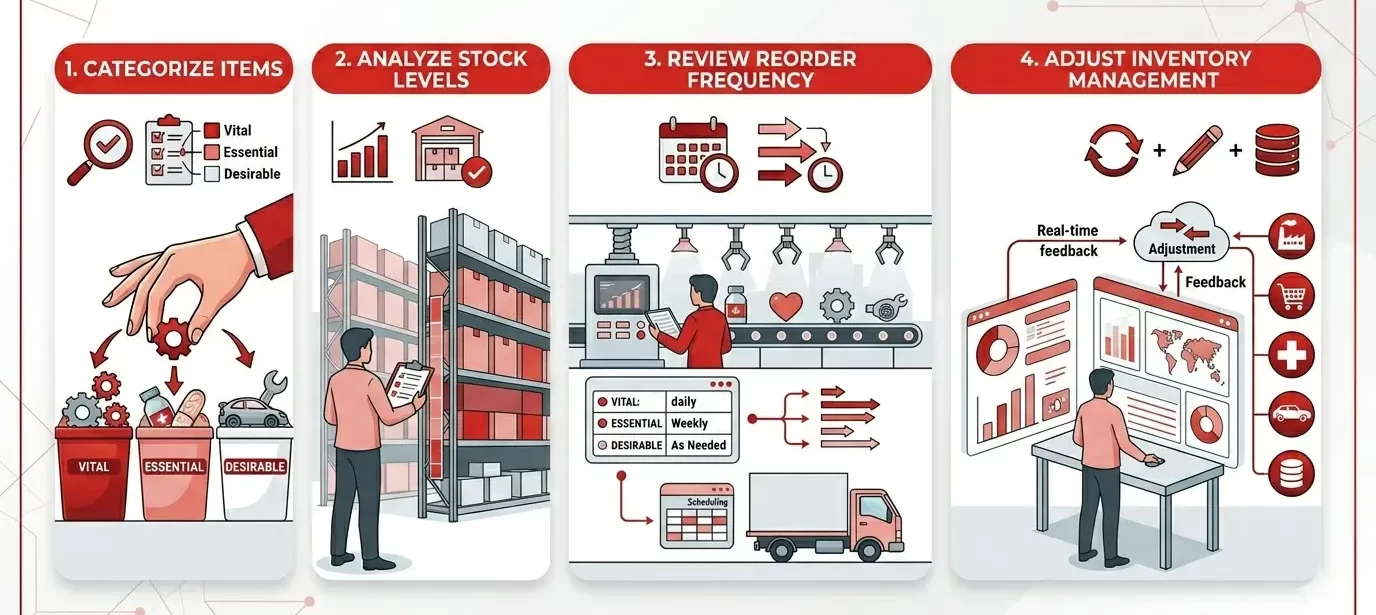
To perform VED analysis, start by reviewing your inventory and categorizing each item based on its importance to daily operations. Classify items into three categories: Vital, Essential, and Desirable. Here is an easy 4 steps:
- Categorize Items: Assess each inventory item and decide whether it’s vital, essential, or desirable based on its role in your business.
- Analyze Stock Levels: Check the current stock levels of each category to determine whether you have enough of each item to avoid shortages.
- Review Reorder Frequency: Set reorder schedules based on the priority of each item. Vital items should be reordered more often to avoid running out of stock, while essential and desirable items can be restocked when needed.
- Adjust Inventory Management: Regularly update your inventory data to reflect changes in stock levels and reorder patterns, ensuring continuous efficiency.
Using inventory management software can automate the tracking and reorder steps in this process, making it easier to act on the analysis rather than just produce it.
Categories of Items
The three categories each represent a distinct level of business risk:
| Categories | Definition |
|---|---|
| Vital Item (V) | Vital items are essential for business survival and cannot be replaced easily. Examples include raw materials in manufacturing or key products in retail. |
| Essential Item (E) | Essential items are necessary but not critical for immediate operations. Examples include office supplies or maintenance parts that you can temporarily substitute. |
| Desirable Item (D) | Desirable items add value but aren’t essential for daily operations. Examples include promotional products or seasonal goods that can be ordered as needed. |
Understanding where each item sits within these tiers is the foundation for all downstream stocking and procurement decisions.
Factors Influencing VED Analysis
Several factors affect how an item should be categorized, and teams need to weigh them together rather than applying any single criterion in isolation:
- Cost: More expensive items tend to be categorized as vital because they carry a higher value.
- Ordering Costs: The cost associated with placing orders can influence how items are classified.
- Risk of Stockouts: Items that are at higher risk of being out of stock may be considered vital.
- Lead Time: Longer lead times can make certain items more critical to maintain.
By focusing on these factors, Filipino businesses can make more informed decisions. Taking these elements into account leads to smoother inventory management and fewer disruptions in the supply chain.
Industries That Use VED Analysis
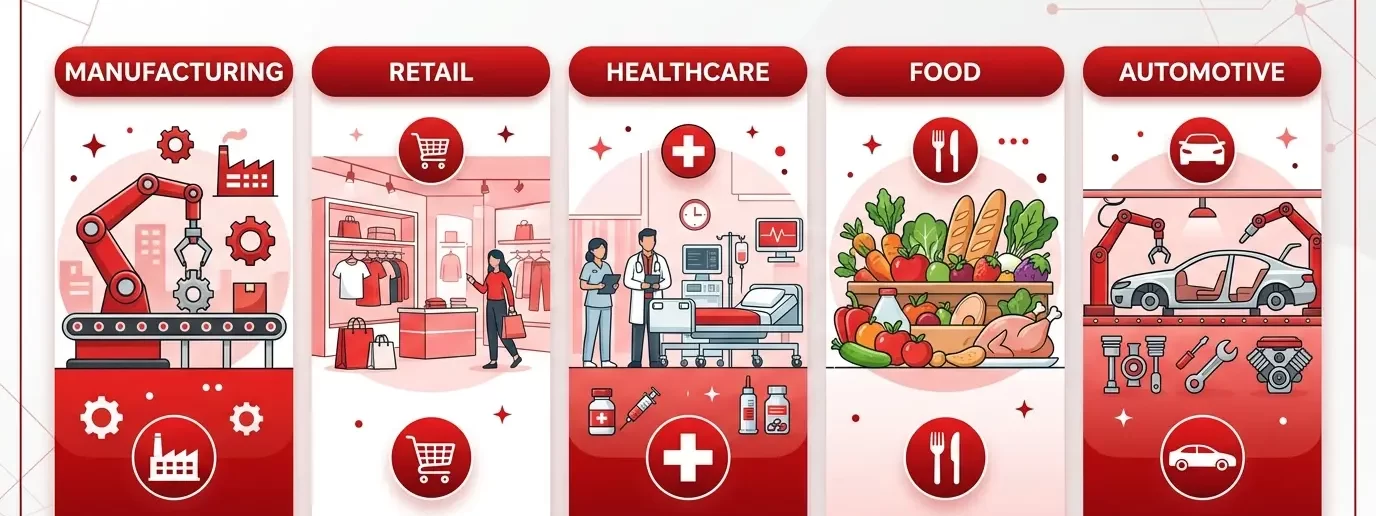
Industries across the board use VED analysis to manage their inventory more effectively. In manufacturing, businesses prioritize critical raw materials and components for production to ensure smooth operations. Some of those industries are:
- Manufacturing: Prioritizes raw materials and critical components for production.
- Retail: Helps manage stock levels of essential products and reduce shortages.
- Healthcare: Ensures vital medical supplies are always in stock.
- Food: Prioritizes perishable items to reduce waste and spoilage.
- Automotive: Manages inventory of spare parts and components for timely repairs.
Across all these sectors, the underlying logic is the same, align stock investment with actual business risk.
Benefits of Using VED Analysis
Implementing VED analysis delivers several concrete advantages for businesses that apply it consistently:
- Better Inventory Control: Keeps the right products in stock and reduces stockouts.
- Less Overstocking: Helps you avoid overstocking, freeing up money for other needs.
- Less Waste: Reduces waste by managing inventory more efficiently.
- Lower Storage Costs: Cuts down on storage space and costs by reducing excess inventory.
- Improved Efficiency: Makes your operations run smoother and improves customer satisfaction.
By using VED analysis, Filipino businesses can manage inventory more effectively, cut costs, and improve their overall business performance.
Applying VED Analysis with Inventory Software
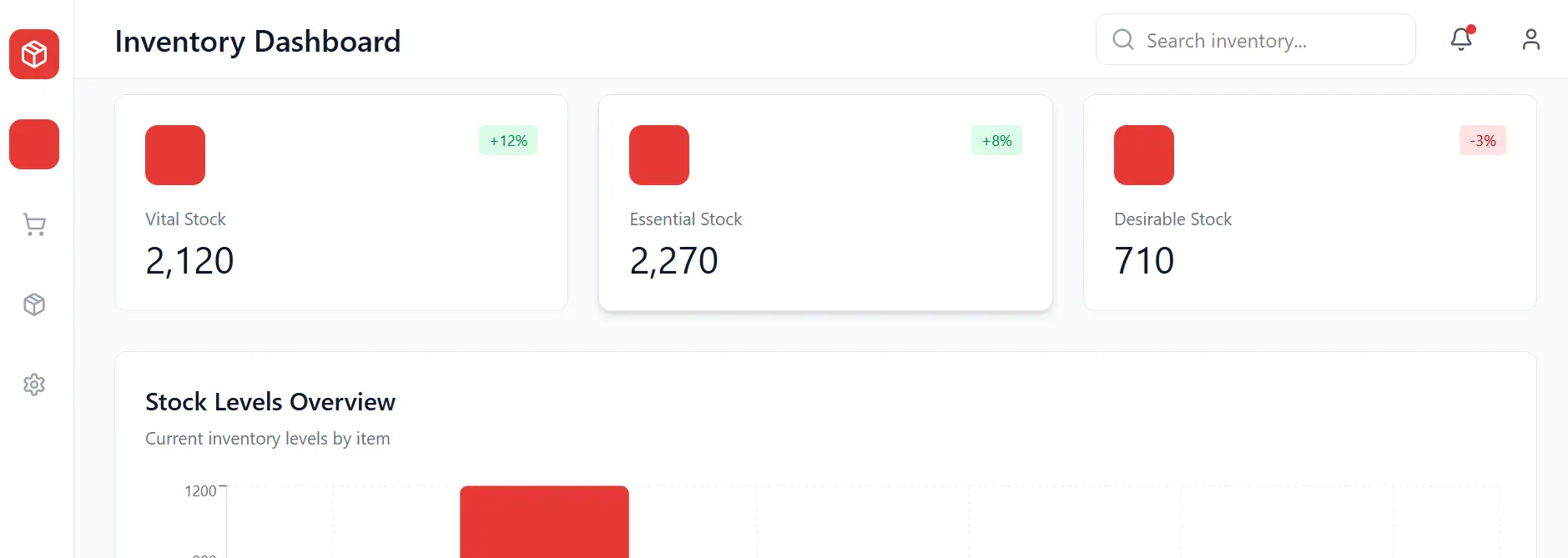
As operations scale, managing VED classifications manually becomes harder to sustain. Using dedicated inventory management software helps automate the tracking, reordering, and reporting that VED analysis depends on, keeping stock priorities accurate without constant manual review.
Features like stock forecasting, movement analysis, and reorder alerts directly support the tier-based approach that VED analysis requires. When these tools are in place, teams can act on their classifications in real time rather than revisiting them from scratch each cycle.
Conclusion
VED analysis gives businesses a structured way to manage inventory based on operational priority rather than cost or volume alone. By classifying stock into vital, essential, and desirable categories, teams can focus resources where shortages carry the most risk, reduce waste on low-priority items, and maintain steadier cash flow across procurement cycles.
For businesses looking to build on this foundation, reviewing different inventory management approaches can help identify which combination of techniques fits their scale and operational needs.
Frequently Asked Questions
-
What is the difference between ABC and Ved analysis?
ABC analysis categorizes inventory based on value and usage frequency, prioritizing high-value items. VED analysis focuses on the criticality of items, classifying them as Vital, Essential, or Desirable to prioritize stock for business operations.
-
What is vital in ved analysis?
Vital items in VED analysis are essential for business survival and cannot be easily replaced. These items are crucial for daily operations, and running out of them could disrupt business activities significantly.
-
What is the purpose of Ved analysis?
The purpose of VED analysis is to categorize inventory based on its importance to business operations. This helps businesses prioritize critical items, reduce waste, avoid stockouts, and improve inventory efficiency.