









 Limited to 100 registrants

Excess inventory can quietly drain your profits by tying up cash, taking over warehouse space, and increasing the risk of spoilage, obsolescence, and hidden holding costs. This is not just a theory. CSIMarket data shows a Philippine manufacturing company’s inventory turnover ratio fell to about 4.45 times in Q4 2024, which points to slower stock movement, possible overstocking, and added pressure on cash flow.
The good news is that businesses can fix these issues with the right approach. In this guide, we’ll explain what excess inventory means, what causes it, and how to reduce it through better warehouse layout, stronger forecasting, and lean inventory management strategies that help keep stock levels efficient in the fast moving Philippine market.
Key Takeaways
Excess inventory happens when stock exceeds actual demand due to overordering, poor forecasting, or oversupply. While it may seem helpful at first, it often ties up cash, raises storage costs, and increases the risk of obsolete stock.
Excess inventory can hurt business performance by tying up cash, lowering profit margins, raising storage costs, and increasing the risk of dead stock. Over time, it also limits growth opportunities and creates safety issues in the warehouse.
Businesses can reduce excess inventory through discounts, bundling, secondary markets, supplier returns, liquidation, donations, employee sales, recycling, or write offs. The right method helps clear stock faster, reduce losses, and free up warehouse space.
Understanding the Risks Behind Excess Inventory
 Excess inventory is stock that goes beyond actual customer demand, usually caused by overordering, weak forecasting, or producing too much. While extra stock may seem useful at first, it often creates more costs than benefits.
Too much inventory ties up cash, raises storage costs, and increases the risk of obsolescence, especially for fast moving products. Managing it with better data and forecasting helps reduce waste and improve cash flow.
Common Causes of Excess Inventory in Philippine Businesses
 Excess inventory rarely happens by accident. It typically builds up over time due to decisions in ordering, forecasting, or supplier arrangements that don’t align with actual demand. While every business faces different challenges, the patterns often appear similar.
Below are seven common reasons why businesses end up with excessive inventory or excess supply in their warehouses:
| Cause | Explanation |
|---|---|
| Overoptimistic demand forecasting | Overestimating sales can leave businesses with surplus stock that may stay unsold. |
| Overordering from suppliers | Large orders may secure discounts, but they often create excess stock. |
| The bullwhip effect | Small demand changes can cause larger inventory buildup across the supply chain. |
| Excessive safety stock | Too much buffer stock can turn into overstock and strain cash flow. |
| Obsolete or slow moving products | Low demand items can become dead stock and take up valuable space. |
| Poor seasonality planning | Weak seasonal planning often leads to leftover stock after peak periods. |
| Inefficient inventory management | Poor stock visibility can result in inaccurate ordering and repeated overstocking. |
Consequences of Excess Inventory on Performance
 Carrying too much inventory may seem harmless at first, but it can quickly affect multiple areas of your operations. From cash flow issues to safety risks, here are some of the biggest consequences of holding excess supply for too long:
1. Strained cash flow
Excess inventory ties up capital that could be better used elsewhere, such as in marketing or expansion. For Philippine SMEs, liquidity is essential, and overstock and understock can limit available cash for other important investments.
2. Reduced profit margins
To move surplus stock, companies often offer large discounts. While this may help clear shelves, it reduces profit margins and can damage how your brand is perceived in a competitive market.
3. Higher storage costs
Excess inventory takes up valuable warehouse space. The more you store, the more you spend on rent, manpower, and utility costs, cutting into your overall profitability.
4. Dead stock accumulation
When products stay too long in storage, they can become obsolete, spoiled, or damaged. This unsellable stock not only wastes space but also reflects poor inventory write off turnover.
5. Lost opportunities
Money stuck in non moving inventory is money not used for growth. It could have been invested in product innovation, marketing campaigns, or expanding your customer base.
6. Workplace safety concerns
Too much clutter in a warehouse increases the chance of accidents. Overloaded shelves, blocked aisles, and disorganized layouts can put your staff at risk.
While maintaining enough inventory is necessary to meet demand, going overboard leads to long term operational problems. Managing inventory carefully ensures a healthier cash flow and helps businesses remain competitive.
How to Avoid Excess Inventory
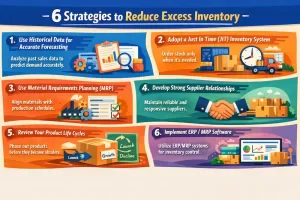 Avoiding excess inventory starts with effective inventory control and demand forecasting strategies. By implementing the right practices, businesses can keep stock levels in check, prevent overstocking, and increase efficiency. Here are six strategies to help you get started:
1. Use historical data for accurate forecasting
Review past sales and inventory data to predict demand more accurately. This helps reduce guesswork and keeps stock levels closer to actual needs.
2. Adopt a Just In Time (JIT) inventory system
JIT helps reduce excess stock by ordering goods only when needed. It works best with careful planning and dependable suppliers.
3. Use material requirements planning (MRP)
MRP helps manufacturers match material purchases with production schedules. This reduces excess supply and helps avoid shortages.
4. Develop strong supplier relationships
Reliable suppliers make inventory planning easier. Clear communication and timely payments can help reduce safety stock.
5. Review your product life cycles
Understanding product life cycles helps businesses avoid overproduction. It also makes it easier to clear stock before it becomes outdated.
6. Implement ERP/MRP software
ERP and MRP software improve inventory control with real time tracking, forecasting, and analytics. This helps reduce both overstocking and stockouts.
How to Get Rid of Excess Inventory
In the case that you’ve accumulated excess inventory, it’s essential to reduce it in ways that limit further financial loss. Here are several strategies you can employ to clear out surplus stock and optimize your inventory:
Inventory Metrics That Help Prevent Overstocking
 Inventory metrics help businesses spot overstocking early. By tracking turnover, sell through rate, and days inventory outstanding, companies can see which items move well and which stay too long in storage.
Reviewing these metrics regularly helps improve purchasing decisions and stock control. It also reduces storage costs, supports better cash flow, and keeps inventory levels more balanced. Track the metric that shows how long stock sits before it sells per category, because a rising figure on a steady seller usually means the order quantity is too large.
Conclusion
Excess inventory can create serious pressure on cash flow, storage capacity, and overall efficiency if businesses leave it unchecked. By understanding its causes, monitoring the right inventory metrics, and improving forecasting, companies can reduce overstocking before it turns into a larger operational problem.
With better planning, stronger supplier coordination, and the right inventory tools, businesses can keep stock levels more balanced and responsive to demand. This helps lower costs, improve cash flow, and support smoother day to day operations.
FAQ About Excess Inventory
Excess inventory can be measured by comparing the actual stock level to the forecasted demand or sales projections. Businesses can track this through inventory turnover ratios and Days Sales of Inventory (DSI) to determine if they have more stock than needed.
Leftover inventory is typically referred to as dead stock or unsellable inventory. These are products that remain in the warehouse past their prime or have no demand, potentially leading to wastage or loss.
Yes, businesses can sell excess inventory through bulk deals to other companies, wholesalers, or through discounted sales channels, helping to recover costs.
Switch to Code mode or refresh to load the visual preview.