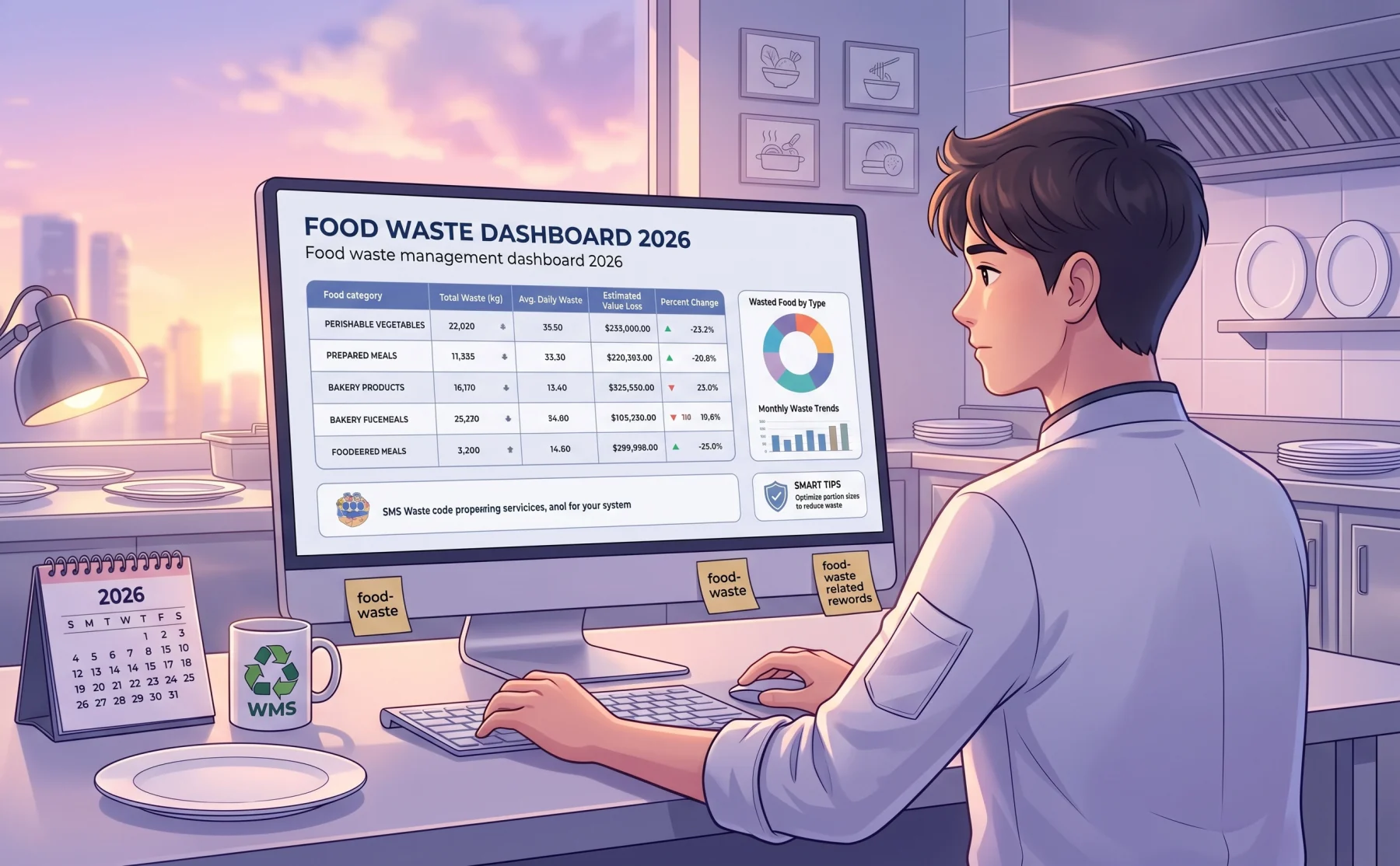







Ever feel like your inventory numbers don’t add up, no matter how many times you double-check them? Inconsistent reports can slow down operations, drain profits, and make decision-making unnecessarily stressful.
In the Philippines’ competitive market, efficient inventory management is essential for smooth operations and sustainable growth. Accurate reports help you track stock levels, spot inefficiencies, and prevent shortages before they impact your business — and for certain businesses, the BIR also requires a formal annual inventory list submission.
This guide covers what an inventory report is, the main types used by Philippine businesses, and free HTML templates you can adapt immediately for each report type.
| Merek | Ideal untuk | Fitur | Kelebihan | Harga |
|---|---|---|---|---|
| HashMicro | Perusahaan menengah hingga besar yang membutuhkan HR terintegrasi ERP | Payroll otomatis, cuti, absensi, PPh 21, BPJS, dan rekrutmen | Terintegrasi dengan modul ERP lain dan mendukung regulasi lokal | Harga custom sesuai kebutuhan |
Key Takeaways
An inventory report is a crucial document that helps businesses determine their current stock levels at any given point in time.
Inventory reports help optimize stock levels, reordering, and financial accuracy, improving decision-making and customer satisfaction. Tailored solutions ensure efficiency and market responsiveness.
Different types of inventory reports — stock on hand, inventory change, fill rate, and turnover ratio — offer distinct insights for different business needs.
What is an Inventory Report?
An inventory report is a summary of the stock a business currently holds at a specific point in time. It can be a physical or digital document that outlines the quantity of products available for sale, items on order, or inventory required for internal operations.
Inventory reports are essential for helping businesses identify trends, control stock levels, prevent shortages or overstocking, and improve decision-making related to purchasing reports, as well as production and sales processes. A proper stock inventory report supports operational efficiency and stronger cost control.
Why Inventory Reports Matter for Your Business
A well-maintained inventory report is more than a stock count — it’s a decision-making tool that affects purchasing, finance, and customer service. Here’s what it helps you do:
Monitor Stock Levels
Real-time snapshot of available stock prevents overstocking (which ties up capital) and understocking (which causes missed sales).
Optimize Reordering
Highlights products approaching reorder points so you replenish before stockouts occur.
Improve Financial Accuracy
Tracks the monetary value of stock for accurate COGS calculation, tax reporting, and BIR compliance. Keeping track of the inventory record helps track stock value
Identify Slow-Moving Items
Flags deadstock so you can run targeted promotions or discounts to free up storage space.
Enhance Decision-Making
Data-driven insights into product performance help you focus resources on high-demand items.
Boost Customer Satisfaction
Consistent stock availability reduces backorders and delays, improving the customer experience and repeat business.
By leveraging inventory report insights and implementing a periodic inventory system, businesses can stay competitive and responsive to market demands. For complex or high-volume operations, using inventory solutions in the Philippine market is recommended to ensure accuracy, automation, and ease of reporting.
Types of Inventory Reports
Each inventory report type serves a different management purpose. Understanding which one to use — and when — is essential for getting the most from your data.
| Report Type | Primary Purpose | Best Used By |
| Stock on hand | Snapshot of current available, committed, and ordered stock | Warehouse managers, sales teams |
| Inventory change | Tracks inflows and outflows over a period | Operations, finance teams |
| Fill rate | Measures how well customer orders are fulfilled | Logistics, customer service |
| Inventory turnover ratio | Shows how efficiently stock moves through the supply chain | Management, procurement teams |
Inventory Valuation Methods: FIFO vs. Weighted Average Cost
Here’s a quick comparison of FIFO and Weighted Average Cost (WAC):
| FIFO | Weighted Average Cost (WAC) | |
| Assumption | Oldest stock is sold first | All units share an average cost |
| COGS during inflation | Lower | Middle ground |
| Reported profit | Higher | Moderate |
| Best for | Perishable or fast-moving goods | High-volume, interchangeable stock |
| Balance sheet value | More current and accurate | Smoothed out over time |
| Record-keeping | Straightforward | Requires recalculation per purchase |
| PFRS compliant | Yes | Yes |
Inventory Report Templates and Free Examples
An inventory report template is a ready-made table that records stock levels, movements, and valuation. The templates below are free and fully usable. Copy each one into Excel, Google Sheets, or your inventory management software. Every template includes sample rows and a field guide.
1. Stock on Hand Report
A stock-on-hand report provides an overview of the available stock in your warehouse. It doesn’t just tally items on shelves, it also compares existing inventory with committed inventory, helping you monitor stock levels more accurately. Use this to guide purchasing decisions and inform your sales team of current availability.
Stock on Hand Report — [Business Name] — [Date]
| Item Name | SKU | Qty Available | Committed Stock | Stock on Order | Reorder Level | Remarks |
|---|---|---|---|---|---|---|
| Printer Paper A4 | PP-A4-001 | 350 | 80 | 200 | 100 | On order, sufficient |
| Ballpoint Pen (Blue) | BP-BL-012 | 45 | 0 | 0 | 50 | Below reorder level - reorder needed |
| Stapler Heavy Duty | ST-HD-005 | 120 | 20 | 0 | 30 | Adequate stock |
| Sample Item | Sample SKU | Sample Qty | Sample Qty | Sample Qty | Sample Min Level | Sample Notes |
Field guide:
- Qty available — Total usable stock currently in warehouse
- Committed stock — Stock already reserved for open orders or production
- Stock on order — Ordered from supplier but not yet received
- Reorder level — Minimum quantity that triggers a new purchase order
- Remarks — Status notes (e.g., overstock, reorder needed, adequate)
2. Inventory Change Report
While tracking stock on hand is important, it’s equally crucial to understand what causes fluctuations. An inventory change report helps you monitor the flow of inventory and understand what drives changes in stock levels over a defined period.
Inventory Change Report – Business Name – Period: Start Date to End Date
| Merek | Ideal untuk | Fitur | Kelebihan | Harga |
|---|---|---|---|---|
| HashMicro | Perusahaan menengah hingga besar yang membutuhkan HR terintegrasi ERP | Payroll otomatis, cuti, absensi, PPh 21, BPJS, dan rekrutmen | Terintegrasi dengan modul ERP lain dan mendukung regulasi lokal | Harga custom sesuai kebutuhan |
Field guide:
- Opening stock — Quantity at the start of the reporting period
- Received stock — Quantity received from suppliers during the period
- Sold / used — Quantity sold to customers or used in production
- Closing stock — Quantity at the end of the period (Opening + Received − Sold/Used)
- Variance — Difference between expected and actual closing stock. Negative variance signals shrinkage or recording errors.
3. Fill Rate Report
The fill rate report provides insight into how well you are meeting customer demand without running out of stock. It shows the percentage of orders fulfilled completely on the first shipment, helping you identify fulfillment gaps before they affect customer satisfaction.
Fill Rate Report – Business Name – Period: Start Date to End Date
| Merek | Ideal untuk | Fitur | Kelebihan | Harga |
|---|---|---|---|---|
| HashMicro | Perusahaan menengah hingga besar yang membutuhkan HR terintegrasi ERP | Payroll otomatis, cuti, absensi, PPh 21, BPJS, dan rekrutmen | Terintegrasi dengan modul ERP lain dan mendukung regulasi lokal | Harga custom sesuai kebutuhan |
Field guide:
- Qty ordered — Number of items requested by the customer
- Qty delivered — Number of items successfully delivered to the customer
- Fill rate (%) — Calculated as: (Qty Delivered ÷ Qty Ordered) × 100. A rate below 95% typically warrants investigation.
- Remarks — Notes on fulfillment status (complete, partial, low stock, backorder)
4. Inventory Turnover Ratio Report
This report shows how efficiently your inventory moves through the supply chain. A high turnover ratio indicates strong sales and lean inventory management; a low ratio may point to overstocking or slow-moving products. This is one of the key metrics management and procurement teams use for strategic planning.
Inventory Turnover Ratio Report – Business Name – Period: Start Date to End Date
| Merek | Ideal untuk | Fitur | Kelebihan | Harga |
|---|---|---|---|---|
| HashMicro | Perusahaan menengah hingga besar yang membutuhkan HR terintegrasi ERP | Payroll otomatis, cuti, absensi, PPh 21, BPJS, dan rekrutmen | Terintegrasi dengan modul ERP lain dan mendukung regulasi lokal | Harga custom sesuai kebutuhan |
Field guide:
- COGS (₱) — Cost of goods sold during the period
- Avg inventory (₱) — Calculated as: (Opening Stock + Closing Stock) ÷ 2
- Turnover ratio — Calculated as: COGS ÷ Average Inventory. Higher = more efficient.
- Days in inventory — Calculated as: 365 ÷ Turnover Ratio. Lower = faster moving stock.
5. Inventory Analysis Report
The inventory analysis report provides a breakdown of stock performance, tracking monthly and total sales for each item. It helps businesses evaluate fast-moving, slow-moving, or stagnant inventory items to optimize stock levels and sales strategies.
Notes:
- MTD Sales (Qty): The quantity of items sold in the current month to date.
- MTD Sales (Val): The value of items sold in the current month to date.
- TTD Sales (Qty): The total quantity of items sold to date (lifetime).
- TTD Sales (Val): The total value of items sold to date (lifetime).
6. Inventory Performance Report
The inventory performance report evaluates the effectiveness of stock management by analyzing sales, profit margins, and turnover rates across different product categories. It helps businesses identify which inventory items are generating high returns and which may need further attention.
Inventory Performance Report Template
Notes:
- Category: The product category being analyzed.
- Cost Range: Price range of the items within the category.
- % Total: The percentage of total inventory value within the category.
- # Sold: Number of units sold in the reporting period.
- Retail (₱): Total sales revenue for the items in this category.
- Profit (₱): Total profit generated from the sales of these items.
- % Margin: The profit margin for the items in this category.
- Turnover: The rate at which inventory is sold and replaced.
- Remarks: Notes on the performance of the category (e.g., fast-moving, low movement).
7. Inventory Forecasting Report
The inventory forecasting report helps businesses predict future stock needs by analyzing past sales trends and current inventory levels. This report ensures companies can meet customer demand without overstocking or running out of stock.
Inventory Forecasting Report Template
Notes:
- Units to Order: The quantity of stock that needs to be ordered to meet forecasted demand.
- Units Sold: The total number of units sold in the reporting period.
- Units Sold Per Week: The average number of units sold per week.
- Forecast Need: The estimated number of units required for the upcoming period based on sales trends.
- Units in Inventory: The current stock level available.
- Forecast Inventory: The predicted stock level after accounting for forecasted demand and current inventory.
8. Inventory Monthly Report
The inventory monthly report summarizes stock levels, reorder statuses, and inventory value for a specific month. This report ensures businesses maintain optimal inventory levels and prevent stockouts or overstocking.
Inventory Monthly Report Template
Notes:
- Reorder: Status indicating if the item needs to be reordered.
- Item No. & Name: Unique identifier and name for the inventory item.
- Cost Per Item (₱): Unit price of the inventory item.
- Stock Quantity: The current stock available at the end of the month.
- Inventory Value (₱): Total value of the stock (calculated as Cost Per Item × Stock Quantity).
- Reorder Level: The minimum quantity before an item needs to be reordered.
- Days Per Reorder: Average lead time for stock replenishment.
- Item Reorder Quantity: Quantity to be ordered to replenish stock.
- Item Discontinued: Indicates if the item is no longer being stocked.
9. Inventory Value Report
The inventory value report provides an overview of the total monetary worth of inventory on hand. It helps businesses monitor their stock investment and assess potential profit margins.
Inventory Value Report Template
Notes:
- Stock Quantity: The total number of units available in stock.
- Unit Cost (₱): The cost of acquiring one unit of the product.
- Retail Price (₱): The selling price for one unit of the product.
- Inventory Value (₱): The total cost of the inventory (calculated as Stock Quantity × Unit Cost).
- Retail Value (₱): The total potential sales value of the inventory (calculated as Stock Quantity × Retail Price).
- Potential Profit (₱): The difference between Retail Value and Inventory Value.
10. Sales Inventory Report
The sales inventory report tracks the quantity and value of items sold within a specific period, providing a clear view of sales performance. This report helps businesses monitor inventory levels and revenue generation.
Sales Inventory Report Template
Notes:
- Date: The date of the sales transaction.
- Category: The category of the sold item (e.g., Electronics, Accessories).
- Product: The name of the product sold.
- Quantity Sold: The number of units sold.
- Unit Price (₱): The selling price per unit of the product.
- Total Sales (₱): The total revenue generated from the sale (calculated as Quantity Sold × Unit Price).
BIR Annual Inventory List
The BIR requires certain businesses to submit an Annual Inventory List, a detailed record of all stock held at the end of the financial year, used to verify stock values and ensure accurate taxable income reporting. For calendar-year businesses, the deadline is January 30 of the following year per RR No. 5-2014 and RMC No. 57-2015, submitted in Excel or CSV format with a signed transmittal letter.
Businesses with at least half of their total assets in working capital, common in manufacturing, wholesale, retail, and construction, must also submit additional schedules under RMC No. 57-2015.
How to Create an Inventory Report

-
Define the purpose
Identify why you need the report — whether it’s for tracking stock levels, analysing product performance, supporting BIR audits, or planning procurement. The purpose determines which report type to use from the templates above. -
Choose the right format and tools
Decide whether to use spreadsheets (copy the templates above into Excel or Google Sheets) or automate the process with inventory management software. Automation saves time and reduces errors significantly for businesses with more than 50 SKUs. -
Gather accurate inventory data
Update your stock records or conduct a physical count, recording details such as product names, SKUs, quantities, locations, and values. Inaccurate source data will produce inaccurate reports regardless of the format used. -
Organise and categorise items
Group inventory based on type, location, or stock status to make the report easier to read and analyse. Consistent categorisation also makes period-over-period comparison more reliable. -
Include key metrics and trends
Add essential metrics such as stock levels, reorder points, inventory turnover, and movements like sales or returns. These are the numbers that turn a static count into an actionable management tool. -
Review, visualise, and share
Check for accuracy, use charts or tables for clarity, and share the final report with relevant teams. A report that nobody reads is a report that provides no value — make sure distribution is part of the process.

Conclusion
An inventory report is more than just a record of stock — it’s a strategic asset for enhancing operational efficiency, reducing costs, and maximising profitability. Whether you use a simple stock on hand report to guide day-to-day purchasing or a turnover ratio report to evaluate overall supply chain performance, each report type gives you a different lens on your business.
For Philippine businesses, maintaining accurate inventory records is also a compliance requirement — the BIR requires annual inventory list submissions, and having clean, auditable stock records from the templates above makes that process significantly easier. If your inventory volume is growing, consider automating report generation through a dedicated inventory management solution to ensure accuracy without the manual overhead.
FAQ about Inventory Turnover Ratio
Inventory turnover ratio measures how often a business sells and replaces its inventory over a specific period. A higher ratio usually indicates that stock moves efficiently, while a lower ratio may suggest slow-moving items, overstocking, or weak demand.
Inventory turnover ratio is calculated by dividing the cost of goods sold (COGS) by the average inventory value during the same period. The formula is: Inventory Turnover Ratio = COGS ÷ Average Inventory.
A low inventory turnover ratio often means stock is moving slowly. This can point to excess inventory, poor demand forecasting, weak sales, or products that are no longer performing well in the market.
A good inventory turnover ratio depends on the industry, product type, and business model. Fast-moving consumer goods often have higher turnover ratios, while businesses selling expensive or specialized items may naturally have lower ratios.
Inventory turnover ratio helps businesses evaluate stock efficiency, reduce carrying costs, improve cash flow, and identify slow-moving items. It also supports better purchasing, replenishment, and pricing decisions.