







Imagine finding a way to peek into the future of your retail store’s shelves, knowing exactly what will sell and what won’t. Mastering the art of forecasting inventory could be your secret weapon, allowing you to match your stock perfectly with customer demand.
This isn’t just about avoiding unsold items, it’s about transforming those insights into profits and customer satisfaction. By mastering inventory forecasting, you can keep your shelves stocked perfectly, not too much, not too little.
Read on to discover how to avoid overstock headaches and the dreaded customer turn away due to empty shelves. Let’s get into it!
Key Takeaways
Accurate inventory forecasting helps you balance stock levels to meet customer demand effectively. Avoiding overstock and stockouts ensures smoother operations and happier customers.
Retailers can choose from multiple forecasting methods including qualitative, quantitative, time series, causal, and simulation approaches, each suited to different business needs and data availability.
Effective forecasting relies on complete data, a strong understanding of customer habits, and reducing manual errors. By following these best practices, you can improve inventory control and better optimize your resources.
What is an Inventory Forecast?

We both know that managing your stock effectively is crucial. Inventory, or demand forecasting, involves predicting exactly how much stock you’ll need to meet customer demand. Think about it, when you’re about to run out of stock, your instinct might be to order more. But can you sell them quickly enough?
Avoiding stock shortages is vital because they can slow down order fulfillment and disappoint your customers. On the flip side, holding too much stock can lead to wasted resources, unused items, and a decrease in the value of your goods.
That’s why it’s essential for you to master how to forecast inventory. It helps you keep control of your inventory levels, especially if you are using a well integrated ERP system. By carefully analyzing past sales and potential future events, you can make smart, data driven decisions that balance your stock levels perfectly.
Why Does Retail Need to Forecast Inventory?
There are tons of benefits to forecasting inventory for your retail. When you predict what your customers want before they even ask for it, you’re one step ahead. This means you can plan for big sales without stressing what will be stocked. It keeps your customers happy because they can find whatever they want whenever they visit.
Also, getting your inventory forecast right means keeping your supply chain healthy. If you know what you’ll need in advance, you can avoid last minute scrambles to get more or having too much stock that doesn’t sell, saving you money and a lot of headaches. Plus, it helps ensure you’re not wasting effort on items that won’t sell, especially with the right retail management software in place.
Benefits of Forecast Inventory

Forecasting your inventory accurately is crucial for the success of your retail business. By predicting what stock you’ll need in the future, you can make your operations smoother, keep your customers satisfied, and increase your profits.
Some benefits you can expect while forecasting inventory are:
- Reduced Overstock and Understock Situations: Knowing exactly how much inventory to order and when helps prevent situations where you have too much or too little stock, which can tie up capital or result in lost sales.
- Improved Cash Flow: With better inventory control facilitated by retail inventory management software, businesses can reduce the amount of money tied up in excess stock, improving overall cash flow.
- Enhanced Customer Satisfaction: Having the right products available when customers need them enhances the shopping experience, which can lead to increased customer loyalty and repeat business.
- Increased Efficiency and Productivity: Accurate inventory forecasting, with the help of reliable inventory management software, makes business operations smoother and cuts down the time and effort needed to manage stock.
- Better Supplier Relations: By forecasting demand accurately, you can place orders well in advance, allowing for better planning and potentially better terms from suppliers.
Forecast inventory offers numerous benefits that extend beyond simple stock management. By understanding and implementing effective inventory forecasting strategies supported by advanced inventory management software, you can ensure they not only meet customer demand but also operate more efficiently, saving time and money.
Forecast Inventory Methods
Understanding different methods for forecasting inventory is essential for effective stock management in a retail management system. Each method offers a unique approach and can be selected based on the specific needs of your business. Those are:
| Method | Explanation |
|---|---|
| Qualitative Forecasting | This method relies on the expertise and insights of experienced individuals instead of just raw numbers. You can use their assessments of various factors to better predict future demand. |
| Quantitative Forecasting | This method involves using mathematical models and statistical data to predict future inventory needs. You can apply this approach to ensure precise and data-driven stock predictions. |
| Time Series Analysis | This approach uses historical data to identify trends. You can analyze past sales to understand patterns and better forecast your inventory needs. |
| Causal Forecasting | This advanced method examines how different variables affect market demand. You can study the impact of factors like competitors, economic conditions, and socio-economic trends to refine your forecasting. |
| Simulation Methods | These involve creating models that simulate different scenarios and their outcomes on your inventory. You can use simulation to test how changes in the market or your operations might affect your stock levels. |
By understanding and applying these forecasting methods, you can better predict and manage your inventory levels, ensuring that your business remains responsive and efficient in meeting customer demand.
Best Practices for Demand Forecasting
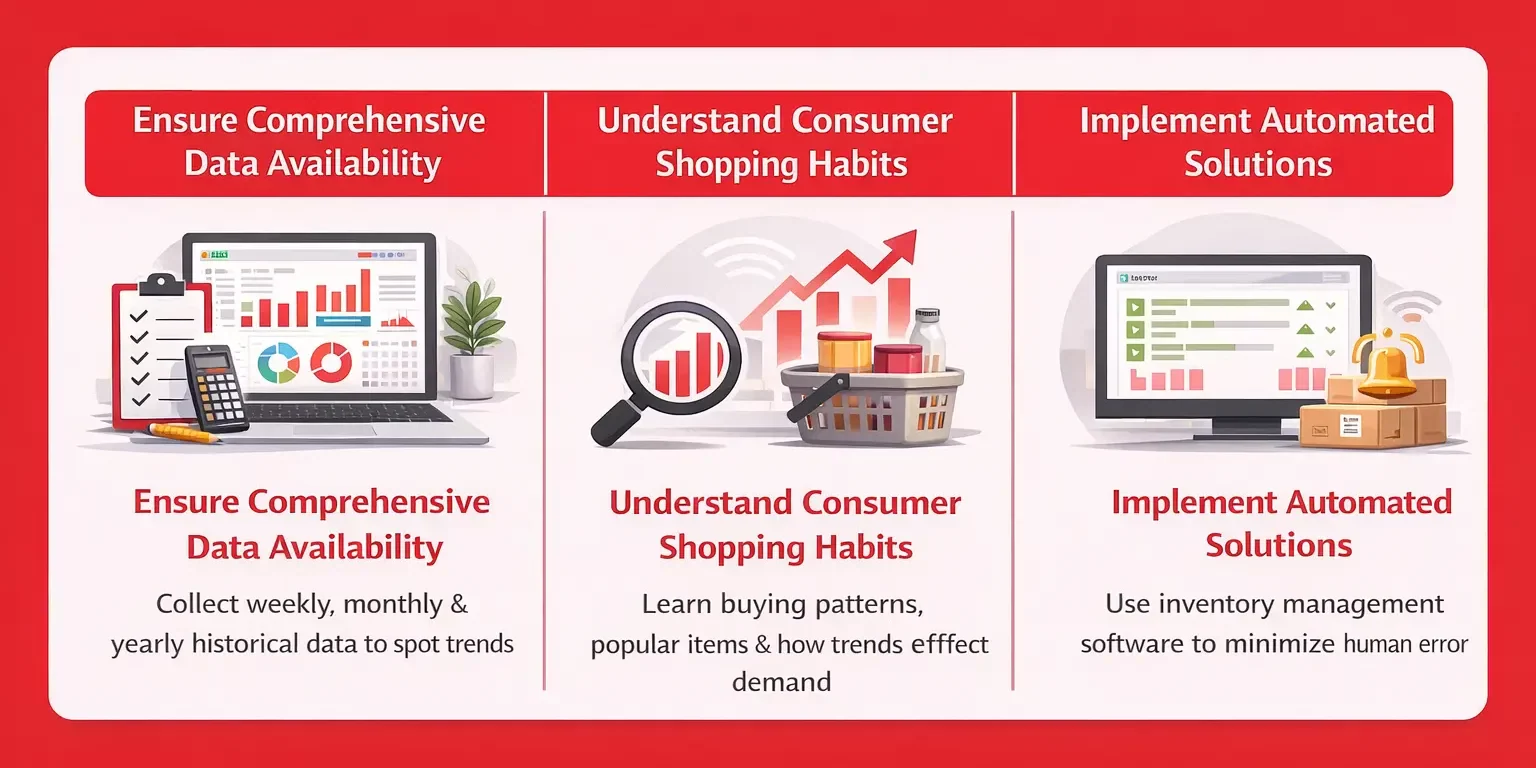
Applying effective demand forecasting strategies can significantly improve how you manage inventory, reduce costs, and keep customers satisfied. Here are some best practices to help you forecast more accurately:
- Ensure Comprehensive Data Availability: Accurate, complete data is key for reliable forecasts. Make sure you have access to weekly, monthly, and yearly historical data to spot trends.
- Understand Consumer Shopping Habits: Knowing your customers’ buying patterns helps in accurate forecasting. Consider their buying frequency, popular items, and how quickly trends impact demand.
- Implement Automated Solutions for Ease of Forecasting: Automation reduces human error and improves data accuracy. Use inventory management software for stock alerts, detailed reports, and integration with purchasing and accounting systems.
Conclusion
Accurate inventory forecasting helps retailers avoid the twin problems of overstocking and stockouts, both of which directly affect profitability and customer satisfaction. By applying consistent forecasting methods and following data driven best practices, retailers can maintain stock levels that reflect actual demand rather than guesswork.
For retailers looking to go further, comparing available tools is a practical next step. A look at the top inventory management software options can help identify platforms that best support forecasting, stock planning, and day to day inventory operations.
FAQ Around Forecast Inventory
Inventory forecast data includes information that helps predict stock needs, like past sales and demand trends. This data supports planning the right inventory levels to meet customer demand.
To forecast in Excel, start by organizing past sales data in a spreadsheet. Then, apply Excel’s “FORECAST” or “TREND” functions to estimate future inventory needs based on that data.
A common formula is Excel’s =FORECAST(x, known_ys, known_xs), which predicts future values based on historical data. This formula helps estimate demand and plan stock levels accurately.