










 Limited to 100 registrants

Every business, whether it’s a small retail shop in Divisoria or a BPO firm in BGC, always makes financial data daily. A financial report takes that data and organizes it into something meaningful, showing income, expenses, assets, and liabilities in a way that actually makes sense.
These reports aren’t just paperwork for compliance. They’re the documents your accountant uses when filing with BIR, what banks look at when you apply for a loan, and how you figure out if last quarter was actually profitable or just felt busy. For MSMEs especially, getting these reports right can mean the difference between smooth operations and scrambling during tax season.
The challenge? Creating accurate reports takes time, and there’s always the risk of errors that could trigger BIR penalties. That’s where understanding the basics and knowing which tools can help becomes valuable.
Key Takeaways
Financial reports give you a clear picture of your business’s financial health, which helps when making decisions about expansion, cost-cutting, or investments
These documents serve multiple purposes: tracking performance, supporting decisions, meeting regulatory requirements, and building credibility with potential investors
Using report templates like income statements and balance sheets can simplify your process and reduce the chance of errors
Accounting software with BIR-CAS compliance features can automate much of this work, freeing you up to focus on actually running your business
What is a Financial Report?
A financial report is basically a summary of your company’s financial situation over a specific period. It covers what you earned, what you spent, what you own, and what you owe. Think of it as your business’s financial story told in numbers.
The main goal here is to present accurate information about how your business is actually doing. The most common types are income statements, balance sheets, and cash flow statements, each one showing a different angle of your financial picture.
Beyond just tracking money, these reports help with transparency and legal compliance. In the Philippines, you’ll need them for BIR filings, bank loan applications, and if you’re courting investors. Many businesses turn to financial reporting software to automate calculations and make sure everything aligns with local regulations.
Components of Financial Statements
Financial statements are what help businesses in the Philippines check their financial health and make smart decisions. Under the Philippine Financial Reporting Standards (PFRS), there’s a specific structure to follow:
- Balance Sheet – Shows what your business owns (assets), owes (liabilities), and the owner’s share (equity) at a specific point in time. For a sari-sari store, your inventory and cash are assets, while unpaid supplier bills count as liabilities.
- Income Statement – This one tracks revenues and expenses over a period to show whether you made money or not. A carinderia, for example, would list daily sales as revenue, then subtract costs like ingredients and staff wages to see what’s left.
- Cash Flow Statement – Tracks actual cash moving in and out across operations, investments, and financing activities. A manufacturing firm might show cash coming in from product sales and going out for equipment purchases.
- Changes in Equity Statement – Explains how the owner’s share changed due to profits, investments, or withdrawals. If you injected more capital or took out personal draws, it shows up here.
- Notes to Financial Statements – These add context to the numbers, like explaining how you valued your inventory or details about that big loan agreement.
Each of these components gives Filipino business owners and stakeholders different insights into performance, compliance, and how resources are being managed.
What Makes a Good Financial Report?

A financial report does more than just satisfy regulators—it’s a tool for understanding your company’s actual situation and making better decisions. Here’s what separates a useful report from one that just collects dust:
- Clear and easy to follow – Nobody wants to decipher complicated jargon. A strong report uses straightforward language, proper formatting, and organized sections so readers can quickly find what they need.
- Accurate down to the centavo – All data needs to be correct and consistent. Even small errors can lead to poor decisions or, worse, damage your credibility with banks or investors. Double-check everything.
- Timely, not outdated – Reports lose value when they’re months old. For companies here in the Philippines, staying current also means staying on top of BIR deadlines and maintaining proper financial compliance.
- Complete coverage – A quality report includes all the essentials: income, expenses, assets, liabilities, and equity. Skipping sections means stakeholders won’t get the full picture they need.
- BIR-CAS and IFRS compliant – Philippine businesses need to follow BIR-CAS standards and IFRS regulations. This isn’t just about avoiding penalties—it also makes your financial information credible and comparable globally.
Here’s the thing: a financial report isn’t just a record. It’s a strategic tool. Using reliable accounting tools built for Philippine businesses can help you produce reports that check all these boxes without spending your whole weekend on spreadsheets.
Why Financial Reports Matter for Your Business
Financial reports aren’t just for accountants and auditors. They serve real purposes that directly affect how your business operates and grows.
Keeping track of how your business performs
At its core, a financial report—whether it’s an annual report or a statement of financial position—monitors your company’s performance over time. It shows your income, expenses, and profit margins. This way, you can spot problems early instead of finding out months later that something went wrong.
Making informed decisions
Should you expand to another branch? Cut costs somewhere? Invest in new equipment? Financial reports give you the data to answer these questions without just going with your gut. In the Philippines, accurate reports also keep you ready for tax compliance with the Bureau of Internal Revenue.
Meeting legal and regulatory requirements
BIR-CAS standards exist for a reason. Compliance keeps you out of trouble and builds trust with regulators, investors, and business partners. When your financial dealings are transparent, people take your business more seriously.
Getting funding and attracting investors
Banks and investors want to see numbers before they commit. A clear financial report showing your assets, liabilities, and cash flow gives them confidence in your stability and growth potential. It’s often the difference between getting approved and getting rejected.
Shaping your business strategy
Beyond compliance, financial reports help you plan strategically. By analyzing trends, you can adjust pricing, cut unnecessary costs, or spot growth opportunities. In a competitive market like the Philippines, this kind of insight matters.
No business operates effectively without accurate financial reports. They promote transparency, support decisions, ensure compliance, and open doors to opportunities.
Step-by-Step: Creating Your Financial Report
Here’s how to put together a financial report that actually serves its purpose:
Step 1: Gather all your financial data
Pull together everything for the reporting period: sales invoices, BIR forms (like 2307 and 2550M), expense receipts, payroll records, and bank statements. Reconcile your beginning and ending balances for assets, liabilities, and equity with supporting documents. This foundation determines how accurate everything else will be.
Step 2: Pick your reporting framework
For Philippine businesses, you’ll follow the Philippine Financial Reporting Standards (PFRS), which aligns with IFRS but has local adaptations. Keep BIR requirements in mind too. Decide whether you’re doing annual, quarterly, or monthly reporting based on what your stakeholders need and what compliance requires.
Step 3: Build your financial statements
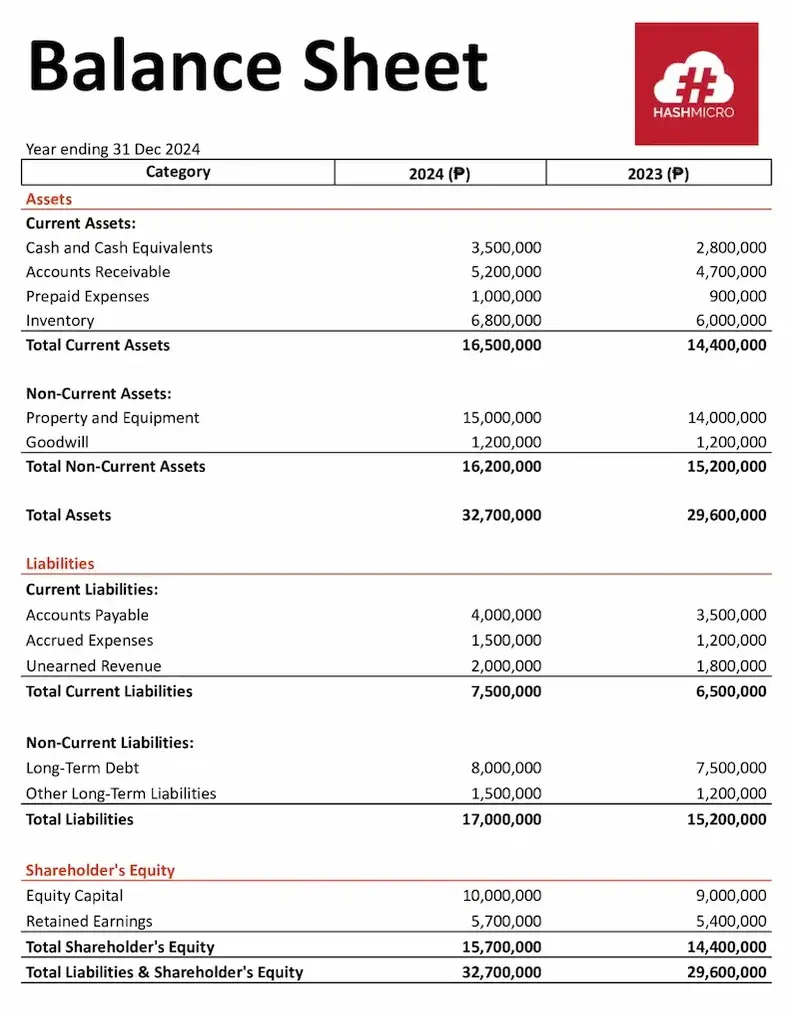
- Balance Sheet: List your assets (cash, receivables), liabilities (payables, loans), and equity (capital) as of a specific date. Make sure Assets = Liabilities + Equity. Separate current from non-current items.
- Income Statement: Summarize revenues and expenses. Use accrual accounting to match them within the same period. Highlight net income and gross profit.
- Cash Flow Statement: Break down cash inflows and outflows into operating, investing, and financing activities. Reconcile with your balance sheet.
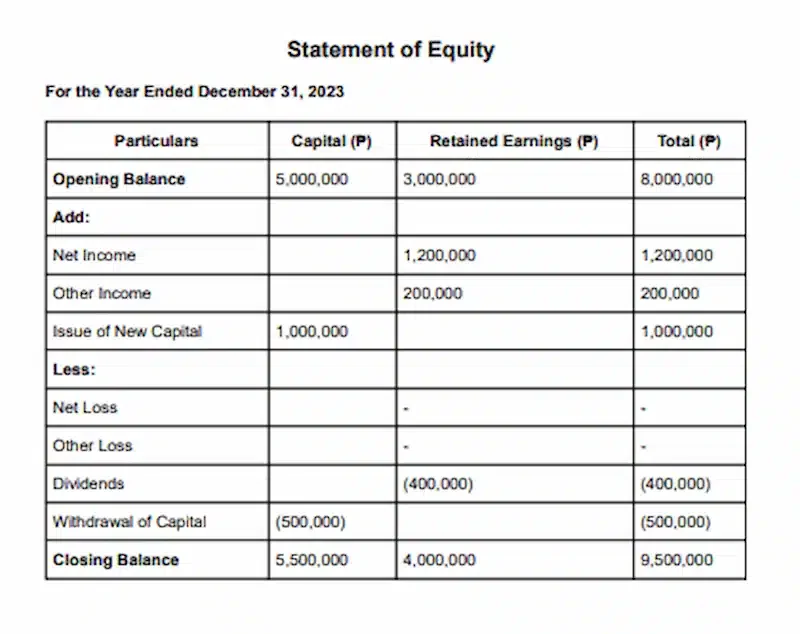
- Statement of Changes in Equity: Show how equity changed from net income, contributions, withdrawals, or other adjustments.
- Notes: Explain key accounting policies and any significant transactions—like the depreciation method you’re using or details about VAT reporting.
Step 4: Write the Management Discussion and Analysis
Give an overview of what the numbers mean: revenue trends, expense patterns, risks (market conditions, even typhoon impact), and future plans. Write in plain language so anyone can understand, not just accountants.
Step 5: Include supplementary components if needed
Depending on your situation, you might add:
- Auditor’s Report: Independent verification of accuracy and compliance
- Sustainability Report: ESG contributions if relevant to your stakeholders
- Governance Report: Board and management details
- Letter to Stakeholders: CEO summary of performance and outlook
Step 6: Review everything
Check all calculations. Verify compliance with PFRS and BIR regulations. Confirm figures match across all statements. Have someone else review for errors—fresh eyes catch things you’ll miss.
Step 7: Format for presentation
Organize clearly with charts, tables, and graphs where they help. Add a table of contents and page numbers. Use a clean layout and readable font. Professional presentation builds credibility.
8 Financial Report Types and Templates
Different reports serve different purposes. Here’s a breakdown of the main types you might need, along with when to use each one:
1 – Balance sheet
This snapshot shows your assets, liabilities, and equity at a specific moment. It follows the formula: Assets = Liabilities + Equity. Use it to assess whether your business can meet its obligations and to track financial progress over time.
Best for: Understanding your overall financial position, preparing for bank loans, investor presentations
2 – Income statement
Also called a profit and loss statement, this tracks what you earned and spent over a period to show net profit or loss. It helps identify where to cut expenses or grow revenue.
Best for: Evaluating profitability, making operational decisions, identifying cost problems
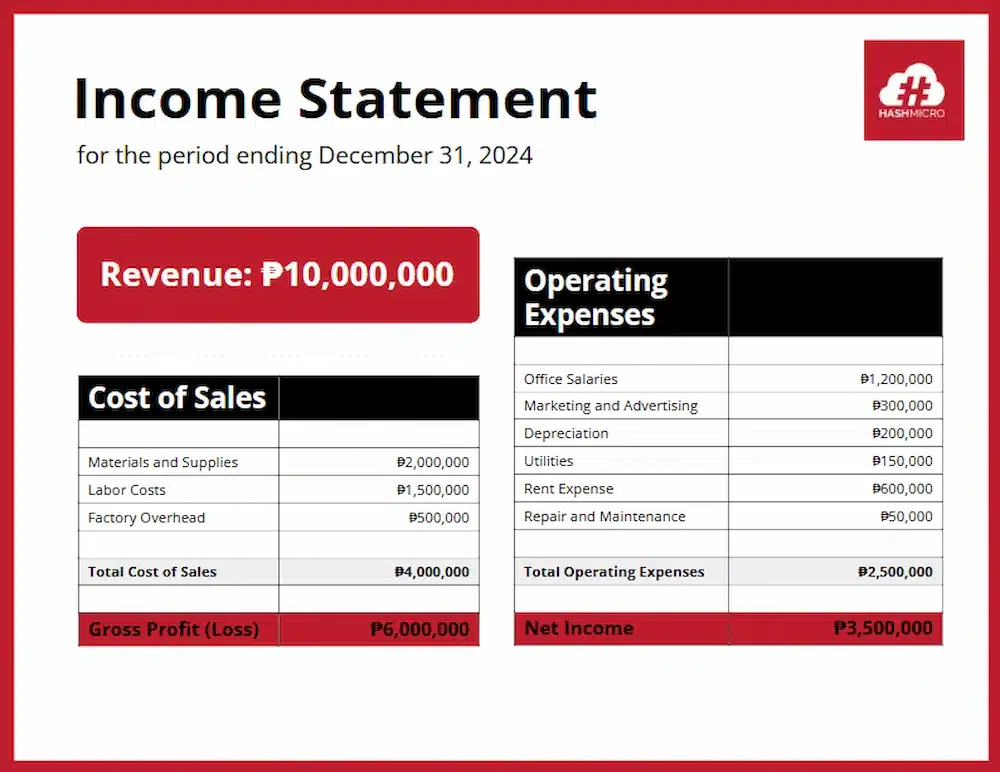
By reviewing this report, businesses can plan better, spot trends, and improve their financial success.
3 – Cash flow report
This tracks actual cash movement—not just paper profits. It shows cash from operations, investing, and financing activities. Critical for making sure you can actually pay your bills.
Best for: Managing working capital, planning for cash shortages, understanding real liquidity
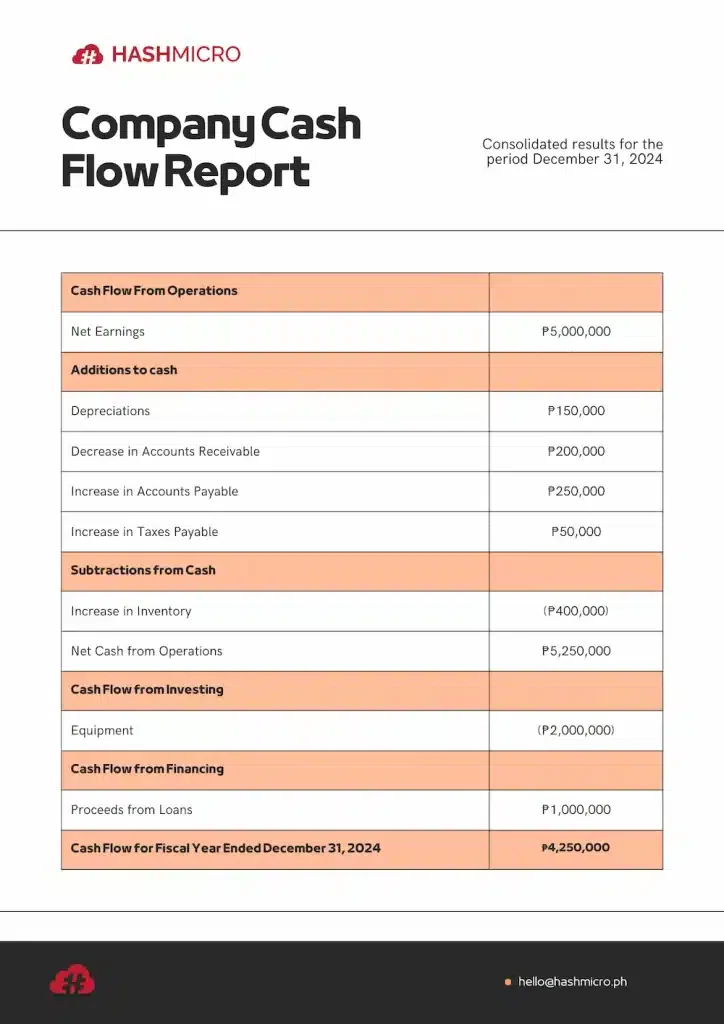
The report is divided into three sections: operating cash flow (daily business), investing cash flow (long-term assets), and financing cash flow (loans or investments). By analyzing it, businesses can avoid cash shortages and maintain financial stability.
4 – Change in equity
Shows how owner’s equity evolved through profits, losses, investments, and withdrawals. Useful for seeing how the business is being funded and how earnings are distributed.
Best for: Tracking capital changes, understanding dividend policies, shareholder reporting
5 – Business budget
A forward-looking plan that estimates income and expenses. Acts as a roadmap for achieving financial goals and controlling costs.
Best for: Planning expenditures, setting targets, controlling costs
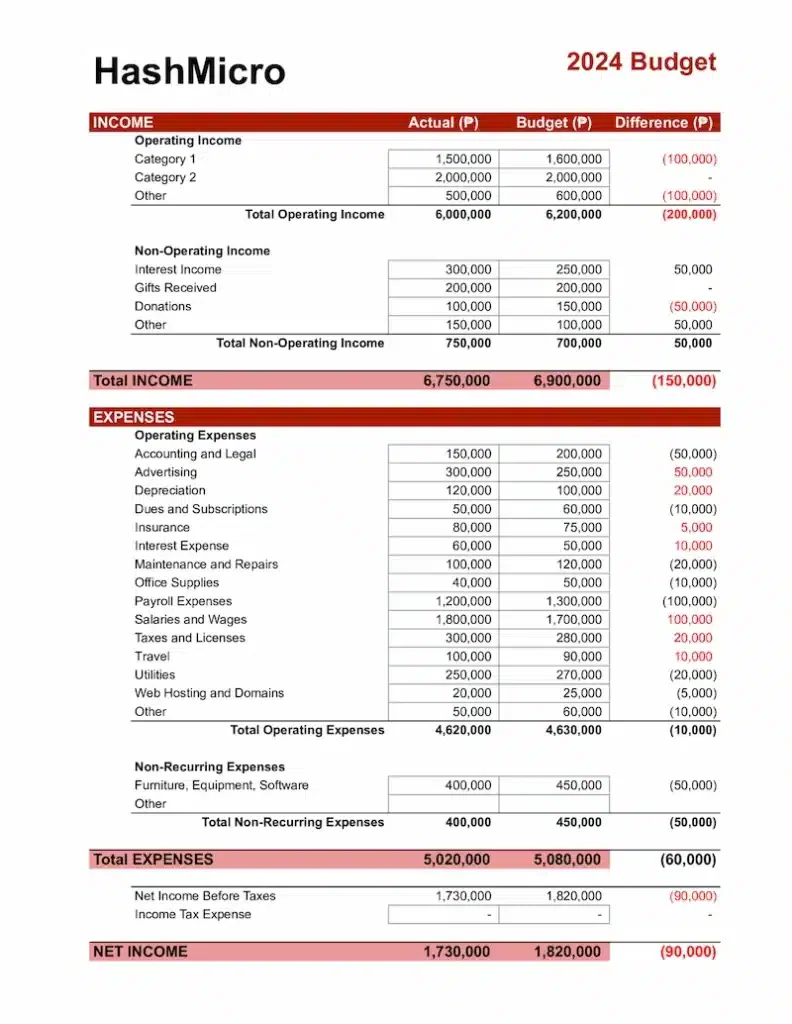
A typical business budget includes projected revenues, fixed and variable costs, and potential profit margins. By regularly updating and reviewing the budget, businesses can adjust their strategies to meet financial targets and grow sustainably.
6 – 12-month business budget
Extends the budget concept across a full year, accounting for seasonal trends and recurring costs. Provides better visibility into annual cash flow patterns.
Best for: Long-term planning, preparing for slow seasons, annual goal-setting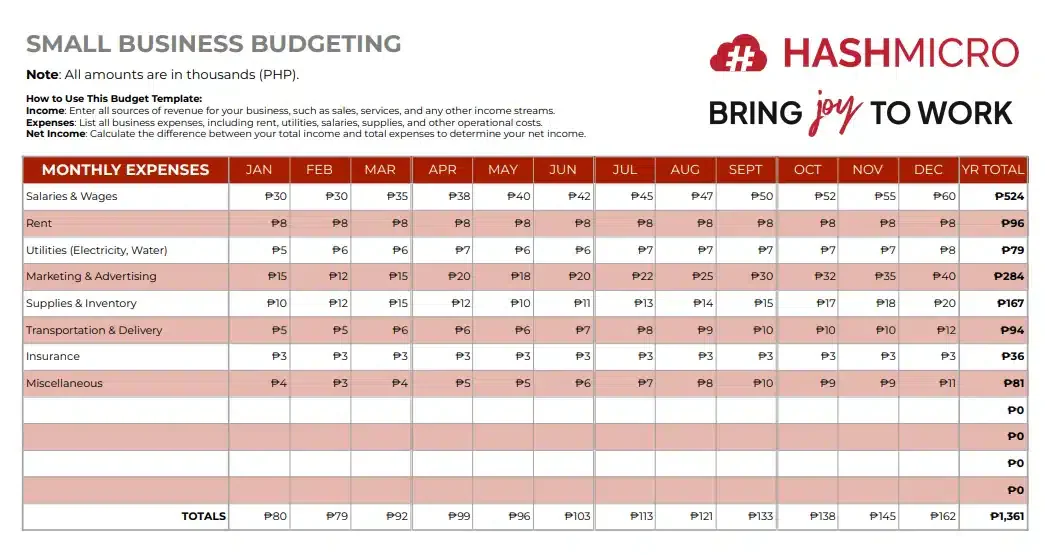 This type of budget allows businesses to plan ahead, align expenses with revenue patterns, and track cash flow throughout the year. It is more comprehensive than shorter budgets, offering better insights into annual growth opportunities and areas to cut unnecessary costs.
7 – Profit and loss projection
Estimates future income and expenses to anticipate earnings and identify potential problems before they happen.
Best for: Forecasting, scenario planning, supporting business plans
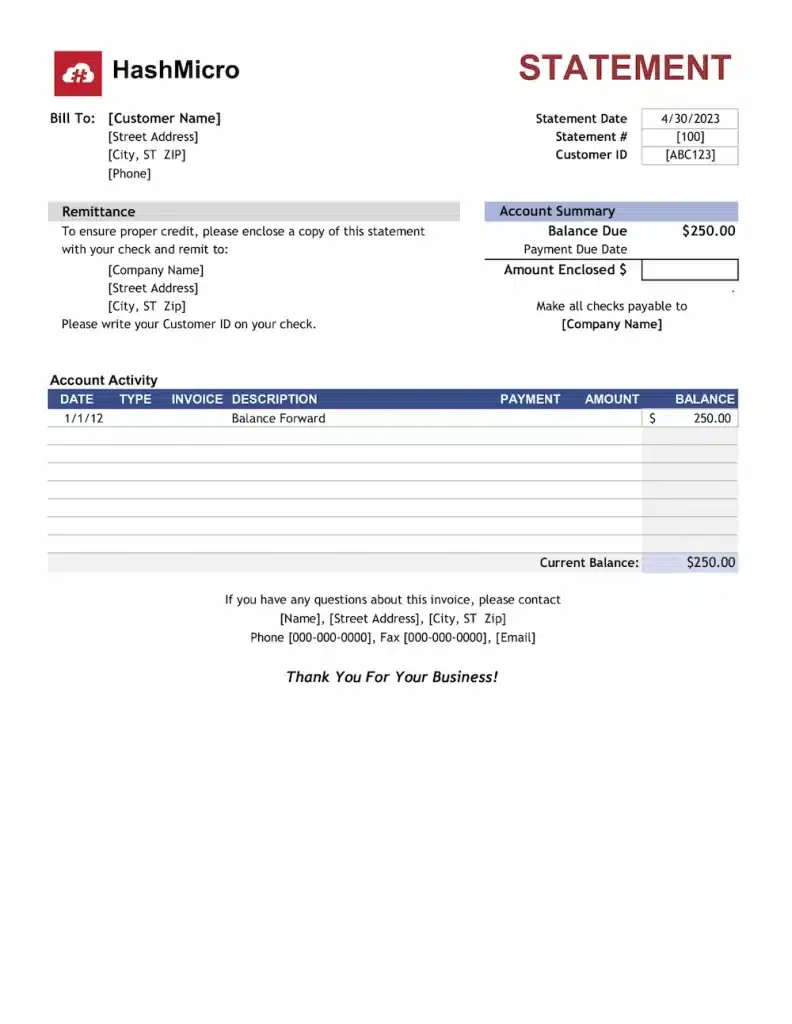
8 – Billing statement
A customer-facing document summarizing outstanding balances, recent transactions, and payment terms. Maintains transparency and helps manage receivables.
Best for: Customer communication, accounts receivable management, progress billing
Choosing the Right Report for Your Situation
Which report you need depends on what question you’re trying to answer:
| Your Question | Use This Report |
|---|---|
| Can my business pay its debts? | Balance Sheet |
| Did we make money last quarter? | Income Statement |
| Do we have enough cash to cover payroll? | Cash Flow Statement |
| How has owner investment changed? | Statement of Changes in Equity |
| What should we spend next month? | Business Budget |
| How might profits look next year? | P&L Projection |
Think about your audience too. Investors typically want cash flow statements to assess liquidity. Your management team might rely more on profit projections for decision-making. BIR needs specific formats for compliance.
Whatever you choose, make sure it aligns with local standards. Tools like automated accounting systems can help generate accurate reports that meet BIR-CAS requirements without manual formatting headaches.
Common Mistakes to Avoid
- Waiting until tax season – Don’t scramble to create reports at the last minute. Update them monthly or quarterly so you always have current data.
- Mixing personal and business finances – This creates messy reports and potential BIR issues. Keep accounts separate from day one.
- Ignoring cash flow – Profit on paper doesn’t mean cash in the bank. Many profitable businesses fail because they can’t cover short-term obligations.
- Using outdated templates – BIR requirements change. Make sure your formats comply with current standards.
- Skipping the review – Always have someone else check your work. Small errors can snowball into big problems.
Conclusion
Financial reports form the backbone of sound business management. They provide detailed insights into your company’s activities, help track performance, and support resource allocation. For Philippine businesses specifically, they’re essential for BIR compliance and building credibility with banks and investors.
The key is finding the right balance between thoroughness and practicality. Start with the reports you actually need, keep them updated, and consider automation tools that can reduce the manual burden while improving accuracy.
Whether you’re a sari-sari store owner tracking daily sales or a manufacturing firm preparing for an audit, understanding financial reports—and using them effectively—gives you a clearer path forward.
Frequently Asked Questions about Financial Report
FAQ
A financial report is a document that summarizes a company’s financial activities, including income, expenses, assets, and liabilities, to provide a clear overview of its financial health and performance.
The main types of financial reporting are the income statement, balance sheet, cash flow statement, and statement of changes in equity, each focusing on different aspects of a company’s financial health.
The general purpose of financial reporting is to provide accurate financial information to help stakeholders make informed decisions and ensure regulatory compliance.
An example of a financial report is an income statement, which shows a company’s revenue, expenses, and net profit over a specific period.