







Construction inventory management is the process of tracking materials, tools, and equipment throughout a project’s lifecycle ensuring resources are available when needed, preventing costly delays, and keeping workflow on schedule. Poor material handling is one of the leading causes of budget overruns in construction, making structured inventory control a foundational practice rather than an optional upgrade.
A well implemented system allows teams to monitor stock levels in real time, automate reordering, and reduce waste across every project phase. Integrating construction scheduling software and construction estimating software helps align material availability with project timelines, closing the gap between what’s planned and what’s actually onsite.
Key Takeaways
Effective inventory management is important for project success. It boosts productivity, cuts costs, and fosters teamwork to prevent delays.
Types of construction inventory management include consumables, materials, and tools, each vital for minimizing waste and ensuring project efficiency.
Common challenges in construction inventory management include inaccurate tracking, theft, and inefficient reordering processes.
What is Construction Inventory Management?
Construction inventory management is the process of tracking materials, tools, and equipment throughout a project’s lifecycle. It helps ensure that resources are available when needed, reducing delays and improving workflow.
By using a construction inventory management system, teams can monitor stock levels in real time, streamline reordering, minimize waste, and enhance overall project efficiency.
Moreover, these systems often feature advanced reporting capabilities, giving managers valuable insights into inventory usage. Integrating construction scheduling software and construction estimating software can further align inventory availability with project timelines.
Benefits of Construction Inventory Management

Effective inventory management directly affects both project timelines and cost control. When teams have real-time visibility into stock levels and tool availability, communication improves across departments fewer last minute calls, fewer delays waiting on materials, and fewer budget surprises. Effective construction inventory software helps construction firms proactively spot shortages before they become disruptions, rather than reacting after a project has already stalled.
Types of Inventory in Construction
Effective inventory management systems can vary widely based on the specific needs of a construction project management. Understanding the different types of inventory can help streamline operations and enhance overall efficiency.
1. Consumables
Consumables include items like safety gear and small tools that are frequently used and replaced. Tracking these ensures teams have what they need without unnecessary surplus, minimizing waste and costs.
2. Construction and materials
Building materials encompass everything from bricks to concrete. An effective management system tracks usage and reorders supplies, preventing project delays caused by shortages and ensuring consistent workflow.
3. Tools and equipment
Tools and equipment are vital assets on any construction site. Proper inventory management ensures these items are available when needed and well-maintained, extending their lifespan and reducing replacement costs.
The Challenges of Managing Construction Inventory

Navigating the complexities of construction inventory management comes with its share of challenges. Identifying these obstacles is crucial for improving efficiency and ensuring project success.
1. Inaccurate tracking
Human error, poor communication, and manual recordkeeping are the most common sources of inventory discrepancies. Shortages and overstock both carry costs, and both often trace back to data that isn’t updated in real time. Automated systems reduce exposure to these errors by keeping records synchronized as materials move.
2. Theft and loss
High staff turnover and open access worksites make construction projects particularly vulnerable to theft and material loss. Investing in site security alongside inventory monitoring software gives teams both visibility and accountability over valuable assets.
3. Inefficient reordering processes
Without a structured reordering workflow, teams often discover shortages only when work has already stopped. Automating replenishment triggers based on minimum stock thresholds rather than relying on manual checks keeps the procurement process running smoothly without interruptions.
6 Keys for Improving Construction Inventory Management Efficiency
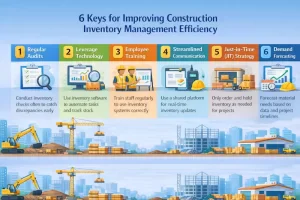 Implementing effective inventory management practices can significantly enhance efficiency and reduce costs. Adopting the following strategies can help construction teams optimize their inventory processes.
1. Regular audits
Frequent inventory checks keep recorded stock levels aligned with what’s actually on-site. This builds staff accountability and surfaces discrepancies early, before they escalate into delays or budget gaps.
2. Leverage technology
Inventory management software automates routine tasks like data entry and stock monitoring, freeing teams to focus on project work rather than manual tracking. These tools also generate reporting data that supports better planning decisions over time.
3. Employee training
Even the best system produces poor results if staff don’t know how to use it correctly. Regular training ensures consistent processes across the team, and refreshers help everyone adapt as software features evolve.
4. Streamlined communication
Open communication among team members helps ensure everyone knows inventory needs and issues. A shared platform where updates can be posted in real-time promotes transparency and fosters collaboration, enabling quicker responses to inventory challenges.
5. Just-in-Time (JIT) Strategy
Just-in-time inventory management is a smart strategy that minimizes the amount of inventory you keep on hand. Instead of stockpiling materials, JIT focuses on producing and delivering goods only as needed. For construction projects, JIT can be a game changer. Here are some tips to implement JIT effectively:
- Reduce On-Site Materials: Keep only essential materials on-site to lower storage costs and reduce the risk of damage or theft.
- Coordinate with Suppliers: Build strong relationships with suppliers to ensure timely deliveries that align with your project schedule.
- Schedule Deliveries: Plan material deliveries to coincide with specific project phases, ensuring you have what you need when you need it.
By adopting these JIT practices, you can enhance efficiency, save costs, and streamline your construction processes.
6. Demand Forecasting Routine
Using historical data, market trends, and upcoming project timelines to forecast material needs helps teams avoid both excess stock and critical shortages. For larger projects, structured demand planning also integrates well with broader warehouse and logistics workflows, giving managers earlier warning of potential gaps.
Conclusion
Effective inventory management is one of the clearest levers construction teams have for controlling costs and keeping projects on schedule. When materials, tools, and equipment are tracked consistently and reordering is automated rather than reactive the risk of delays caused by shortages drops significantly. Combining solid processes with the right technology is what separates projects that finish on budget from those that don’t.
For teams looking to put these practices into action, exploring the available options for construction inventory management software is a practical next step comparing what each platform offers in terms of realtime tracking, reporting, and integration with existing project workflows.
FAQ about Construction Inventory Managament
Construction inventory management involves systematically tracking and controlling materials, tools, and equipment used in construction projects to ensure efficiency and reduce waste.
Inventory management is crucial in construction as it helps prevent delays, reduces costs, improves project efficiency, and ensures that the right materials are available when needed.
Construction inventory can be tracked using software solutions, barcoding systems, regular physical counts, and detailed records of material usage and reordering.