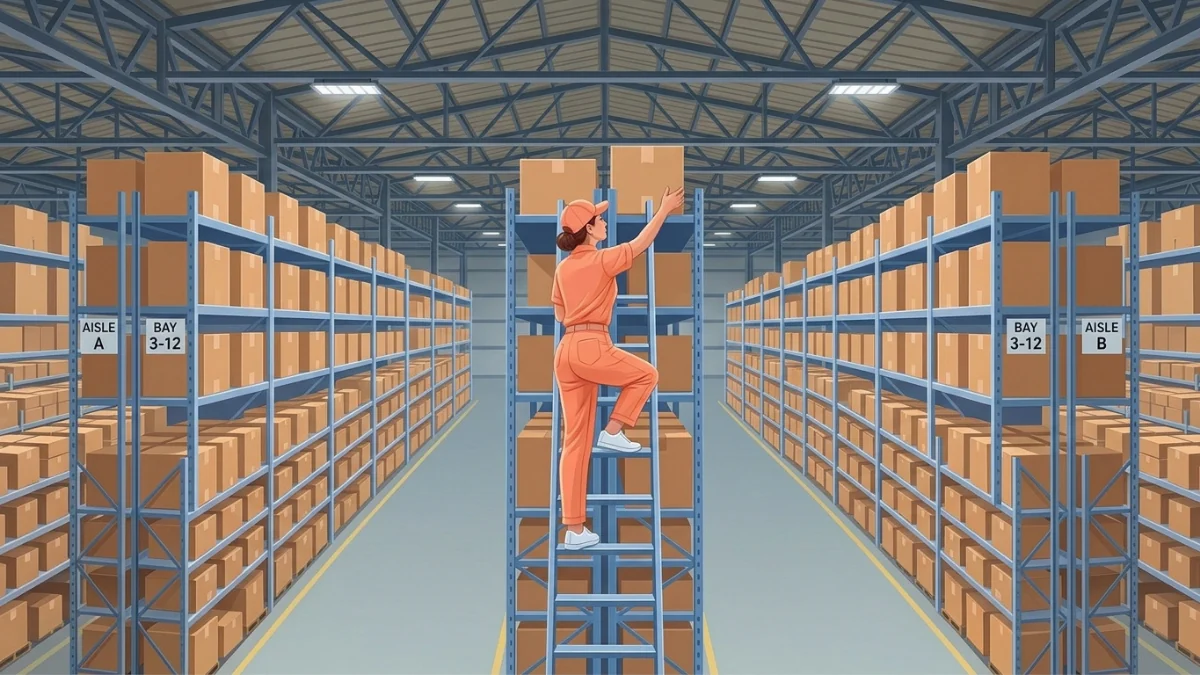






You have your stock lined up and your sales forecasts ready, but suddenly, a trending product starts flying off the shelves faster than you anticipated. Caught off-guard, you’re left with empty shelves and a long list of orders you can’t fill. This situation underscores the critical importance of maintaining a buffer stock.
This problem gets worse when businesses lack a reliable stock control system. Teams notice stock depletion too late, and replenishment moves more slowly. Poor monitoring also intensifies supply chain disruptions, extends stockout periods, strains customer relationships, and disrupts operations further. Read on to learn how to manage buffer stock better.
Key Takeaways
Maintaining an adequate buffer stock helps businesses manage unexpected demand spikes and avoid costly stockouts.
Analyzing historical data helps enable businesses to predict future demand more accurately and optimize inventory levels.
Buffer stock handles unexpected fluctuations in demand or supply, while safety stock protects against worst-case stock-out scenarios.
Buffer Stock Definition

Buffer stock, or reserve inventory, is an essential business management tool. It’s used to maintain a sufficient supply of products, especially during unexpected demand or supply interruptions. With this, companies can ensure their operations continue smoothly without worrying about short-term market fluctuations.
This strategic reserve allows businesses to meet customer orders on time, enhancing customer satisfaction and maintaining a steady flow of income, even during supply chain disruptions. It is a cushion that prevents operational hiccups and helps maintain consistent service levels.
The Importance of Buffer Stock
Buffer stocks are essential for stabilizing supply chains, especially in industries like seasonal products where demand fluctuates unpredictably. Without a strong inventory system, businesses face the real risk of running out of stock when it matters most.
This not only means lost sales but also gives customers a reason to turn to your competitors, potentially losing their loyalty permanently. Moreover, implementing Minimum Order Quantities (MOQ) can help maintain buffer stock levels effectively, ensuring readiness for demand spikes.
If reserves are too low, even minor supply chain disruptions can grind production to a halt, necessitating expensive rush orders and overwhelming your procurement team. These kinds of operational hiccups can quickly balloon into substantial financial losses and may erode trust with both suppliers and customers.
Components of Buffer Stock

Buffer stock is not a fixed extra quantity. It acts as a flexible inventory layer that helps businesses handle demand spikes, supplier delays, and operational disruptions that may cause stockouts.
To set the right level, companies need to understand the factors that create uncertainty. These components help businesses calculate buffer stock more accurately and avoid excess inventory.
Demand and sales patterns
- Average demand rate shows the typical daily or weekly sales volume used as the baseline for planning.
- Demand variability shows how far actual demand shifts from the average. Higher volatility often requires more buffer stock.
- Seasonal demand patterns reflect recurring peaks during holidays, promotions, or specific periods that may require temporary stock adjustments.
Supplier and replenishment factors
- Lead time is the time suppliers need to deliver goods after an order is placed.
- Lead time variability shows how often delivery timing changes, which increases uncertainty.
- Supplier reliability covers delays, partial shipments, and order accuracy that affect stock protection needs.
- Order frequency and replenishment policy influence how much stock businesses should keep between orders.
Internal planning considerations
- Review period refers to how often teams check inventory and make replenishment decisions.
- Service level target reflects the desired probability of avoiding stockouts during normal fluctuations.
- Internal operational constraints include warehouse space, picking speed, and processing delays that affect stock levels.
By understanding these components, businesses can set buffer stock more strategically, maintain stable operations, and avoid unnecessary overstocking.
Geographical Considerations in Buffer Stock Management

To manage buffer stocks effectively, businesses should think about where their products are stored to optimize supply chain efficiency. For instance, if your business has multiple locations, you can place some stocks in central hubs that are easily accessible.
Integrating a periodic inventory system allows for regular checks and better control over buffer stocks across multiple locations, ensuring products are placed in central hubs that are easily accessible, allowing quick movements of products to areas experiencing high demand without long shipping times or delays. Another practical approach is placing buffer stocks near key markets or distribution centers.
By doing this, you reduce the risk of delays caused by transportation issues or border checks. This strategy not only helps you respond faster to sudden demand surges but also saves on shipping costs, ensuring that your customers always have what they need, when they need it.
Using Historical Data to Determine Buffer Levels

Using historical data helps businesses accurately determine buffer stock levels by analyzing past sales patterns and demand trends. This ensures that companies can anticipate seasonal spikes and slow periods, allowing them to adjust their inventory accordingly.
However, not all historical data carries equal weight. Buffer stock decisions should focus on data that reflects variability in demand and supply, rather than high-level summaries. When analysed properly at the SKU and location level, historical records help businesses determine how much extra inventory is truly necessary to absorb short-term fluctuations.
Crucial historical data for determining buffer levels
- SKU-Level Sales Data (Daily or Weekly)
Granular sales data shows how volatile demand truly is. Analysing fluctuations at the SKU level helps identify which items require higher buffer protection. - Stockout Records and Lost Sales Indicators
If products frequently go out of stock, historical sales may appear lower than actual demand. Reviewing stockout periods helps estimate unmet demand and prevents underestimating buffer requirements. - Actual Supplier Lead Time and Variability
Average lead time alone is insufficient. Businesses must also measure how often suppliers deliver late and by how many days. Greater variability typically requires a higher buffer stock. - Seasonal and Promotional Trends
Recurring events such as holiday peaks, promotional campaigns, or payday cycles significantly impact demand. These patterns should be incorporated into buffer calculations to avoid recurring shortages. - Return and Cancellation Data
High return rates or cancelled orders may distort demand figures. Analysing these patterns ensures buffer levels reflect genuine consumption rather than temporary sales spikes.
Historical data that is less relevant for determining buffer levels
- Category-Level Aggregated Data
Category summaries can mask volatility at the SKU level. Buffer stock decisions are more accurate when based on individual product performance. - Marketing Metrics Without Sales Correlation
Metrics such as website visits or social media engagement are not reliable inputs for buffer stock unless directly linked to confirmed sales conversion patterns. - Outdated Historical Data
Data from several years ago may no longer reflect current supply chain conditions, customer behavior, or sales channels. Recent data provides a more accurate basis for decision-making.
By focusing on the right historical indicators and leveraging automated systems, businesses can determine buffer levels that balance operational flexibility with inventory control.
Buffer Stock vs. Safety Stock
Safety stocks and buffer stocks often confuse people, but they serve very different purposes in inventory management. You can use buffer stock to handle unexpected fluctuations in demand or supply, while safety stock protects against worst-case stock-out scenarios.
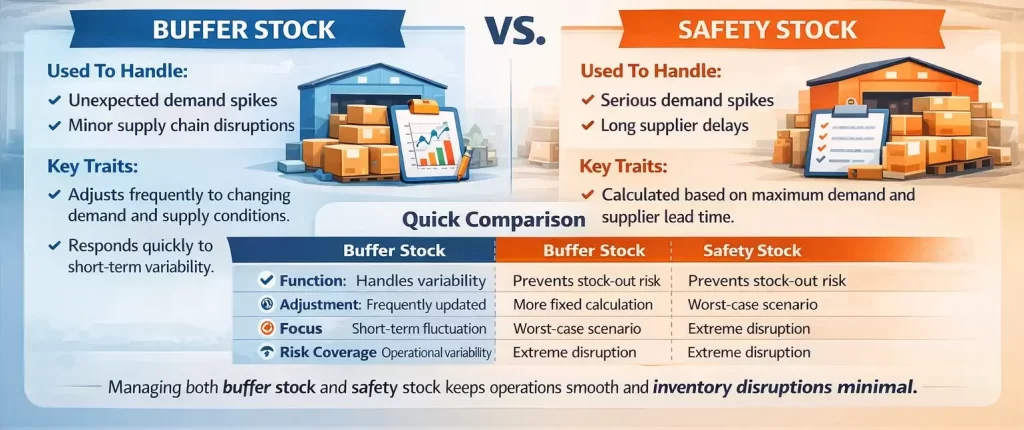
Buffer stock adjusts more frequently to reflect current demand trends and supply conditions. Safety stock, however, is calculated based on maximum demand and lead time, ensuring enough inventory during delays.
Understanding these differences is crucial for keeping operations smooth and avoiding costly disruptions. By managing both types effectively, businesses can maintain better control over their inventory.
Conclusion
Effective buffer stock management ensures smooth operations and meets fluctuating demand. Poor stock management can result in stockouts and frustrated customers. By implementing a strategic buffer stock system, businesses can maintain steady supply levels and ensure customers receive their products on time.
It is important to know the many components of buffer stock and what historical data to analyse to determine buffer levels. As such, to make this process even easier, automating buffer stock calculations with a robust inventory management system can significantly improve efficiency.
FAQ for Buffer Stock
A buffer inventory stores extra raw materials to handle potential supply chain delays. It helps businesses meet demand despite unexpected disruptions.
In a level business, buffer stock maintains consistent production during demand changes. It ensures steady output and prevents operational slowdowns.
Businesses use stock buffers to handle unpredictable demand or supply chain issues by storing extra inventory. This ensures they fulfill orders without interruptions or delays.
Longer lead times increase uncertainty, so businesses must hold more buffer stock to prevent stockouts during replenishment delays.>
Excess buffer stock increases storage costs, ties up cash, raises risk of obsolescence, and can lead to inefficiencies in inventory management.>