













Businesses use public warehouses to cut logistics costs, avoid heavy upfront investment, and stay flexible as demand changes. Unlike private facilities, these shared warehouses let companies store goods without taking on the cost and commitment of building their own storage network.
In this article, you will learn what a public warehouse is, how it works, and why many businesses use it to support daily operations. You will also see how this type of warehouse can help companies manage inventory, fulfill orders, and respond faster to market needs.
Key Takeaways
|
Table of Contents
What is a Public Warehouse? Understanding the Core Concept
A public warehouse is a storage facility run by a third party that stores goods for multiple businesses, either short term or long term. Instead of building and managing their own warehouse, companies rent the space and services they need, while the provider takes care of staff, equipment, security, and daily operations.
Today, public warehouses do more than store inventory. Many also support order handling, shipping, and other warehouse tasks, giving businesses more room to adjust when demand changes. In this setup, the business still owns the goods, while the warehouse operator is responsible for keeping them safe and properly managed.
Key Characteristics of a Public Warehouse
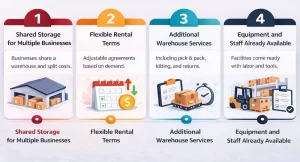 Public warehouses stand out because they offer flexible storage and operational support without the cost of running a private facility. Here are the main features that make them a practical option for many businesses.
1. Shared storage for multiple businesses
A public warehouse stores goods from different companies in one facility. Because costs are shared, businesses can access professional warehousing services at a lower cost.
2. Flexible rental terms
Many public warehouses offer short-term or adjustable agreements. This helps businesses increase or reduce storage space based on demand.
3. Additional warehouse services
Public warehouses often provide services beyond storage, such as pick and pack, kitting, cross-docking, and returns handling. This gives businesses extra support without building their own warehouse team.
4. Equipment and staff already available
The warehouse provider usually handles equipment, labor, and daily operations. As a result, businesses can store and move goods more easily without major upfront spending.
How Public Warehouses Operate Within the Supply Chain
 Daily operations in a public warehouse follow a clear process to keep goods organized and shipments on schedule. Because one facility handles inventory from many businesses, staff rely on standard procedures and warehouse systems to manage products accurately.
The process starts when goods arrive at the receiving dock. Staff check the shipment, inspect items for damage, label them, and record them in the warehouse system before placing them into storage.
After that, the warehouse stores each item based on size, movement, and handling needs. Fast-moving products are placed in easier-to-reach areas, while slower items go into deeper storage. To keep records accurate, staff also perform regular cycle counts so stock levels stay updated without interrupting daily operations.
Strategic Advantages of Utilizing Public Warehousing Facilities
Many businesses use public warehouses to cut upfront costs and avoid building their own storage facilities. Instead of spending heavily on property, equipment, and setup, they pay for warehouse space as part of their operating costs.
Another major benefit is flexibility. Businesses can increase storage space during busy periods and reduce it when demand slows, so they do not have to pay for unused capacity.
Public warehouses can also help businesses store goods closer to customers and reduce delivery time. At the same time, the warehouse provider usually handles safety standards, facility maintenance, and compliance requirements, which lowers the operational burden on the client.
Potential Drawbacks and Limitations to Consider
While the benefits are compelling, it is essential for supply chain planners to maintain an objective view. Public warehousing is not a universal panacea, and there are specific scenarios where its limitations may hinder a company’s operational goals.
| Challenge | Explanation |
|---|---|
| Loss of direct control | Businesses depend on the warehouse provider’s staff, systems, and daily operations. |
| Communication and system issues | Poor coordination or weak system integration can cause delays and stock errors. |
| Priority conflicts in peak season | During busy periods, smaller clients may face slower fulfillment than larger accounts. |
| Higher long term costs | For businesses with stable, high volume, public warehousing may cost more over time. |
Public vs. Private vs. Contract Warehousing: A Comparative Analysis
To make informed logistical decisions, it is vital to understand how public facilities stack up against the two other primary warehousing models: private and contract.
| Warehouse Type | Control | Flexibility | Cost | Best For |
|---|---|---|---|---|
| Public Warehousing | Managed by a 3PL and shared with other businesses. | Highly flexible. | Low upfront cost. | Businesses with changing demand. |
| Private Warehousing | Owned and controlled by one company. | Limited flexibility. | High investment cost. | Companies with stable high volume. |
| Contract Warehousing | Run by a 3PL but dedicated to one client. | Moderate flexibility. | Medium to high cost. | Businesses needing dedicated space. |
The Role of Technology in Modern Public Warehouses
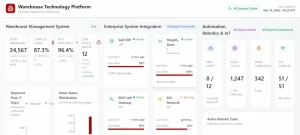 The days of managing inventory with clipboards, spreadsheets, and manual data entry are long gone. Today’s competitive logistics landscape is driven by complex technological ecosystems that provide real-time visibility, predictive analytics, and automated workflows.
1. Warehouse Management Systems (WMS)
A WMS helps the warehouse track goods, manage inventory, and monitor order movement in real time. It also gives clients visibility into stock levels and fulfillment status.
2. Enterprise System Integration
Warehouse systems need to connect with a client’s ERP, website, or sales platform to keep data accurate. This allows orders and inventory updates to move automatically between systems.
3. Automation, Robotics, and IoT
Many warehouses now use automation to speed up work and reduce manual tasks. Tools like robots and IoT sensors also help improve accuracy and monitor storage conditions.
Industry Specific Use Cases for Public Warehouses
Public warehouses help e-commerce and retail businesses manage changing demand more easily, especially during peak sales periods. They often support picking, packing, kitting, and returns, which helps businesses handle fast moving orders more efficiently.
In food and beverage, shared warehouses often provide ambient, chilled, and frozen storage to protect product quality. They also follow strict inventory rotation and tracking practices to reduce spoilage and support compliance.
Healthcare and pharmaceutical companies use public warehouses for secure, climate controlled storage with close monitoring. In manufacturing and automotive, these facilities often serve as nearby storage hubs for raw materials or parts, helping businesses support production without overcrowding the factory floor.
Step by Step Implementation Guide
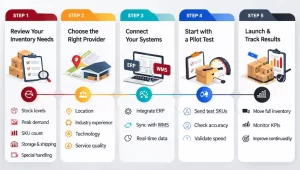 Moving to a public warehouse takes planning to avoid delays and keep operations stable. A clear process helps businesses choose the right provider and set up a smoother transition.
Step 1: Review your inventory needs
Check your average stock levels, peak demand, SKU count, storage needs, and shipping volume. Note any special handling requirements before speaking with providers.
Step 2: Choose the right provider
Do not focus only on price. Review the provider’s location, industry experience, technology, and service quality, then visit the facility if possible.
Step 3: Connect your systems
Make sure your ERP or order system can connect with the warehouse’s WMS. This helps keep inventory and order data accurate in real time.
Step 4: Start with a pilot test
Send a small group of products first. Use this stage to check inventory sync, order accuracy, and fulfillment speed before moving everything.
Step 5: Launch fully and track results
After a successful test, move the rest of your inventory and monitor KPIs such as order accuracy, stock loss, and shipping performance. Review results regularly to improve operations.
Common Pitfalls and How to Avoid Them
While public warehousing offers immense flexibility, businesses can stumble if they fail to navigate the arrangement carefully. Being aware of common mistakes can save companies significant time and money.
| Mistake | Explanation |
|---|---|
| Ignoring hidden fees | Extra service charges can raise total costs. |
| Poor technological alignment | Weak system sync can cause stock and shipping errors. |
| Misjudging location strategy | A poor location can increase shipping time and cost. |
Conclusion
Public warehouses give businesses a practical way to reduce storage costs, stay flexible, and support day to day logistics without building their own facility. With shared space, added services, and technology support, this model can help companies manage inventory more efficiently and respond faster to changing demand.
Still, public warehousing works best when businesses choose the right provider, connect their systems properly, and understand the costs involved. When planned carefully, it can become a strong part of a more responsive and cost effective supply chain.
FAQ About Public Warehouses
-
What is the main purpose of a public warehouse?
A public warehouse provides shared storage and logistics services for multiple businesses. Companies use it to store inventory, handle fulfillment, and manage goods without building their own warehouse facility.
-
Who typically uses public warehouses?
Public warehouses are commonly used by e-commerce businesses, retailers, manufacturers, food distributors, and pharmaceutical companies that need flexible storage and logistics support.
-
What services do public warehouses usually offer?
In addition to storage, many public warehouses provide services such as pick and pack fulfillment, cross-docking, inventory tracking, order processing, and returns handling.
-
Are public warehouses suitable for growing businesses?
Yes. Public warehouses are often ideal for growing businesses because they allow companies to scale storage space and logistics operations without investing in their own facility.
-
How do public warehouses help reduce logistics costs?
Public warehouses lower costs by sharing facilities, equipment, and labor across multiple clients. This reduces the need for businesses to invest in property, warehouse staff, and operational infrastructure.