













After a customer clicks “Buy Now,” the journey doesn’t stop there. For many online sellers, the real challenge begins as they manage the complexities of storing, packing, and shipping orders. This is where fulfillment centers come in, streamlining the entire process by handling the logistics behind the scenes.
Rather than taking on the burden of managing deliveries yourself, a fulfillment center takes care of everything from storing your inventory to ensuring each order is packed and shipped correctly. This allows businesses to focus on growing and scaling, without getting bogged down by boxes, labels, and paperwork.
In this article, we’ll break down how fulfillment centers work, their role in supporting e-commerce, and key considerations before partnering with one.
Key Takeaways
|
Table of Contents
What is a Fulfillment Center?
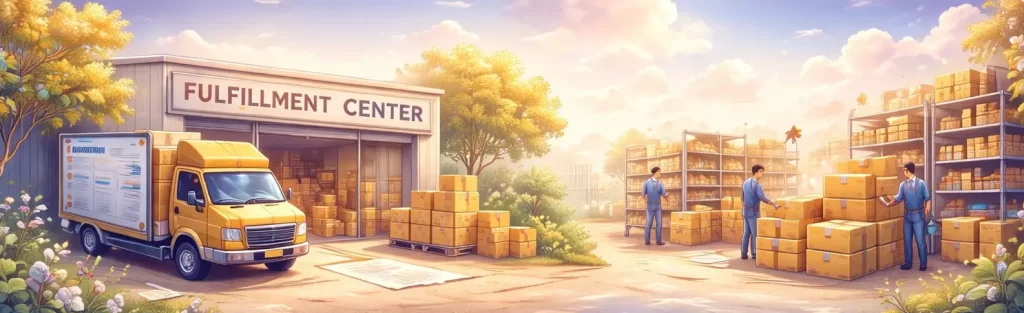
A fulfillment center is a third-party service provider responsible for handling the storage, packing, and shipping of customer orders for businesses. Businesses that utilize fulfillment centers typically store their products in large warehouses and by using fulfillment center, it allowing companies to focus on core activities like product development and marketing.
Fulfillment centers are often placed near major cities or transportation hubs. It helps speed up delivery times and reduce shipping costs, as it’s especially important for same-day or next-day delivery options. Fulfillment centers are commonly used by online businesses that want to manage increasing order volumes without handling packing and shipping themselves. This includes:
- Small e-commerce startups aiming to save time on logistics
- Medium-sized brands looking to expand into new regions
- Large retailers that need efficient nationwide or global delivery
- Subscription-based businesses that send recurring packages
- Crowdfunded projects that need to fulfill a high volume of backer orders quickly
Benefits of Using a Fulfillment Center
Outsourcing to a fulfillment center offers several key advantages for businesses, such as:
- Cost Efficiency: By outsourcing order fulfillment, businesses can save on warehouse space, inventory management costs, and labor.
- Scalability: Fulfillment centers allow businesses to scale operations efficiently without worrying about storage and shipping logistics.
- Faster Shipping: Fulfillment centers often have partnerships with multiple carriers and can expedite shipping times to customers.
How Does a Fulfillment Center Work?
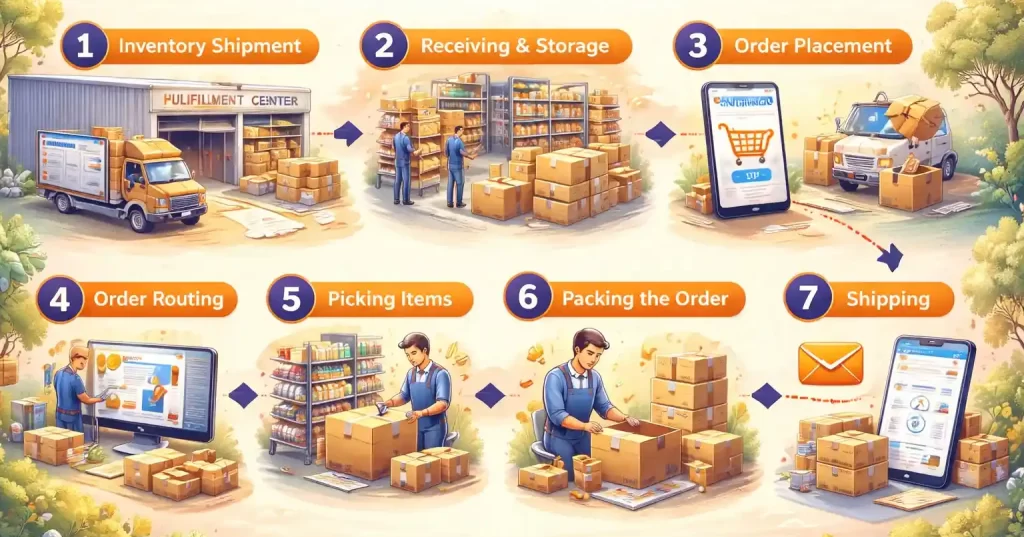
The process starts when an order is placed by a customer, which is then sent to the fulfillment center. From there, the center picks the items from inventory, packs them, and ships the order to the customer. This entire process is typically automated and managed via software, ensuring efficient operations. Here’s a typical step-by-step at how fulfillment centers process and ship customer orders:
- Inventory Shipment: The business sends bulk inventory to the fulfillment center for storage and processing.
- Receiving & Storage: The fulfillment center logs, inspects, and stores products in designated areas like shelves or bins.
- Order Placement: A customer places an order through the business’s website or sales channel.
- Order Routing: The order is automatically sent to the fulfillment center’s system for processing.
- Picking Items: Staff or automation systems locate and pick the correct items from storage.
- Packing the Order: The picked items are securely packed using materials that match brand and shipping requirements.
- Shipping: The package is labeled and handed off to a shipping carrier for last-mile delivery.
- Tracking & Updates: Tracking information is sent to the customer, and the fulfillment center may handle returns if needed.
Fulfillment Center vs Warehouse, What’s the Difference?
While both warehouses and fulfillment centers are both types of warehouses and store inventory, they serve different purposes and operate differently:
| Aspect | Fulfillment Center | Warehouse |
| Main Purpose | Designed for processing customer orders, especially for e-commerce platforms like Lazada, Shopee, or TikTok Shop. | Used mainly for bulk storage, often by distributors or manufacturers. |
| Day-to-Day Operations | Uses automation and systems like WMS (Top Warehouse platforms) for packing and shipping. | May rely more on manual processes and traditional methods for inventory storage. |
| Extra Services | Offers value-added services such as branded packaging, gift wrapping, and marketing inserts. | Primarily focused on storage without additional services. |
| Returns Handling | Often processes customer returns and manages coordination with buyers. | Returns handling is generally not part of warehouse services. |
| Business Focus | Specializes in online retail and handles small orders daily. | Used across various industries such as agriculture, manufacturing, or trading. |
| Client Types | Designed for digital-first businesses that focus on e-commerce sales. | Used by companies with offline retail operations or bulk distribution models. |
Challenges of Fulfillment Center
While outsourcing fulfillment has many benefits, it also comes with some drawbacks that businesses should consider.
1. Higher Costs
Hiring a third-party fulfillment provider can be more expensive than managing everything in-house especially if you don’t move inventory quickly. You may be charged for storage, receiving, packing, shipping, and returns. These fees can add up, especially if your products stay in storage too long or need special packaging.
Tip: Compare these costs carefully with the expenses of running your own fulfillment setup.
2. Less Control
When you outsource, you give up some control over how your orders are handled. This can be a problem if your products require special handling, packaging, or instructions. Not every fulfillment center can manage those needs, which may limit your options.
3. Risk of Mistakes
Mistakes can still happen: wrong shipments, inventory miscounts, or delays. These issues can hurt your customer satisfaction.
Tip: Keep strong communication with your provider to catch and fix problems quickly.
4. Dependency on a Third Party
Your business depends on the fulfillment center to keep things running smoothly. If they face issues like system errors, staff shortages, or unexpected disruptions, your orders might be delayed.
Tip: Choose your fulfillment partner carefully and have backup plans to make sure you can minimize the fallout. One of the backup plans you can consider is to keep track of your own items using inventory software or WMS.
Does Your Business Need a Fulfillment Center?
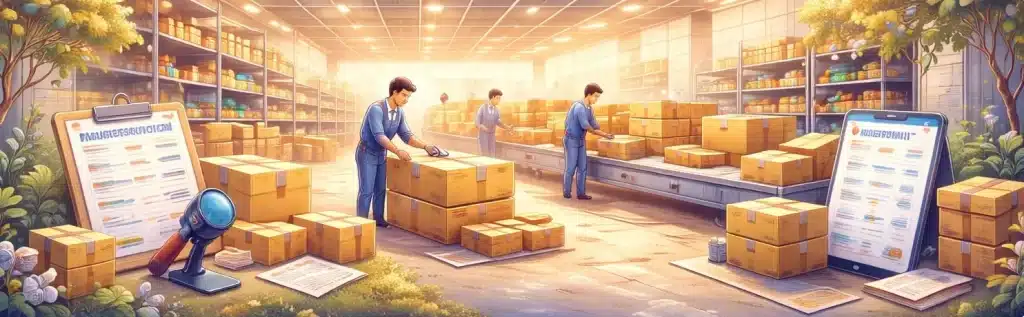
Before deciding to partner with a fulfillment center, consider the following questions specific to your business setup in the Philippines:
- Do you receive at least 100–200 orders per month? If your monthly order volume is steadily increasing especially during sales seasons like 11.11, 12.12, or payday promos, it may be time to outsource fulfillment.
- Are you running out of storage space? If you’re storing products at home, in a small office, or renting extra rooms just for inventory, a fulfillment center can help you save space and avoid clutter. This is especially helpful in Metro Manila or urban areas where rental costs are high.
- Is your team overwhelmed with packing and shipping? When you’re spending too much time printing labels, managing waybills, or waiting in line at courier drop-offs, your operations aren’t scalable.
- Do your customers expect faster delivery? If you’re targeting buyers from Luzon, Visayas, and Mindanao, working with a strategically located fulfillment partner can speed up shipping. Sometimes it enables next-day or two-day delivery depending on the courier.
- Are you planning to join more platforms? If you’re expanding from Shopee to Lazada, TikTok Shop, or even your own website via Shopify or WooCommerce, fulfillment centers can consolidate your inventory and process orders from multiple channels at once.
If you answered yes to any of these, a fulfillment center might be worth considering.
Conclusion
A fulfillment center helps businesses store, pack, and ship customer orders efficiently, especially in e-commerce setups. It streamlines operations, saves time and space, and supports fast, accurate deliveries across the country.
Even if you work with a fulfillment partner, it’s crucial to have full visibility over your inventory. With HashMicro’s WMS, you’ll know exactly what’s picked, packed, and shipped, no matter where it’s stored.
HashMicro gives you powerful tools like 3D warehouse views, stock forecasting, and mobile barcode scanning. So if you want control, speed, and clarity in your fulfillment flow, this system’s got your back.
If you’re interested, try the free demo now!
FAQ on Fulfillment Center
-
What’s the difference between a fulfillment center and a 3PL?
A fulfillment center is a type of 3PL (third-party logistics provider) specifically optimized for customer order processing like picking, packing, shipping, and returns. Other 3PLs may focus on broader logistics services such as freight forwarding, bulk distribution, or supply chain analytics,
-
What order volume makes outsourcing to a fulfillment center worthwhile?
It typically becomes cost-effective when you reach consistent monthly order volumes (often 100–200 or more) especially if your current setup delays shipping, eats up space, or strains your team.
-
How do fulfillment center fees work?
Most providers charge a combination of fees: setup/account, storage, receiving, picking/packing, packing materials, and shipping. Prices vary with package size, weight, and order frequency.