














Leave management is a core part of HR operations covering how employee time off is requested, approved, tracked, and kept compliant with labor regulations. As workforces grow more complex, many organizations are turning to dedicated leave management systems to replace manual processes and reduce errors.
This article breaks down what leave management involves, its benefits, legal requirements, common challenges, and practical strategies to handle it more effectively.
Key Takeaways
|
Table of Contents
What is Leave Management?
Leave management is the process of overseeing and organizing employee time off to ensure it is handled fairly and in compliance with company policies. It simplifies handling leave requests, approvals, and tracking, whether done manually or through automated systems, to help maintain workforce balance and productivity.
This process includes monitoring different types of leave, such as vacation, sick, maternity or paternity, and unpaid while promoting transparency and fairness throughout the organization. Effective leave management balances employee needs with the organization’s objectives.
Historically, leave management was carried out manually using paperwork or spreadsheets, often leading to errors and inefficiencies. Today, automated systems have become central to modern HR operations often working alongside payroll management tools to ensure that leave deductions and entitlements are calculated accurately
5 Advantages of Effective Leave Management
Efficient leave management provides many benefits that can significantly enhance employee satisfaction and overall business performance. Companies can ensure precise and effective leave tracking by implementing a well organised system, thereby reducing errors and discrepancies. The following are some of the key benefits:
1. Improved accuracy and transparency
By using automated leave management software, organizations can effectively track and manage employee leave balances, ensuring accuracy in leave accruals and approvals. This level of transparency builds trust with employees, allowing them to access and review their leave records quickly.
2. Enhanced productivity
A well structured leave management system allows for proactive planning of employees’ time off, reducing disruptions to daily operations. By having visibility into employee absences, managers can allocate resources more effectively and maintain a balanced workload across the team.
3. Compliance with legal requirements
Effective leave management ensures that businesses comply with labour laws and regulations, such as statutory sick leave and holiday entitlements. Automated systems can be regularly updated to reflect changes in legislation, ensuring the company stays compliant with all relevant rules.
4. Reduced administrative burden
Automating leave requests and approvals makes the process more streamlined, allowing HR teams to focus on other important tasks. This reduces the need for manual tracking and paperwork, enhancing efficiency and lowering administrative costs.
5. Improved employee satisfaction
A well organized and fair leave application process boosts employee morale by ensuring they can take their entitled time off easily. Employees value a transparent system for requesting, tracking, and using their leave, contributing to a healthier work life balance.
Legal Requirements in Leave Management

Integrating legal requirements into leave management helps companies comply with labour laws and prevent possible legal issues. By understanding and following these regulations including rules around Philippine labor law provisions businesses protect themselves and ensure that employees receive the benefits they are entitled to.
- Statutory leave entitlements: Many countries have regulations that define the minimum leave an employee is entitled to, such as paid vacation days, sick leave, and public holidays. These legal requirements ensure employees receive the time off they are due.
- Sick and medical leave: Employers are often required by law to provide paid or unpaid sick leave, depending on local regulations. Leave management systems should be designed to efficiently process ill leave requests and track the duration of illness related absences to avoid potential legal issues.
- Maternity and paternity leave: In many jurisdictions, maternity and paternity leave is legally mandated, with specific guidelines regarding how long employees can take off, whether the leave is paid or unpaid, and any necessary documentation. Companies must comply with these regulations to avoid legal penalties or lawsuits.
- Public holidays: Employees are entitled to time off on public holidays as defined by national or regional law. Leave management systems should account for these holidays, ensuring employees are not required to work on statutory holidays unless properly compensated.
- Tracking leave for compliance: A critical aspect of legal compliance is ensuring employees do not exceed the maximum leave they are entitled to, whether paid or unpaid. This requires accurate tracking and reporting of leave, helping businesses avoid legal disputes and stay compliant with labour laws.
By integrating legal requirements into leave management systems, businesses can mitigate compliance risks, reduce legal exposure, and ensure that employees’ rights are adequately protected.
Challenges in Leave Management
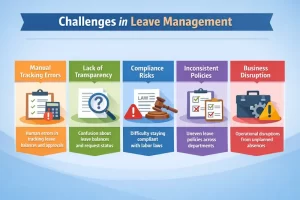 Effective leave management is crucial for ensuring a smoothly operating workplace, but it also presents challenges that can affect both HR teams and employees. Below are some common obstacles businesses encounter when handling employee leave:
1. Manual tracking errors
A significant challenge in leave management is the potential for human error when tracking employee leave manually. Mistakes such as miscalculating leave balances, mishandling approval processes, or overlooking leave requests can lead to confusion, employee dissatisfaction, and even legal complications.
2. Lack of transparency
A well structured system ensures employees have clarity about their leave balances and the status of their leave requests. Without this transparency, confusion and dissatisfaction can arise, as employees may be unsure of their eligibility to apply for leave or the amount of time off they have accrued.
3. Compliance risks
Different regulations across countries and regions govern employee leave entitlements, and non compliance with these laws can result in legal consequences. Staying updated on changes to employee benefits and statutory entitlements and ensuring company policies adhere to legal standards can be a challenging task.
4. Inconsistent leave policies
Uneven leave policies across departments or regions can lead to confusion and perceptions of unfair treatment among employees. When some employees have greater access to leave than others, it can result in frustration and a decline in morale.
5. Impact on business operations
Unplanned employee absences such as sick leave or absenteeism, can disrupt business operations and impact productivity. Maintaining adequate staffing can become a significant challenge without a reliable system to assist HR and managers in planning and managing leave requests.
Effective Strategies for Leave Management
Adopting effective leave management practices is crucial to creating a streamlined and efficient process that supports both the organization and its employees. Below are some key strategies for managing employee leave effectively:
- Automate leave requests and approvals: Improving leave management can be achieved effectively by automating the process with HRIS system, from submitting leave requests to granting approvals. Automated systems minimize human error, ensure timely responses, and remove workflow delays.
- Establish clear leave policies: Well defined and clearly communicated leave policies help employees understand their entitlements, including how much leave they can take, the process for requesting time off, and the necessary procedures to follow.
- Maintain accurate leave tracking: Accurately tracking employee leave balances, such as vacation days, sick leave, and public holidays, is essential to avoid errors and maintain compliance. A reliable leave management system should provide real time updates on each employee’s leave history, helping HR and managers prevent over approvals and ensuring employees stay within their entitlements.
- Analyze leave trends and absenteeism: Keeping track of employee leave patterns can reveal issues like frequent absenteeism or excessive sick leave. Reviewing this data allows HR to identify trends, such as recurring absences during specific times, which may signal deeper concerns that require attention.
- Ensure business continuity with effective leave planning: Proactive leave planning helps prevent disruptions to business operations when employees take time off. Managers should have a clear view of upcoming leaves and make arrangements to redistribute workloads as needed.
For additional information, you can explore our other article that covers the top HRIS software in the Philippines, including their features, benefits, and recommendations to assist you in making an informed choice.
Conclusion
Leave management plays a crucial role in human resource operations by ensuring that workforce time off is handled consistently, fairly, and in line with labor law requirements. A structured approach to managing leave supports operational continuity, reduces payroll discrepancies, and contributes to employee satisfaction through clear and transparent entitlement policies.
Organizations that invest in well designed leave management processes whether through defined policies, automated workflows, or integrated HR systems are better positioned to maintain productivity and avoid compliance risks over the long term. For businesses evaluating their options, exploring a comparison of leading HRIS platforms available in the Philippines can help identify solutions that align with their size, industry, and workforce structure.
FAQ Leave Management
-
What does a leave manager do?
Employee leave management is the process of managing your team member’s time away from work, which can include parental leave, sick leave, or vacations. Paid leave is an integral part of a company’s employee benefits program.
-
What is the purpose of leave administration?
Employee leave management does exactly that, facilitating the tracking, administering, and compensating of employee leave, to ensure employees are getting the rest and work life balance they need, while keeping functions like team collaboration, payroll, and compliance efforts on track.
-
What is the scope of leave management system?
A leave management system can help your organization define employee leave requirements, approve leave requests, and manage holidays in a way that aligns with your organization’s leave policies.