













You probably feel the exhaustion of staring at messy spreadsheets or losing high value leads because you missed a message while handling paperwork. In the fast moving Malaysian market relying on manual data entry is a recipe for disaster that stops your business from scaling. You might find your team struggling to keep up with customer demands while trying to manage everything manually.
Adopting a more automated approach can help you reclaim your time so you can focus on building real human connections. Official digital initiatives in the country emphasize that Malaysian businesses must prioritize digital adoption to stay competitive in the rapidly evolving regional economy. This transition also makes it easier to stay aligned with LHDN MyInvois requirements while naturally improving your business workflow.
It is time to look at how CRM can support your company growth in 2026. We have curated this strategic guide to show you how efficient systems can simplify your daily tasks and keep your customers happy. Please read this article until the end to find out how you can refine your operations and stay ahead in the competitive Malaysian market.
Key Takeaways
|
Secure your 2026 market dominance with a high performance sales pipeline. Click the banner below to explore our strategic growth solution.

Understanding CRM Automation: Beyond Basic Data Entry
You need to look past the old idea of a digital address book to see how much automation can actually change your daily operations. Historically these systems were just static places to save contact info and a few phone call notes. Now technology has turned these databases into intelligent ecosystems that can handle complex tasks without you ever lifting a finger.
At its heart CRM automation uses smart software and AI to wipe out those boring manual tasks from your schedule. This method helps you organize complex business processes and gives you real time insights when you need them most. Before we dive into the workflows understanding what a CRM system is today will help you see it as an active teammate rather than just a storage bin.
Think about your sales team’s daily grind where they might spend up to 70% of their time on tasks that don’t involve selling. This includes tedious data entry and drafting the same emails over and over again. Automation changes the game by handling that administrative burden for you so no opportunity slips through the cracks while you focus on closing big deals.
Adding AI and RPA to your workflow means your system can now anticipate what your customers need before they even ask. Predictive scoring helps you identify which leads are ready to buy so your team can prioritize their energy where it matters most. This level of tech transforms your reactive model into a proactive machine that keeps your revenue growing in the competitive Malaysian market.
The Core Components of an Automated CRM Ecosystem
You should not see your automated strategy as a single tool but as a group of parts working together to manage your business growth . These pillars help you manage your entire customer journey while staying [compliant with local regulations] in Malaysia such as LHDN MyInvois standards.
1. Marketing Automation
Your marketing team needs to handle early interactions at scale using precise and automated workflows to improve your lead quality. This pillar focuses on nurturing your leads until they are ready for a successful handoff to sales without manual intervention.
-
Email Campaigns: You can trigger personalized sequences based on user behavior such as a welcome series for new subscribers.
-
Lead Scoring: Your system can assign values to prospects so your team knows which leads are ready to buy immediately.
-
Social Media Management: You can automatically route inquiries from social platforms to your support channels to improve your response time.
-
Ad Retargeting: You can sync your CRM data with ad platforms to show highly relevant ads to customers who have already visited your site.
2. Sales Force Automation (SFA)
When a lead is ready to buy these tools take over to speed up your sales cycle and remove unnecessary friction. This acts as a virtual assistant for your team by handling the [logistics of closing deals] so you can focus on strategy.
- Lead Routing: You can automatically send leads to the right rep based on their workload or expertise in the Malaysian market.
- Activity Tracking: You can log all calls and meetings automatically to eliminate manual data entry for your sales team.
- Proposal and Quote Generation: You can use templates to generate accurate quotes with SST compliance in just a few seconds.
- Pipeline Management: You can update deal stages automatically to provide accurate revenue forecasts for your leadership team in real time.
3. Customer Service Automation
Keeping your existing clients is much more profitable than finding new ones and your customer retention is the key to sustainable growth. This ensures your clients in Malaysia receive fast support which increases their satisfaction and overall customer lifetime value.
- Ticketing Systems: You can turn incoming messages into trackable tickets and assign them priority levels automatically for faster resolution.
- Chatbots and Virtual Assistants: You can deploy AI assistants to handle common questions so your agents can focus on complex issues and high value tasks.
- Knowledge Base Suggestions: Your system can suggest helpful articles based on keywords to encourage customer self service and reduce ticket volume.
- Feedback Loops: You can trigger surveys after a resolved issue to gather valuable performance data and improve your service quality.
Bridging the Gap: Sales and Marketing Alignment

You should stop letting your marketing and sales departments work in separate silos that waste your valuable time and budget. CRM automation acts as the essential bridge to ensure both teams share the same goals and data transparency. By connecting these teams you create a culture of accountability that directly impacts your sustainable business growth in Malaysia and overall profitability.
You can remove human bias from your lead management by implementing an automated scoring system that identifies your most promising prospects. Your team no longer has to guess which leads are ready because the system handles the lead qualification process automatically so no one wastes time on cold leads . This ensures your sales professionals only focus on accounts that will actually convert into paying customers for your business.
Automation also gives you closed loop reporting so you can see exactly which marketing campaigns bring in the most revenue. This continuous feedback loop helps you optimize your marketing budget while ensuring your records stay organized for LHDN MyInvois reporting standards. You will finally have the clear data required to make better leadership decisions and outperform your competitors in the local market.
Strategic Benefits of Implementing CRM Automation
You should view the decision to automate your processes as a strategic maneuver that delivers high returns for your business rather than just a simple tech upgrade. The results go far beyond saving time as they impact every level of your company operations by improving lead management and conversion. For organizations looking to grow fast implementing comprehensive workflow automation is a critical necessity to prevent bottlenecks in your pipeline.
Unprecedented Operational Efficiency
You can achieve massive gains in efficiency when your software handles the repetitive daily tasks that usually slow down your team. This allows your leadership team to focus on strategic growth while you effectively lower your overhead costs. Your teams can accomplish much more with fewer resources while significantly increasing your total business output to stay ahead of the competition.
Enhanced Data Accuracy and Integrity
Human error in manual data entry can cost you thousands in lost revenue and potential compliance issues with local authorities. Automation ensures your data is captured and updated across your entire organization according to strict programmatic rules. You can rely on this single source of truth to ensure your records stay aligned with LHDN MyInvois standards in Malaysia.
Hyper-Personalization at Scale
Generic communications are no longer effective as your customers expect you to understand their specific needs and preferences . You can now deliver personalized content to thousands of clients at once using behavioral triggers and specific customer segments. This level of targeting helps you build deeper customer trust and leads to much higher conversion rates for your brand.
Accelerated Sales Cycles
Time is your biggest enemy because the longer a lead sits untouched the colder it becomes for your sales team. Automated lead routing ensures your inquiries get a response within minutes instead of waiting for days to be assigned. By removing delays from your pipeline you can shorten your average sales cycle and win more deals than your competitors in the region.
Improved Customer Retention and Lifetime Value
Retaining an existing client is much cheaper than finding a new one and automation is the key to maintaining long term loyalty. You can use automated onboarding to reduce churn and ensure your clients understand your value from the very first day. Consistently engaging your customers with relevant info will help you increase your customer lifetime value and build sustainable success in the Malaysian market.
Step-by-Step Guide to Implementing CRM Automation
You can make the transition from manual processes much easier by following a structured phased approach for your rollout. This method ensures high user adoption and helps your leadership team [achieve a smooth digital transition] without disrupting your daily operations in Malaysia.
Step 1: Audit Your Current Processes
You should map out your existing customer journey to identify bottlenecks and repetitive tasks before touching any software . Finding where leads fall through the cracks allows you to prioritize the highest ROI tasks and fix operational leaks that are costing you money.
Step 2: Define Clear Objectives
You must establish measurable goals such as decreasing lead response times to ensure your investment pays off . Setting clear key performance indicators helps you track your automation success and make smart adjustments based on real time data as you scale your business.
Step 3: Start Small and Scale
You should avoid the mistake of automating every process at once and instead begin with simple high impact workflows. Starting with tasks like a welcome sequence helps your team adapt to the new system before you introduce more complex logic for your Malaysian operations.
Step 4: Prioritize Clean Data
You need to ensure your database is free of duplicate or outdated records to prevent your automated actions from failing. High data hygiene is essential to stay compliant with local regulations like LHDN MyInvois and maintain a single source of truth for your leadership team.
Common Pitfalls and How to Avoid Them
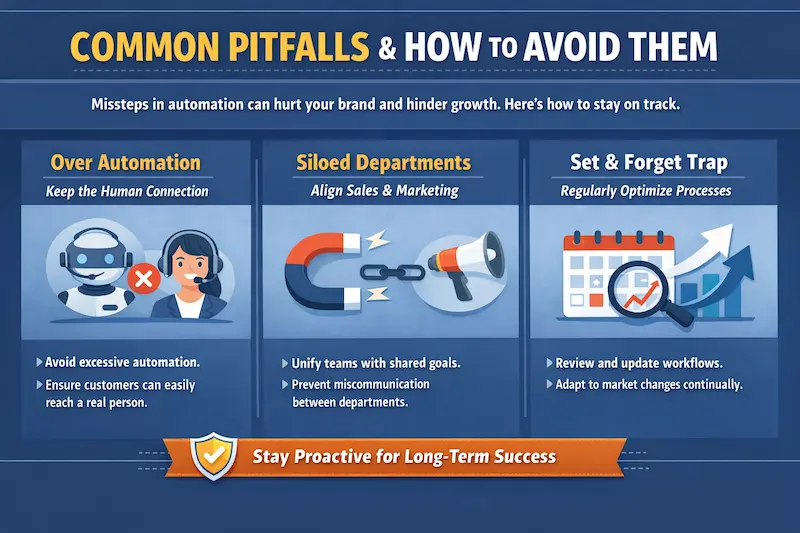
You should recognize that poor automation setups can damage your brand reputation and frustrate your workforce. Misconfigured systems in the local market often lead to missed opportunities instead of growth. You must proactively manage these risks to ensure your digital transformation remains successful and efficient.
- Over Automation: You must avoid the trap of automating every interaction because your customers still value a genuine human touch. Being stuck in a robotic loop will only drive your clients away to competitors. Always provide an easy way to speak with an expert to keep your customer service high quality and personal.
- Siloed Departments: Automation will only amplify existing friction if your sales and marketing teams are not aligned on lead definitions. You need shared protocols before launching any workflows to ensure everyone works toward the same revenue goals. This alignment is the best way to improve your conversion rates and keep your business growth sustainable.
- The Set It and Forget It Mentality: You cannot simply set your workflows and forget them because Malaysian consumer behaviors are constantly evolving. What worked last year might underperform today so you need to review your data and test new strategies regularly. Constant optimization of your triggers will help you maintain a high performing pipeline throughout 2026.
Advanced Practices and the Future of CRM Automation
You should use predictive AI to find hidden patterns in your data that human analysis might miss. This system identifies leads with the highest propensity to buy so your sales team works more efficiently. This strategy ensures you focus your energy on high value prospects who are ready to convert immediately.
Predictive Analytics and AI Lead Scoring
You can use AI to analyze historical behavior and prioritize prospects who are most likely to close. This dynamic scoring helps your team work on the most profitable deals without wasting time on cold leads.
Omnichannel Orchestration
Your customers in Malaysia move across WhatsApp and LinkedIn before making a purchase decision. Advanced systems automatically pivot your communication to their preferred channel to ensure your message is seen. This seamless approach helps you engage your audience effectively without being intrusive.
Hyper-Personalization at Scale
You can now use behavioral data to generate unique content and layouts for every individual prospect. Automating this process builds deeper trust and significantly accelerates your entire sales cycle. Delivering this level of detail is the best way to improve your overall conversion rates and dominate the market.

Conclusion
Implementing strategic automation turns routine operations into a high performance revenue engine for 2026. Focusing on high value activities becomes effortless once manual tasks are eliminated from the daily workflow. This shift ensures your organization remains agile and ready for rapid regional scaling.
Maintaining strict alignment with LHDN MyInvois and SST standards protects your brand from unnecessary operational risks. Intelligent systems provide the transparency required for better leadership decisions and long term expansion. This reliability is the key to building sustainable business success across Malaysia.
Exploring how advanced features fit specific business goals is the best way to validate this investment. A locally optimized solution will accelerate operational speed while driving consistent profitability. Scheduling a free demo today allows your leadership to see how these smart tools transform your daily success.
FAQ About CRM Automation
-
How does CRM automation directly impact the company bottom line and ROI?
Automation turns routine operations into a high performance revenue engine by freeing up your team for high value strategic activities. Research from global firms indicates that digital transformation significantly improves operational speed while reducing long term overhead costs through better resource allocation. This shift allows your business to maximize profitability while maintaining a lean and efficient workforce.
-
Is the system fully compatible with local Malaysian tax and invoice regulations?
Advanced platforms ensure your business remains compliant with LHDN MyInvois and SST requirements by automating the reporting and validation process. This integration protects your organization from operational risks and costly penalties while providing a single source of truth for all financial audits. Maintaining local compliance is the best way to build long term trust with your stakeholders and government agencies.
-
What is the most effective way to begin the automation journey without disrupting current operations?
Adopting a structured phased approach is the most effective way to ensure high user adoption and a smooth transition for your employees. Starting with simple high impact tasks like lead qualification allows your team to adapt to new workflows before scaling to more complex logic. This gradual rollout prevents operational bottlenecks and ensures your business maintains its productivity during the digital migration.
-
How does AI lead scoring improve the accuracy of sales and revenue forecasting?
Predictive AI identifies hidden patterns in your historical data to prioritize prospects who are most likely to convert into paying customers. This technology removes human bias from the sales pipeline and allows your leadership to make better strategic decisions based on real time information. Using these advanced insights helps your company accurately predict future cash flow and allocate budgets toward the most profitable channels.