










 Limited to 100 registrants

As the year goes by, businesses face challenges with fluctuating demand during certain seasons. The key to navigating this is understanding how to balance stock levels, ensuring you have enough to meet demand without overburdening your resources. It’s about knowing how to adjust when demand peaks.
With the right approach, seasonal inventory management can give you an edge over your competitors. Properly preparing for these shifts will not only ensure smooth operations but also enhance customer satisfaction. Keep reading to discover expert tips on mastering seasonal inventory management!
Key Takeaways
Seasonal inventory helps businesses meet demand and avoid stock issues, ensuring financial stability.
Supply chain visibility and financial accuracy are essential for optimizing seasonal inventory, minimizing waste, and boosting overall productivity.
A modern inventory management system has accurate tracking of inventory levels, responds faster to shifting demand, and reduces costly errors.
What is Seasonal Inventory?
Seasonal inventory refers to products stocked specifically for peak demand periods, such as holidays or weather changes. Businesses prepare in advance by adjusting stock levels to align with anticipated market trends and customer behavior.
These inventory fluctuations affect industries like retail, food, and hospitality, requiring businesses to plan purchases, storage, and sales strategies accordingly. Failure to manage seasonal inventory can lead to losses, stock shortages, or excessive storage costs.
Importance of Seasonal Inventory
Managing seasonal inventory helps businesses meet demand efficiently while avoiding overstocking or stock shortages. Proper planning optimizes cash flow, maximizes sales, and ensures financial stability.
In the Philippines, demand fluctuates due to holidays like Christmas and local festivals like Sinulog, Panagbenga, Ati-Atihan, Pahiyas, and Kadayawan. Businesses that adjust inventory strategies accordingly stay competitive and improve customer satisfaction.
By understanding seasonal inventory and implementing a manufacturing inventory system, businesses can make informed decisions, optimize supply chains, and boost profitability during peak seasons. Proper forecasting and inventory control help ensure smooth operations and customer satisfaction.
"Managing seasonal demand is therefore a delicate balancing act."
Key Elements of Seasonal Inventory Management

Businesses must focus on key factors like supply chain visibility, financial accuracy, and operational efficiency to stay competitive. Here are the key elements that help businesses manage seasonal inventory effectively:
1. Supply chain visibility
To keep operations smooth, businesses must track inventory to prevent disruptions and ensure availability. By using real-time insights, they can reduce delays, minimize losses, and make informed decisions. Digital tools further enhance efficiency, helping businesses stay ahead during seasonal fluctuations. Explore how digital tools can support your business, and discover more about their pricing scheme below.
2. Financial accuracy
Proper financial planning helps control costs, set budgets, and track performance. Avoiding excess expenses like warehousing fees improves cash flow and stability. This ensures smooth operations and maximizes profitability during seasonal fluctuations.
3. Inventory optimization
Optimizing inventory helps businesses stock the right products while minimizing waste and costs. By analyzing past sales data, they can adjust procurement strategies to improve cash flow and avoid dead stock. As a result, businesses maintain a more efficient and cost-effective supply chain.
4. Enhancing operational efficiency
Efficient inventory management reduces errors, speeds up processing, and enhances business performance. By using technology-driven solutions like barcode scanning and automated restocking, businesses can handle peak-season demand smoothly.
Inventory Metrics & KPIs for Seasonal Inventory

Key performance indicators (KPIs) help businesses track seasonal trends and make informed decisions. Monitoring these metrics improves inventory efficiency and prevents overstocking or shortages. Here are essential KPIs for seasonal inventory management:
- Stock Turnover Rate – Measures how often inventory is sold and replaced in a specific period.
- Sell-Through Rate – Indicates the percentage of inventory sold compared to the total received.
- Days of Inventory on Hand – Calculates how long current stock will last based on sales trends.
- Order Accuracy Rate – Tracks the percentage of correctly fulfilled orders, ensuring smooth operations.
By consistently monitoring these KPIs, businesses can refine inventory strategies, enhance forecasting, and maintain profitability during seasonal peaks.
Inventory Models and Management Strategies
Different inventory models help businesses optimize stock levels and reduce costs. Below are key strategies businesses can use:
- Just-in-Time (JIT) Inventory – Minimizes holding costs by restocking only when necessary. This approach works best with reliable suppliers and fast-moving products, but can be risky if supply chain disruptions occur.
- FIFO & LIFO Methods – First-In-First-Out (FIFO) ensures older stock sells first, preventing spoilage, while Last-In-First-Out (LIFO) prioritizes newer stock, benefiting industries with rapid cost changes.
- ABC Analysis – Categorizes inventory by importance, helping businesses focus on high-value items while efficiently managing lower-priority stock.
- Economic Order Quantity (EOQ) – Determines the ideal order quantity to minimize costs while ensuring product availability. It balances ordering and holding costs for a stable inventory flow.
How to Build a Seasonal Inventory Calendar for Year-Round Demand Planning

A seasonal inventory calendar helps businesses prepare stock before demand rises. It gives teams a clearer schedule for purchasing, promotions, warehouse planning, and replenishment, so they can reduce stockouts, avoid overstocking, and manage seasonal demand with better control.
To build one, businesses should identify key demand periods such as Christmas, New Year, back-to-school season, local festivals, payday cycles, and major promotions. They should then review past sales data to see when demand starts rising, reaches its peak, and begins to slow down. This timeline helps teams decide when to increase stock, maintain inventory levels, and reduce stock after the season ends.
A strong calendar also needs clear action points in every phase. Businesses should use this mini framework to guide execution:
- Pre-season: forecast demand, confirm supplier lead times, and prepare stock.
- Peak season: monitor sales, replenish fast-moving items, and respond quickly to changes.
- Post-season: clear excess stock, review performance, and improve the next inventory plan.
By following this action phase, a business will be better prepared to handle seasonal inventory operations.
Seasonal Inventory Challenges
Managing seasonal inventory comes with several challenges that businesses must overcome to maintain efficiency and profitability:
- Dead Stock and Stockouts – Balancing inventory levels is critical. Dead stock ties up capital and storage, while stockouts generate lost revenue and customer dissatisfaction. Demand forecasting and inventory monitoring preserve optimal stock equilibrium, which is easier to hold with inventory forecasting software built for seasonal peaks.
- Storage and Logistical Issues – Limited storage and logistical constraints impact seasonal inventory management. Efficient warehousing strategies and outsourcing storage solutions improve supply chain performance and cost efficiency.
- Post-Season Demand Fluctuations – Once peak seasons end, businesses may struggle with excess stock or sudden drops in demand. Discount strategies and flexible inventory models ensure continued profitability.
- Rising Business Costs – Seasonal peaks often increase costs, including supplier pricing, logistics, and labor expenses. Negotiating supplier terms and optimizing logistics help manage these rising costs effectively.
To address these issues, businesses must use demand forecasting and inventory tracking systems. Proper planning helps in maintaining an optimal stock balance throughout the year.
Types of Seasonal Inventory Demand
Different factors influence seasonal inventory demand in the Philippines, requiring businesses to adjust their stock accordingly:
|
Impact |
|
|---|
| 1. Weather-Driven Demand | Weather conditions affect product demand, such as increased sales of umbrellas during typhoon season and cold beverages in summer. | Businesses must track weather patterns to ensure the right stock is available at the right time. |
| 2. Cultural and Holiday Influences | Major holidays like Christmas, New Year, and local fiestas drive consumer spending. | Businesses should stock festive items and promotional products in advance to capitalize on these seasonal peaks. |
| 3. Migration, Travel, and Income | Population shifts and holiday travel impact product demand, increasing sales of luggage, travel essentials, and gifts. | Monitoring economic trends helps businesses adapt their inventory strategies effectively. |
| 4. Back-to-School Demand | The school season increases demand for uniforms, bags, notebooks, stationery, and other academic supplies. | Businesses should prepare inventory early and launch relevant promotions before the academic year starts. |
| 5. Event-Based and Promotional Demand | Concerts, local events, payday periods, and special promotions can quickly raise demand for selected products. | Businesses should align stock planning and marketing campaigns with event schedules and expected customer traffic. |
By knowing these, your business will be able to prepare for the inevitable seasonal demands. You can prepare your seasonal inventory so that you can profit from the window of opportunity.
Reduce Your Headache during Peak Season with a Modern Inventory System
Peak seasons can quickly create stock shortages, overstocking, and fulfillment delays when businesses rely on manual processes. A modern inventory system helps teams manage seasonal demand with better accuracy, stronger visibility, and faster decision-making across purchasing, warehousing, and stock control.
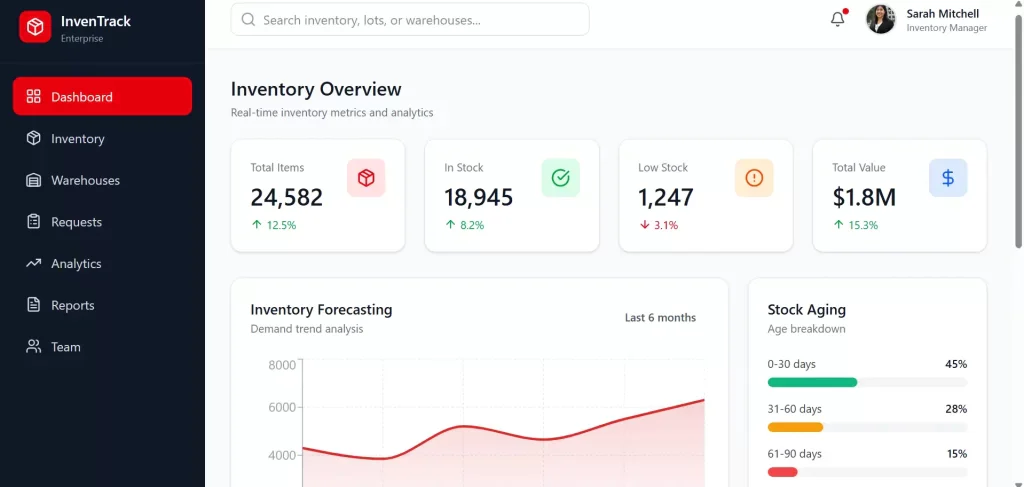
By using the right system, businesses can maintain healthier inventory levels, respond faster to shifting demand, and reduce costly errors during busy periods. This makes modern inventory software a practical solution for companies that want smoother operations and better control during seasonal spikes.
Here are the key features of a modern inventory system:
- Barcode Management – Track and manage stock movements across multiple locations with better accuracy.
- Lot and Serial Number Tracking – Monitor item history more easily through automatic lot and serial number tracking.
- Stock Request Management – Streamline stock requests and approval workflows to speed up internal replenishment.
- Inventory Forecasting – Estimate future inventory needs based on demand patterns and planning periods.
- Inventory Valuation – Review inventory value across warehouses more quickly and accurately.
- Stock Aging Analysis – Analyze stock age to identify slow-moving items and make better replenishment decisions.
With these features, businesses can improve inventory control, reduce disruptions, and stay better prepared for seasonal demand. If you want to compare available options, read our guide to the best inventory systems to manage seasonal demand.
Conclusion
Managing seasonal inventory is essential for businesses to meet demand efficiently and avoid stockouts. Proper planning and tracking key metrics help businesses streamline operations and reduce excess costs. By optimizing inventory, businesses can maintain a competitive edge and increase profitability.
Businesses need to adopt a modern cloud-based inventory management system. Its connectivity with the clouds ensures that all outlets will follow the same memo during seasonal demands. Your business will grow, be flexible, and stable. With the system, your businesses can optimize stock levels and maximize revenue during peak seasons.
Frequently Asked Questions
Examples include holiday decorations, seasonal clothing, and items for special events or weather-based demand.
It helps businesses meet peak demand, reduce excess stock, and ensure timely product availability for customers during seasonal fluctuations.
By forecasting demand, tracking stock levels, and automating replenishment to prevent shortages or overstock during peak seasons.
Seasonal availability refers to products that businesses sell or stock only during specific seasons, holidays, or recurring demand periods.>
Seasonal inventory covers items businesses stock for peak demand periods, while off-season inventory refers to products with lower demand outside those periods.>