







Imagine running a manufacturing operation where every resource is optimized, every schedule is on time, and raw materials are always ready. This is the promise of effective Production Planning and Inventory Control (PPIC) in today’s fast-paced industry.
Yet, without the right tools, PPIC managers face overwhelming challenges such as inaccurate forecasting, production delays, and high operational costs. These issues impact efficiency and profitability and affect customer satisfaction.
According to a study by the Philippine Statistics Authority (PSA), over 40% of manufacturing delays in the country stem from mismanaged inventory and production schedules. Adopting advanced solutions is critical for overcoming these setbacks.
Discover in this article how PPIC works, its benefits to your business, and how ERP software can simplify your processes. Let us guide you toward a more intelligent, more efficient manufacturing operation.
Table of Contents
Key Takeaways
|
What is PPIC (Production Planning and Inventory Control)?

Production Planning and Inventory Control (PPIC) is the process of coordinating a company’s manufacturing activities and managing the raw materials needed to produce finished goods. It involves creating production schedules, monitoring resources, and maintaining sufficient inventory levels to meet demand without disruption. In most manufacturing companies, the PPIC department serves as a vital link between sales, procurement, and finance ensuring that every stage of the production process runs smoothly and that customer orders are fulfilled on time.
The PPIC department carries out a wide range of responsibilities to keep operations aligned and efficient:
- Planning production schedules: Create detailed schedules to ensure manufacturing processes run on time and meet deadlines.
- Creating and managing manufacturing orders: Organize production orders in line with inventory levels and customer requirements.
- Forecasting inventory requirements: Predict inventory needs by analyzing customer demand, sales forecasts, and market trends.
- Scheduling: Plan production batches based on available raw materials, inventory levels, and estimated production times.
- Monitoring inventory levels: Track raw materials and finished goods in warehouses to ensure uninterrupted production.
- Optimizing machine productivity: Manage machinery usage to prevent overuse or underuse and maintain balanced operations.
- Coordinating with other departments: Collaborate with sales, marketing, and procurement teams to resolve production-related challenges.
- Managing stock movements: Monitor incoming and outgoing goods to maintain optimal stock levels and avoid shortages or excess.
- Providing inventory data: Share accurate inventory information with the finance department to support production reporting and financial planning.
- Solving production issues: Resolve disruptions quickly through effective communication with relevant departments.
Benefits of PPIC (Production Planning and Inventory Control)

An efficient PPIC system streamlines manufacturing operations, reduces unnecessary costs, and boosts overall productivity. Here are the key benefits in detail:
1. Ensure Right-Sized Investments in Capital Equipment
PPIC helps organizations determine the exact production capacity needed to meet business demands, guiding decisions about the right amount of machinery, labor, and suppliers required. With accurate planning, businesses can reduce waste and make confident investment decisions that maximize ROI while eliminating delays in production capacity.
2. Reduce Inventory Costs
By collaborating with the sales team to forecast customer demand, PPIC ensures well-planned safety stocks and minimizes unnecessary inventory handling costs. This preparation allows businesses to navigate unexpected supply and demand fluctuations without resorting to expensive last-minute raw material orders.
3. Reduce Labor Costs
PPIC streamlines labor allocation by optimizing manufacturing processes and introducing automation where applicable, ensuring maximum productivity with minimal workforce requirements. It helps identify the right practices, raw materials, and technology investments allowing businesses to accomplish more with fewer resources.
4. Improve ROA (Return on Assets)
By adopting best practices tailored to the business, PPIC enables companies to optimize asset utilization — from machinery to suppliers — ensuring nothing is overworked. This systematic approach enhances asset efficiency while maintaining production quality and consistent returns.
5. Enhance Customer Service
Effective PPIC ensures precise production schedules and on-time order delivery, which strengthens customer satisfaction and builds a positive brand image. Fewer complaints and delays help businesses foster stronger client relationships and a loyal customer base.
6. Easy Inventory Control
A robust PPIC process provides real-time insights into inventory levels, instantly notifying teams about stock availability or shortages to enable proactive planning. This efficiency saves time and allows staff to focus on higher-value tasks without unnecessary manual effort.
7. Improve Plant Morale
Well-planned schedules, organized inventories, and clear communication reduce rush orders and last-minute chaos — creating a less stressful work environment. Employees feel more empowered and confident in their roles, leading to higher morale and a more productive workforce.
8. Reduce Idle Time
Idle time caused by raw material shortages can disrupt workflows and lower productivity across the entire operation. PPIC minimizes this by ensuring a smooth flow of materials and a well-planned production process, allowing businesses to maintain continuous operations and maximize efficiency. For companies managing complex inventory management needs, PPIC provides the structured foundation needed to keep stock levels aligned with production demands at all times.
Types of Production Planning
1. Master Production Schedule
The Master Production Schedule is a comprehensive plan that specifies when production will commence for various products, including the timing and quantities involved. Its primary objective is to establish a practical timeline that ensures timely delivery while minimizing excess inventory.
2. Materials Requirement Planning
Materials Requirement Planning focuses on guaranteeing the availability of essential raw materials, maintaining minimal stock levels, and supporting procurement strategies. Manufacturing inventory software can support this process by automating material tracking and improving planning accuracy.
3. Capacity Planning
Capacity Planning evaluates the production capabilities an organization needs to meet customer demand and adapt to variations in product requirements. This process aims to balance costs with available resources while aligning supply with demand.
4. Workflow Planning
Workflow Planning involves organizing the sequence of tasks executed throughout the production process. It allows teams to monitor each item’s progress, clarify task ownership, and maintain clear visibility into the current status of all production activities.
What are the stages involved in production planning and inventory control?
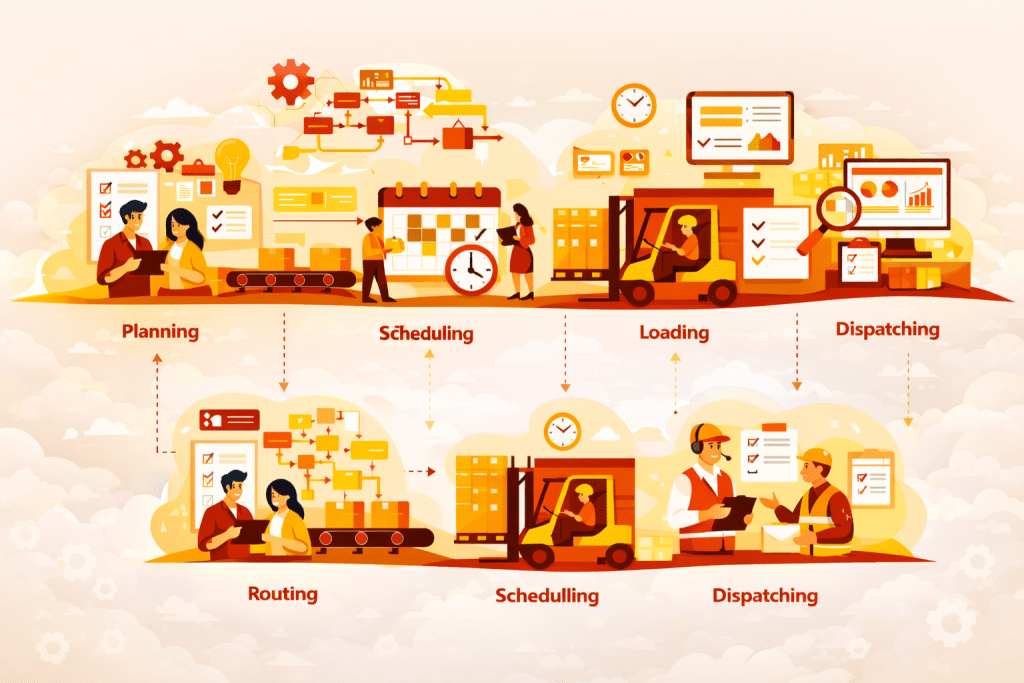
1. Planning
This phase outlines production objectives of what will be made, who handles which tasks, and what methods will be used. It involves gathering input from sales and engineering to develop a detailed plan covering labor, equipment, and material needs.
2. Routing
Routing determines how raw materials move through the production facility and how they are converted into finished products. This step coordinates all production stages, specifying the required materials and resources while optimizing operational flow.
3. Scheduling
Scheduling focuses on timing, determining when each operation will be completed to make the best use of available time. Various schedule types, such as Master and Daily Schedules, are used to manage timelines effectively across the production floor.
4. Loading
Loading evaluates the workload assigned to machines and workers, balancing new tasks against those already scheduled. It identifies underutilization and overloading issues, with solutions such as adding shifts or overtime to prevent delays.
5. Dispatching
Dispatching involves issuing orders and instructions based on routing and scheduling plans. This step ensures that all necessary materials are prepared for production and that comprehensive records are maintained throughout.
6. Follow-up
Often referred to as monitoring, this step compares actual performance with expected outcomes to identify problems in the production process. It addresses issues such as missed deadlines and may require adjustments to targets or schedules to improve overall efficiency. Teams using dedicated production planning tools can automate much of this monitoring, making it easier to catch deviations early before they affect output.
How ERP Software Optimizes PPIC

Manual processes in PPIC often lead to human errors, data inaccuracies, and delays that reduce consistency across production. Implementing ERP software addresses these challenges by automating and streamlining operations through a centralized platform eliminating the need for separate systems and enabling faster, more accurate process management.
Key benefits of using ERP software to optimize PPIC include automated production scheduling, efficient Bill of Materials (BoM) and routing preparation, early warnings for low inventory levels, automated equipment maintenance scheduling, simplified procurement through automation, real-time monitoring of raw materials and finished goods, accurate inventory data for demand forecasting, and comprehensive reporting on inventory, production, and expenses. For businesses evaluating their options, reviewing the best manufacturing ERP software available can help identify a system that fits their production scale and PPIC requirements.
Conclusion
PPIC is a foundational process for any manufacturing business looking to maintain smooth production, manage inventory efficiently, and deliver on customer commitments consistently. Without structured planning and control, operations are vulnerable to delays, waste, and missed demand signals that compound over time. Businesses that invest in well-defined PPIC practices and the right technology to support them are better positioned to reduce costs, optimize resources, and scale their operations with confidence. For companies exploring software solutions to support these processes, reviewing the top ERP systems for manufacturing can be a useful starting point for finding tools that align with their production goals and workflow complexity.
FAQ About PPIC
-
What is PPIC in supply chain?
PPIC, or Production Planning and Inventory Control, is a key function in the supply chain that ensures efficient production processes and optimal inventory management. It aligns production schedules with inventory levels to meet customer demand while minimizing waste and delays.
-
What is the purpose of PPIC?
The purpose of PPIC is to streamline manufacturing processes and manage inventory effectively. It ensures production schedules run on time, raw materials are available, and finished goods meet demand. PPIC aims to enhance efficiency, reduce costs, and improve overall operational performance.
-
What is the purpose of the inventory control system?
The purpose of an inventory control system is to maintain optimal stock levels, prevent overstocking or shortages, and ensure smooth operations. It helps monitor inventory in real time, reduce waste, improve cash flow, and ensure that production processes remain uninterrupted.
-
What is the difference between production planning and inventory control?
Production planning focuses on scheduling and organizing manufacturing activities to meet output targets, while inventory control ensures that the right materials are available in the right quantities at the right time. Together, they form PPIC, a unified approach that keeps production and stock management in sync.