







A study by Ador R. Torneo on performance management in the Philippines found that companies with strong performance management systems perform better, engage employees more, and drive higher productivity. Yet, many businesses still lack structured tracking and clear communication about performance expectations.
Without a proper system in place, growth opportunities are missed, and companies struggle to align employee goals with business success. That’s why businesses are implementing more effective performance management methods. Henceforth, this article will explore further into performance management.
Key Takeaways
Performance management helps employees understand their goals and improve through regular feedback and clear expectations.
Good methods include setting goals, getting feedback from different people, coaching, and checking progress often.
Regular check-ins and tracking performance help employees grow, feel valued, and keep customers happy.
What is Performance Management?

Performance management is a continuous process that involves regularly communicating and defining job roles, priorities, performance expectations, and development plans to enhance individual performance while ensuring alignment with the organization’s strategic objectives.
Additionally, it serves as a tool for managers to track and assess employees’ work. The main goal of performance management is to help people do their best at work. It also ensures their efforts support the organization’s overall goals.
Both private and public sectors commonly use this approach. In addition to setting objectives at the start of the evaluation period and assessing performance at the end, it’s better to conduct regular feedback sessions throughout the year.
How HR Performance Management Works
A good performance management program helps managers and employees stay on the same page about expectations, goals, and career growth while making sure everyone’s work aligns with the company’s bigger picture.
It also helps allocate resources effectively within the company’s performance budget. Instead of just focusing on yearly reviews, performance management looks at how employees fit into the workplace as a whole, aiming for continuous improvement rather than perfection.
For instance, a sales manager may set revenue targets for their team within a specific time frame. Instead of just assigning numbers, they also provide strategic guidance to help employees achieve their goals.
Benefits of Performance Management
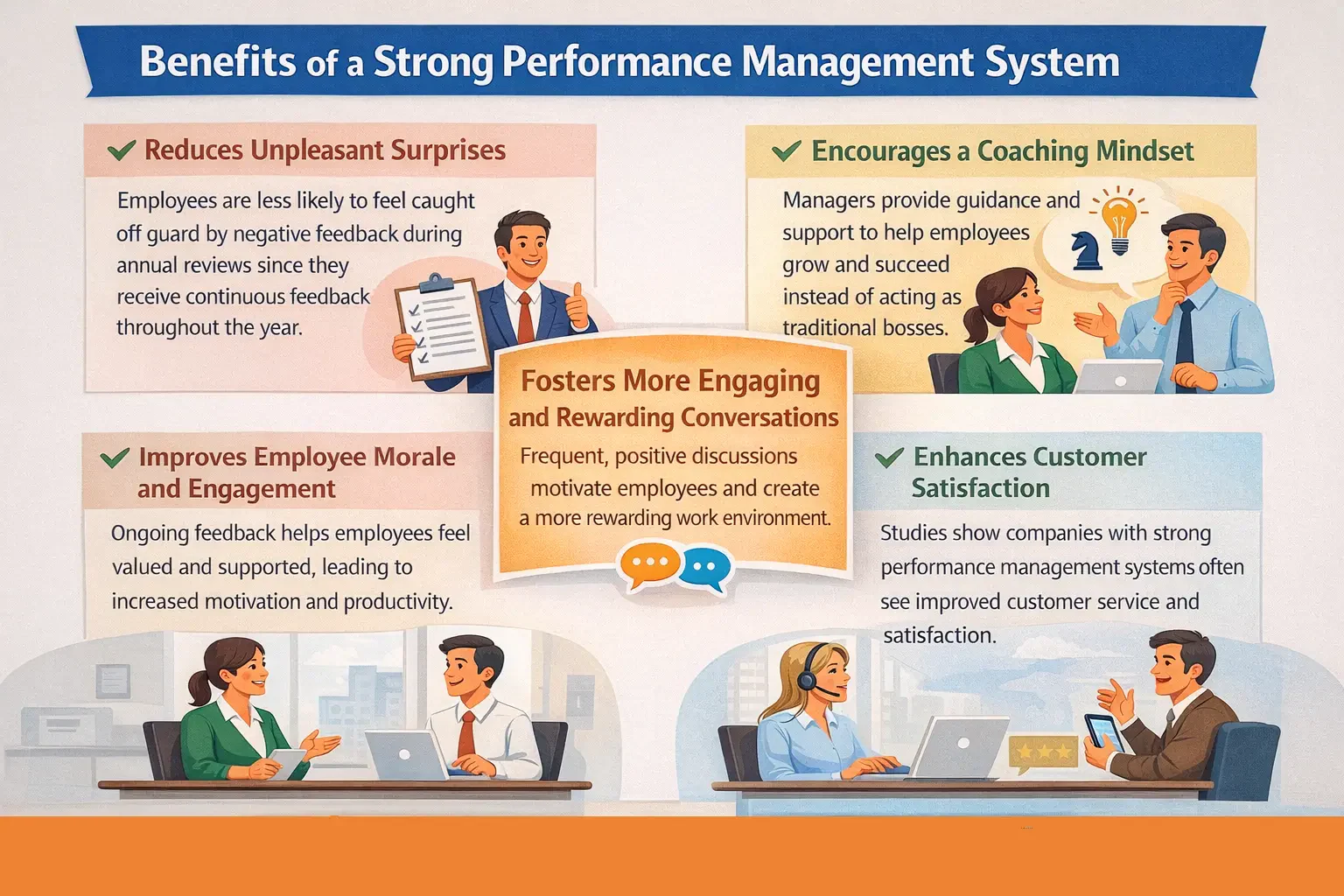
Supporters of performance management argue that it not only helps companies achieve their objectives but also enhances job satisfaction for employees, ultimately leading to better retention rates.
Methods of Performance Management
 Selecting the right performance management approach can drive continuous improvement, support employee growth and development, and ultimately enhance their contributions to your organization’s success. Below are some key performance management methods explained.
1. Goal Setting
One of the most effective performance management strategies is setting SMART (Specific, Measurable, Achievable, Relevant, and Time-bound) goals. This approach provides employees with clear direction, motivation, and a sense of purpose.
Managers and employees can collaborate to set different types of SMART goals based on business needs and individual growth:
- Performance Goals – Focused on meeting specific job responsibilities and achieving key deliverables.
- Development Goals – Aimed at improving skills and competencies that prepare employees for career advancement.
- Stretch Goals – Designed to push employees beyond their comfort zones, encouraging them to take on new challenges and enhance their capabilities.
2. Continuous Performance Management
This method is an ongoing approach where managers and employees regularly discuss work performance and goals throughout the year. Instead of limiting feedback to annual reviews, managers provide real-time, constructive input alongside goal-setting and frequent check-ins.
Frequent feedback builds trust and makes work relationships more open and honest. It also helps catch small problems before they turn into big ones, improves communication between team members and managers, and creates a workplace where people feel supported in their growth.
3. Management by Objectives (MBO)
Management by Objectives (MBO) is a performance management approach that evaluates how well an employee’s work aligns with company goals. It helps managers assess job responsibilities, set clear objectives, and track progress to ensure employees are meeting expectations.
Once goals are in place, managers collect and analyze performance data to see how employees are doing. Regular feedback helps employees understand their strengths and pinpoint areas for improvement. If they’re struggling with certain tasks, they can ask for guidance and support.
This method also helps HR identify skill gaps and training needs. Additionally, it gives insight into workload distribution—whether employees can handle their tasks effectively or if adjustments, like delegating responsibilities, are necessary.
4. 360-Degree Feedback
360-degree feedback, also known as a 360 review, is a performance management method where employees receive input from multiple sources, including their manager, colleagues, and self-evaluations.
Instead of relying solely on a manager’s perspective, this approach provides a well-rounded view of an employee’s performance. Additionally, the process of giving feedback to peers encourages employees to reflect on their own growth and development.
While team members play a significant role in providing feedback, managers oversee the reports to identify key concerns or praise-worthy performance. The insights gathered can also guide employee training and development plans.
5. Performance Appraisals
Performance appraisals are one of the more traditional performance management methods, typically conducted on an annual, bi-annual, or quarterly basis. These structured one-on-one meetings between an employee and their manager involve a comprehensive review of performance, highlighting strengths, weaknesses, and areas for improvement.
Beyond just evaluation, performance appraisals help employees understand their career trajectory within the company and what steps they need to take for growth or promotion. When done effectively, they can lead to better employee retention over time.
6. Coaching
Coaching is a performance management approach that focuses on mentoring employees to enhance their skills, knowledge, and overall performance through one-on-one discussions. Rather than providing direct solutions, coaching encourages employees to think critically and develop their own answers.
Since coaching requires specific skills, managers need proper training to guide employees effectively. Most organizations combine coaching with other performance management methods to create a well-rounded approach to employee development.
Common Steps to Performance Management
 While there are ready-made performance management software solutions available, most organizations tailor their templates to fit their specific needs. However, effective performance management programs generally share a few key components, including:
- Aligning Employee Activities with Company Goals – Employees should clearly understand how their roles contribute to the company’s overall mission. Managers and employees should work together to define job responsibilities.
- Setting Clear Job Performance Outcomes – Employees should know what their job produces, the processes involved, the impact of their work on the company, and how they should interact with colleagues, supervisors, and customers. A role-based competency management system can help define the skills and competencies required for each position.
- Establishing Measurable Performance Expectations – Employees should have input on how their success is measured. Expectations can include results (what they produce), actions (how they work), and behaviors (the attitude and values they demonstrate).
- Developing Career Growth Plans – Employees should have opportunities to learn new skills and apply them in ways that benefit both themselves and the company.
- Holding Regular Check-ins – Instead of relying only on an annual performance review, managers and employees should have ongoing discussions throughout the year to track progress and make necessary adjustments.
Download a Simple Performance Review Template
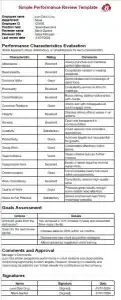
This simple performance review template covers the main sections companies usually need to evaluate employees clearly and consistently. Instead of creating a review form from scratch, you can use this template to speed up the appraisal process and keep every evaluation more organized.
Here’s what’s inside the template:
1. Employee information
This section records basic details such as employee name, department, position, employee ID, review period, reviewer name, and last review date. It helps keep each evaluation documented properly.
2. Performance characteristics evaluation
This part measures core work areas like attendance, dependability, technical skills, punctuality, teamwork, honesty, communication, and work quality. Each category includes a rating and comments, so the review feels more specific and useful.
3. Goals assessment
This section tracks whether the employee achieved goals from the last review period and outlines goals for the next one. It helps managers connect performance discussions with clear improvement targets.
4. Manager comments and approval
Here, managers can summarize the employee’s overall performance, highlight strengths, and note areas that still need improvement. This makes the review more balanced and actionable.
5. Signature section
The final part includes signatures from both the employee and reviewer, along with the date. This confirms that the review has been discussed and recorded properly.
Download this template to make employee evaluations easier, more structured, and more professional. It is a practical format for businesses that want a simple review document ready to use.
Download Performace Review Template
Tips for Conducting Performance Management
Effective performance management requires the right strategies and continuous evaluation to ensure success. Here are some key tips to build a system that supports both employee growth and company goals.
1. Assess What’s Working and What’s Not
Before making any updates to your performance management process or tools, it’s crucial to evaluate what’s effective, what isn’t, and the reasons behind it. HR should gather feedback from both employees and managers, collecting insights on their experiences and suggestions for improvement.
Once this information is compiled, it can be presented to business leaders alongside research and industry data to support the need for change.
2. Selecting the Right Performance Management Approach
There are two primary methods of performance management: the behavioral approach and the results-oriented approach. Choosing the right one depends on the nature of the role being evaluated.
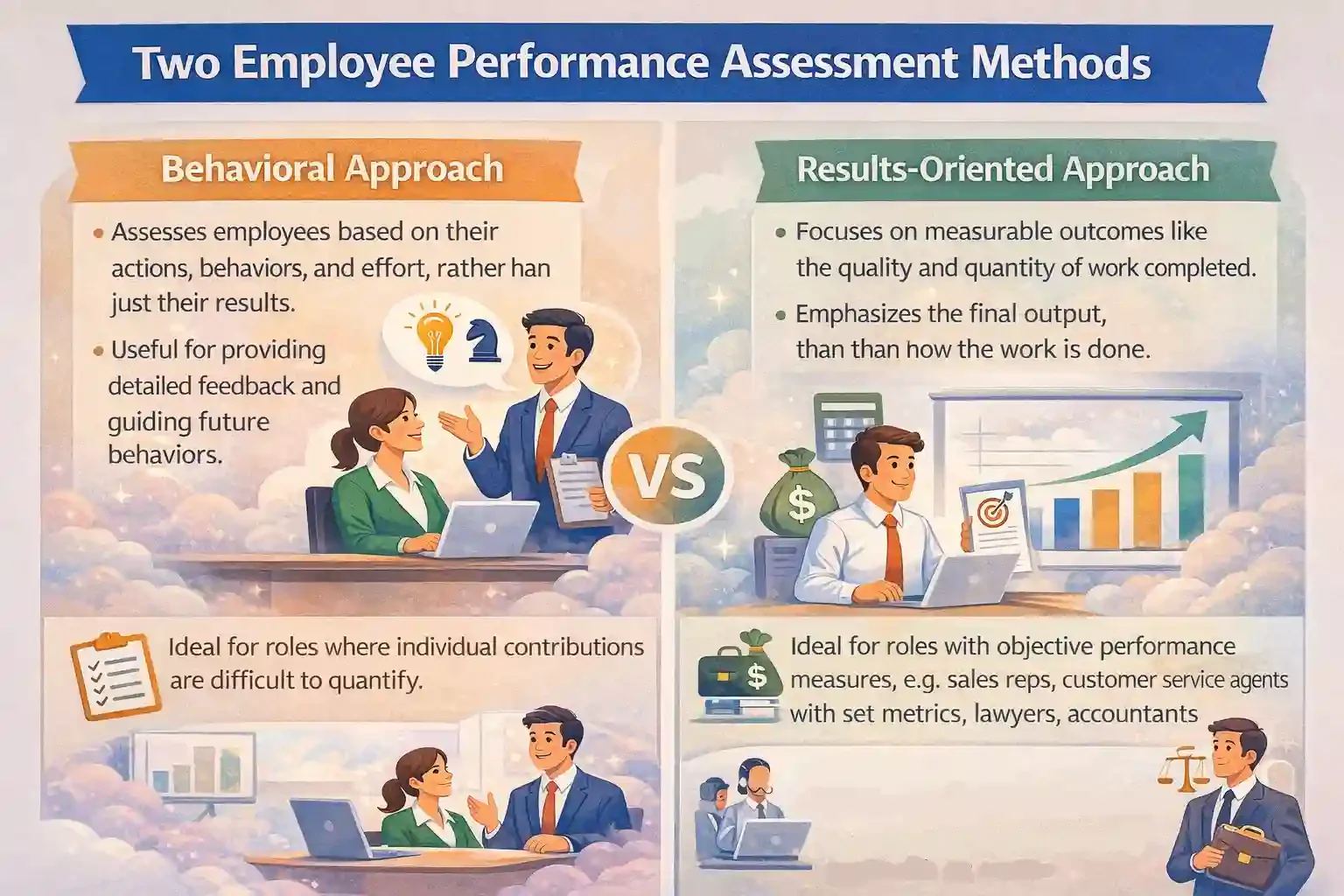
To ensure effective performance management, it’s essential to choose the approach that best suits the role. Additionally, as work environments evolve—such as with the rise of remote and hybrid work models—companies should reassess their performance management strategies.
3. Train and Support Managers
Managers are key players in the success of a performance management program. They are responsible for engaging, motivating, and helping employees grow. To ensure they fulfill this role effectively, HR should provide structured training on giving and receiving constructive feedback.
Additionally, managers should be coached on how to establish an ongoing, open feedback loop with their teams, fostering a culture of continuous improvement.
4. Implement Continuous Performance Management
A study by Willis Tower Watson revealed that while 93% of organizations consider improving overall performance a key goal of performance management, less than half (44%) feel their current programs effectively achieve this objective.
One major issue is the overreliance on annual performance reviews without regular follow-ups or one-on-one check-ins throughout the year. Without ongoing feedback and coaching, employees miss opportunities for growth and improvement.
HR can play a crucial role in training managers to provide continuous, constructive feedback. This approach keeps employees motivated, helps identify and resolve issues early, and ensures that underperforming employees receive the necessary support and resources to improve.
Conclusion
Performance management keeps employees engaged, motivated, and aligned with company goals. Kapag may regular check-ins at clear expectations, mas madali for employees and businesses to grow together.
Let’s be real: managing performance manually takes too much time and doesn’t always give you the full picture. Why stick to outdated methods when you can have a system that does the work for you? With HR Software, hindi mo na kailangang mag-effort mag-track ng performance, automated na lahat, real-time pa.
Frequently Asked Questions on Performance Management
The goals include aligning individual tasks with company objectives, improving work quality through regular feedback, and identifying areas for skill development.
Workforce performance evaluation is an ongoing process of setting expectations and providing feedback, while appraisals are periodic reviews focused on past performance.
It increases motivation by recognizing achievements, offering growth opportunities, and showing employees how their work contributes to company success.
Digital tools help track goals, provide real-time feedback, and analyze work progress, making performance oversight more accurate and efficient.