







Inventory reconciliation is the process of matching physical stock with recorded inventory levels. This step is essential as it helps reduce discrepancies and uncovers the causes behind any variances.
When tracking is inaccurate, businesses often face stockouts or excess stock, and both situations drive up costs and hurt revenue. Poor inventory visibility also makes it harder to plan purchases, forecast demand, and allocate budgets with confidence.
Implementing the right software is crucial to overcoming these challenges. A recent survey conducted by Right Goods Philippines Incorporated found that the implementation of an inventory system significantly impacted repeat purchases by 27.4%
This article will help you understand how inventory reconciliation works, why it matters for your business, and what steps you can take to do it more effectively.
Table of Contents
Key Takeaways
|
What is Inventory Reconciliation?
Inventory reconciliation involves taking stock of all items and ensuring that recorded inventory data aligns with the actual quantities on hand. A regular reconciliation process is essential to identify and resolve any discrepancies.
Inventory differences often occur due to recording errors, damaged products, or stock shortages. By using inventory tools for daily operations, businesses can keep data accurate and minimize potential losses.
Additionally, this process supports managers in making informed decisions regarding stock control and boosts operational efficiency by ensuring consistent and precise monitoring of inventory levels.
How Inventory Reconciliation Improves Business Operations
Reconciling inventory is crucial for maintaining smooth business operations. By regularly matching physical stock with digital records, businesses can ensure accurate inventory levels, enhancing their ability to meet customer demands.
In addition, a regular reconciliation process helps identify and resolve discrepancies early, such as shrinkage from theft, damage, or administrative mistakes. Addressing these issues promptly allows businesses to safeguard their assets and increase profitability.
Effective inventory management system further improves operational efficiency by delivering accurate data for better decision making. With reliable inventory information, businesses can optimize purchasing, sales, and warehouse strategies, reduce unnecessary costs, and promote sustainable growth.
Read More: Top Construction Inventory Management Software
7 Methods for Effective Inventory Reconciliation
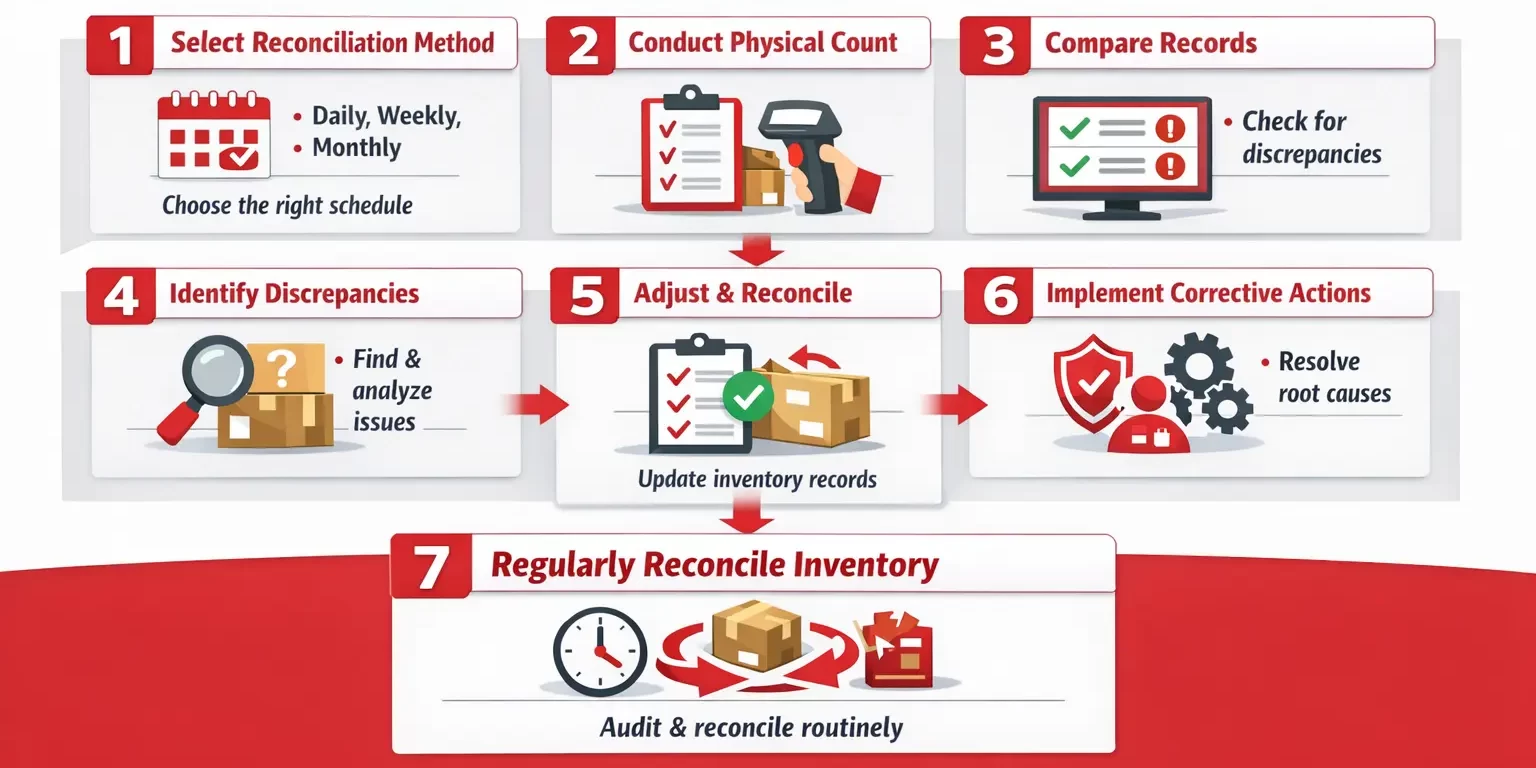
Following a consistent process is the most reliable way to keep stock records accurate. The steps below outline a practical approach that works for businesses of most sizes and industries.
1. Select your inventory reconciliation method
Start by deciding how often and in what format you will reconcile inventory. Depending on transaction volume and the size of your stock, daily, weekly, or monthly cycles each have distinct trade offs between effort and accuracy. Choosing the right cadence from the beginning sets up the rest of the process to run more smoothly.
As transaction volumes grow, many businesses find it useful to reassess their reconciliation frequency to keep pace with demand.
2. Conduct a physical inventory count
The next step is to carry out a detailed count of your physical inventory. This step is vital to collect accurate data that reflects your actual stock levels. Take time to ensure every item is counted properly, as this forms the core of successful inventory management.
3. Compare physical counts with digital records
Once the physical count is complete, compare it with your digital inventory records. Look for any inconsistencies between the two. This step helps identify errors or issues that need to be addressed, ensuring that your inventory data remains accurate.
4. Identify missing items and determine causes of discrepancies
If discrepancies arise, identify the missing items and investigate the root causes, such as human error, theft, or product damage. Understanding the source of these issues enables you to implement corrective measures and prevent future discrepancies.
5. Adjust records and reconcile inventory
Record any differences and update your inventory system accordingly. This step aligns your digital records with your actual stock levels, ensuring transparency and accountability. Finalizing these adjustments completes the reconciliation process and sets the stage for future cycles.
6. Implement corrective actions
Address the underlying causes of discrepancies by enhancing staff training, tightening security measures, or upgrading inventory tracking technology. By resolving these issues, you can prevent recurring problems and strengthen your inventory management practices.
7. Regularly reconcile inventory
Finally, consistency is what makes reconciliation effective over time. Whether the schedule is daily, weekly, or monthly, regular checks help teams catch errors early and maintain inventory accuracy across cycles. Treating it as an ongoing routine rather than a one time task is what produces lasting results.
Advantages of Regular Inventory Reconciliation
Running reconciliation consistently produces compounding benefits across the business. The advantages below reflect what businesses typically gain when they make reconciliation a routine rather than a reactive measure.
1. Precise and Reliable Inventory Data and Reports
Regular reconcile inventory ensures your inventory reports accurately reflect your actual stock levels. Precise records are vital for making informed decisions, from purchasing to sales strategies. Consistent verification prevents costly errors and poor judgment. Reliable data also fosters better communication across departments, promoting smooth and efficient operations.
2. Improved Demand Forecasting
Accurate inventory data improves demand forecasting by allowing you to track trends and patterns. Regular reconciliation process helps predict future demand with more accuracy, ensuring better planning and resource allocation. This reduces the risk of stockouts or overstock situations, leading to higher customer satisfaction and increased profitability.
3. Decreased Shrinkage Risk
Shrinkage from theft, damage, or errors can affect your bottom line. Regular reconciliation process helps identify discrepancies early, allowing you to address shrinkage before it becomes a bigger issue. Understanding shrinkage sources enables you to implement strategies to reduce it, such as better security or improved handling processes, resulting in a more efficient and cost effective operation.
4. Current and Accurate Safety Stock Levels
Maintaining proper safety stock levels is essential to balance supply and demand. Regular reconciliation keeps your safety stock aligned with actual consumption and lead times. This minimizes the need for emergency orders, improving cash flow management and overall business stability.
5. Prevent costly theft
Routine reconciliation can help detect theft and fraud by identifying unusual discrepancies between physical stock and records. Early detection allows swift corrective actions, protecting your business from potential losses. Addressing these issues fosters a secure environment, promoting accountability and integrity within your team.
3 Methods for Performing an Inventory Reconciliation
Effective inventory reconciliation is crucial for maintaining precise stock levels and ensuring smooth business operations. Choosing the right method tailored to your business needs is key to achieving success.
Here, we’ll examine three reliable methods for inventory reconciliation that can help maintain accuracy and operational efficiency:
1. Seasonal inventory checks
Conducting seasonal inventory checks involves reconciling stock during specific periods, typically around peak seasons or major sales events. This approach is ideal for businesses with fluctuating inventory levels, ensuring stock accuracy before high demand times.
By scheduling checks during critical seasons, you can prevent discrepancies that could disrupt operations. Additionally, these checks offer insights into inventory trends, leading to better forecasting and planning.
This proactive approach ensures that your checking inventory is ready to meet market demands, improving customer satisfaction and reducing the risk of stockouts or overstock situations.
2. ABC method
The ABC method segments inventory into three groups based on value and turnover rate. High value, fast moving items (A) are reconciled most frequently. Mid tier items (B) are checked on a moderate schedule. Low value, slow moving goods (C) are reviewed less often.
This approach allows teams to focus the most attention where discrepancies would cause the greatest impact, without spending equal effort on every SKU regardless of importance.
3. Random checks
Random or spot checks introduce unpredictability to the reconciliation process by counting random items or sections of the warehouse without prior notice. This approach is particularly useful for identifying discrepancies that may go unnoticed during scheduled counts, helping to maintain overall inventory accuracy.
Random checks also encourage vigilance among staff and can be easily integrated into other inventory management tasks, such as cycle counting or audits, offering flexibility and ensuring up to date and accurate stock records with minimal effort.
Tips for Implementing Accurate Inventory Reconciliation for Businesses

Effective inventory reconciliation is essential for maintaining accurate stock levels and ensuring smooth business operations. By applying the right strategies, you can significantly reduce errors and save time, making the process more streamlined and productive.
Here are some useful tips to enhance your inventory reconciliation process for better outcomes:
- Utilize barcode scanners: Speed up the counting process and minimize errors by using barcode scanners, which can easily integrate with your inventory system.
- Perform regular inventory counts: Regular inventory counts help identify discrepancies early, maintaining accurate stock levels and preventing overstock or stock shortages.
- Organize inventory before counting: Arrange your inventory by categories or locations before starting the count to make the process smoother and more accurate.
- Implement inventory management software: Use inventory management software like manufacturing inventory software to automate tracking and reduce manual mistakes, ensuring your records are always accurate and up to date.
Conclusion
Inventory reconciliation works best when it becomes a routine part of how a business operates. Each step in the process, from physical counting to adjusting records and investigating discrepancies, builds toward more accurate data and better decision making overall.
As stock volumes grow and processes become more complex, having the right systems in place makes a real difference. For businesses evaluating their options, reviewing a comparison of leading inventory management tools can help identify which solution fits their workflow and scale best.
FAQ
-
What is the difference between inventory reconciliation and a physical inventory count?
A physical inventory count is just one step in the reconciliation process. Inventory reconciliation goes further by comparing the physical count against system records, identifying discrepancies, and making the necessary adjustments to ensure both records are fully aligned.
-
How often should a business reconcile its inventory?
The appropriate frequency depends on transaction volume and business size. High volume businesses often benefit from daily or weekly reconciliation, while smaller operations may find monthly checks sufficient. The most important factor is maintaining consistency to ensure long term inventory accuracy.
-
What are the most common causes of inventory discrepancies?
Common causes include data entry errors, damaged or misplaced goods, unrecorded stock movements, and in some cases theft or fraud. Identifying the root cause of each discrepancy is essential to prevent similar issues from recurring in the future.