







aManaging inventory gets harder as businesses grow. More SKUs, more suppliers, more sales channels, and without a system connecting them, stock data quickly becomes unreliable. A miscount in one channel leads to overselling in another, and by the time it’s caught, the damage to fulfilment and customer trust is already done.
According to McKinsey & Co., AI-integrated inventory management software can reduced logistics costs by 15%, lowered inventory levels by 35%, and improved service levels by 65%. This shows how technology-based inventory systems can significantly improve operational performance in a digital-driven business environment.
With the right platform, businesses gain real-time visibility into stock levels, smoother inventory planning, and more structured warehouse operations, all supporting faster, more consistent decision-making.
Key Takeaways
AI-integrated inventory management software can bring many benefits, including reduced costs, automated tracking, and simplified tasks.
The core functions of inventory management software include automated stock workflows, real-time visibility, demand forecasting, and integrated order processing.
Real-time updates and multi-system integration are the two most critical capabilities to evaluate when selecting an inventory management platform for a growing business.
The right inventory management software depends on your business type. Solutions range from free tools for small online sellers to enterprise ERP platforms for complex multi-location operations.
What is Inventory Management Software?
Inventory management software is a system that tracks, organizes, and oversees inventory. It automates real-time monitoring of stock levels and deliveries. Online sellers also often rely on e-commerce inventory management software to handle e-commerce and sync stock across every sales channel. This software ensures accuracy, reduces manual errors, and enhances operational efficiency.
Businesses need inventory management software to avoid common pitfalls such as stockouts and human error. Did you know human mistakes in inventory management can be costly? According to VPG, retail shrinkage (inventory losses from theft, errors, and fraud) costs the industry over $132 billion.
The Function of Inventory Management Software
Inventory management software handles more than basic stock counts. According to LLCBuddy, a well-implemented system can deliver a 25% productivity boost, improve space utilisation by 20%, and increase stock efficiency by 30%.
Its main functions include:
- Automated workflows: Automates purchase order creation, reorder alerts, and stock updates to reduce manual work and human error.
- Inventory insights and reporting: Presents inventory turnover, cost patterns, and performance metrics to support data-driven decisions.
- Real-time stock visibility: Shows current stock quantities, movements, orders, sales, deliveries, and locations across every channel.
- Integrated inventory control: Centralises SKU data, product histories, and item details while connecting inventory with sales and supply chain operations.
- Optimised order processing: Improves picking, packing, and shipping accuracy to shorten lead times and prevent fulfilment errors.
- Predictive demand planning: Analyses historical and real-time data to forecast inventory needs and prevent stock shortages or excess inventory.
A Detailed Look at Different Inventory Software Options
Use the comparison below to see how each platform supports stock tracking, inventory control, reporting, and integrations before reviewing the detailed vendor list.
| Brand | Best for | Pros | Cons | Price |
|---|---|---|---|---|
| 1) HashMicro | The best end-to-end solution for all types of business needs | 1) 100% unlimited user with no additional cost 2) Accessible with any device 3) Guaranteed data security with ISO certification 4) Wide choice of installation–cloud, on-premise, or hybrid. | 1) The comprehensive features might be too complex for small businesses; however, they can still be adjusted according to business needs. | Contact Vendor |
| 2) QuickBooks | Best for small businesses needing accounting integration | 1) Easy to use and learn 2) Integrates well with other systems | 1) Limited features 2) Limited reporting and analytics 3) Not scalable | Start at $115/month |
| 3) Inflow | Best for multi-location inventory tracking | 1) User-friendly interface 2) Effective multi-location tracking 3) Strong reporting capabilities | 1) Limited advanced features 2) Customer support response time 3) Integrations with other software are limited | Start at $186/month |
| 4) Sortly | Best for visual inventory tracking with a user-friendly interface | 1) User-friendly software 2) Mobile app accessibility 3) Easy setup and configuration | 1) Limited advanced inventory features 2) Lacks robust reporting options 3) No support for complex workflows 4) Limited integration capabilities | Start at $0/month |
| 5) Odoo | Best for highly customizable inventory management | 1) Highly customizable 2) Excellent integration with other Odoo apps 3) Open-source flexibility | 1) Steep learning curve 2) Performance issues with large databases 3) Complex setup process 4) Customer support can be slow | Start at $24/month |
| 6) Zoho | Best for startups needing scalable inventory solutions | 1) Accurate order pick-and-pack processes 2) Scalable with businesses 3) Low entry price | 1) Lack of customized templates, like package slips and shipment documents 2) Complex integration with other third-party e-commerce providers 3) Lack of transparent pricing | Free and Paid (Start at $29/month) |
| 7) Ordoro | Best for simplified operation relates to e-commerce & inventory | 1) Excellent customer service 2) A decent number of integrations 3) Good dropshipping features | 1) Limited customized packaging slips 2) Slow syncing 3) No mobile access 4) Overseas customer support | Start at $349/month |
| 8) Katana | Best for integrations to top e-commerce platforms | 1) Free 14-day trial 2) Integrates with most top e-commerce platforms and shipping apps 3) Time-saving purchase order and tracking features | 1) Additional cost for adding new users 2) No live phone support | Free and Paid (Start at $359/month) |
| 9) Mosaic | Best for streamlining operations through data analysis | 1) Comprehensive inventory tracking 2) User-friendly interface 3) Easy to use and learn | 1) Designed for F&B and retail businesses, so might not fulfill other industries’ needs 2) Not scalable | Contact Vendor |
| 10) Fishbowl | Best for rich features for construction, manufacture, & industries | 1) Excellent customer support 2) Suitable for complex inventory needs | 1) Outdated user interface 2) Long implementation process 3) Requires significant training | Contact Vendor |
| 11) Shopify | Best for integrations to various channels | 1) Easy to use 2) Seamless integration with other apps 3) Sell online and in person | 1) Transaction fees are charged when not using Shopify Payments 2) No email hosting 3) Limited customization freedom 4) Expensive plans | Start at $19/month |
| 12) Monday.com | Best for custom workflows for tracking & management | 1) Customizable 2) User-friendly interface 3) Excellent collaboration tools | 1) Lacks specific inventory management features 2) May require additional apps for complete solutions 3) Not specialized in inventory management | Free and Paid (Start at $9/month) |
| 13) Oracle | Best for managing inventory & supply efficiently | 1) Comprehensive materials management 2) Optimize inventory and service levels 3) Manage costing and optimize profitability | 1) Slow user interface 2) Real-time inventory API is not available3) Lack of customized reports | Start at $25.000/year |
| 14) Cin7 | Best for automated inventory control | 1) Integration with third-party systems 2) Easy to use and intuitive 3) The system is very well-organized | 1) Lack of customer support 2) The software experiences numerous lags and bugs 3) Some features are not functioning properly | Start at $45/month |
| 15) Page365 | Best for real time update and auto record all stocks | 1) Has a free plan with basic inventory management 2) Auto invoice for all sales gained from social media 3) Easy to create and improve sales plans | 1) More suited for online stores, so might not fulfill other industries’ needs 2) Limited users in a package | Free and Paid (Start at ₱4,990/month) |
15 Best Inventory Management Software in 2026
With a wide range of inventory management platforms available in the Philippines, selecting the right one depends on your business size, industry, and operational complexity. The 15 options below cover the market from free tools for small sellers to enterprise-grade systems for distribution operations
1. HashMicro Inventory Management Software
HashMicro's Inventory Software provides a cloud-based inventory management platform that helps businesses track stock and monitor sales within a centralized system. Key inventory activities such as stock movement and delivery are managed in one place to support more consistent data handling.
This inventory software supports real-time inventory updates and helps businesses in the Philippines maintain clear inventory records in line with requirements from the Bureau of Internal Revenue (BIR).
HashMicro key features:
- Stock forecasting & auto-reordering: Predict restocking needs based on real-time sales trends.
- Fast & slow-moving stock analysis: Identify top sellers and underperformers to optimize inventory.
- Putaway strategies: Get smart suggestions for product placement by category or demand.
- Streamlined stock requests: Automate internal stock requests with approval workflows.
- Stock reservations & reporting: Reserve items for customers or branches to avoid misallocation.
- Warehouse stock optimizer: Balance stock levels across multiple warehouse locations.
- Barcode, QR & RFID Integration: Its barcode stock tracking system enables instant tracking via barcodes or RFID tags, reducing manual errors and speeding up audits.
- QC management: Automatically detect defects during inspections for better product quality.
| Pros | Cons |
|
|
If your business manages inventory across multiple warehouses, sales channels, or branches, Consider HashMicro to centralize stock movements and reporting in one system. Get a free consultation below to see whether its inventory platform fits your operational requirements.

2. QuickBooks Inventory Software
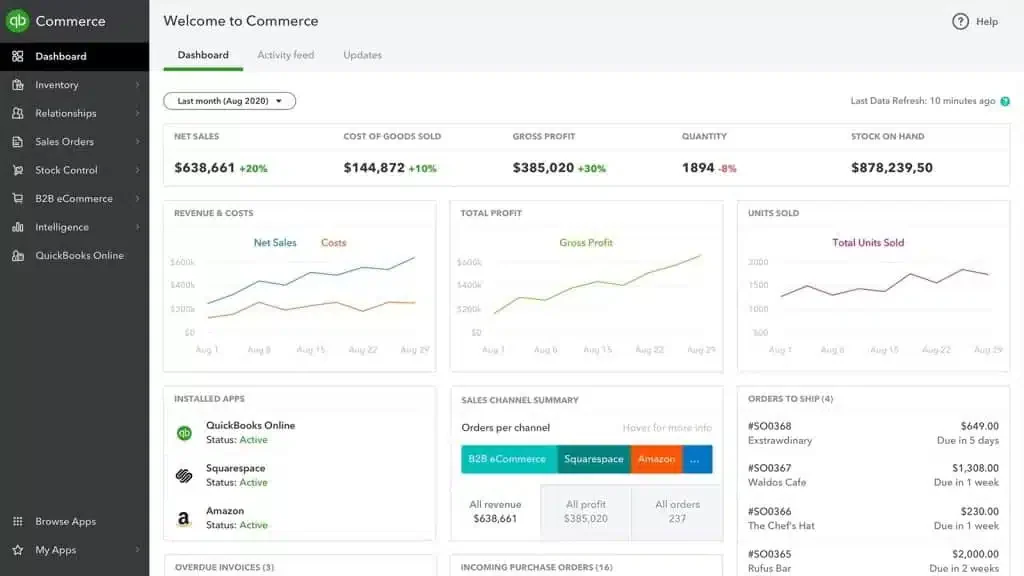
QuickBooks is an inventory management software designed for businesses. It offers stock control management, warehouse and order management, and batch and expiry tracking features.
QuickBooks inventory software in the Philippines helps companies to streamline their inventory processes and provides a variety of affordable packages suitable for businesses of all sizes.
Price: US$115/month
QuickBooks key features:
- Accounts payable management
- Order tracking
- Sales fulfillment
- Inventory and related costs tracking
| Pros | Cons |
|
|
3. Inflow Inventory Software
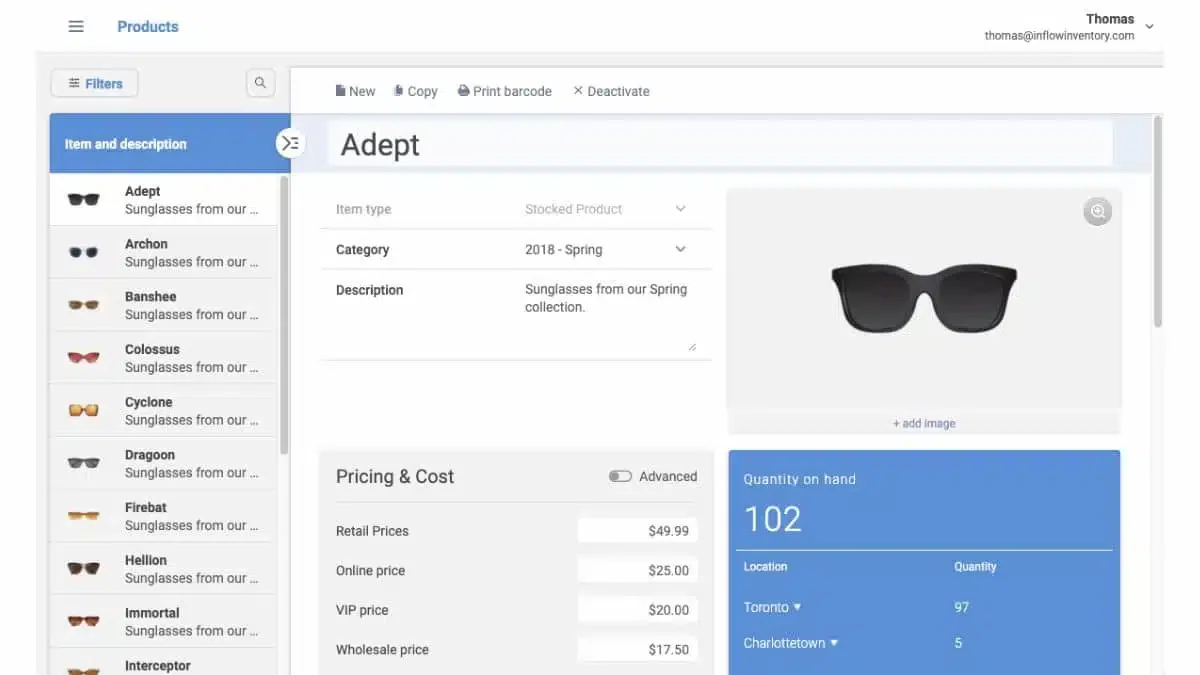
Inflow is an inventory management software provider that simplifies inventory processes for Filipino businesses across industries. Since its inception, Inflow Inventory Software Philippines has aimed to provide intuitive software solutions.
The company has built its reputation on offering tools that help companies manage their stock levels. It’s straightforward inventory software that reduces manual errors and enhances operational efficiency.
Price: Starts at US $186/month for the Entrepreneur plan, with higher tiers such as US $436/month and US $999/month for Small Business and Mid-Size, respectively.
Inflow key features:
- Barcode scanning
- Multi-location inventory tracking
- Order management
- Reporting and analytics
| Pros | Cons |
|
|
4. Sortly Inventory Software
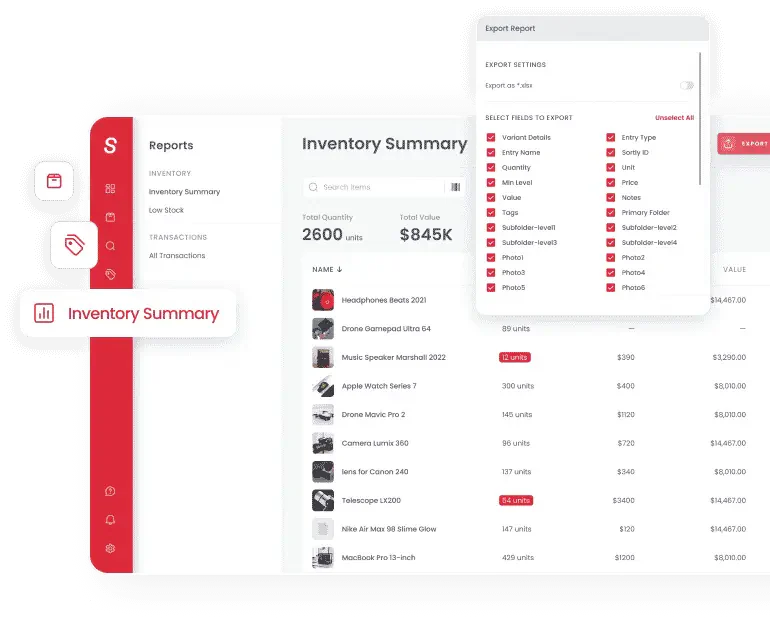
Sortly is modern inventory management software designed for small—to medium-sized businesses. Founded to simplify inventory processes, it offers an intuitive, visual interface that makes managing inventory easy.
Price: From US$0/month to US$299/month for 5,000 items.
Sortly key features:
- Visual inventory tracking
- QR code scanning
- Customizable fields
- Mobile app access
| Pros | Cons |
|
|
5. Odoo Inventory Software
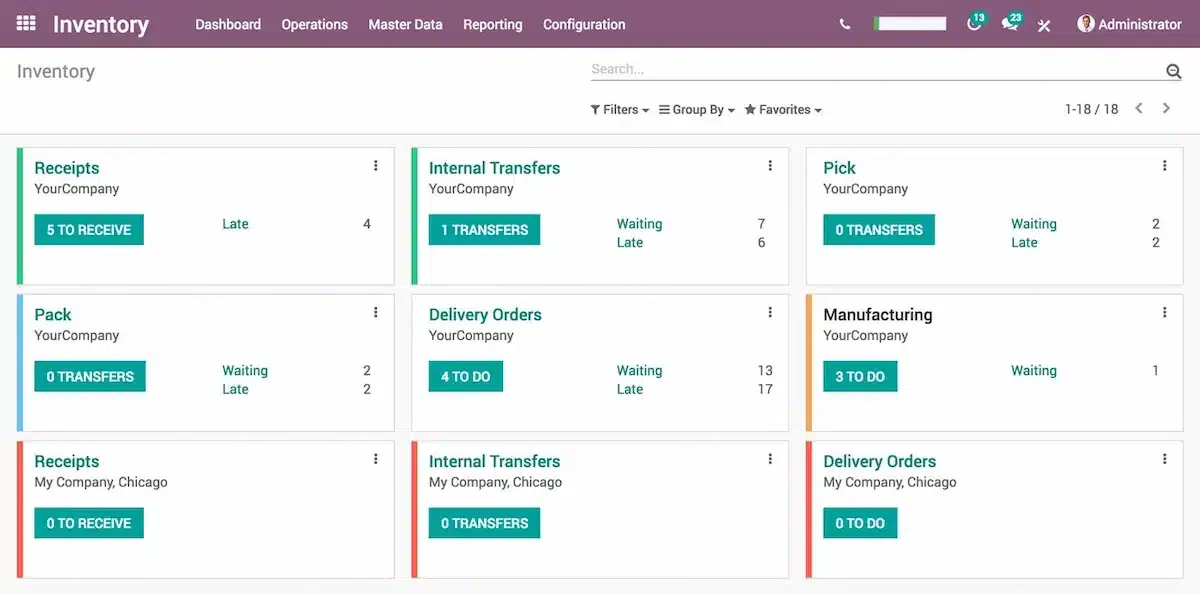
Odoo is an Inventory Software platform that provides a complete suite of integrated applications, including a bookkeeping system. Its inventory management module is widely used in the Philippines for its flexibility, modular architecture, and strong integration across business functions.
Price: From approximately US $24 per user/month for the “per app” pricing
Odoo key features:
- Automated replenishment
- Multi-warehouse management
- Barcode integration
- Real-time stock levels
| Pros | Cons |
|
|
6. Zoho Inventory Software
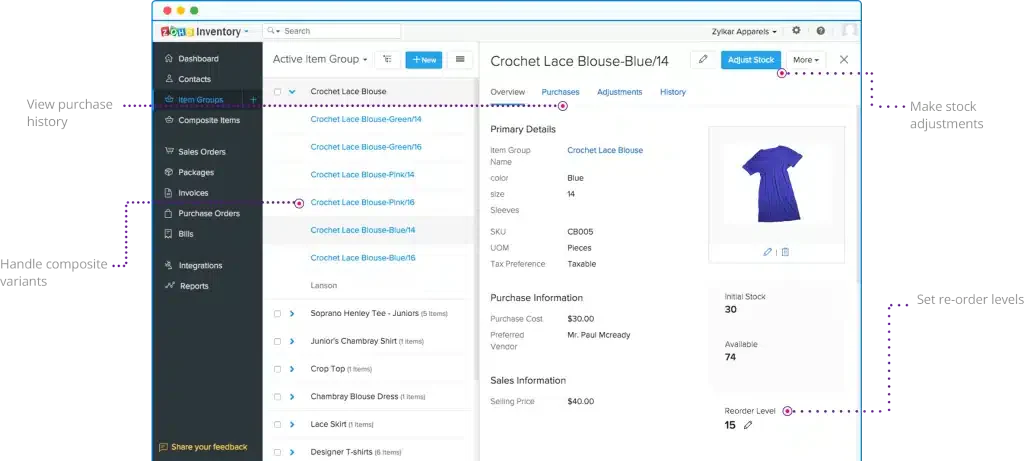
Zoho Inventory is a cloud-based inventory management software designed to help businesses manage orders, track stock, and streamline shipping operations. It offers comprehensive features at competitive pricing, making it attractive for startups and growing companies.
Time-saving features such as autofill for purchase orders, one-click dropship management, and multi-warehoshuse management are also available. Additionally, Zoho Inventory’s higher-tier plans in the Philippines accommodate large-scale sellers.
Price: Free (up to 50 orders/month, one user, 2 locations) with paid plans starting at approximately US $39/month (or US $29/month if billed annually).
Zoho key features:
- Multi-warehouse management
- Serial and batch tracking
- Item grouping and bundling
- Packaging business management system
- Sales order management
| Pros | Cons |
|
|
7. Ordoro Inventory Software
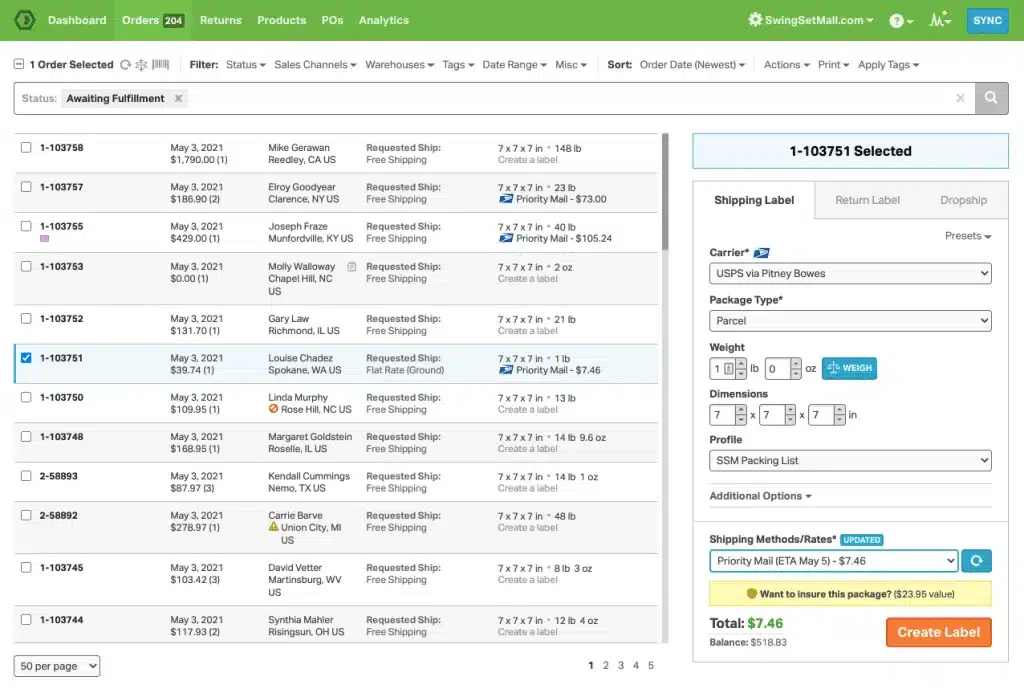
Ordoro is a cloud-based software for inventory management and order fulfillment. It was created to simplify the management of e-commerce orders and inventory for online retailers. It provides various features to assist businesses in efficiently managing their inventory and suppliers from one central platform.
Price: US $349/month (Advanced) or US $499/month (Premium)
Ordoro key features:
- Inventory management
- Purchase orders
- Order management
- Shipping management
| Pros | Cons |
|
|
8. Katana Inventory Platform
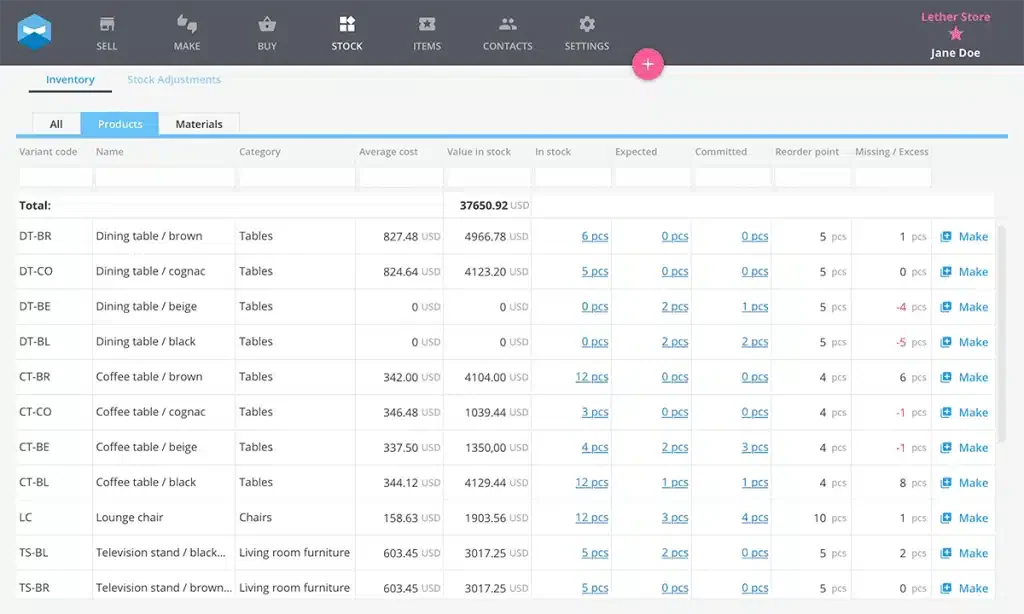 Katana is a manufacturing-focused inventory management software designed to handle order management, stock obsolescence analysis, and shipping for e-commerce, multichannel, and B2B businesses. Its primary advantage, however, lies in its effectiveness within the manufacturing industry.
Price: Free plan available (up to 30 SKUs and three inventory locations), with paid plans starting at US$359/month (billed annually) for the Standard tier.
Katana key features:
- Location management
- Multiple warehouses
- Stock Inquiry
- FIFO, LIFO, Weighted Average
- Stock movement
| Pros | Cons |
|
|
9. Mosaic Inventory Software
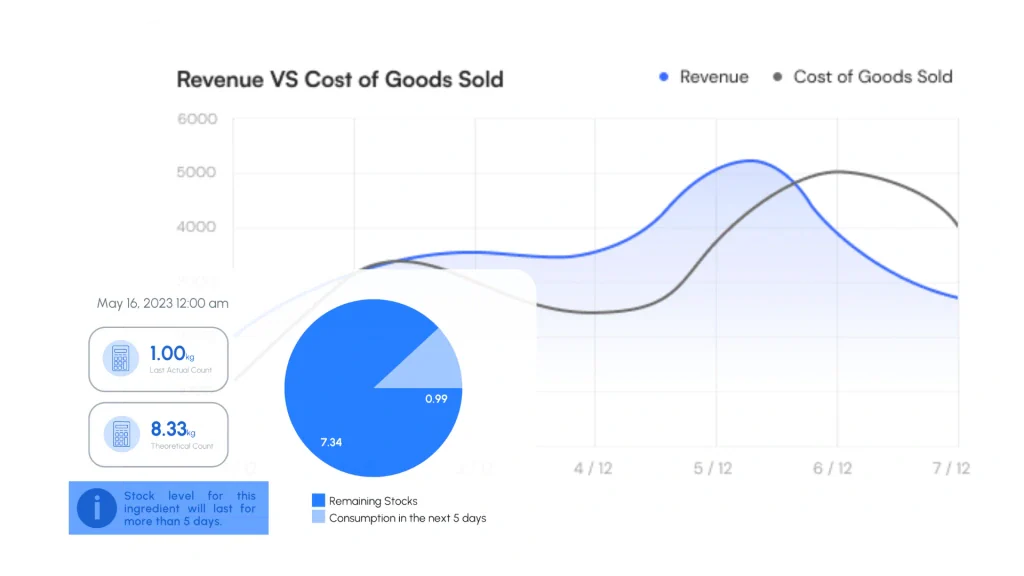
Mosaic is a Philippine-based inventory management system designed for F&B businesses and retailers, offering intelligent purchasing, real-time analytics, and cost monitoring. Established in 2016 and headquartered in Manila, Philippines, Mosaic inventory software is a technology provider for food businesses.
Mosaic inventory systems are integrating with third-party delivery apps to advanced data analytics and inventory management, providing businesses with the tools and knowledge necessary for success.
Price: Contact vendor for pricing information.
Mosaic key features:
- Multi-location inventory management
- Stock replenishment
- Integrated with POS software
- Inventory overview
| Pros | Cons |
|
|
10. Fishbowl Inventory Software
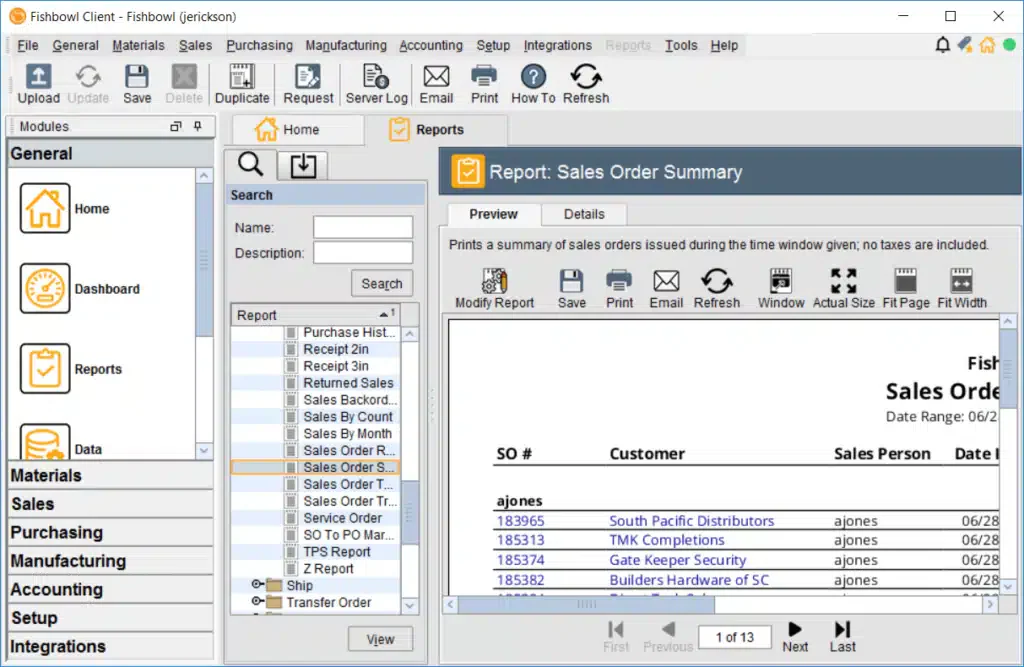
Fishbowl is a construction inventory management software serving businesses for over two decades. This vendor has a rich set of features that caters to the construction, manufacturing, and warehousing industries.
The inventory software in the Philippines is robust in handling complex inventory needs, such as multi-location and purchase order workflow. Fishbowl provides a cohesive solution for businesses.
Price: Contact vendor for pricing information.
Fishbowl key features:
- Multi-location inventory management
- Advanced order processing
- Integration with QuickBooks
- Barcode scanning
| Pros | Cons |
|
|
11. Shopify Inventory Software
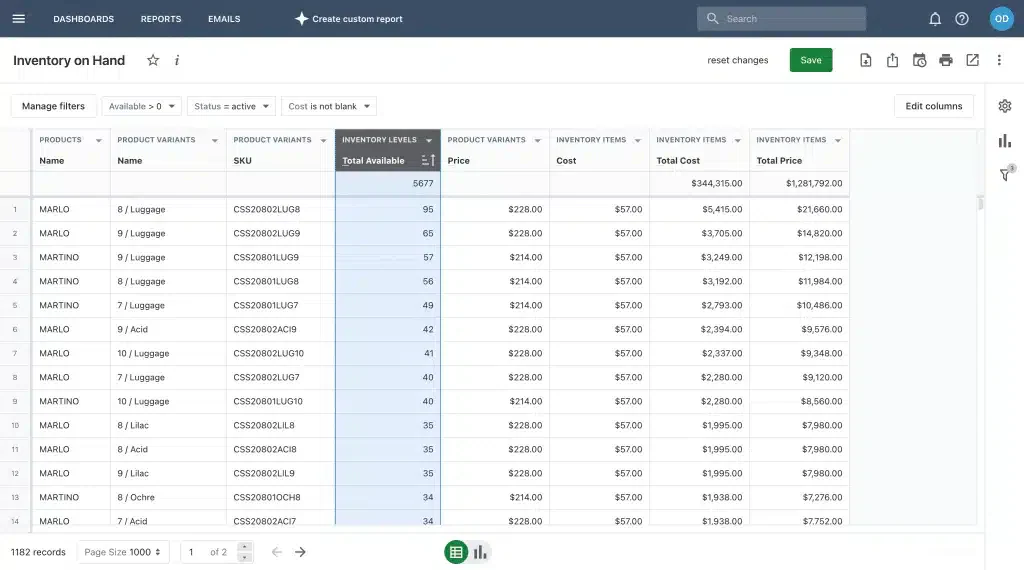 Shopify is a well-known e-commerce platform that simplifies the creation and management of online stores. It enables sellers to offer products and services through various channels, such as websites, social media platforms, and major online marketplaces.
Shopify operates in the Philippines as a software-as-a-service (SaaS) platform on a subscription model. Users pay a fee to use the platform, which includes access to tools for designing and managing their online stores, as well as hosting services.
Price: Plans start at US $19/month to US $29/month.
Shopify key features:
- Inventory tracking
- Purchase orders
- ABC analysis
- Multi-location management
| Pros | Cons |
|
|
12. Monday.com Inventory Software
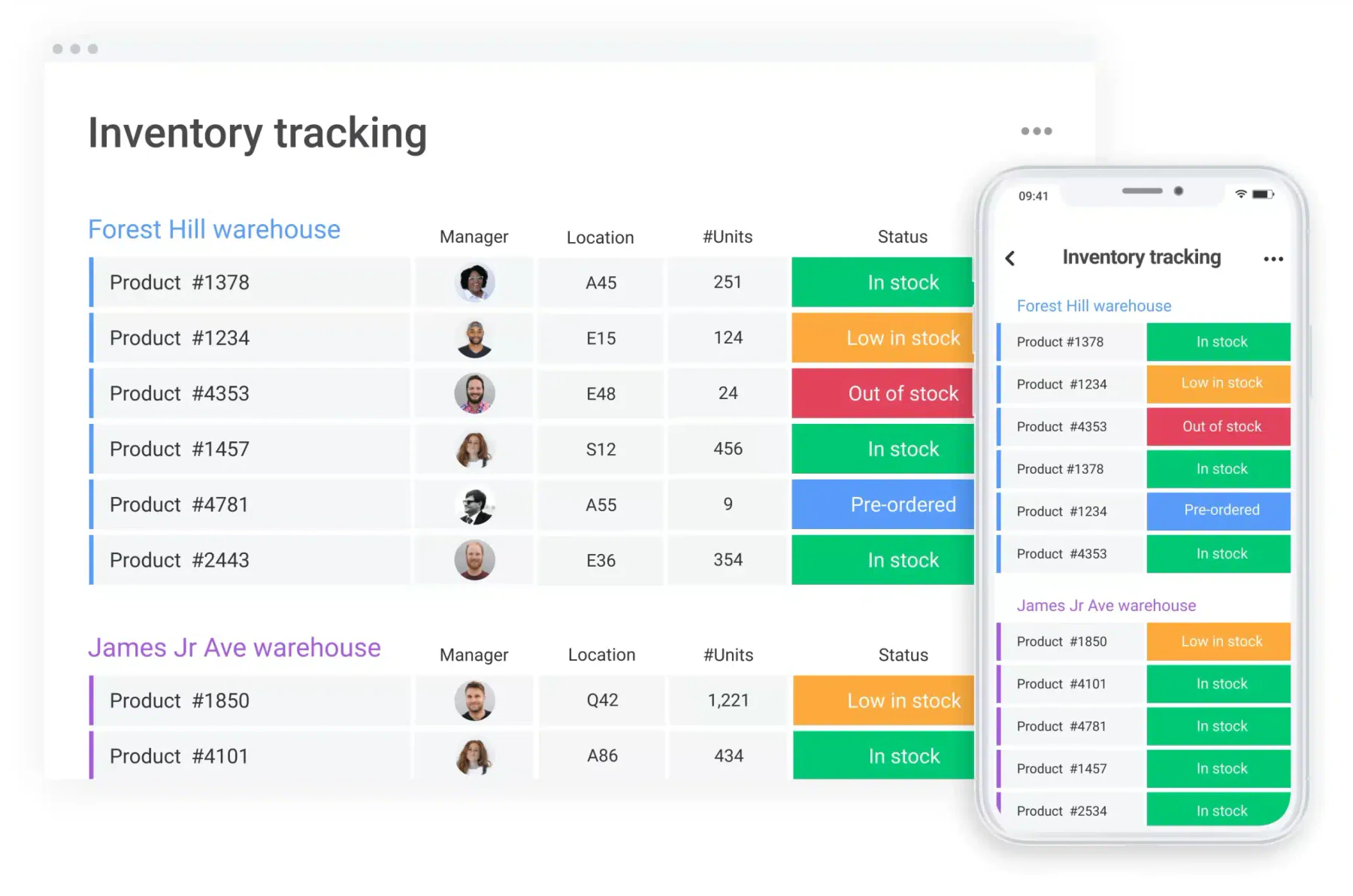
Monday.com is an inventory management system founded in 2012. This vendor has gained popularity for its user-friendly interface. Monday allows businesses to create custom workflows for inventory tracking and management.
Its visual, collaborative inventory management software makes it ideal for teams looking to manage inventory alongside other business processes in the Philippines.
Price: Free plan available; paid plans start at US $9 per seat/month.
Monday.com key features:
- Visual dashboards
- Automated notifications
- Task prioritization
| Pros | Cons |
|
|
13. Oracle Inventory Platform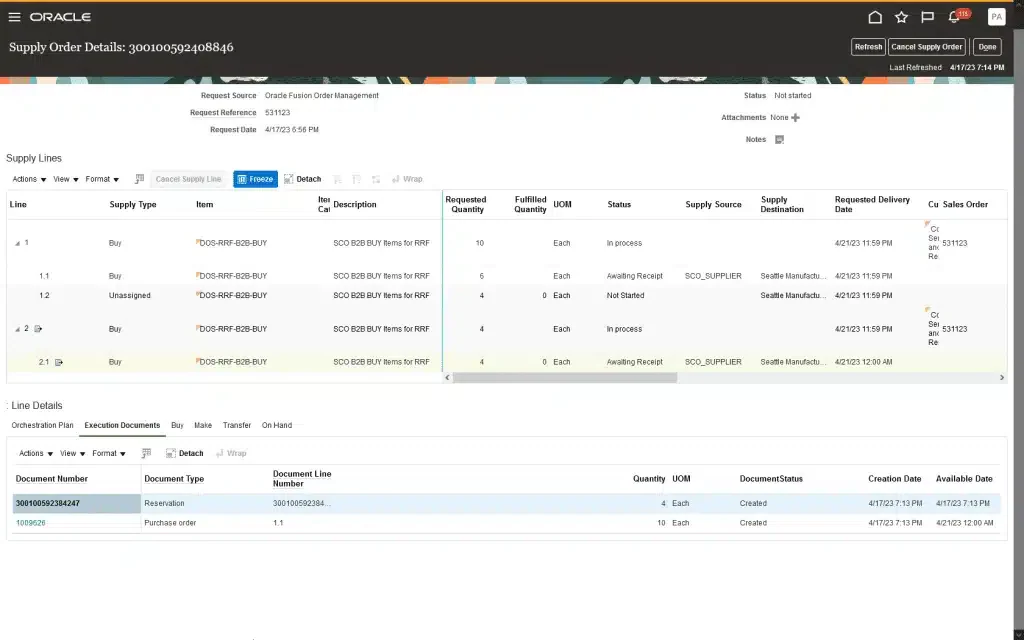
Oracle Inventory is a part of Oracle’s enterprise resource planning (ERP) software solutions, specifically designed to help businesses efficiently manage their inventory and supply chain operations.
It offers a range of features, such as a real-time inventory tracking system, order management from receipt to fulfillment, and effective supplier management. The software also includes warehouse management tools for inventory storage and shipping.
Price: Starting from around US $25,000 annually
Oracle key features:
- Product expiry management
- Stock aging report
- Integrated with barcode and QR code
- Material request management
| Pros | Cons |
|
|
14. Cin7 Inventory Software
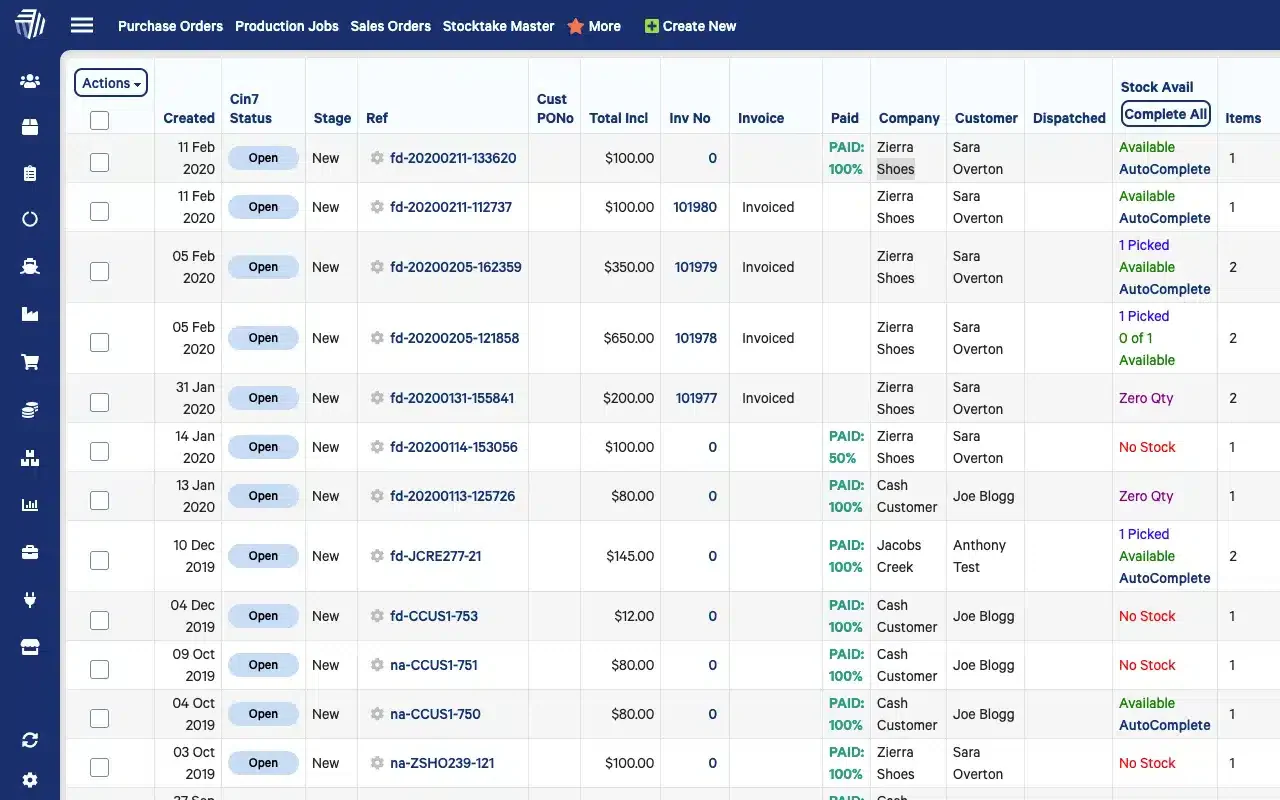
Cin7 is an inventory app in the Philippines designed for online retailers. It allows integration with channels like Amazon, eBay, Shopify, BigCommerce, QuickBooks Online, Etsy, and Magento, enabling automated inventory control and streamlined shipping processes.
With Cin7, retailers can efficiently manage inventory across multiple warehouses and locations. Additionally, users can easily access real-time analytics and product performance reports to identify which channels generate the most revenue.
Price: From US $44.99/month to around US $269.99/month for more features.
Cin7 key features:
- Accounting integration
- Activity dashboard
- Barcode/ticket scanning
- Cost tracking
- Inventory optimization
| Pros | Cons |
|
|
15. Page365 Inventory Software
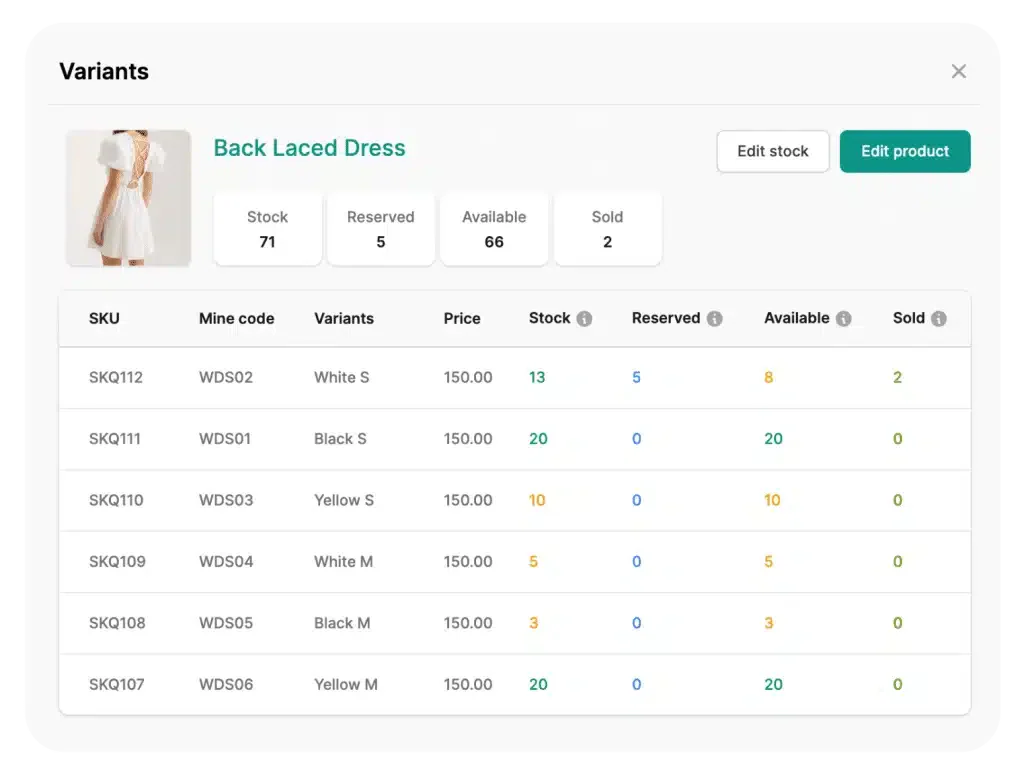
Page365 is an Order Management System designed for online sellers, offering a free inventory management system in the Philippines that automatically records all stock movements. Real-time updates provide a comprehensive solution with all the functions for online sellers.
Tailored for businesses in Asia, particularly in the Philippines and Thailand, Page365 synchronizes inventory with Shopee and Lazada, two of the region’s most significant marketplaces.
Price: Free plan available, with paid plans starting at ₱4,990/month (Solo) in the Philippines.
Page365 key features:
- E-commerce integration
- Stock management
- Ability to add multiple SKUs
- Real-time stock update
| Pros | Cons |
|
|
What Should You Check Before Choosing Inventory Management Software?

When evaluating cloud-based inventory management software, these five criteria help narrow down the best fit for your operations:
- User-friendly interface makes it easier for employees to learn and use the software effectively, reducing the time and resources needed for training.
- Real-time updates are essential in inventory management software because they give businesses accurate, up-to-date stock information to support fast, informed decisions.
- Stock notifications are crucial because they keep businesses informed in real time, helping them avoid stockouts and maintain sufficient inventory to meet demand. Tighter stock control does more than prevent stockouts. It helps businesses lower operational costs by cutting excess holding, spoilage, and emergency reorder expenses.
- Barcode scanning is essential in inventory software as it enhances the speed and accuracy of inventory management.
- Integration with other systems is vital because it streamlines data flow across accounting and purchasing, reducing manual work and improving efficiency.
"Inventory management software is no longer just a tool but a strategic backbone that ensures every unit of stock is tracked, synchronized, and optimized to support smarter, data-driven operations."
Conclusion
Effective inventory software plays a key role in keeping stock accurate and operations running smoothly. As more businesses adopt digital systems, modern inventory software in Philipppine provide real-time visibility, reducing manual errors and improving overall efficiency.
For businesses that want to understand the underlying principles before committing to a platform, a closer look at how inventory management software works, including stock control methods, reorder strategies, and tracking approaches can help clarify what features actually matter for their specific operations.

FAQ About Inventory Management Softwar
The best inventory management software depends on your business size and industry. Enterprise businesses with complex needs often choose systems like HashMicro or Oracle for their depth of features. Small and mid-sized businesses may find QuickBooks, Zoho Inventory, or Inflow more cost-effective. E-commerce sellers in the Philippines frequently use Page365 for its Shopee and Lazada integration, while manufacturers often prefer Katana or Fishbowl.
Philippine businesses do not always need BIR-compliant inventory software, but they should use it when their inventory system forms part of a registered CAS, CBA, POS, invoicing, or tax-reporting workflow. Large taxpayers and businesses that adopt these computerized systems must register them with the BIR.
The four main types of inventory management systems are just-in-time management (JIT), materials requirement planning (MRP), economic order quantity (EOQ), and days sales of inventory (DSI).
To keep track of inventory effectively, assign an inventory manager, use an inventory management system, set a regular inventory checking schedule, implement proper tracking tools, and conduct routine audits to maintain accuracy.
Inventory management software should include real-time stock tracking, automated reorder alerts, barcode or RFID support, demand forecasting, reporting dashboards, and integration with accounting, sales, e-commerce, and warehouse systems. These features help businesses maintain accurate stock records, reduce manual work, prevent shortages, and coordinate inventory across multiple locations.