










 Limited to 100 registrants

Inventory holding costs also called carrying costs are the ongoing expenses a business incurs to store unsold goods, covering warehouse fees, insurance, capital tied up in stock, and losses from shrinkage or obsolescence. These costs accumulate silently: the longer inventory sits unsold, the more it erodes the margin on every unit.
For businesses in the Philippines managing tight working capital, holding costs are one of the fastest ways profit disappears without a clear line item to trace it to. This article explains what inventory holding costs are, how to calculate them, and practical strategies for reducing them.
Key Takeaways
Inventory holding costs are the ongoing expenses of storing unsold goods, including warehouse fees, insurance, tied-up capital, and shrinkage losses that accumulate the longer inventory remains unsold.
Inventory holding costs include six main components: storage fees, insurance premiums, cost of capital, inventory shrinkage, obsolescence costs, and depreciation, each of which accumulates the longer goods remain unsold in the warehouse.
The six main components of inventory holding costs are storage fees, insurance premiums, cost of capital, shrinkage, obsolescence, and depreciation.
What is Inventory Holding Cost?

Inventory holding costs are the expenses businesses incur to store unsold products. These include warehouse fees, insurance, and security to keep goods safe. The longer inventory stays unsold, the more these costs accumulate.
Additionally, products may lose value over time, especially perishable or outdated items. Businesses also tie up capital in unsold stock, which could be used for other investments. This creates an opportunity cost that impacts financial performance.
Managing these costs effectively is key to protecting profit margins. By reducing excess inventory and improving storage practices, companies can lower expenses. This helps maintain steady cash flow and overall business success.
What Are the Differences Between Inventory Cost and Inventory Holding Cost?
Inventory cost covers all expenses involved in acquiring stock, while inventory holding cost refers to the ongoing expenses of storing and managing that stock over time. The table below breaks down the key differences between the two.
| Aspect | Inventory Cost | Inventory Holding Cost |
| Scope | Includes all acquisition costs: purchase price, shipping, and taxes. | Focuses solely on storage and management expenses. |
| Timeframe | Incurred at the point of purchase. | Accumulates over time as inventory remains in storage. |
| Examples | Product cost, freight, import duties. | Warehouse rent, insurance, shrinkage, depreciation. |
| Financial Impact | Reflects upfront investment in stock. | Reduces profitability when inventory turnover is low. |
Understanding this distinction helps businesses identify where costs are building up and which expenses can be actively managed to protect margins.
Example of Inventory Holding Cost
Understanding inventory holding costs is important like solving a puzzle, and it helps to know the specific examples that contribute to these expenses. Here are a few piece of common examples puzzle:
-
Storage fees:
Storage fees cover the cost of renting or maintaining a warehouse to store unsold goods. These expenses can include the rent or mortgage of the warehouse space, as well as utilities like electricity and water.
In addition to these, businesses often need to pay for climate control systems and general upkeep to keep the storage area in good condition.
-
Insurance premiums:
Insurance premiums are what businesses pay to protect their inventory from various risks, including theft, fire, flooding, or natural disasters. This protection ensures that if something happens to the inventory, the business can recover some or all of its losses.
The amount a company pays for insurance depends on the type of goods being stored and the location of the warehouse.
-
Cost of capital:
This refers to the financial burden of having money tied up in unsold inventory. When a business purchases products or materials, the funds used could have been invested elsewhere to generate income or grow the business.
The longer inventory stays unsold, the higher this opportunity cost becomes, as that capital is effectively frozen.
-
Inventory shrinkage:
Shrinkage refers to the loss of inventory due to theft, damage, or spoilage during storage, handling, or transportation. Businesses must account for shrinkage in their financial planning, as it directly affects the overall value of their stock. Maintaining an accurate inventory count helps identify shrinkage patterns early before they become significant losses.
-
Obsolescence costs:
Over time, certain products may become obsolete or outdated. This happens when consumer preferences change, or when newer versions of a product enter the market.
As a result, the older stock might need to be sold at a discount or, in some cases, can’t be sold at all, leading to a loss in revenue.
-
Depreciation:
Depreciation refers to the decrease in the value of inventory over time, especially for items that have a limited shelf life or are subject to wear and tear.
Perishable goods, like food products or pharmaceuticals, are particularly vulnerable to depreciation, as they must be sold before their expiration date to avoid total loss.
-
Real World Example
 Imagine a medium sized Filipino furniture manufacturer that rents a warehouse in Metro Manila for ₱500,000 each month to store unsold furniture. Besides the rent, the company pays ₱100,000 for utilities, ₱75,000 for security, and ₱25,000 for insurance to protect its inventory from risks like theft, fire, or typhoons.
The manufacturer has ₱30 million worth of furniture sitting in the warehouse, which ties up money that could be used for other investments. Every month, the company faces a 1.5% loss in inventory due to shrinkage, which includes damage from handling and minor theft.
Additionally, as the manufacturer brings in new furniture designs, older stock can become outdated, lowering its resale value and increasing obsolescence costs.
This example shows how inventory holding costs can greatly affect a Filipino business’s profits, especially as these costs build up month after month.
Read More: Top Construction Inventory Management Software
How to Calculate Inventory Holding Costs
Sometimes, calculating how much inventory is being stored can feel overwhelming. Here’s a simple way to understand the steps involved in calculating inventory holding costs:
1. Add up total inventory costs
First, gather all the costs associated with holding your inventory. These include:
- Capital costs: The money spent on buying raw materials or inventory, including any financing fees and taxes.
- Warehouse costs: The expenses for storing inventory, such as rent, utilities, and insurance.
- Employee costs: Salaries, wages, and benefits of warehouse staff.
- Opportunity costs: The potential revenue you miss out on by storing slow moving items or not being able to invest cash tied up in inventory elsewhere.
- Depreciation costs: The loss in value of products while they sit in storage.
- Inventory risk costs: Losses due to theft, damage, or products becoming outdated before they can be sold.
2. Calculate the total inventory value
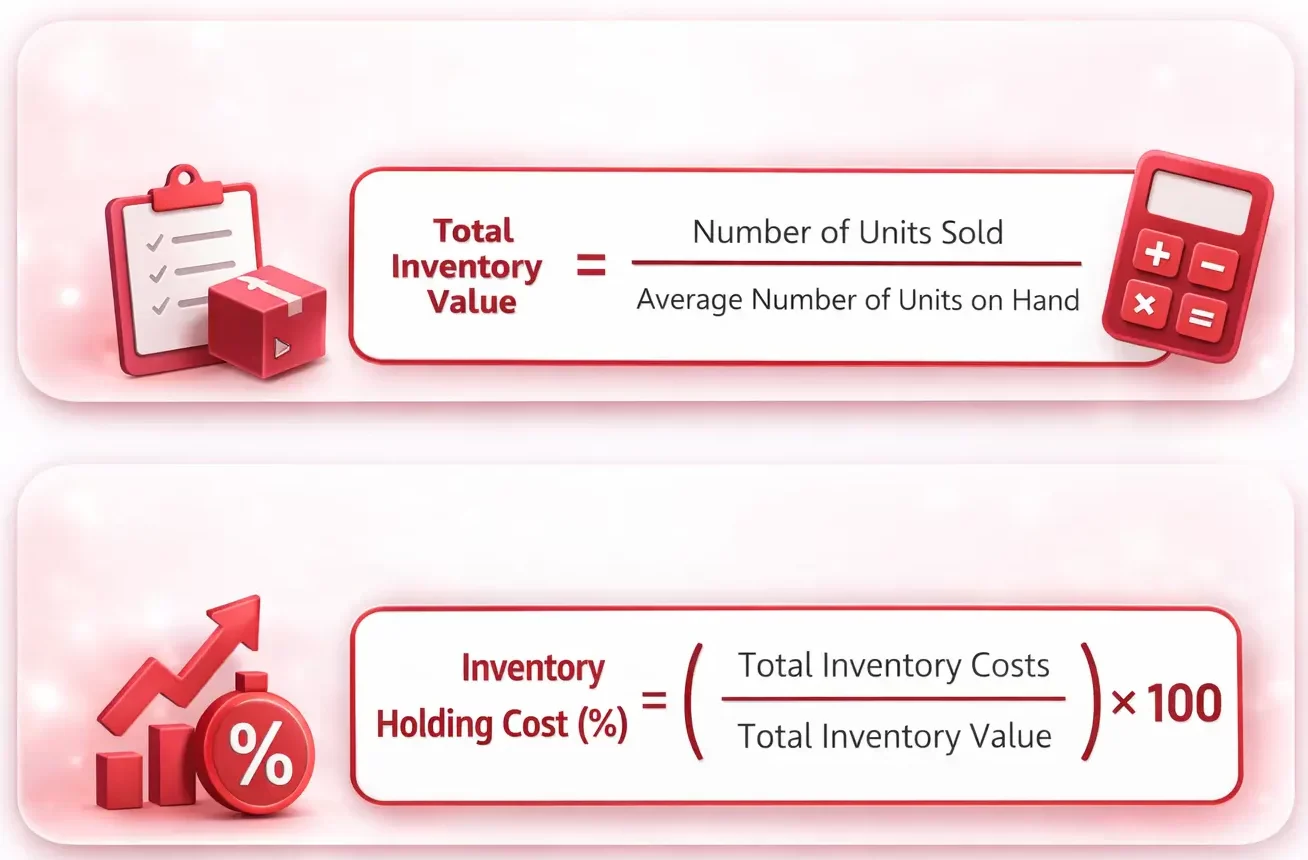
To find out how much your inventory is worth, take the average value of the inventory you had during the period you’re looking at. You can do this by dividing the number of units sold by the average number of units you had in stock:
Total Inventory Value = Number of Units Sold / Average Number of Units on Hand
3. Figure out the inventory holding cost percentage
Finally, calculate the inventory holding cost formula by dividing the total inventory costs by the total inventory value, and then multiply by 100 to get the percentage:
Inventory Holding Cost (%) = (Total Inventory Costs / Total Inventory Value) x 100
This percentage will help you understand how much holding inventory affects your business and guide you in making better decisions to reduce these costs.
Are There Any Strategies to Reduce Inventory Holding Cost?
Reducing inventory holding costs is important for keeping a business efficient and profitable. Using targeted strategies can help cut unnecessary expenses and improve operations. Here are some simple ways to manage and lower these carrying costs:
1. Use just-in-time (JIT) inventory
First, only order products when you need them to avoid having too much in stock. This reduces how long items sit in storage and helps make better use of warehouse space. Furthermore, calculating safety stock and reorder points ensures you have enough to meet demand without overstocking.
2. Work with third party logistics (3PL)
Outsource your storage and labor to a 3PL provider to save on costs. They often have more efficient storage solutions, which can reduce expenses. Additionally, many 3PLs also offer software and tools to help you better manage your inventory.
3. Improve warehouse layout
Organize your warehouse better to save space and cut down on handling time. Upgrading shelving or adding automation can reduce labor costs and speed up how quickly orders are filled. A more efficient process means fewer mistakes and lower inventory costs.
4. Do regular inventory checks
Regularly check your inventory to find slow moving or outdated items. Offer sales, bundle them with popular items, or donate them to reduce storage expenses and recover some of your investment.
Indeed, clearing these items reduces storage costs and makes room for more profitable products. These checks also help you improve your buying decisions.
5. Use inventory management system
Automate your inventory tracking with a system that gives real time updates. This helps you avoid overstocking or running out of items. The cloud inventory management system also helps predict demand, so you can order the right amount and lower costs.
Conclusion
Inventory holding costs accumulate gradually across warehouse fees, tied-up capital, shrinkage, and obsolescence until they become a structural problem rather than a controllable expense. Businesses that track these costs consistently and apply targeted reduction strategies protect both their margins and their cash flow.
For businesses looking to make holding cost management more systematic, reviewing the best inventory management software options available is a practical starting point for identifying which tools best match storage complexity, product mix, and budget.
FAQ on Inventory Holding Cost
Inventory holding costs are the ongoing expenses of storing unsold goods, including warehouse fees, insurance, capital opportunity cost, shrinkage, and obsolescence. Most businesses aim to keep holding costs within 20-30% of total inventory value per year.
Inventory holding costs typically range from 20% to 30% of total inventory value per year, varying by industry and product type. Tracking the figure as a percentage makes it easier to benchmark across periods.
Inventory holding costs can be both fixed and variable. Fixed costs like warehouse rent stay constant, while variable costs like utilities and shrinkage change with inventory volume. Reducing overall stock volume lowers total holding costs even when fixed costs remain unchanged.
Effective approaches include just-in-time ordering to avoid overstock, regular audits to clear slow-moving items, improved warehouse layout to cut labor and space costs, and inventory management software for real-time stock visibility and demand forecasting.