







Inventory accuracy is one of those things businesses only notice when it goes wrong. A stockout during peak season, an audit that does not match records, or a customer order that cannot be fulfilled all trace back to the same root problem. Poor stock data quietly disrupts operations, erodes customer trust, and creates compliance risks that are difficult to fix after the fact.
This article will cover what inventory accuracy means, why it matters, how to calculate it, and the practical steps businesses use to maintain it.
Key Takeaways
|
Table of Contents
What is Inventory Accuracy?

Inventory accuracy refers to the degree to which your physical stock matches the records in your inventory management system. It’s a crucial component of business operations, influencing everything from customer satisfaction to financial reports.
When your physical inventory and your electronic records align perfectly, you have achieved high inventory accuracy. This alignment ensures that the data you rely on to make business decisions is both reliable and actionable.
The distinction between real inventory and electronic records is fundamental. Real inventory consists of the actual items available in your store or warehouse, while electronic records represent these items in your digital systems. Discrepancies between these can lead to significant challenges, including misinformed decision making and potential losses in revenue.
Why is Inventory Accuracy Important?

Accurate inventory directly impacts customer satisfaction. When customers receive their products on time and as expected, trust builds, and loyalty grows. Conversely, inaccuracies can lead to missed sales opportunities and damaged reputations, as customers are quick to share their frustrations about stock issues.
Furthermore, maintaining precise inventory levels reduces both operational and holding costs, improving overall efficiency. Overstocking, for example, ties up capital in unsold goods, while understocking forces rushed orders at premium prices. Additionally, accurate inventory prevents shrinkage due to theft, damage, or errors, ensuring proper asset valuation for management and investor reporting.
Challenges in Maintaining Inventory Accuracy
For many Philippine e-commerce businesses, inventory inaccuracies rarely stem from one obvious source. Rapid sales cycles, mis-picks during order processing, and improperly restocked returns all quietly erode data reliability, making robust cloud inventory management practices essential for keeping up with the demands of an active online marketplace.
Several other factors tend to compound these inaccuracies over time:
- Poor system integration: Inventory management systems that fail to connect smoothly with other business processes create data gaps that are difficult to trace and correct.
- Lack of real time updates: Systems that do not reflect stock changes immediately push teams into making decisions based on outdated records.
- Self-storing practices: Inadequate storage methods lead to damaged goods or misplaced items that never get properly recorded as losses.
For Philippine businesses, submitting an inventory list to the Bureau of Internal Revenue (BIR) is also a legal requirement. Ensuring that receipts and invoices follow inventory list BIR guidelines helps avoid compliance issues when audits come around.
How to Calculate Inventory Accuracy
Inventory accuracy is typically calculated using the formula:

Example Calculation
Units recorded in the inventory system = 500
Units physically counted in the warehouse = 485
Inventory Accuracy = (485 / 500) × 100
Inventory Accuracy = 97%
This result means that 97% of the items counted in the warehouse match the quantities recorded in the inventory system.
This percentage reflects how well physical stock matches inventory records, and applying it regularly helps gauge the effectiveness of inventory management practices over time. Steps to maintain accuracy include conducting regular physical counts, validating those counts against recorded data, and keeping inventory valuation current so that financial reporting accurately reflects the total worth of stock on hand.
What is a Good Inventory Accuracy Rate?
A good inventory accuracy rate varies by industry, but rates above 97% are generally considered excellent. Businesses operating below this threshold often experience frequent order fulfillment errors, financial reporting gaps, and difficulty passing internal or regulatory audits.
To put it in practical terms, a business counting 1,000 stock items at 97% accuracy means 970 items match perfectly between physical count and system records, with only 30 discrepancies allowed before operations start to feel the impact.
Industry benchmarks help businesses understand where they stand relative to peers and identify which areas need the most attention. For sector specific guidance, resources on construction inventory management software can offer more relevant context than general figures.
Read More: Top Construction Inventory Management Software
Tips to Improve Inventory Accuracy
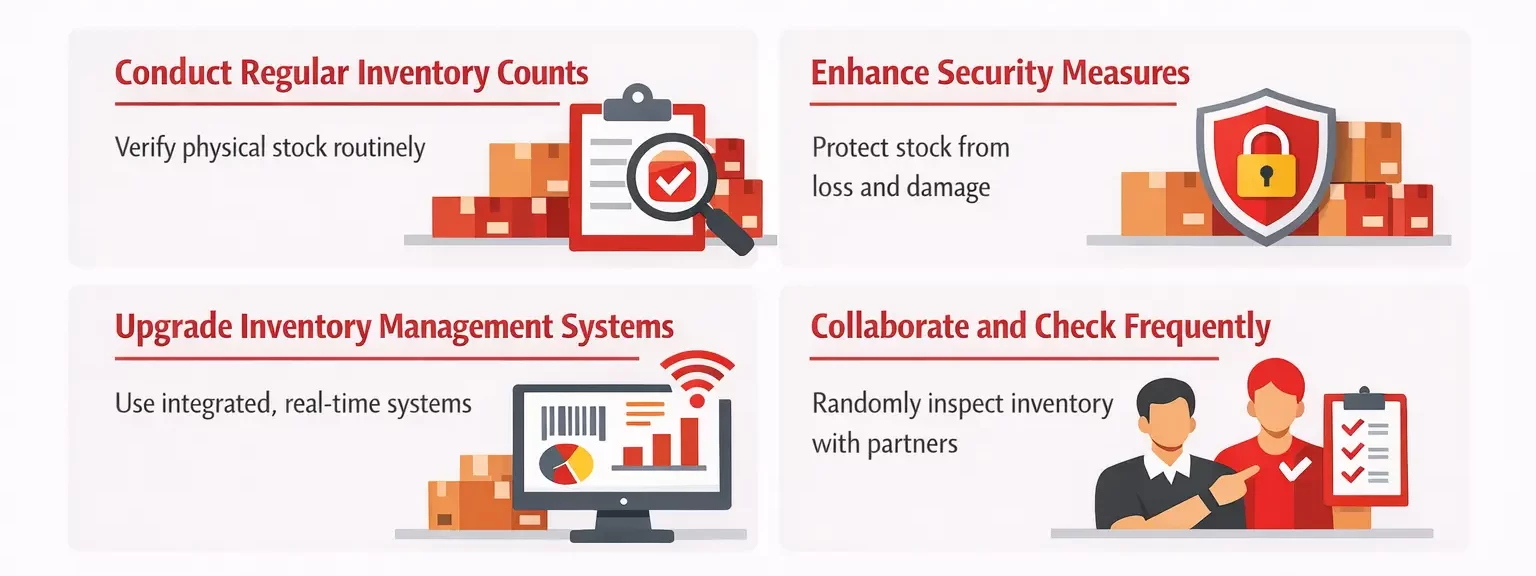
Improving inventory accuracy is crucial for maintaining efficient operations and safeguarding your business’s bottom line. Here are some effective strategies:
- Conduct Regular Inventory Counts: Implement cycle count programs to routinely verify physical stock, allowing you to identify and correct discrepancies quickly.
- Enhance Security Measures: Improve your storage methods to protect against loss, damage, and theft, ensuring more accurate inventory records.
- Upgrade Inventory Management Systems: Invest in advanced systems that provide real time data and integrate smoothly with other business processes.
- Collaborate and Check Frequently: Work with reliable fulfillment partners and conduct frequent, randomized checks to prevent issues before they become problematic.
Adopting these tips will not only help in maintaining accurate inventory records but also in creating a more resilient business infrastructure. By ensuring inventory accuracy, you position your business for smoother operations and improved customer satisfaction. Other software like manufacturing inventory software, can help to improve inventory accuracy.
Conclusion
Maintaining high inventory accuracy keeps stock levels synchronized with records, reduces operational disruptions, and directly supports customer satisfaction. Businesses that track accuracy consistently are better positioned to catch discrepancies early, control costs, and meet compliance requirements without scrambling during audits.
For teams looking to strengthen their approach, reviewing the leading inventory management software options available today can help identify which tools align best with their scale and industry needs.
Frequently Asked Questions
-
How do you measure inventory accuracy?
Inventory accuracy is measured by comparing physical stock counts to the records in your inventory system. The accuracy percentage is calculated using the formula: (Accurate stock items / Total stock items) * 100%.
-
Why is inventory accuracy important?
This is critical as it ensures that stock levels meet customer demand without surplus. Accurate inventory prevents financial losses and enhances customer satisfaction by avoiding stockouts and overstock issues.
-
What is the goal of inventory accuracy?
The goal of inventory accuracy is to maintain a reliable record that mirrors the actual stock levels in real time. This ensures efficient business operations, optimal stock levels, and accurate financial reporting.