










 Limited to 100 registrants

Imagine losing your best employees because your compensation package isn’t competitive. In today’s job market, salary alone isn’t enough to retain top talent. Understanding employee compensation is crucial for business success, but many employers overlook its importance.
Keep reading to discover how to manage compensation effectively and create a package that keeps employees engaged, motivated, and committed to your company.
Key Takeaways
Employee compensation includes both direct pay and indirect benefits provided in exchange for an employee’s work.
A structured compensation framework helps reinforce organizational values, ensure fairness, and improve talent retention.
Effective compensation design requires balancing market competitiveness, internal equity, and regulatory compliance.
When managed strategically, compensation becomes a performance-aligned investment rather than just an operational expense.
What is Employee Compensation
Employee compensation is the total pay, benefits, and perks employees receive for their work. It helps attract talent and keeps employees happy, which boosts business success. Understanding these components ensures fair pay and motivates teams to perform their best.
- Salary and wages: The amount of money employees receive for their work, which is processed through payroll. This might be paid as an hourly wage or an annual salary and includes any commission employees receive. Salary and wages are paid to employees on regular pay schedules.
- Benefits: Any employer-provided benefits that employees receive. This typically includes any insurance benefits (health, dental, vision, life, etc.), retirement plans, stock options, profit-sharing plans, and various types of leave.
- Bonuses: Bonuses might be paid to employees for exceeding sales goals or if the company has an excess budget at the end of the year. These, too, are processed through payroll but might not be paid out every pay cycle.
- Additional perks: This covers anything else employees receive for their work that doesn’t easily fit into any of the previously mentioned categories. This includes things like company-provided lunches, on-site parking, and other perks that don’t have easily measurable monetary values, like flexible work schedules and more.
Importance of a Compensation Package

A well-structured compensation package attracts top talent and builds a strong, committed workforce. It ensures employees feel valued and motivated, which directly improves job satisfaction and productivity. Businesses that offer competitive pay gain a positive reputation, making it easier to attract skilled professionals.
Retaining employees through fair wages also reduces hiring costs and stabilizes company growth. Employers who invest in proper compensation create a workplace where employees are engaged, loyal, and driven to succeed.
Following labor laws and ensuring fair pay structures protect businesses from compliance issues and legal risks. Ethical compensation practices also strengthen employer-employee relationships, fostering a more stable and harmonious work environment. The good thing is that you can simplify this by using an HRM system.
Components of Employee Compensation
Here are some components that employers need to be aware of to maintain their employees’ morale and let the company thrive. Those are:
| Component | Description |
|---|---|
| Base Pay | Fixed salaries or hourly wages based on roles and industry standards. Ensures financial stability. |
| Performance-based Pay | Bonuses and commissions for exceeding performance targets. Encourages motivation and productivity. |
| Benefits | Health insurance, retirement plans, and mandatory contributions (SSS, PhilHealth, Pag-IBIG). Supports well-being. |
| Perquisites (Perks) | Company cars, housing allowances, and meal subsidies. Adds non-monetary value to employment. |
| Recognition Programs | Public awards, appreciation events, and acknowledgement for achievements. Boosts morale and motivation. |
| Career Development | Training, mentorship, and promotions. Helps employees grow professionally and improve skills. |
Types of Employee Compensation
There are 2 main types of compensation that you could give to your employee, they are:
Fixed compensation
Fixed compensation provides employees with a stable income that does not change based on performance. It ensures financial security and allows employees to plan their expenses with confidence. This predictability helps workers focus on their roles without concerns about fluctuating earnings.
Employers benefit by complying with labor laws and creating a structured, transparent workplace. A fair salary structure fosters employee loyalty, making it easier to retain skilled talent and build a motivated workforce. Some examples of fixed compensations are:
- Base Salary: Employees receive a set amount each month or year, regardless of performance.
- Hourly Wages: Employees are paid a fixed rate for every hour worked, ensuring fair compensation.
- Overtime Pay: Workers receive additional compensation for extra hours worked beyond regular schedules.
- Allowances: Fixed payments for transportation, meals, or housing to support employees’ work-related needs.
- 13th Month Pay: A mandatory bonus given annually in the Philippines to enhance financial stability for workers.
Variable compensation
Variable compensation gives employees extra financial rewards based on how well they perform, making them more motivated to achieve higher goals. Unlike fixed salaries, this structure directly connects earnings to measurable success, ensuring employees feel valued for their contributions.
This setup helps businesses encourage a high-performance culture where effort and results go hand in hand. Employers also benefit by aligning financial incentives with business goals, keeping the workforce engaged, motivated, and competitive in a fast-changing market. Some examples of variable compensations are:
- Bonuses: Extra payments for reaching or exceeding specific company or individual performance targets.
- Commissions: A percentage-based reward for sales or revenue generation, commonly used in sales-driven roles.
- Profit-Sharing: Employees receive a portion of company profits based on overall business performance.
- Incentive Pay: Rewards for meeting productivity, quality, or customer satisfaction benchmarks.
- Stock Options: The opportunity to purchase company shares at a discounted rate, aligning employee and business success.
Benefits Included in a Compensation Package

A well-rounded compensation package includes both mandatory and supplementary benefits that improve employee well-being and job satisfaction. Employers who offer these benefits help their workforce stay financially secure and maintain a healthy work-life balance.
Providing strong benefits also enhances employee loyalty and reduces turnover rates. Below are the key benefits included in a compensation package in the Philippines:
Mandatory benefits in the Philippines
Mandatory benefits are required by law and ensure employees receive basic financial security and healthcare coverage. Employers must comply with these requirements to avoid legal penalties and maintain a fair workplace.
The full list of employee benefits in the Philippines also covers leave entitlements and 13th month pay, but the three contributions below are the baseline. Those mandatories are:
- Social Security System (SSS): Employees receive retirement, disability, and maternity benefits through employer contributions to SSS. This provides financial protection during unforeseen circumstances and ensures long-term security.
- PhilHealth: This mandatory health insurance covers medical expenses and helps employees manage healthcare costs. Employers must contribute to PhilHealth to ensure workers receive the necessary medical support.
- Pag-IBIG Fund: Contributions to Pag-IBIG allow employees to access affordable housing loans and other financial assistance programs. This benefit supports long-term financial stability and homeownership opportunities.
Supplementary benefits
Supplementary benefits go beyond legal requirements and improve employee satisfaction and well-being. Employers who offer these benefits create a more attractive and competitive workplace.
- Additional Health Coverage: Some companies provide HMO plans, dental insurance, and mental wellness programs. These benefits improve employee health and reduce absenteeism due to medical issues.
- Paid Time Off: Employees receive paid leave for vacations, sick days, and parental responsibilities. Adequate rest enhances job performance and prevents burnout, leading to a more engaged workforce.
- Employee Wellness Programs: Initiatives like gym memberships, mental health support, and wellness workshops help employees maintain a balanced lifestyle. A healthier workforce is more productive and contributes positively to workplace culture.
Offering a combination of mandatory and supplementary benefits helps businesses build a motivated, loyal, and high-performing team. A strong benefits package is an investment in both employee satisfaction and long-term business success.
Factors Determining Employee Compensation
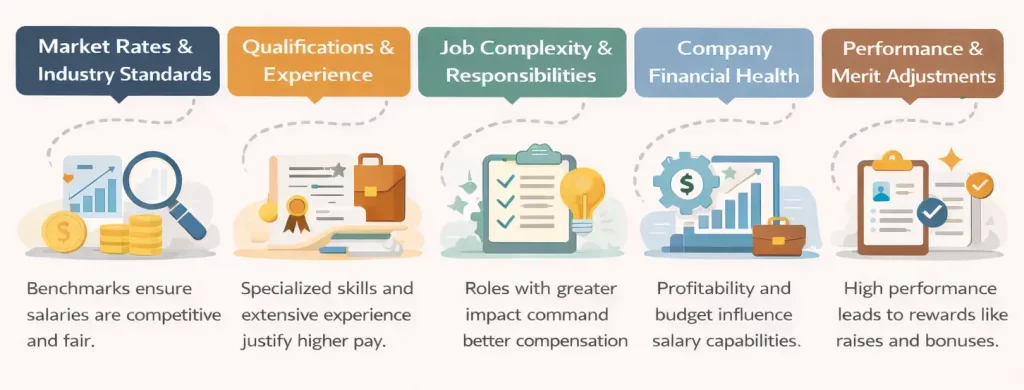
Setting fair and competitive compensation requires employers to evaluate multiple factors that influence salary decisions. Understanding these elements would help businesses create pay structures that attract and retain top talent while ensuring legal compliance.
Key Factors That Determine Compensation:
- Market Rates and Industry Standards: Employers analyze industry benchmarks to ensure salaries remain competitive and fair. Paying below market rates can result in high turnover, while offering competitive pay enhances employee retention.
- Employee Qualifications and Experience: Workers with specialized skills, advanced education, or extensive experience often receive higher pay. Their expertise brings added value to the company, justifying a more competitive salary.
- Job Complexity and Responsibilities: Roles with higher responsibilities, decision-making authority, or specialized knowledge typically command better compensation. Employers evaluate a job’s impact on business operations when determining pay levels.
- Company Financial Health: A company’s profitability and budget influence its ability to offer competitive salaries. Financially stable businesses can provide better compensation packages, helping them attract and keep skilled employees.
- Performance Evaluations and Merit-Based Adjustments: Employers use performance reviews to determine salary increases, bonuses, and promotions. Recognizing and rewarding high-performing employees boosts morale and encourages continuous improvement.
By considering these factors, employers can create compensation packages that motivate employees while ensuring financial sustainability. A well-structured pay system supports business growth and keeps employees engaged, productive, and satisfied in their roles.
Conclusion
A strong compensation package gives employees financial security and motivation to perform their best. It ensures fairness, encourages loyalty, and helps businesses attract top talent while maintaining a positive work environment. Employers who prioritize well-structured compensation create a workplace where employees feel valued and engaged.
Regular updates to compensation plans keep businesses competitive and employees motivated to grow within the company. Investing in employee well-being leads to long-term success, lower turnover rates, and a more productive workforce.
Frequently Asked Questions
Employee compensation in SSS provides financial assistance for work-related injuries, illnesses, or death. It covers medical expenses, disability benefits, and pensions to support employees and their families.
The Employee Compensation Commission ensures fair and timely benefits for work-related disabilities or deaths. It oversees compensation policies, ensuring compliance and protection for employees under the law.
SSS monthly compensation is based on the employee’s salary and the corresponding contribution table. The employer and employee contribute a percentage of the salary, ensuring retirement, disability, and health benefits.
Employees who are registered with SSS and have made the required number of contributions are eligible for employee compensation benefits. Coverage typically applies to work-related sickness, injury, disability, or death occurring in the course of employment, subject to SSS rules and documentation requirements.