











Every business that buys goods or services from outside vendors relies on the reliability of its suppliers. Yet many companies still treat supplier contracts as routine paperwork rather than an important safeguard. When a contract is vague or poorly written, it can lead to financial loss, supply disruptions, and disputes. A clear and well-structured agreement helps define responsibilities and protects both parties.
Whether you are a procurement manager, supply chain leader, or business owner, understanding supplier contracts is essential. This guide explains what supplier contracts are, why they matter, the key elements they should include, the types of agreements commonly used, and how businesses can manage them more effectively.
Table of Contents
Key Takeaways
|
What Is a Supplier Contract?
 A supplier contract is a legally binding agreement between a buyer and a supplier that sets the terms for delivering goods, materials, or services. It defines key details such as delivery timelines, pricing, quality standards, and the responsibilities of each party if the agreement is not fulfilled.
These agreements may also be called vendor or supply agreements. Unlike a purchase order that records a single transaction, a supplier contract governs the broader relationship between both parties and often applies to multiple purchases over time.
Why Supplier Contracts Matter in Today’s Supply Chain

Risk Mitigation
Supplier contracts help businesses manage supply chain risks that can arise from price fluctuations, delivery delays, quality issues, or regulatory problems. By clearly defining responsibilities and consequences, a contract ensures both parties understand how risks are handled if disruptions occur.
Operational Continuity
Clear agreements allow suppliers to understand delivery schedules, quality expectations, and order volumes. This clarity helps suppliers plan production and logistics more effectively, which reduces the likelihood of disruptions that could delay operations or halt production.
Financial Control
Contracts also provide financial clarity through agreed pricing, payment terms, and potential discounts. These provisions help procurement and finance teams maintain cost stability, manage budgets more effectively, and avoid unexpected price increases.
Legal Protection
When disputes arise, written contracts serve as the primary reference for determining each party’s obligations. Clear clauses covering penalties, dispute resolution, and legal jurisdiction help businesses resolve conflicts more efficiently.
Relationship Foundation
Beyond legal protection, supplier contracts create transparency and shared expectations. When both sides clearly understand their responsibilities, the partnership becomes more stable and collaborative over time.
Key Components of a Supplier Contract
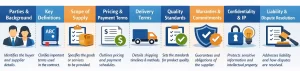 A comprehensive supplier contract is made up of several distinct sections, each serving a specific purpose. While the exact structure will vary depending on the nature of the relationship, the industry, and the applicable legal jurisdiction, the following components are found in virtually every well-drafted supplier agreement.
1. Parties and Background
This section identifies the two parties involved in the agreement—the buyer and the supplier. It usually includes their full legal names and registered addresses. The contract may also briefly explain the purpose of the partnership.
2. Key Definitions
Some terms in a contract can have specific meanings. The definitions section clarifies important terms so both parties interpret them the same way, reducing the risk of confusion later.
3. Scope of Supply
This part explains exactly what the supplier is expected to provide. It may include product types, quantities, specifications, or services agreed upon by both parties.
4. Pricing and Payment Terms
Here, the contract outlines the price of goods or services and how payments will be made. It typically includes payment schedules, currency, and any conditions related to price adjustments.
5. Delivery Terms
This section explains when and how the goods will be delivered. It usually covers delivery timelines, shipping methods, and the location where the goods will be received.
6. Quality Standards
Quality requirements ensure the products or services meet the agreed standards. The buyer may also have the right to inspect the goods before accepting them.
7. Warranties and Commitments
Suppliers often guarantee that their products meet specifications and are free from defects. This section also explains what happens if the goods fail to meet those standards.
8. Confidentiality and Intellectual Property
During the partnership, both parties may share sensitive information. This section protects that information and clarifies ownership of any intellectual property related to the products or services.
9. Contract Duration and Termination
This part states how long the contract will remain valid. It also explains the situations in which either party can end the agreement.
10. Liability and Dispute Resolution
The final section outlines responsibility if problems occur and explains how disputes will be resolved, whether through negotiation, mediation, arbitration, or legal proceedings.
Types of Supplier Contracts
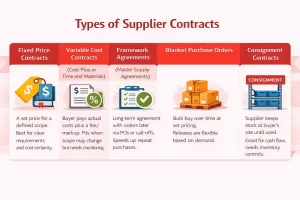 Supplier contracts come in different formats because pricing, scope, and risk are not always predictable. The right type depends on how clear the deliverables are, how stable costs will be, and how much control the buyer needs over changes.
-
Fixed Price Contracts
A set price for a defined scope. Best when requirements are clear and the buyer wants cost certainty.
-
Variable Cost Contracts (Cost Plus or Time and Materials)
The buyer pays actual costs or labor time at agreed rates, plus a fee/markup. Best when scope may change, but it requires close monitoring to prevent budget creep.
-
Framework Agreements (Master Supply Agreements)
A long-term agreement that sets standard terms for repeat purchases. Orders are placed later via purchase orders or call-offs, which speeds up procurement.
-
Blanket Purchase Orders
A commitment to buy a set quantity over a period at agreed pricing, with deliveries released as needed. Useful when demand is predictable but delivery timing can vary.
-
Consignment Contracts
Stock sits at the buyer’s site, but the supplier keeps ownership until items are used or sold. Good for cash flow, but it needs tight inventory tracking and clear rules on loss/returns.
How to Negotiate a Supplier Contract
A good negotiation is not about squeezing the supplier. It’s about getting clear terms, lowering risk, and setting up a working relationship that holds up when things get messy.
Step 1: Do your homework
Review your spend, understand what matters most, and research the supplier’s market position. List your non-negotiables, your preferred terms, and what you can trade. Know your backup plan if the deal falls through (your BATNA).
Step 2: Align internally first
Get input from legal, finance, operations, and anyone who will live with the contract. If you skip this, you’ll get “yes” from the supplier and “no” from your own team later.
Step 3: Look beyond price
Unit price is only part of the cost. Factor in shipping, lead times, quality issues, inventory holding, switching costs, and the cost of delays. A cheap supplier can become expensive fast.
Step 4: Use data, not opinions
Bring benchmarks, competing quotes, performance history, and clear requirements. Data makes your position stronger and keeps the conversation grounded.
Step 5: Be clear about risk
Agree upfront on what happens when things go wrong: delays, defects, compliance issues, or major disruptions. Set fair rules for warranties, liability limits, and force majeure so neither side gets stuck with unreasonable exposure.
Step 6: Negotiate the working relationship
How you negotiate shapes how the supplier will treat you later. Push for strong terms, but keep it practical and fair so the supplier stays motivated to support you when capacity is tight.
Common Supplier Contract Mistakes to Avoid
 Even experienced procurement professionals make mistakes in supplier contracts. Being aware of these common pitfalls can save your organization significant time, money, and frustration.
1. Using Generic Templates Without Customization
Many companies rely on standard contract templates. However, templates rarely fit every supplier relationship. Contracts should reflect the specific goods, services, risks, and regulatory requirements involved.
2. Not Defining Clear Performance Metrics
Terms like “timely delivery” or “high quality” are too vague. Contracts should include measurable indicators such as delivery timelines, defect rates, or service response times.
3. Weak Termination and Exit Clauses
Some businesses focus only on pricing and overlook how the contract ends. Poor termination terms can trap companies in unfavorable supplier relationships or create high switching costs.
4. Ignoring Compliance Requirements
Modern supply chains must follow regulations related to data protection, anti-corruption laws, environmental rules, and trade compliance. Contracts should clearly state compliance obligations and audit rights.
5. No Clear Change Management Process
Business conditions often change. Without a formal process for contract modifications, informal adjustments can lead to confusion, disputes, or financial losses.
6. Overlooking Currency and International Payment Risks
For global sourcing, exchange rate changes and payment terms can affect real contract costs. Contracts should define currency terms, tax responsibilities, and payment security mechanisms.
How to Manage Supplier Contracts Effectively
Signing a supplier contract is only the beginning of the process. Effective contract management ensures the agreement delivers real value throughout the relationship. Without proper oversight, businesses can lose significant value due to missed obligations, weak monitoring, or poor documentation.
1. Centralize Contract Storage
Store all supplier contracts in one accessible repository instead of scattered across emails or folders. Centralization makes it easier to track documents, monitor expiry dates, and ensure the right teams can access the information.
2. Track Important Dates and Obligations
Supplier contracts often include key milestones such as renewal dates, audit rights, and pricing reviews. Tracking these deadlines helps prevent unwanted auto-renewals or missed negotiation opportunities.
3. Monitor Supplier Performance
Regularly measure supplier performance using the metrics defined in the contract. Periodic reviews help identify issues early and maintain accountability between both parties.
4. Manage Contract Changes Formally
Any changes to scope, pricing, or delivery terms should be documented through formal amendments or change orders. This prevents misunderstandings and protects both parties if disputes arise.
5. Conduct Periodic Contract Audits
For high-value contracts, review invoices, pricing terms, and compliance obligations regularly. Audits help ensure suppliers follow the agreed terms and that the contract still reflects current market conditions.
6. Prepare Early for Contract Renewal
Treat contract renewal as a strategic opportunity rather than a routine task. Reviewing performance and market data ahead of renewal allows businesses to renegotiate better terms.
Supplier Contract Checklist What to Review Before You Sign
Before signing, run a quick checklist to confirm the contract matches what your team actually needs. Focus on the basics first scope, pricing, delivery timelines, quality standards, and performance metrics, plus who owns risk if things go wrong.
Next, check the “what if” clauses that usually cause disputes later. Make sure termination terms, change control, liability limits, dispute resolution, and compliance requirements are clear, then confirm key dates and responsibilities are easy to track once the contract is live.
Conclusion
Supplier contracts protect your business long after the negotiation ends. When the terms are clear on scope, pricing, delivery, quality, risk, and performance, you reduce surprises and keep operations stable even when supply conditions change.
Before signing, treat the contract as a working tool, not a formality. Review the essentials, avoid the common mistakes, and manage the agreement actively through performance tracking, documented changes, and early renewal planning so the supplier relationship continues to deliver value over time.
FAQ About Supplier Contract
-
What is a supplier contract?
A supplier contract is a legally binding agreement between a buyer and a supplier that sets terms for providing goods or services, including pricing, delivery timelines, quality standards, and responsibilities.
-
What is the difference between a supplier contract and a purchase order?
A purchase order records one transaction for specific items and dates, while a supplier contract governs the broader relationship and often covers multiple purchases over time.
-
What should be included in a supplier contract?
A supplier contract typically includes scope of supply, pricing and payment terms, delivery requirements, quality standards, warranties, confidentiality and IP terms, contract duration, and dispute resolution.
-
Why are supplier contracts important for businesses?
Supplier contracts reduce risk, protect budgets, and prevent operational disruptions by setting clear expectations and accountability for delivery, quality, and performance.
-
What are the common types of supplier contracts?
Common types include fixed price contracts, variable cost contracts (cost-plus or time-and-materials), framework agreements, blanket purchase orders, and consignment contracts.