













Have you ever wondered if your production costs are silently draining your profits? Process costing holds the answer, but most businesses do not fully understand it at first glance. It’s a powerful method for uncovering the truth behind your expenses, yet its potential often remains untapped.
For Philippine manufacturers, especially MSMEs in food processing, garments, or electronics assembly, getting cost data right isn’t optional. The BIR requires proper cost documentation for CAS-accredited businesses, and process costing gives you the structure to stay compliant while actually understanding where your money goes.
Below, we’ll break down how process costing works, walk through the five steps to set it up, and cover where it falls short.
Key Takeaways
|
What is Process Costing?
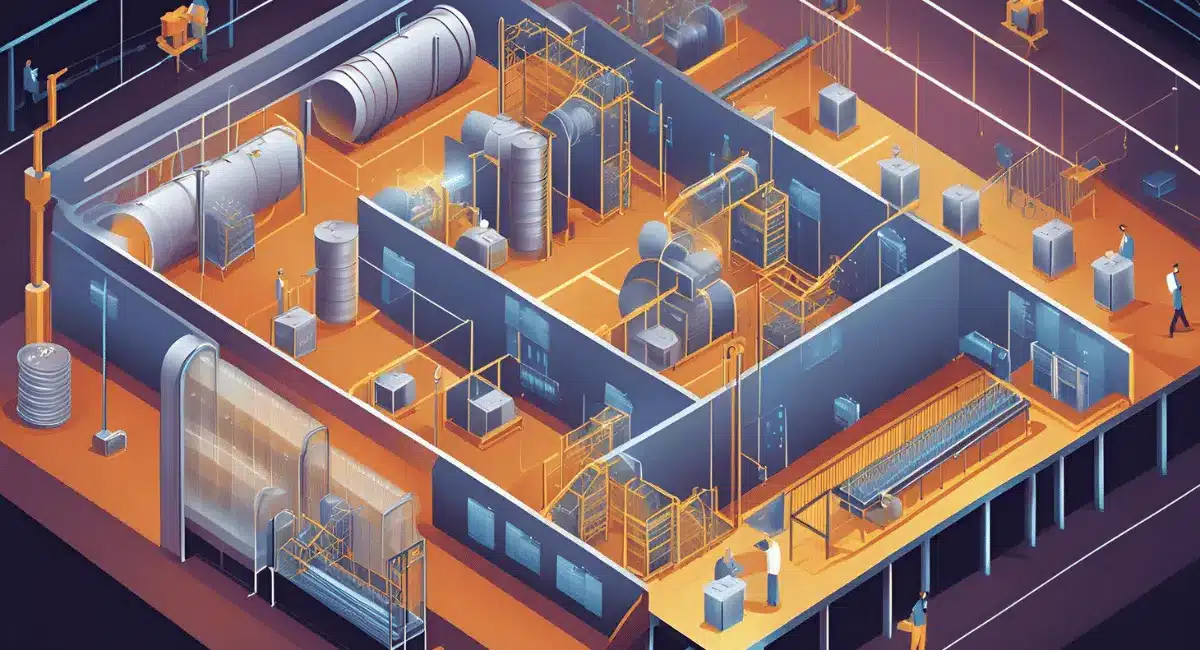
Process costing is a way to track production costs at each stage of manufacturing. It’s built for businesses producing goods in large, continuous batches, like food, chemicals, or electronics, where processes are consistent, and every unit comes out roughly identical. This method allocates expenses for materials, labor, and overhead across production stages.
Here’s a simple example: say you’re a dried mango producer in Cebu. Your production has three stages: slicing, drying, and packaging. Process costing lets you assign specific costs to each of those stages, so you know exactly how much the drying phase costs versus packaging. That’s the kind of granularity that helps you spot waste.
This is different from job order costing, which tracks costs per individual project or batch. If your factory makes custom furniture where every piece is unique, job order costing is your match. But if your output is uniform and continuous, process costing is the way to go.
How Stage-Based Costing Helps Your Bottom Line
When you break costs down by production stage, a few things become much clearer:
- You can spot which stage is eating the most resources. If your packaging phase costs 40% of total production but should only be 20%, you’ve found a problem worth fixing.
- Pricing gets more accurate. Instead of guessing your markup, you’re working from
- It allocates costs fairly between finished and unfinished products, which keeps your financial statements clean and audit-ready — especially important come BIR filing season.
- Your financial reports become more trustworthy. Stakeholders, banks, and investors can see exactly where money is going.
Breaking Down the 5-Step Costing Workflow
Setting up process costing isn’t complicated, but each step matters. Here’s the workflow:
1. Analyze inventory
The first step is evaluating your raw materials and work-in-progress. Raw materials are inputs ready for production, while work-in-progress covers products still being manufactured.
For example, a garment factory in CALABARZON might have ₱500,000 worth of fabric in stock and ₱200,000 in half-sewn pieces on the floor. Knowing these numbers is the starting point for allocating costs properly. A solid inventory management system makes this step much faster than counting by hand.
2. Calculate equivalent units
Calculating equivalent units means converting partially completed products into their finished-product equivalents. Say you have 100 t-shirts that are 50% done — that counts as 50 equivalent finished units.
This matters because you can’t just divide total costs by the number of items on the floor. Some are half-done, some are almost finished. Equivalent units give you a fair denominator for cost-per-unit calculations.
3. Determine total costs
Add up all production expenses, materials, labor, and overhead for a specific period (usually monthly). These costs are then assigned to each stage of production to show where resources are going.
In a Philippine context, don’t forget to include costs that are easy to overlook: electricity (which can be significant in manufacturing), SSS/PhilHealth/Pag-IBIG contributions for production workers, and any BIR-related compliance costs. If you’re unfamiliar with how overhead fits in, this guide on cost accounting fundamentals breaks it down further.
4. Calculate cost per unit
Divide your total production costs by the equivalent units you calculated in Step 2. That’s your cost per unit.
So if your total costs for the month are ₱2,400,000 and you produced 12,000 equivalent units, your cost per unit is ₱200. That’s the number you use for pricing — and if it’s higher than you expected, you know something in your production line needs attention.
5. Allocate costs for completed and incomplete products
For finished products, all production costs are included. For incomplete products, costs are allocated based on how far along they are.
This split is important for financial reporting. If you’re filing with the BIR, your inventory valuation needs to reflect this distinction accurately — finished goods at full cost, work-in-progress at partial cost. Getting this wrong can cause problems during the audit preparation process.
Is Process Costing Right for Your Business?
Not every manufacturer needs process costing. Answer these four questions to find out if it fits:
- Do you produce identical or near-identical units in bulk? (e.g., bottled water, canned sardines, rubber gloves) — If yes, process costing is a natural fit.
- Does your production flow through defined stages? (e.g., mixing → molding → packaging) — If your workflow is continuous, not project-based, this method works.
- Are your products custom or unique per order? — If yes, job order costing is probably better. Process costing struggles with one-off production.
- Do you have more than 1,000 units per production run? — The higher your volume, the more value you get from process costing’s per-unit averaging.
If you answered yes to #1, #2, and #4, process costing is likely your best option.
Where This Method Falls Short
Process costing isn’t perfect, and it’s worth knowing the trade-offs before you commit:
- It’s resource-heavy to set up. You need someone who understands cost accounting, and the initial configuration takes time. For a small MSME with under 10 employees, the setup effort might not be worth it.
- It assumes uniformity. If you produce multiple product variants with very different cost structures, the averaging can distort your numbers. A bakery making both pandesal and custom cakes, for instance, would get misleading per-unit costs.
- It needs consistent updating. Costs change, raw material prices fluctuate, and power rates go up. If you don’t update your allocations regularly, your data becomes stale.
- It won’t work for project-based work. Construction, custom fabrication, or any business where each job is unique should look at a different accounting approach entirely.
How Accounting Software Supports Production Costing
Doing process costing manually — in spreadsheets or on paper — is doable for small operations, but it breaks down fast once you’re running multiple production lines or scaling up. That’s where accounting software comes in.
Good manufacturing-focused accounting software should handle:
- Automated cost allocation — assigning materials, labor, and overhead to each production stage without manual formulas
- Real-time cost tracking — so you see cost overruns as they happen, not at month-end
- Equivalent unit calculations — automatically converting WIP into finished-unit equivalents
- BIR-ready reports — generating the cost documentation you need for CAS compliance and tax filing
HashMicro’s accounting module is one option that covers these features and is BIR CAS-accredited for Philippine businesses. If you’re evaluating tools, you can schedule a free consultation to see whether it fits your production setup.
Typical Process Costing Components for PH Manufacturers
If you’re setting up process costing for the first time, here’s a rough guide to the cost categories you’ll track. These figures are ballpark ranges for Philippine SME manufacturers:
- Direct materials: Varies by industry. A food processor might spend ₱50–₱200/kg on raw ingredients; a garment maker ₱80–₱300/meter of fabric.
- Direct labor: Minimum wage in NCR is ₱645/day (2025 rates). Factor in SSS, PhilHealth, and Pag-IBIG contributions — roughly 10–12% on top of base wages.
- Manufacturing overhead: Electricity is a big one — industrial rates in Meralco’s service area run ₱9–₱12/kWh. Also include equipment depreciation, facility rental, and maintenance.
- Compliance costs: If you’re BIR CAS-accredited, factor in the annual software licensing and audit preparation costs. Check the latest TRAIN Law provisions for any tax incentives that might offset these.
Conclusion
Process costing gives manufacturers a structured way to track the cost of each production stage. It’s not the right fit for every business, custom or project-based operations should look elsewhere, but for standardized, high-volume production, it’s hard to beat.
For Philippine manufacturers, the added benefit is compliance. BIR expects proper cost documentation from CAS-accredited businesses, and process costing provides exactly the kind of structured data that satisfies those requirements.
If you’re still tracking costs in spreadsheets, it might be time to explore accounting software that handles allocation and reporting automatically. You can reach out to providers like HashMicro for a free consultation to see if it makes sense for your setup.
Frequently Asked Questions
-
What is process costing vs job costing?
Process costing tracks costs for the continuous production of identical items, beverages, chemicals, and canned goods. Job costing calculates costs for individual, unique projects, custom furniture, construction, and print jobs. The key difference: one averages costs across all units, the other tracks costs per specific job.
-
What are the main features of process costing?
It tracks costs by production stage for identical items in bulk manufacturing. It uses cost allocation for materials, labor, and overhead.
-
Does Coca-Cola use process costing?
Yes, Coca-Cola uses it as it produces identical beverages in large volumes. This method helps allocate costs across multiple production stages efficiently.
-
Is process costing required by the BIR?
Not specifically, the BIR doesn’t mandate which costing method you use. But if you’re a CAS-accredited manufacturer, you need proper cost documentation for your inventory and COGS. Process costing is one of the most straightforward ways to provide that.