














Performance appraisal, love it or hate it, it’s here to stay. This type of evaluation has become a staple in almost every workplace designed to measure how well employees are doing, recognize achievements, and pinpoint areas where growth is still possible. While the purpose sounds straightforward enough, the experience can spark very different reactions depending on how well the process is run.
So, are performance appraisals actually working? In this article, we’ll take a closer look at what they are, how they’re used, and the common concerns that organizations need to address to make them fair and effective for everyone involved.
Key Takeaways
|
What is a Performance Appraisal?
A performance appraisal is a regular check on how well an employee is doing their job and how much they contribute to the company. It’s also known as an annual review, performance review, employee appraisal, or evaluation.
This process looks at the employee’s skills, achievements, and areas where they might need to improve. They also help allocate limited funds for raises and bonuses by identifying top performers who contribute most to the company’s growth. Many organizations use dedicated tools to streamline this process, providing data-driven insights into employee performance and skill development.
Companies use performance appraisals to give employees feedback, decide on pay raises or bonuses, and sometimes to make decisions about letting someone go. These reviews can happen anytime but are usually done once a year, twice a year, or every three months.
Types of Performance Appraisal

Performance appraisals can take various forms, beyond the common top-down approach where supervisors evaluate employees without their input. Here are some alternatives:
- Self-Assessment: Employees evaluate their own performance and behavior.
- Peer Assessment: Co-workers or team members provide feedback on an individual’s contributions.
- 360-Degree Feedback: Combines input from the employee, supervisor, and peers for a well-rounded view.
- Negotiated Appraisal: A mediator facilitates the process, allowing the employee to present first and emphasizing strengths before addressing areas for improvement.
Additional methods include:
- 720-Degree Feedback: Expands on 360-degree feedback by including external stakeholders like customers, suppliers, and investors.
- Assessment Center Method: Employees are evaluated through activities like simulations, role-playing, and discussions, focusing on skills like communication and emotional intelligence.
- Behaviorally Anchored Rating Scale (BARS): Compares employee behavior to specific performance examples tied to ratings.
- Management by Objective (MBO): Employees and managers collaborate to set goals and track progress, ending with an evaluation of goal achievement.
- Performance Tests and Observations: Skills and knowledge are assessed through tests or problem-solving challenges.
- Project Evaluation Review: Appraisals are conducted at the end of each project instead of yearly.
- Rating Scales: Employees are rated on traits like dependability and initiative, using scales ranging from Excellent to Poor.
These methods offer diverse ways to evaluate and develop employee performance. A performance appraisal form can standardize evaluations and ensure consistent feedback, but companies must choose the method that fits their culture, as what works for one may fail in another.
What is Performance Appraisal Used For?
Performance appraisals are a way to assess how well an employee has performed their job over a certain period. They focus on highlighting what the employee does well and identifying areas where they can grow, all to help them perform better in the future.
These appraisals give both the employee and their manager a clear picture of how things are going. For the employee, it’s a chance to understand what they’re doing right and where they need to improve.
Managers can use these appraisals to understand what the employee needs to improve and offer support. This might mean giving clearer instructions, arranging training, or checking in that they have the tools to do their work well.
For companies managing large teams, they might also rely on dedicated HR and performance tools to assist in documenting appraisal results and choosing the right evaluation method.
Benefits of Performance Appraisal
When done properly, performance appraisals can bring great benefits. They can lift employee morale, increase engagement, set clear expectations, encourage employees to perform their best, and motivate hard work and commitment.
The benefits aren’t one-sided either. Open communication allows employees to voice concerns, share ideas, discover their strengths, feel valued, and be recognized for their achievements.
When Should Performance Appraisal Take Place?

Performance management isn’t just a one-time event; it’s a continuous process that happens throughout the year. Managers are expected to regularly check in with employees to set clear goals and track their progress.
Feedback, whether it’s about achievements or areas for improvement, is shared consistently to help employees grow and stay motivated.
In addition to these regular check-ins, formal reviews or appraisals are conducted at specific intervals, often yearly or quarterly. These structured sessions give a more comprehensive look at the employee’s overall performance.
Criticisms Against Performance Appraisal
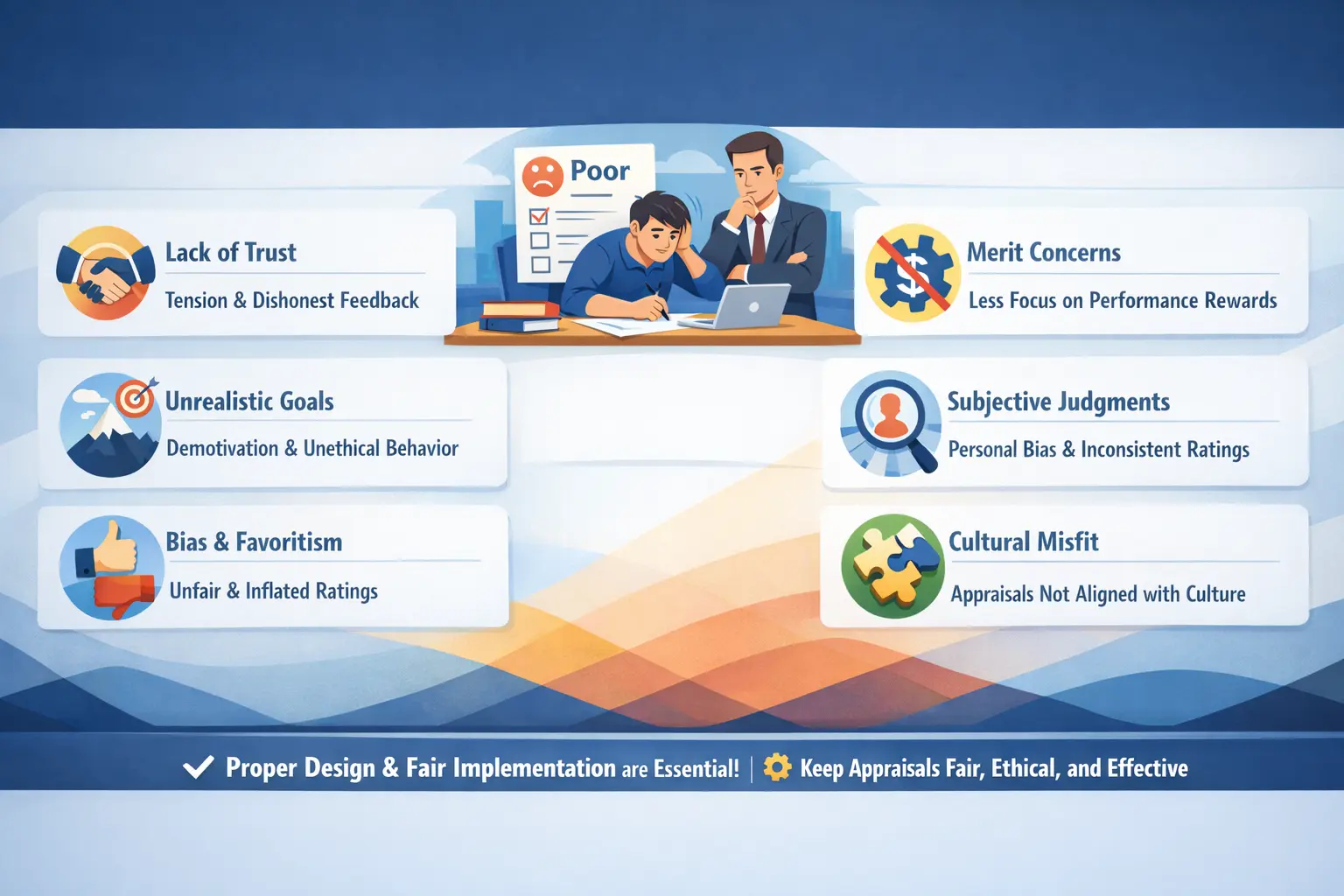
Performance appraisals are meant to encourage employees to meet or surpass their goals, as well as maintaining employee retention, but they often face significant criticism.
One major challenge is distinguishing between individual performance and the overall performance of the organization. If the appraisal system doesn’t align with the company’s culture, it can backfire. Other common problems include:
- A lack of trust in the appraisal system, which may create tension between employees and supervisors or lead employees to provide feedback designed solely to please their managers.
- The implementation of unrealistic goals that demotivate employees or push them toward unethical behavior to meet expectations.
- Concerns from labor experts that performance appraisals may reduce the emphasis on merit-based or performance-based rewards.
- Potentially unfair evaluations where employees are judged based on likability rather than their achievements, or cases where managers inflate ratings for underperforming staff to avoid damaging relationships.
- Biased or unreliable raters who skew results based on personal preferences or subjective judgments.
- Appraisals that are effective in one organizational culture or role may not translate well to others, limiting their usefulness.
These problems show why it’s so important to design and run performance appraisals properly to keep things fair and useful. However, since a performance appraisal is still a crucial factor for the company, make sure that it is not done out of malice and dehumanize the employees.
And while the right HR management platform can make the appraisal process more organized and consistent, it’s still up to managers and the HR department to use it effectively.
Conclusion
Performance appraisals are vital for evaluating employee performance, recognizing achievements, and identifying areas for growth. While beneficial, they require careful design to avoid bias — the main goal, after all, is to help both individuals and the organization move forward. For companies looking to put this into practice, choosing the right tools plays a significant role in how well appraisals are carried out. A good starting point is exploring some of the best performance management tools available, which can help teams run more structured, consistent, and fair evaluations.
FAQ on Performance Appraisal
-
How can I prepare for a performance appraisal?
Review your past performance, identify key accomplishments, and areas for improvement. Be prepared to discuss specific examples and data to support your points.
-
What are some common performance appraisal methods?
Some common methods include self-assessment, peer reviews, 360-degree feedback, and manager-employee interviews.
-
How can I use performance appraisals for employee development?
Use performance appraisals to identify training needs, set development goals, and create a personalized development plan for each employee.
-
How can I provide effective feedback during a performance appraisal?
Be specific, constructive, and focus on behaviors rather than personalities. Use the “sandwich technique” to deliver feedback, starting with positive feedback, followed by areas for improvement, and ending with positive reinforcement.