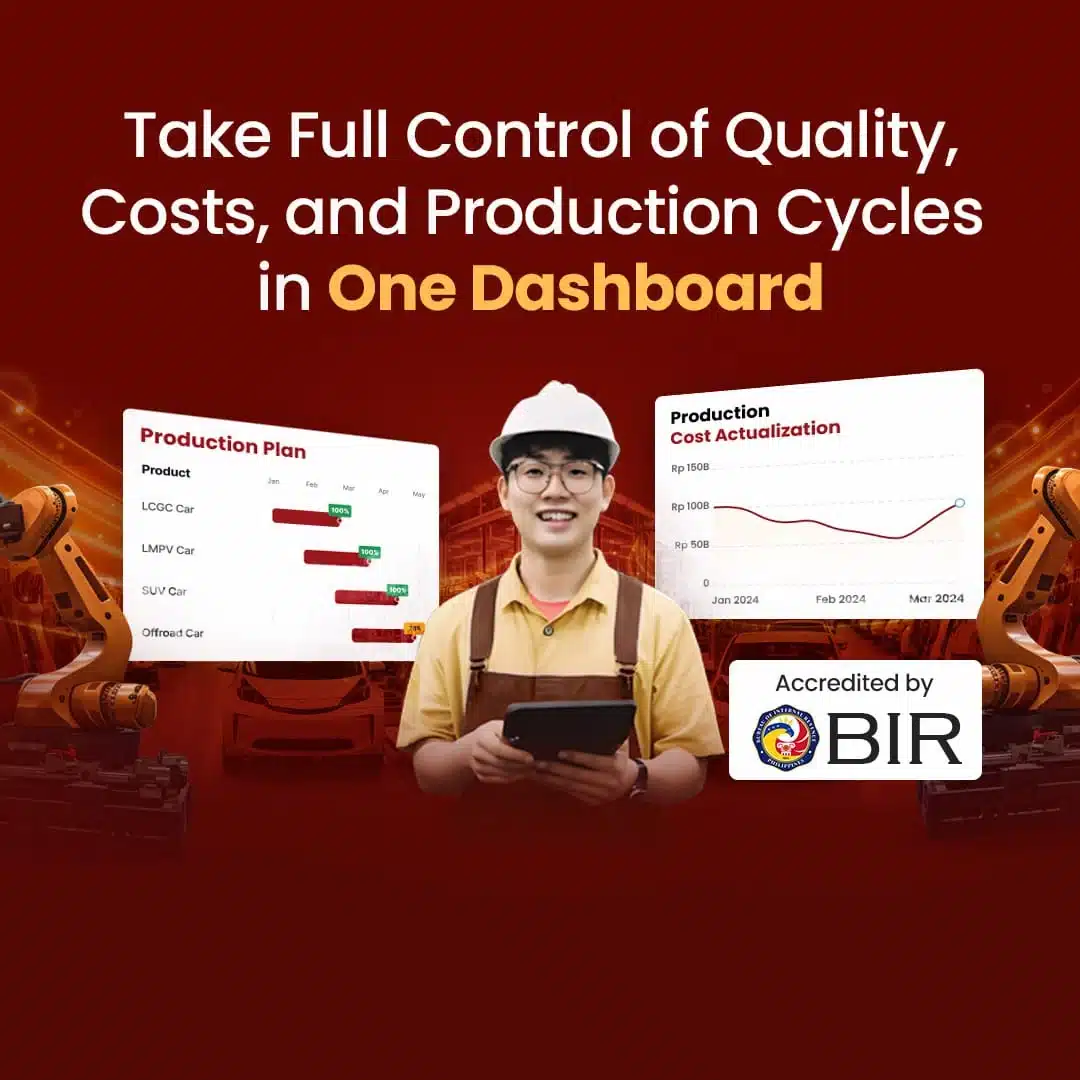







Shop Floor Control helps manufacturers understand what’s really happening on the production floor in real time. Without this visibility, even small delays in work orders, machines, or WIP can escalate into decreased efficiency and missed production targets without being detected early.
According to the Siemens “True Cost of Downtime” Report 2024, the average large factory loses approximately 27 hours of production per month due to unplanned downtime. This figure demonstrates the importance of Shop Floor Control for detecting bottlenecks early and maintaining stable production output.
To simplify Shop Floor Control implementation, many manufacturers utilize HashMicro Manufacturing Software, which integrates production scheduling, tracking, and reporting into a single system. Book a free demo now, then continue reading to understand its components and comprehensive implementation strategies.
Key Takeaways
|
What Is Shop Floor Control (SFC)?
Shop Floor Control, or production floor control, is a structured system that monitors, manages, and reports real-time activities in the production area. It uses procedures, methods, and software so work orders run efficiently, on time, and meet quality standards, while giving managers full visibility.
The primary goal of SFC is not just to supervise but to optimize every element on the production floor. It provides accurate data for strategic decisions, from schedule changes to resolving bottlenecks. Thus, SFC aligns management planning with real execution to achieve company targets.
A. Definition of shop floor control
At its core, Shop Floor Control is the methodical practice of managing work as it moves through manufacturing, from work order release to finished product. It tracks job progress and key data so plans are executed as intended and issues are corrected quickly for continuous improvement.
B. Difference between SFC and Manufacturing Execution System (MES)
While Shop Floor Control and Manufacturing Execution System are often used interchangeably, SFC is actually a function within MES. It focuses on work orders, labor, and job status, while MES adds broader functions like quality, maintenance, analysis, and document control for a plant-wide view.
C. Why SFC is crucial in the Industry 4.0 era
In the era of Industry 4.0, Shop Floor Control is more critical than ever. It becomes the data layer that feeds IoT, AI, and real-time analytics. Thus, SFC provides accurate data for predictive maintenance and smart factories, making it essential for manufacturers to stay competitive.
Main Benefits of Implementing Shop Floor Control for Business

Implementing an effective Shop Floor Control system has impact far beyond daily monitoring. For business leaders, it turns raw floor data into actionable insights. Thus, SFC boosts efficiency, strengthens competitiveness, and cuts waste in time, materials, and labor to lower costs and increase profit.
Moreover, the ability to respond quickly to market changes or production constraints makes the business more agile and reliable. This responsiveness gives a key advantage, enabling faster lead times and better customer satisfaction while fostering a proactive, data-driven culture.
A. Increased efficiency and productivity
One of the key benefits of SFC is a clear boost in efficiency and labor productivity. By giving clear instructions, prioritizing tasks, and tracking progress in real time, it keeps operators on the right job and reduces idle time, while machine monitoring helps maximize overall throughput.
B. Real-time visibility into production processes
Real-time visibility is the cornerstone of modern manufacturing, and SFC delivers it clearly. With a centralized dashboard, managers instantly see work order progress, spot bottlenecks, and track KPIs, so they can act early and prevent delays or costly errors for smoother production flow.
C. Improved quality control and reduced product defects
Shop Floor Control plays a crucial role in improving product quality and reducing defects. By embedding quality checks and SOPs into the workflow, it guides operators, captures defect data in real time, and enables rapid corrections, so scrap and rework drop while overall quality and satisfaction rise.
D. Optimization of operational costs and increased profitability
By enhancing efficiency, reducing waste, and improving quality, SFC helps optimize operational costs. It tracks labor, machine use, and materials to reveal true job costs. Thus, it highlights inefficiencies and cuts unit costs so higher throughput translates into better profit margins.
E. Data-driven decision-making
Perhaps the most strategic benefit of SFC is its role in building a data-driven culture. It captures accurate floor data and turns it into business intelligence, so leaders can track trends, assess process changes, and make fact-based decisions using robust manufacturing software.
To fully realize these Shop Floor Control benefits, many manufacturers rely on integrated production systems that connect scheduling, execution, and reporting in real time. Exploring HashMicro’s pricing can help you understand how its manufacturing solution supports shop floor visibility and cost-efficient production control.

Key Pillars in a Shop Floor Control System
A comprehensive Shop Floor Control system relies on several interconnected pillars that work together. Each one keeps the production cycle smooth, transparent, and controlled. Thus, their synergy creates a cohesive data flow and enables truly optimized manufacturing operations.
From initial scheduling to final performance analysis, these pillars form the backbone of SFC. Scheduling allocates resources, tracking shows progress, data collection is the source of truth, and reporting turns data into insights, so strong integration keeps the whole system stable.
A. Scheduling and dispatching of work orders
The first pillar of SFC is scheduling and dispatching work orders. It builds detailed schedules based on priority, materials, capacity, and skills, then sends orders electronically to each workstation, so paper tickets disappear and everyone always knows what to do next.
B. Material and Work-in-Progress (WIP) tracking
Tracking materials and Work-in-Progress is critical to controlling production. This pillar monitors material use and job movement between workstations. With barcode or RFID data, SFC gives real-time visibility that prevents shortages, cuts WIP levels, and clarifies progress.
C. Automated production data collection
Automated data collection is the heart of an effective SFC system, replacing manual entry with accurate real-time data. By connecting to machines and using simple operator inputs, it captures cycles, status, counts, and defects, so errors drop and decisions rely on trusted information.
D. Reporting and performance analysis
The final pillar is reporting and performance analysis, which turns collected data into actionable intelligence. With flexible reports and KPI dashboards like OEE and on-time delivery, managers can spot trends, find root causes, and guide ongoing optimization of production.
Steps for an Effective Shop Floor Control Implementation
Implementing a Shop Floor Control system is a strategic project that needs careful planning and execution. It goes beyond software installation, transforming work methods, culture, and decisions. Thus, a clear, structured approach reduces disruption and speeds up real benefits.
The key to success is deeply understanding company needs before you begin. Each step, from analysis to evaluation, must have clear, measurable goals. Involving all stakeholders, from operators to top management, then ensures the system solves real issues and supports growth.
A. Stage 1: Needs analysis and goal setting (assessment)
First, conduct a thorough needs analysis. Before evaluating software, understand your current processes, pain points, and objectives. Therefore, map existing workflows and identify bottlenecks. Finally, define SMART SFC system goals, for example, reducing machine downtime by 15% or improving on-time delivery to 98% within a year.
B. Stage 2: Selection of the right software and technology
Once you define your requirements, you can start choosing the right software and technology. Evaluate vendors on fit, functionality, ease of use, scalability, and ERP integration. According to Gartner, integration is a top selection criterion, so use demos, references, and total cost of ownership to decide.
C. Stage 3: Implementation planning and preparation
With a vendor selected, the next step is to build a clear implementation plan. It should list key tasks, owners, and milestones. Then prepare data for migration, align the system with workflows, and set up shop floor hardware like terminals, scanners, and machine connections.
D. Stage 4: Team training and execution
User adoption is critical, so comprehensive training is essential. Create role-based training for operators, supervisors, and managers, and explain how the system helps them. Then manage go-live carefully, often with a phased rollout starting in a pilot area to fix issues early.
E. Stage 5: Evaluation and continuous optimization
Implementation does not end at go-live, as the final stage is ongoing evaluation and optimization. Once the system is running, track results against SMART goals, review SFC data regularly, and use user feedback so you drive continuous improvement and operational excellence.
Integration of Shop Floor Control with Other Systems (ERP & MES)

A Shop Floor Control system works best when it does not stand alone. In today’s tech landscape, it links strategic planning with shop floor execution. Its seamless integration with ERP and MES creates a two-way data flow that keeps operations aligned across the organization.
This integration creates a valuable two-way data flow. ERP sends work orders and BOMs to SFC, while SFC returns actual output, cycle times, and material use for accurate costing and planning. Thus, it removes data silos so all teams share one source of truth, as noted by McKinsey .
A. Synergy of SFC with Enterprise Resource Planning (ERP)
The integration between SFC and ERP forms a strong link between planning and the shop floor. ERP creates schedules and inventory plans, then sends orders to SFC. As work finishes, SFC returns real-time data on labor, materials, and output, so ERP gains accurate costs, stock levels, and order status.
B. The role of SFC in the Manufacturing Execution System (MES) ecosystem
Within the broader MES ecosystem, SFC has a foundational role. It manages and tracks work orders, while MES covers wider plant functions. Thus, SFC supplies raw production data for quality, maintenance, and performance modules, and MES adds context and analytics to run the plant holistically.
Criteria for Choosing the Right Shop Floor Control Software
Choosing the right Shop Floor Control software is a long-term investment that shapes efficiency and scalability. Since many complex options exist, you must evaluate them carefully. Thus, a structured, needs-based selection helps avoid failed implementations, extra costs, and low adoption.
The selection process should focus on how a solution fits your existing workflow, not the reverse. Consider flexibility, ease of use for operators, and integration with current software. In addition, strong vendor support is vital to ensure smooth, long-term system use in your plant.
A. Customization and scalability capabilities
Every manufacturing business is unique, so software must fit your processes. A rigid, one-size-fits-all tool can cause resistance and waste. Instead, choose a flexible, scalable system that adapts workflows, interfaces, and reports and easily grows with more users, machines, or sites.
B. Ease of integration with existing systems
The SFC software must integrate smoothly with your existing tech stack, especially ERP. Poor integration creates data silos and extra manual work. Therefore, check the vendor’s integration track record and look for a robust API to keep information flowing cleanly across the organization.
C. User-friendly interface
The success of an SFC system depends on strong shop floor adoption. If it is hard to use, operators will avoid it and data quality will suffer. Therefore, choose a clean, intuitive interface that fits touch screens and mobile use so training is simple and adoption and accuracy rise.
D. Technical support and after-sales service
Even the best software can fail, so responsive, expert support is vital to reduce disruption. When assessing vendors, review support hours, response times, and expertise. Also seek ongoing training, regular updates, and help to keep improving your SFC system’s value.
Common Challenges and Future Trends in Shop Floor Control
Although the benefits of Shop Floor Control are significant, the journey can face technical and non-technical hurdles. By anticipating these challenges early and planning mitigation, management can ease the transition, increase team acceptance, and unlock the full value of SFC.
Manufacturing technology is evolving rapidly. Modern SFC is no longer just for tracking and reporting, as it is now predictive and prescriptive. Integration with IoT and AI is enabling autonomous, adaptive smart factories, helping companies stay competitive and lead innovation.
A. Overcoming team resistance to change
One of the biggest challenges in new technology projects is team resistance. To overcome this, involve operators and supervisors early, explain how the system makes their work easier, and provide solid training and feedback loops so they feel ownership and support adoption.
B. Trends in IoT and AI integration for smart factories
The future of Shop Floor Control lies in its link with Industry 4.0. IoT connects machines, sensors, and devices to stream real-time data, while AI and machine learning analyze it. Thus, smart factories can auto-adjust schedules, predict maintenance, and correct quality issues for higher efficiency.
C. Leveraging big data analytics for predictive maintenance
A key trend in SFC is using big data for predictive maintenance. Instead of fixed schedules or waiting for breakdowns, sensors track vibration, temperature, and cycles so algorithms spot early warning signs. Thus, maintenance happens just in time, cutting downtime and costs while extending asset life.
Conclusion
Shop Floor Control plays a crucial role in improving production efficiency through real-time visibility, tighter quality control, and data-driven decision-making. With the right system, companies can reduce downtime, lower operational costs, and keep production flow aligned with business plans.
Optimal SFC implementation requires an integrated manufacturing platform that covers production scheduling, real-time progress tracking, quality control, and integration with accounting and inventory modules. This centralized approach allows production managers to oversee all shop floor activities within a single interconnected system.
For companies looking to explore software solutions to support their overall manufacturing process, understanding the options available in the market is an important first step. To explore further, check out the guide on the best manufacturing software in the Philippines that can help you choose the system best suited to your production needs.
FAQ about Shop Floor Control
-
What is the main purpose of shop floor control?
The main purpose of Shop Floor Control is to manage, monitor, and report on all work activities happening on the factory floor in real-time. It ensures that production orders are executed efficiently and according to plan.
-
How does SFC improve production efficiency?
SFC improves efficiency by providing real-time visibility into operations, allowing managers to identify and resolve bottlenecks quickly. It also automates scheduling and data collection, which reduces idle time and manual errors.
-
Is Shop Floor Control part of ERP?
While closely related, SFC is typically a function within a Manufacturing Execution System (MES), which can then be integrated with a company’s main Enterprise Resource Planning (ERP) system. The ERP handles high-level planning, while SFC and MES manage the execution on the factory floor.