







Picture of a system that streamlines operations and boosts profitability. This is reality with effective retail inventory management, transforming your store in the Philippines by enhancing both operational efficiency and customer engagement. Retail inventory management will diligently track and manage merchandise that flows in and out of your store, ensuring the right stock at the right time. It prevents stockouts and surplus inventory while optimizing financial performance.
Dive deeper with us as we explore how mastering effective inventory management can revolutionize your business, ensuring competitiveness, responsiveness to customer needs, and financial stability in the fast-paced retail market.
Table of Contents
Key Takeaways
|
What is Retail Inventory Management?

Retail inventory management is crucial for ensuring the right products are available at the right time and in the right quantities. Additionally, it involves organizing, administering, and controlling the stock businesses sell to make a profit. Effective inventory management maintains the balance between too much and too little inventory, directly impacting operational efficiency and customer satisfaction.
The importance of inventory management in retail success cannot be overstated. It affects a business’s ability to serve customers efficiently, ensuring popular products are always in stock while avoiding excess inventory. By optimizing inventory, retailers reduce costs, increase turnover, and enhance the shopping experience, leading to higher customer loyalty and profitability.
Importance of Retail Inventory Management
Effective inventory management is crucial for retail businesses, especially in the competitive Philippine market. It controls operating costs and maintains a smooth flow of goods to and from the warehouse. By tracking inventory levels and analyzing inventory aging, retailers can make informed purchasing decisions, preventing excessive stock, minimizing holding costs, and avoiding the risks associated with obsolete inventory.
The key benefits of robust inventory management supported by inventory aging insights include enhanced customer satisfaction through consistent product availability and improved profitability by reducing unnecessary overhead. Additionally, better cost control allows retailers to navigate the complex market dynamics and consumer preferences that characterize the Philippine retail landscape.
These advantages position retailers to remain competitive and responsive in a rapidly changing environment. By mastering inventory management and leveraging inventory aging data, businesses can align their operations with market demands, ensuring long-term success and customer loyalty.
Types of Retail Inventory
In retail, inventory is typically classified into five distinct categories, each requiring specific management techniques to ensure operational efficiency and customer satisfaction. This classification helps businesses manage stock more accurately, respond faster to demand changes, and avoid waste.
- Merchandise Inventory: This category includes the products retailers sell directly to customers. Businesses need to track these items closely to maintain availability, prevent stockouts, and avoid excess inventory.
- Safety Stock: Retailers keep safety stock as a buffer against sudden demand spikes, supplier delays, or forecast errors. This extra inventory helps stores continue selling even when disruptions affect regular replenishment.
- Seasonal Inventory: Retailers stock seasonal inventory to meet demand during specific periods such as holidays, back-to-school months, or promotional events. Careful planning helps businesses capture sales without ending up with too many unsold items.
- Transit Inventory: This category covers goods that suppliers have shipped, but stores or warehouses have not yet received. Retailers monitor transit inventory to improve replenishment planning and maintain better visibility across the supply chain.
- Returned, Damaged, or Obsolete Inventory: Retailers often deal with items that customers return, products that arrive damaged, or stock that no longer sells well. Managing these goods properly helps free up storage space, reduce losses, and protect profit margins.
When retailers understand these inventory types, they can control stock more effectively, reduce unnecessary costs, and keep the right products available for customers at the right time.
Steps in Retail Inventory Management
Managing retail inventory effectively is crucial for maintaining a smooth operation and excellent customer service. This process includes several key steps, each critical to ensuring accuracy and efficiency throughout the inventory lifecycle.
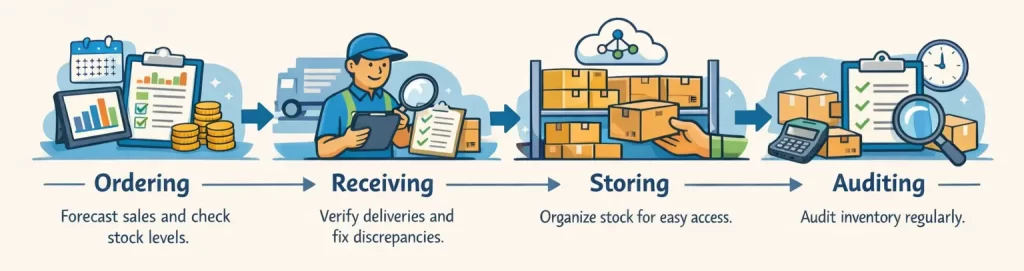
- Ordering: Retailers should base every order on accurate sales forecasts, current stock levels, and expected demand patterns. This approach helps them buy the right quantity at the right time instead of relying on guesswork. As a result, they can avoid overstocking slow-moving products and prevent stockouts that may disrupt sales.
- Receiving: Store or warehouse teams should inspect every delivery as soon as it arrives and compare it with the purchase order, invoice, or receiving document. They need to check product names, quantities, and item conditions carefully to confirm that suppliers sent the correct goods. When teams spot discrepancies early, they can resolve issues faster and keep inventory records accurate.
- Storing: Retailers should organize inventory systematically so staff can find, handle, and replenish items quickly. They need to place products in clearly assigned locations, group similar items properly, and arrange stock in a way that reduces unnecessary movement. This method keeps the storage area orderly, saves time, and lowers the risk of misplaced or damaged goods.
- Auditing: Retailers should audit inventory regularly to confirm that physical stock matches recorded data. By conducting routine checks, they can detect errors, shrinkage, damaged items, or process issues before those problems grow larger. Early findings help businesses improve stock accuracy, strengthen control, and protect daily operations from costly disruptions.
By adhering to these steps, retailers can establish and maintain a robust inventory system that enhances operational efficiency and supports superior customer service. Furthermore, you can implement another software for maintaining smooth inventory management operations.
Inventory Management Techniques for Retailers

Inventory Analysis and Forecasting for Retailers

Inventory analysis and forecasting are crucial for retailers aiming to maintain optimal stock levels and respond effectively to changing market conditions. By analyzing past sales data, inventory turnover, and customer behaviors, retailers gain valuable insights into product performance and market trends.
This detailed analysis aids in making informed adjustments to inventory strategies. Leveraging advanced statistical methods and machine learning helps accurately anticipate demand fluctuations. Integrating inventory management software significantly streamlines forecasting and strategic planning for retailers. This technology automates data analysis, providing real-time insights for quicker, more accurate decisions on stock levels and promotional strategies.
Moreover, it helps prevent overstocking and understocking by aligning inventory with anticipated demand. Synchronizing marketing efforts and staffing ensures competitiveness and profitability.
Best Practices in Retail Inventory Management
Optimizing inventory management is crucial for retail success, and a retail management system plays a vital role in ensuring efficiency and responsiveness to market dynamics. This strategic approach enhances operational performance and supports long-term growth.
- Establish Clear KPIs: Set specific key performance indicators (KPIs) to measure and monitor inventory performance, ensuring that issues get spotted earlier and make better decisions about ordering, replenishment, and stock control.
- Maintain Strong Supplier Relationships: Dependable suppliers support smoother replenishment and reduce the risk of delays that can disrupt sales. Cultivate reliable partnerships with suppliers to secure a stable supply chain and timely inventory replenishment.
- Manage Residual Inventory: Slow-moving or aging stock can take up valuable space and tie up working capital. Implement strategies such as discounts or special promotions to quickly sell the overstock and optimize warehouse space.
- Adjust Based on Demand Patterns: Pay attention to Sales trends, seasonal changes, and customer preferences, which often shift throughout the year to maintain appropriate stock levels and reduce the risk of overstocking or understocking.
- Standardize Inventory Procedures: Clear processes help staff handle stock more accurately and reduce avoidable errors. Regular stock checks also help confirm that physical inventory matches recorded data, making it easier to identify discrepancies early.
As market conditions and consumer behaviors evolve, continuous improvement becomes critical. Retailers must adapt their inventory management strategies to stay competitive and meet changing demands. Investing in technology and training not only streamlines processes and reduces errors but also enhances overall business efficiency and profitability.
Conclusion
Throughout this article, we’ve examined the essentials of retail inventory management, from its basic types and strategic techniques to the benefits of using advanced software solutions. By leveraging real-time analytics, automated forecasting, and comprehensive reporting, retailers can optimize operations, prevent stock issues, and enhance profitability.
Frequently Asked Questions
-
What are the 4 types of inventory management?
The four types of inventory management are perpetual, periodic, Just-In-Time (JIT), and ABC analysis. Each method offers different strategies for monitoring and managing stock to suit various business needs.
-
What is the retail inventory method?
The retail inventory method estimates the ending inventory balance using a cost-to-retail percentage. It helps retailers determine inventory value without a physical count by relating cost to sales.
-
How does inventory work in retail?
In retail, inventory management involves tracking, ordering, storing, and selling stock. It ensures products are available when needed, maximizing sales and minimizing overstock.
-
What are the 5 R’ in retail?
The 5 R’s in retail are having the right product, in the right place, at the right time, in the right quantity, for the right price.
-
What is FEFO and FIFO?
FEFO means First Expired, First Out, while FIFO means First In, First Out. FEFO prioritizes expiry dates, while FIFO prioritizes arrival order.