










 Limited to 100 registrants

Is managing pharmacy inventory draining your time and energy? With over 67,000 licensed pharmacies in the Philippines, many still struggle to maintain the right stock without overloading shelves or wasting expired medicines.
Inefficient inventory practices can lead to costly errors, stockouts, or excess waste, which directly affect both profitability and patient care. Keeping track of expiration dates, monitoring supply levels, and forecasting demand manually is time-consuming.
By implementing smart inventory management systems, pharmacies can automate tracking, set reorder points, and maintain optimal stock levels. This reduces errors, saves costs, and ensures essential medicines are always available.
Key Takeaways
Pharmacy inventory management helps ensure patient safety, maintain compliance, and keep stock levels under control.
There are several pharmacy inventory management methods, such as the visual, periodic, hybrid, and perpetual inventory management methods.
Inventory management software simplifies pharmacy inventory management through automated tracking, real-time stock updates, and expiration monitoring.
What is Pharmacy Inventory Management System?
Pharmacy inventory management is the process of tracking and controlling medications and supplies to ensure proper stock levels and avoid shortages or waste. It works by the monitor inventory in real-time and helps manage expiration dates for optimized efficiency.
Today’s pharmacy management systems work with the electronic POS solution for better stock management. It helps analyze sales, track lots, and find missing stock. This leads to more time for patient care, making healthcare safer and more reliable.
Why is Pharmacy Inventory Management Important?

Effective pharmacy inventory management is key for patient safety and following rules. It helps keep inventory levels right and can make pharmacies more profitable. By managing stock well, pharmacies can save money and sell more.
Having too much stock wastes money and space. It’s also important to check when medicines expire to avoid legal problems. By sorting stock, pharmacies can see what sells fast and what doesn’t, helping them manage better.
Using a system to order stock can prevent running out of items. Cloud Inventory software helps track stock, orders, and saves space. It makes managing stock easier and more efficient.
Problems with stock can hurt a pharmacy’s growth. Good management saves money and makes customers happier. It lets staff focus on important tasks instead of just managing stock.
To show why it matters, here’s a comparison of key points:
| Aspect | Benefits |
| Stock Reorder System | Reduces risk of stockouts |
| Expiration Date Management | Prevents legal liabilities and ensures patient safety |
| Optimized Inventory Levels | Increases profitability and reduces holding costs |
| Automated Inventory Software | Minimizes human errors and enhances storage efficiency |
Benefits of Pharmacy Inventory Management System
Pharmacy inventory management brings many benefits. It makes operations more efficient and improves patient care. It helps manage stock levels well, cuts down on medication waste, and supports efficient stock management.
1. Manage Stocks Effectively
2. Identify and Reduce Expired Items
Inventory software quickly flags medications nearing or past their expiration dates, helping pharmacies remove unsafe products, reduce waste, and save costs while ensuring patient safety.
3. Streamline Lot Tracking of Prescription and OTC Medicines
Automated systems track lot numbers and batches with precision, making it easier to manage inventory across all products. This ensures accurate recalls when necessary, maintains regulatory compliance, and supports proper stock rotation.
4. Identify Sale Trends and Patterns
Medical inventory software analyzes sales patterns, guiding smarter purchasing, predicting future demand, and ensuring high-demand products are always in stock for optimal patient care.
5. Easily Spot Shrinkage
The inventory management particularly through the use of software helps find and fix shrinkage issues. It keeps detailed records to spot problems fast. This lets you take action to lower losses.
6. Identify and Flag High-Risk Medicines
Inventory management systems can identify and flag high-risk medicines, ensuring these items receive special attention during storage, handling, and dispensing. This proactive approach enhances patient safety and reduces the risk of errors.
Pharmacy Inventory Management Methods
Effective pharmacy inventory management is key to managing a big investment and ongoing expense. Different methods can meet various needs, offering a tailored approach to tracking inventory.
1. The Visual Method
The visual inventory method involves scanning shelves and storage areas to check stock levels. It’s simple and easy to learn, making it great for small pharmacies with not much inventory. But, as inventory grows, this method becomes less reliable.
2. The Periodic Method
The periodic counting method involves counting all medications at set times, often monthly. It gives a full view of your inventory, helping you make smart buying choices. Yet, it’s time-consuming and can slow down daily pharmacy work, especially in bigger places.
3. The Perpetual Inventory Management Method
The automated inventory tracking digitally tracks medications in real-time. It offers many benefits, like accurate inventory, easy financial tracking, and quick detection of theft or fraud. Using automation with this method can boost profits and improve cash flow.
4. The Hybrid Method
The hybrid method mixes the strengths of periodic counting and the perpetual system. Pharmacies can count high-value medications periodically and use the perpetual system for other items. This mix ensures detailed tracking of important drugs while keeping other inventory efficient.
| Method | Advantages | Disadvantages |
|---|---|---|
| Visual Inventory | Simplicity, minimal training required | Unreliable for large inventories, discrepancies can go unnoticed |
| Periodic Counting | Comprehensive overview, informed purchasing decisions | Time-consuming, disrupts operations |
| Perpetual System | Real-time accuracy, improves cash flow and customer service | Initial setup can be costly, requires training |
| Hybrid Inventory Management | Balanced approach, thorough tracking of critical drugs | Complex to implement, needs careful planning |
10 Factors Affecting Pharmacy Inventory Management System
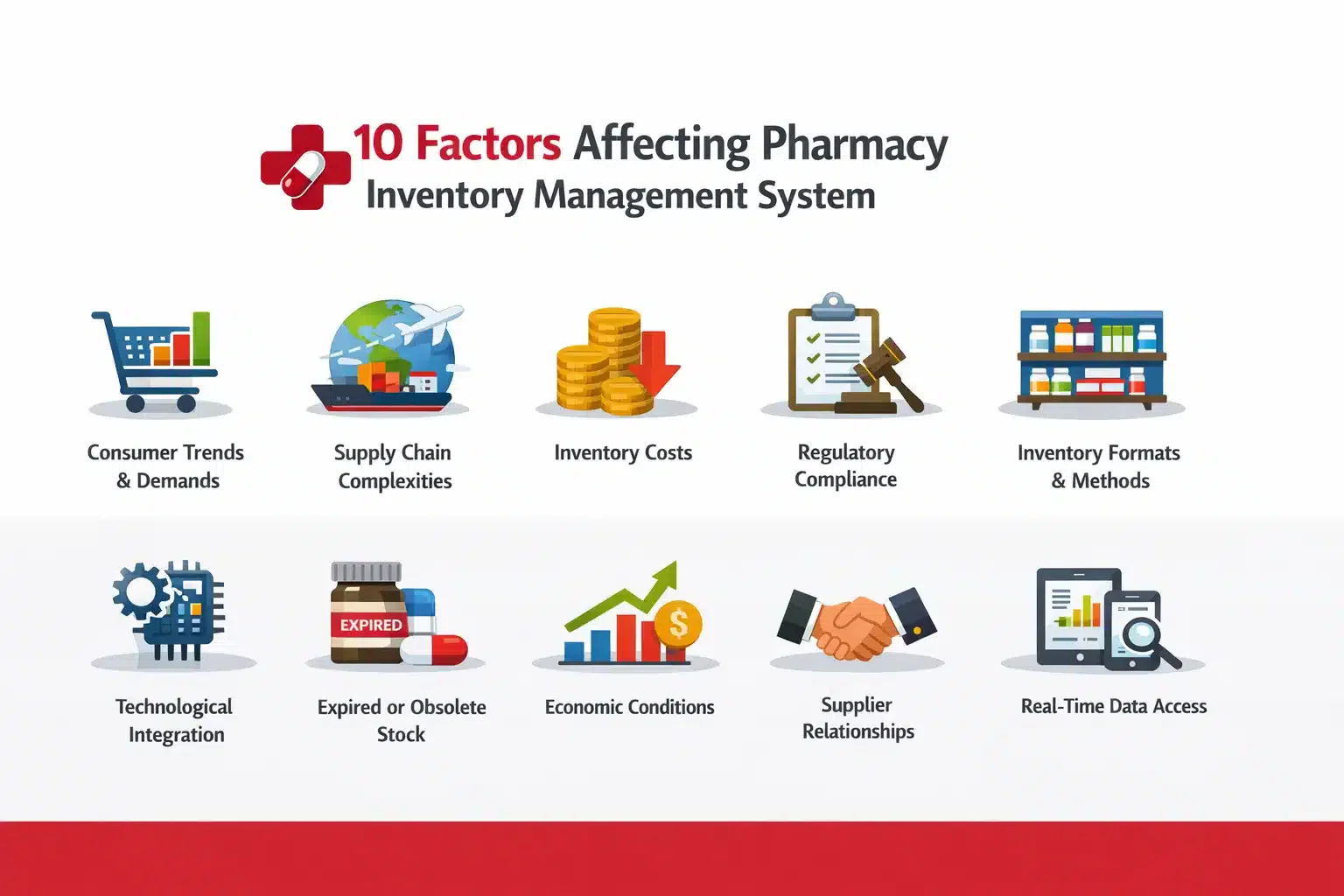
Pharmacy inventory management involves navigating shifting consumer preferences and complex supply chains. As one of a pharmacy’s most valuable assets, effective inventory management enhances profitability by cutting costs.
1. Consumer Trends and Demands
Pharmacies must adapt to changing consumer preferences, seasonal demand, and emerging health trends. These shifts can influence the types and quantities of medications needed.
Understanding customer needs helps pharmacies stock the right products, reducing the risk of stockouts or overstocking while improving customer satisfaction.
2. Supply Chain Complexities
Supply chain disruptions, delays from suppliers, and global distribution challenges can impact inventory levels. Pharmacies must plan for potential delays and establish strong supplier relationships to ensure consistent stock availability, preventing shortages and lost sales.
3. Inventory Costs
Pharmacies face various inventory-related costs, including storage (holding costs), ordering, and stockout expenses. Efficient inventory management helps minimize these costs, ensuring profitability while maintaining sufficient stock levels to meet customer demands.
Pharmacists must deal with different inventory formats and supply chain complexities. They use the percent net profit (PNP) to track inventory performance. There are four main costs related to inventory:
| Cost Type | Description |
|---|---|
| Acquisition Costs | The net amount of money the pharmacy pays for products. |
| Procurement Costs | Include placing and receiving orders, stocking, and paying invoices. |
| Carrying Costs | Costs associated with product storage, including theft or damage. |
| Shortage Costs | Costs incurred when a product is not available on the shelves when needed. |
4. Regulatory Compliance
Strict pharmaceutical regulations require accurate inventory tracking and reporting to avoid penalties and build customer trust. Pharmacies must implement systems that ensure compliance and maintain accurate inventory records.
5. Inventory Formats and Management Methods
Pharmacies manage diverse products, such as prescription drugs, over-the-counter items, and specialty medications. Efficient inventory management methods, including categorization, are crucial for ensuring the availability of a wide range of products.
6. Technological Integration
Lack of advanced inventory systems can hinder efficient tracking, reordering, and analytics. Implementing technology-driven solutions helps pharmacies optimize their inventory, reduce manual errors, and streamline overall operations.
7. Expired or Obsolete Stock
Managing shelf life is critical to minimizing financial losses and ensuring patient safety. Pharmacies must track expiration dates and remove outdated medications promptly, maintaining compliance and avoiding waste.
8. Economic Conditions
Fluctuating market conditions, inflation, and rising costs can affect purchasing decisions and stocking strategies. Pharmacies need to adapt to these economic factors by planning inventory purchases strategically to balance costs and demands.
9. Supplier Relationships
Reliable supplier partnerships ensure timely deliveries and access to essential medications. Strong relationships with vendors help pharmacies maintain consistent inventory levels, reducing the risk of shortages or delays.
10. Real-Time Data Access
Having up-to-date inventory information across all locations is essential for efficient management. Real-time data access allows pharmacies to make informed decisions, balance inventory levels, and enhance overall operational efficiency.
Integrations for Enhanced Pharmacy Inventory Management
Integrating various technologies and systems into a pharmacy inventory management system and implementing the cycle-based inventory recording system can significantly improve efficiency, reduce manual errors, and enhance overall operations.
1. ePOS System Integration
An Electronic Point of Sale (ePOS) system integration allows real-time tracking of sales and inventory. Every transaction updates stock levels instantly, minimizing the risk of overselling or stockouts. It also simplifies financial reporting and provides insights into sales trends.
2. Supplier Management Integration
Supplier integration automates the procurement process by linking the pharmacy’s inventory system with supplier databases. It allows automatic reordering, tracks delivery times, and manages purchase orders efficiently.
3. Barcode and QR Code Integration
Using barcodes and QR codes simplifies the tracking of medications. Scanning codes during sales, restocking, and audits ensures inventory data is accurate and up to date.
4. Accounting Software Integration
Linking inventory management with accounting software helps track the financial impact of inventory decisions. It provides clear visibility into costs, profits, and cash flow related to stock management.
5. Cloud Storage Integration
Storing inventory data on cloud platforms ensures secure, real-time access from multiple locations. It also simplifies data backups and prevents loss due to hardware failures.
Essential Features of a Pharmacy Inventory Management System

A good pharmacy inventory system has many key features. These help pharmacists work better, cut down on mistakes, and care for patients more. Knowing these features is key to making pharmacy work smoother.
1. Electronic Prescription
ePrescribing allows doctors to send prescriptions directly to pharmacies via an online platform. It also reduces medication errors, speeds up prescription processing, and improves customer satisfaction with faster service
2. Automated SMS Messages and Alerts
Automated SMS alerts notify patients about prescription pickups, refill reminders, and medication schedules. Using patient data, the system sends customized messages at set intervals, improving medication adherence, and reducing missed doses.
3. Expiry Control
Expiry control features track medication shelf life and send alerts for items nearing expiration. By monitoring batch dates and flagging expiring stock, pharmacies prevent accounting report loss and ensure the availability of safe medications for patients.
4. Stock Re-Order Management
Automated stock re-ordering ensures that pharmacies always have critical medications in stock. The system monitors inventory levels and triggers reorders when supplies run low. This prevents stockouts, saves time on manual checks, and guarantees continuous.
5. Centralized Database and Backup
A centralized database securely stores all patient and inventory data with automated backups. This makes accessing information across multiple locations simple and protects against data loss.
6. Data Reporting and Analytics
Advanced reporting tools analyze sales trends, stock movements, and vendor performance. By compiling data into actionable reports, the system helps pharmacies optimize inventory, make informed decisions, and improve vendor negotiations.
7. Real-Time Multi-Store and Multi-Location Synchronization
Real-time synchronization connects all branches to a single system, keeping inventory levels updated instantly. This ensures accurate stock levels, prevents overstocking and stockouts, and improves supply chain efficiency, especially for pharmacies with multiple locations.
8. Data Integration with Third-Party Software
Integration capabilities allow the system to work seamlessly with electronic health records (EHRs), point-of-sale (POS), and other tools. This reduces data duplication, enhances workflow efficiency, and ensures smooth communication across systems for better operations.
9. Compliance and Regulatory Features
The system simplifies adherence to pharmaceutical regulations by tracking controlled substances and generating audit-ready reports. This minimizes regulatory risks, ensures compliance, and builds trust in the pharmacy’s operations by maintaining accurate records.
10. Customer Support System
A built-in customer support feature provides direct access to technical assistance through chat, email, or phone. This minimizes downtime caused by technical issues, ensures smooth operations, and enhances customer satisfaction by keeping systems running efficiently.
| Feature | Benefit | Importance |
|---|---|---|
| ePrescribing | Reduces prescription errors and streamlines workflow | High |
| Automated SMS Alerts | Improves medication adherence and customer satisfaction | Medium |
| Expiry Control | Prevents financial losses due to expired medications | High |
| Stock Re-Order Management | Streamlines medication ordering process | High |
| Centralized Database | Secure storage and easy accessibility of data | High |
| Data Reporting and Analytics | Aids in informed decision-making | High |
| Real-Time Synchronization | Prevents stockouts and overstocking | High |
| Third-Party Software Integration | Enhances overall functionality | Medium |
| Compliance Features | Ensures regulatory adherence | High |
| Customer Support | Reduces downtime and enhances productivity | Medium |
Pharmacy Inventory Management Best Practices
It’s key to follow best practices in managing pharmacy inventory. This ensures your pharmacy runs smoothly and efficiently. Here are the important steps to improve your inventory management.
1. Organize Your Pharmacy
Having a well-organized pharmacy is crucial. It makes sure medications are easy to find and stored right. A well-planned layout boosts efficiency and keeps patients safe by lowering the chance of mistakes.
Regular checks and precise control help spot and fix any issues fast. This is backed by pharmacy industry stats.
2. Select the Right Software
Choosing the right inventory management software is vital. The best software gives you real-time data, automates ordering, and offers detailed reports. It helps track what you buy, how much you use, and waste, making your pharmacy more efficient and cost-effective.
3. Insist on Fast and Easy Barcoding
Barcoding makes a big difference in managing pharmacy inventory. Using barcode asset tracking and QR codes makes tracking medications easier and faster. This helps keep inventory accurate and up to date, improving how quickly you can restock.
4. Maintain Accurate Records and SOPs
Keeping accurate records and following standard operating procedures (SOPs) is crucial. This ensures your pharmacy meets all rules and improves service quality. Working together and making decisions based on data can greatly improve patient care and safety.
"Effective pharmacy inventory management relies on organized storage, the right software, efficient barcoding, and accurate records with clear SOPs to ensure safety, compliance, and operational efficiency."
Conclusion
Mastering pharmacy inventory management is essential for maintaining efficient operations and ensuring patients receive the care they need. Proper stock control helps prevent shortages, reduces waste, and keeps costs under control.
Leveraging smart inventory systems allows pharmacies to track products in real time, optimize stock levels, and stay compliant with healthcare regulations. Automation simplifies routine tasks, freeing staff to focus on patient care and other strategic priorities.
Investing in an advanced inventory management solution ensures smoother operations and better decision-making for pharmacy managers. Take the next step toward optimizing your pharmacy workflow with a free consultation today.
FAQ Pharmacy Inventory
Inventory management in a pharmacy is the organized process of monitoring, controlling, and replenishing stock to ensure medications and other essential supplies are available when needed.
Organizing pharmacy inventory requires careful planning and structure. Medications are typically categorized by type or therapeutic use, with a system in place for tracking stock using tools like barcode or RFID scanners.
The FIFO (First-In, First-Out) method is the most widely used inventory method in pharmacies. By ensuring that older stock is dispensed first, FIFO minimizes the risk of expired medications, enhances safety, and maintains compliance with regulatory requirements.
Pharmacies commonly use methods such as ABC analysis, which categorizes items based on their value and frequency of use, and just-in-time (JIT) inventory, which reduces stock levels by replenishing as needed.