






Are you aware of the significant risks that inventory overstock and understock pose to your business? Overstocking can lead to substantial financial losses due to excess capital tied up in unsold goods. Similarly, understocking can result in unmet customer needs, diminishing their trust in your brand and potentially leading to further losses.
Proper inventory management is crucial to prevent these scenarios and maintain a healthy balance that aligns with market demand, ensuring both customer satisfaction and financial stability. Therefore, this article will discuss more about inventory overstock and understock, as well as how to prevent it.
Key Takeaways
Inventory overstock and understock both pose significant risks to business operations in the Philippines, leading to financial losses and damaged customer relationships.
It’s important for business to recognize the factors that lead to overstock and understock, one of them is inefficient inventory tracking.
There are some key strategies to prevent inventory overstock and understock, including inventory management software.
Difference Between Inventory Overstock and Understock
When discerning what overstock is, it typically refers to situations where a business holds more inventory than what is currently required to meet customer demand. This condition, also identified as excessive stock or excess inventory, can lead to surplus situations that burden the company with unnecessary costs.
Conversely, understock occurs when your inventory levels are too low, failing to satisfy the market demand. This shortage can result in missed sales opportunities and can negatively impact customer satisfaction, as immediate needs cannot be adequately met.
Both excess inventory and insufficient stock can act as barriers to business growth, as they each can lead to lost revenue and cost inefficiencies. To help illustrate these contrasts further, the following table compares critical aspects of overstock and understock:
| Aspect | Overstock | Understock |
| Cash Flow | Capital gets tied up in extra inventory. | Sales may be lost when demand cannot be met. |
| Storage Costs | Higher because more space is needed. | Lower, but stock-out risk increases. |
| Business Risk | Higher risk of obsolete stock and holding costs. | Higher risk of missed sales and unhappy customers. |
| Best Response | Use discounts, clearance, or supplier returns. | Improve forecasting and reorder planning. |
Grasping the difference between excess stock and inventory shortages allows you to adopt more informed strategies that align with your business’s operational goals and market demand, fostering a more agile and responsive business environment.
Consequences of Inventory Overstock and Understock
Effective inventory control is essential for maintaining profitability and customer satisfaction in any business. When inventory is poorly managed, it can lead to significant issues, such as overstock or understock, each with distinct and damaging consequences.
| Impact Area | Overstock | Understock |
| Financial Impact | Ties up cash and can reduce profit when stock stays unsold. | Can raise costs through rush orders and urgent restocking. |
| Product Risk | Items may become obsolete or spoil before they sell. | Products run out before demand is fulfilled. |
| Operating Costs | Storage, insurance, and security costs increase. | Emergency shipping and faster procurement may be needed. |
| Sales Impact | Old stock may need markdowns, which cuts margins. | Businesses lose sales when items are unavailable. |
| Customer Impact | Less direct, but outdated stock can weaken product appeal. | Customers may feel frustrated and switch to competitors. |
These consequences underline the critical need for precise inventory management strategies to prevent financial strains and protect customer relationships. Proper inventory management ensures that you have just enough stock to meet demand without excess, maintaining your business’s operational efficiency and market competitiveness.
Factors of Inventory Overstock
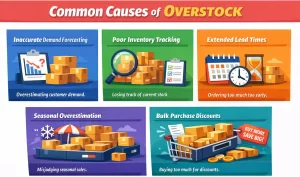 Several factors can lead to overstock situations, each requiring careful consideration to prevent unnecessary financial strain. Here are five key factors that contribute to inventory overstock:
- Inaccurate Demand Forecasting: Misestimating customer demand leads to purchasing more stock than needed, causing an overflow in inventory that may not sell.
- Poor Inventory Tracking: Without effective tracking systems, businesses can lose sight of what is already in stock, resulting in repetitive ordering or purchasing excess items.
- Extended Lead Times: Anticipating long supplier lead times might prompt businesses to order large quantities in advance. If market demands shift unexpectedly, this can result in surplus stock.
- Seasonal Overestimation: Companies sometimes overestimate the amount of inventory required for seasonal sales boosts. When the season wanes, they are left with unsold products.
- Bulk Purchase Discounts: Attractive discounts on bulk purchases can tempt businesses to buy more inventory than necessary, especially if the cost savings appear significant compared to the storage and potential wastage costs.
Factors of Inventory Understock
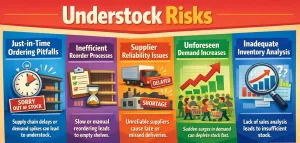 Effective inventory management not only prevent overstock but also guards against understock. Understocking can be detrimental, leading to missed sales opportunities and weakened customer relationships.
Here are five key factors that contribute to inventory understock:
- Just-in-Time Ordering Pitfalls: Relying heavily on just-in-time inventory systems can lead to understock if there are unexpected delays in the supply chain or sudden spikes in demand that weren’t anticipated.
- Inefficient Reorder Processes: If the reorder processes are not streamlined or automated, it can result in delays in restocking, leaving shelves empty for longer periods.
- Supplier Reliability Issues: Dependence on suppliers who fail to deliver goods on time or who often encounter stock shortages themselves can directly impact your inventory levels.
- Unforeseen Demand Increases: Sudden increases in product demand, possibly due to market trends or promotional successes, can deplete stock faster than anticipated, leading to understock situations.
- Inadequate Inventory Analysis: Failing to do an inventory analysis to understand sales patterns and stock needs can result in insufficient stock levels, especially for high-demand items.
How to Avoid Inventory Overstock and Understock

Successfully managing inventory is a critical aspect of running a business that cannot be overlooked. Balancing the fine line between too much and too little stock requires strategic planning and the adoption of robust processes. Here are key strategies to prevent both overstock and understock, ensuring your inventory
levels are just right to meet demand without excess:
- Implement Demand Forecasting Tools: Utilize advanced forecasting techniques and tools to predict customer demand more accurately.
- Enhance Supply Chain Visibility: Improve visibility throughout your supply chain to quickly adapt to supply variations and demand changes.
- Set Reorder Points: Establish clear reorder points based on historical sales data and current market trends to maintain optimal stock levels.
- Regularly Review Inventory Data: Conduct frequent reviews of your inventory performance to identify and rectify potential issues before they result in overstock or understock.
- Streamline Supplier Communication: Develop strong relationships with reliable suppliers and maintain open lines of communication to ensure timely delivery of goods.
To improve these processes and reduce the risk of inventory mismanagement, adopting inventory management software is an invaluable step. In the next section, we will learn about the impact of inventory management software for managing your inventory.
Conclusion
Mastering inventory balance is essential for your business to flourish, ensuring both operational efficiency and the upkeep of customer satisfaction. The journey towards this mastery begins with a clear understanding of how overstock and understock can impact your company’s performance.
Adopting an advanced inventory management software system can significantly streamline your ability to maintain this balance. This technology gives you a proactive, data informed edge, letting you skillfully predict and respond to the ever-changing needs of the market.
FAQ About Inventory Overstock and Understock
Overstock happens when a business keeps more inventory than needed, while understock happens when inventory is too low to meet customer demand. Both can hurt profitability and disrupt operations.
Overstock can tie up cash, increase storage costs, and raise the risk of obsolete or unsold items. It may also force businesses to offer discounts that reduce profit margins.
Understock can happen because of delayed supplier deliveries, weak reorder processes, sudden demand spikes, or poor inventory analysis. These issues can leave shelves empty and cause missed sales.
Businesses can reduce these risks by improving demand forecasting, setting reorder points, reviewing inventory data regularly, and maintaining better communication with suppliers.
Yes, inventory management software helps businesses track stock more accurately, monitor sales patterns, and make better purchasing decisions. This makes it easier to maintain the right inventory balance.