






Managing HR manually works until it does not. As teams grow and compliance requirements become more demanding, spreadsheets and paper records create more problems than they solve. As a result, many businesses are now comparing the best HRIS software in the Philippines to handle payroll, attendance, and statutory compliance in one place.
Before comparing the best HRIS software options, it helps to understand what an HRIS actually is and how it supports payroll, attendance, employee data, and compliance management.
This guide covers 15 of the best HRIS systems in the Philippines, reviewed for 2026. Specifically, each option is evaluated based on HR needs, compliance requirements, and growth plans, so businesses can find the right fit more easily.
Key Takeaways
The top 15 HRIS software options for 2026 offer different strengths, from local compliance and mobile access to international payroll and AI features.
Using all-in-one HR platforms reduces the need to switch between multiple tools, saving time and minimizing errors.
Choose an HRIS based on core needs, local compliance, scalability, integration, and usability to support efficient operations and long-term business growth.
Comparison of best HRIS software Philippines 2026
| HRIS Software | Best for | Business size | Core strength | PH compliance fit | Mobile access |
|---|---|---|---|---|---|
| 1) HashMicro | Advanced, locally compliant HR automation | SME to Enterprise | Payroll, attendance, multi-branch HR control | ✅ Strong | ✅ |
| 2) Rippling | Unified HR + IT workflows | Growing business to Enterprise | HR, payroll, and IT provisioning in one platform | ⚠️ Check | ✅ |
| 3) Sprout | Philippine payroll compliance | SME to Growing business | Local payroll, biometrics, and leave workflows | ✅ Strong | ✅ |
| 4) Omni | Simple, lightweight HR management | SME | Core HR, onboarding, and employee data | ⚠️ Partial | ✅ |
| 5) peopleHum | AI-driven HR and engagement | Growing business | Talent management, engagement, and LMS tools | ⚠️ Check | ✅ |
| 6) Gusto | Remote or global teams | SME to Growing business | Global payroll and onboarding automation | ⚠️ Limited | ✅ |
| 7) BambooHR | Easy, structured HR system | SME to Mid-sized | Employee records, performance, and HR reporting | ⚠️ Check | ✅ |
| 8) PayrollHero | Strict attendance control for shift teams | SME to Mid-sized | Facial recognition attendance and workforce accountability | ⚠️ Partial | ✅ |
| 9) GreatDay HR | Mobile-friendly HR and payroll | Growing business | Recruitment, payroll, and performance in one app | ⚠️ Check | ✅ |
| 10) factoHR | Full HR automation in one platform | Growing business to Enterprise | Payroll, compliance, attendance, and ESS tools | ✅ Strong | ✅ |
| 11) UltiPro | Customizable enterprise HRIS | Enterprise | Flexible HR, payroll, and employee management | ⚠️ Check | ✅ |
| 12) Workday | Deep analytics and workforce planning | Enterprise | Advanced planning, analytics, and enterprise HR control | ⚠️ Check | ✅ |
| 13) Deel | Global remote hiring and payroll | Startup to Enterprise | Cross-border payroll, onboarding, and compliance | ⚠️ Limited | ✅ |
| 14) Zoho People | Zoho ecosystem integration | SME to Growing business | HR automation with connected business apps | ⚠️ Check | ✅ |
| 15) HReasily | Simple, compliant payroll for SMBs | SME to Mid-sized | Payroll, leave, attendance, and statutory reporting | ✅ Strong | ✅ |
✅ Strong = strong fit for Philippine payroll and statutory workflows. ⚠️ Check / Partial / Limited = confirm local setup, depth of compliance support, and implementation scope with the vendor.
Recommendations Based on Specific Business Needs
- All-in-one HRIS for growing Philippine businesses → HashMicro, Sprout, factoHR
- Simple HRIS for SMEs with lean HR teams → Omni, BambooHR, HReasily
- Enterprise HRIS with deeper analytics and control → Workday, UltiPro, Rippling
- HRIS for strong local payroll and statutory compliance → HashMicro, Sprout, HReasily
- HRIS for remote or global workforce management → Deel, Gusto, Rippling
- HRIS for shift-based or field-heavy operations → HashMicro, PayrollHero, GreatDay HR
- HRIS for businesses already using a broader software ecosystem → Zoho People, Rippling, Workday
Top 15 HRIS Philippines
Here are 15 of the best HRIS systems in the Philippines for 2026, chosen for their strong local compliance, practical features, and ability to grow with your business. These HRIS system examples represent top solutions tailored for Philippine companies of all sizes.
1. HashMicro
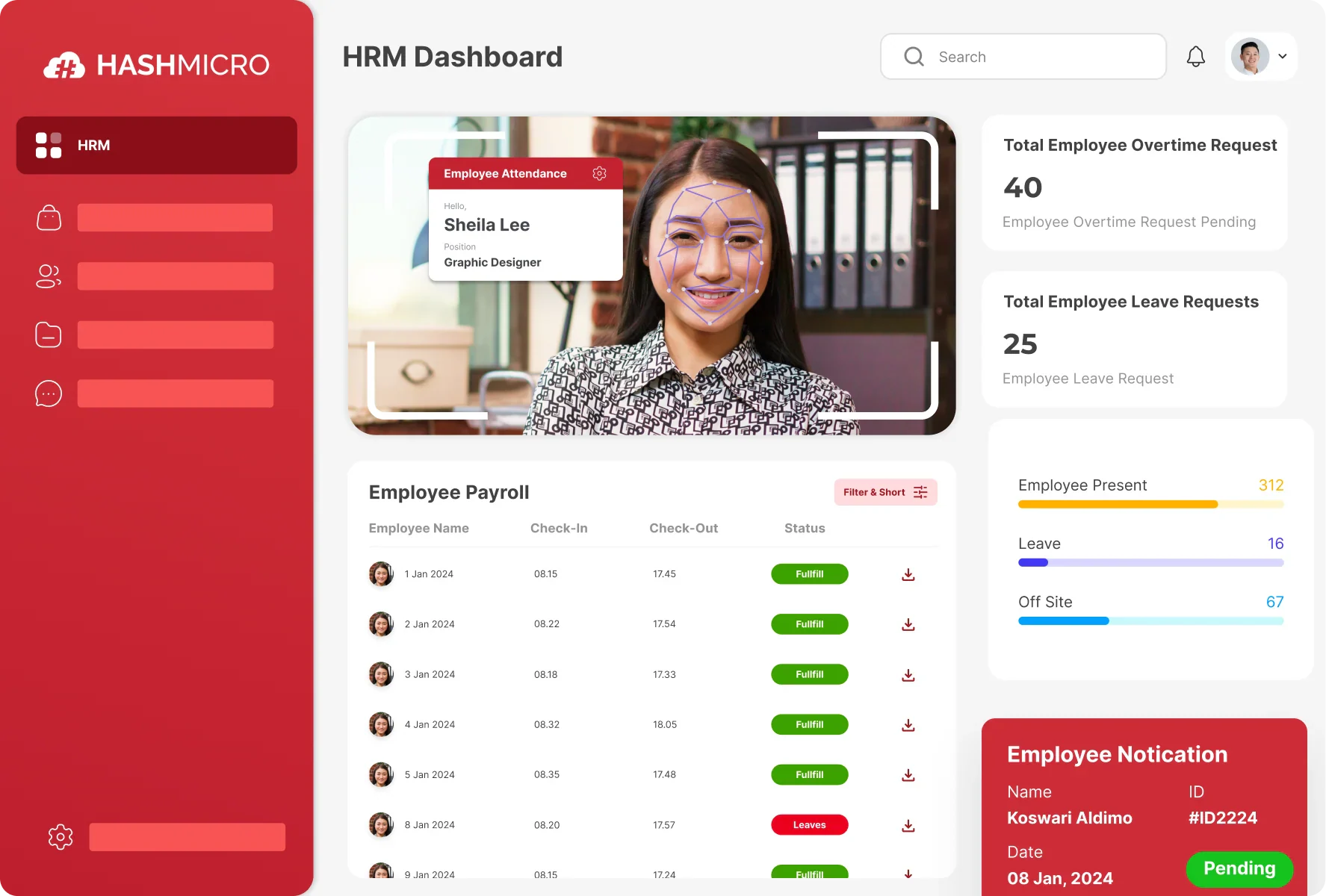 HashMicro is a powerful, all-in-one HRIS software in the Philippines built for all sorts of businesses. It automates key HR tasks like payroll, attendance, and performance tracking, so employees can work more efficiently and avoid administrative hassles.
With built-in tools that support local regulations like SSS, PhilHealth, Pag-IBIG, ITR regulations, and BIR reporting, the HRIS systems help HR managers run smoother operations and make smarter, data-driven decisions.
HashMicro also values local support, offering Tagalog as a language option and a local team that assists from setup through post-sales. Trusted by over 2,000 companies across Southeast Asia, its HRIS software handles attendance management for businesses of all sizes, from retail and manufacturing to logistics and construction.
HashMicro key features:
- Employee Self-Service Portal
- Face Recognition & GPS Attendance
- Flexible Shift & Roster Management
- Daily/Hourly Payslip Automation
- Approval Delegation & Reminders
- Employee Mobile App
- Ready-Made Monthly and Annual HR Report, Contract, and Payslip Templates
- Biometric & Attendance Device Integration
- Digital Signatures
- Smart Reports & Insights
- Performance Management
| Pros | Cons |
|
|
Best Suited For:
- Growing businesses and enterprises in the Philippines
- Companies with multi-location teams or shift-based operations
- Businesses needing local compliance plus broader HR automation
Pricing: Custom quote / free demo.
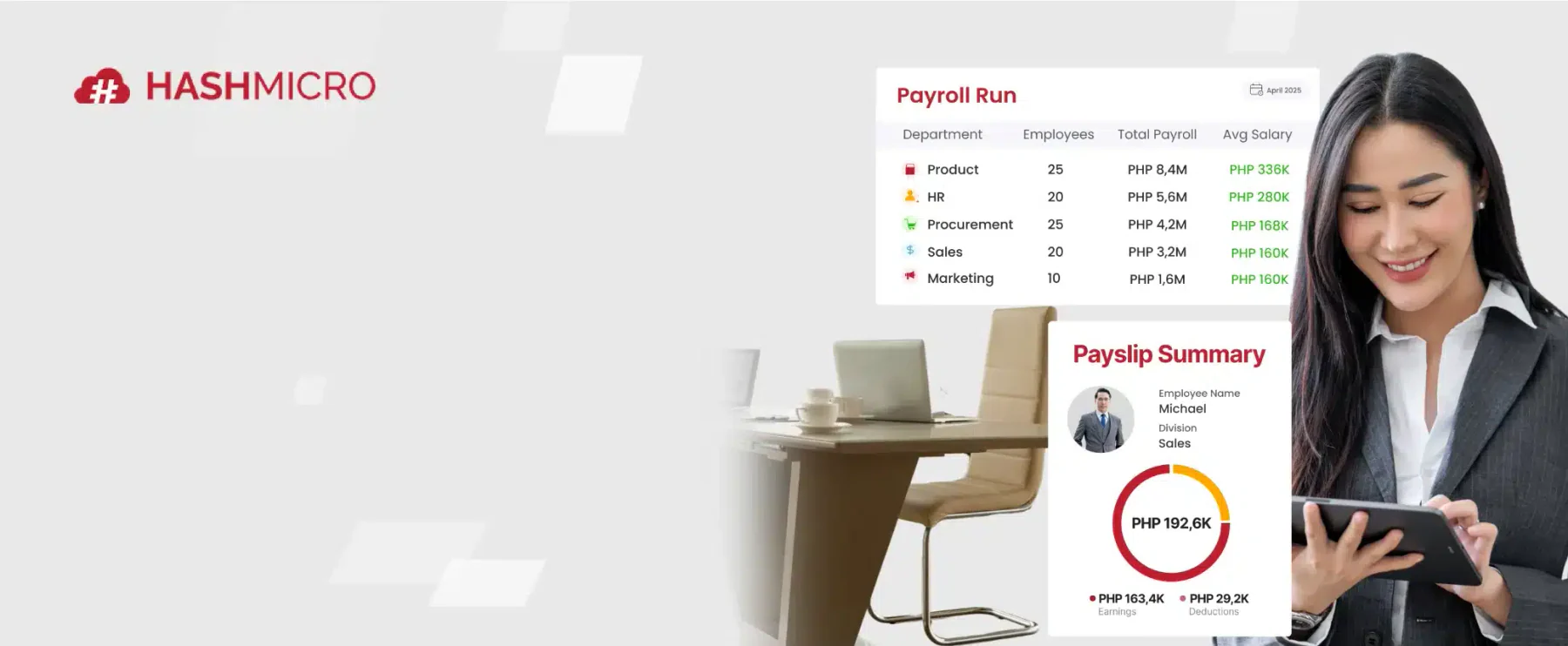
For more on how HashMicro’s HRIS software can simplify your HR processes, click our banner below.
2. Rippling
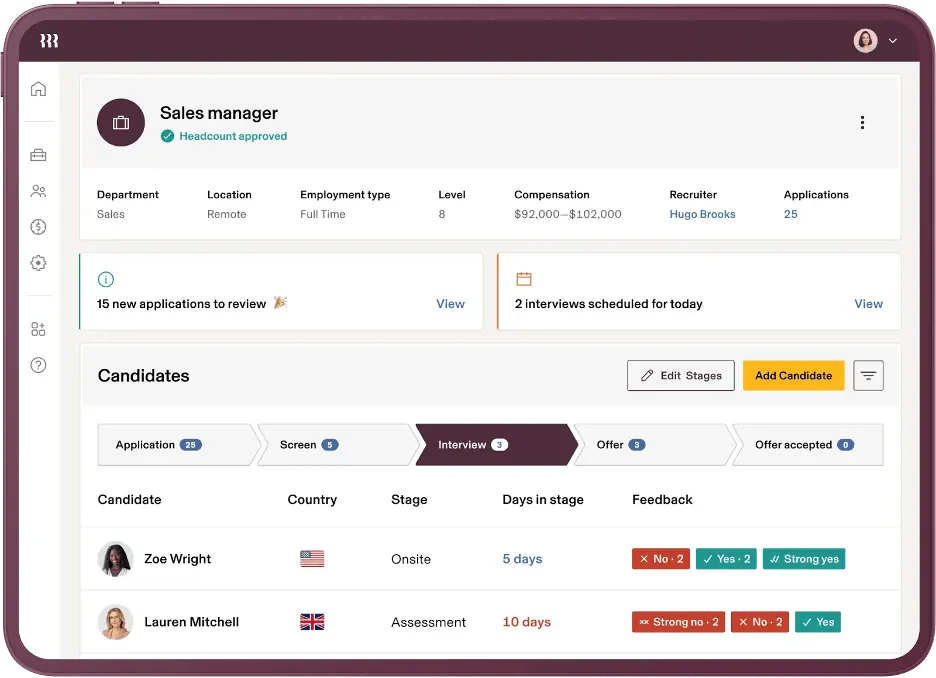 Rippling HRIS software in the Philippines stands out as one of the leading platforms for HR and attendance management. Known for its unified approach, it can streamline both HR information systems and IT operations from a single system, ideal for companies looking to simplify complex administrative processes.
Rippling can also connect HRIS systems with IT functions, such as automatically assigning apps, devices, and accounts when onboarding new hires. This makes it especially valuable for tech-forward companies or businesses managing remote teams.
As a comprehensive human resources software, Rippling offers end-to-end solutions that cover payroll, benefits administration, employee recordkeeping, and compliance, all while ensuring seamless integration with IT infrastructure.
Rippling key features:
- Seamless payroll processing with local tax and contribution support
- Time-off tracking with automated leave accrual and approvals
- Real-time compliance dashboards to track labor law updates
- Full-service benefits administration, including health insurance integration
- Centralized document management for hiring, contracts, and employee records
| Pros | Cons |
|
|
Best Suited For:
- Growing businesses and enterprises
- Companies wanting HR plus IT workflows in one platform
- Remote or tech-driven teams
Pricing: Custom quote.
3. Sprout Solutions
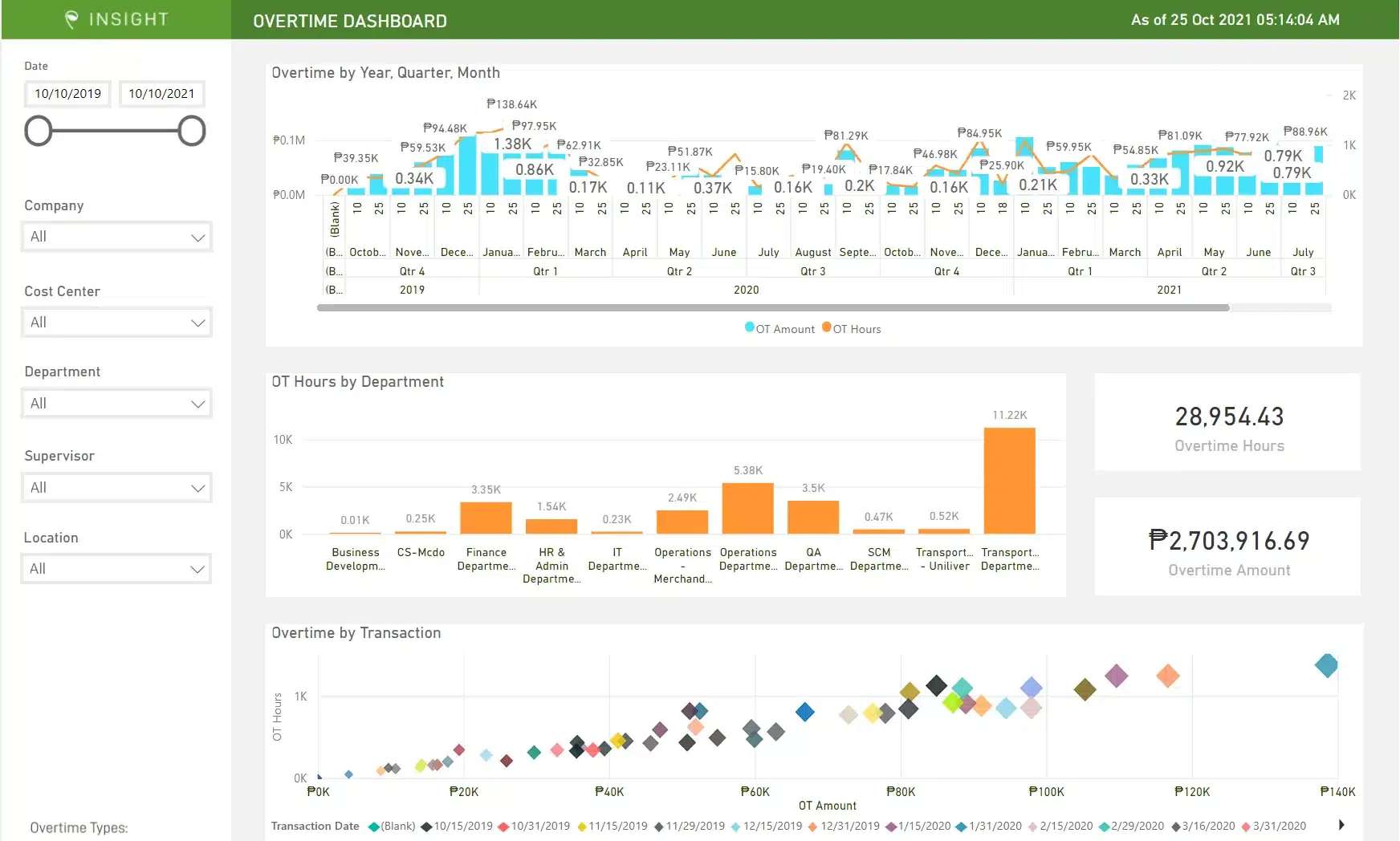 Sprout Solutions is a cloud-based HRIS software in the Philippines designed to help companies simplify and centralize their human resource operations. Built with ease of use in mind, it allows HR teams to manage employee records, automate repetitive tasks, and improve day-to-day efficiency.
What makes Sprout appealing to Philippine businesses is its strong focus on local labor law compliance and seamless integration with Philippine payroll standards. Its mobile-friendly human resource information system design also caters well to distributed workforces or companies with field employees.
Based on our hands-on Sprout Solutions review, it equips HR departments with the tools they need to stay compliant, efficient, and responsive to the dynamic needs of modern organizations in the Philippines.
Sprout key features:
- Centralized employee database for storing personal info, job details, and employment history
- Timekeeping tools with biometric device support and real-time attendance syncing
- Leave tracking with built-in approval workflows and balance monitoring
- Payroll processing that supports SSS, PhilHealth, Pag-IBIG, and BIR compliance
- Mobile access so employees can clock in, request leave, and view payslips on the go
| Pros | Cons |
|
|
Best Suited For:
- Philippine businesses focused on payroll compliance
- Companies with field staff or attendance-heavy workflows
- HR teams that want local-first cloud HR software
Pricing: Custom quote for Sprout Payroll, Payroll Professional Services, and Payroll Starter on the official pricing page.
4. Omni
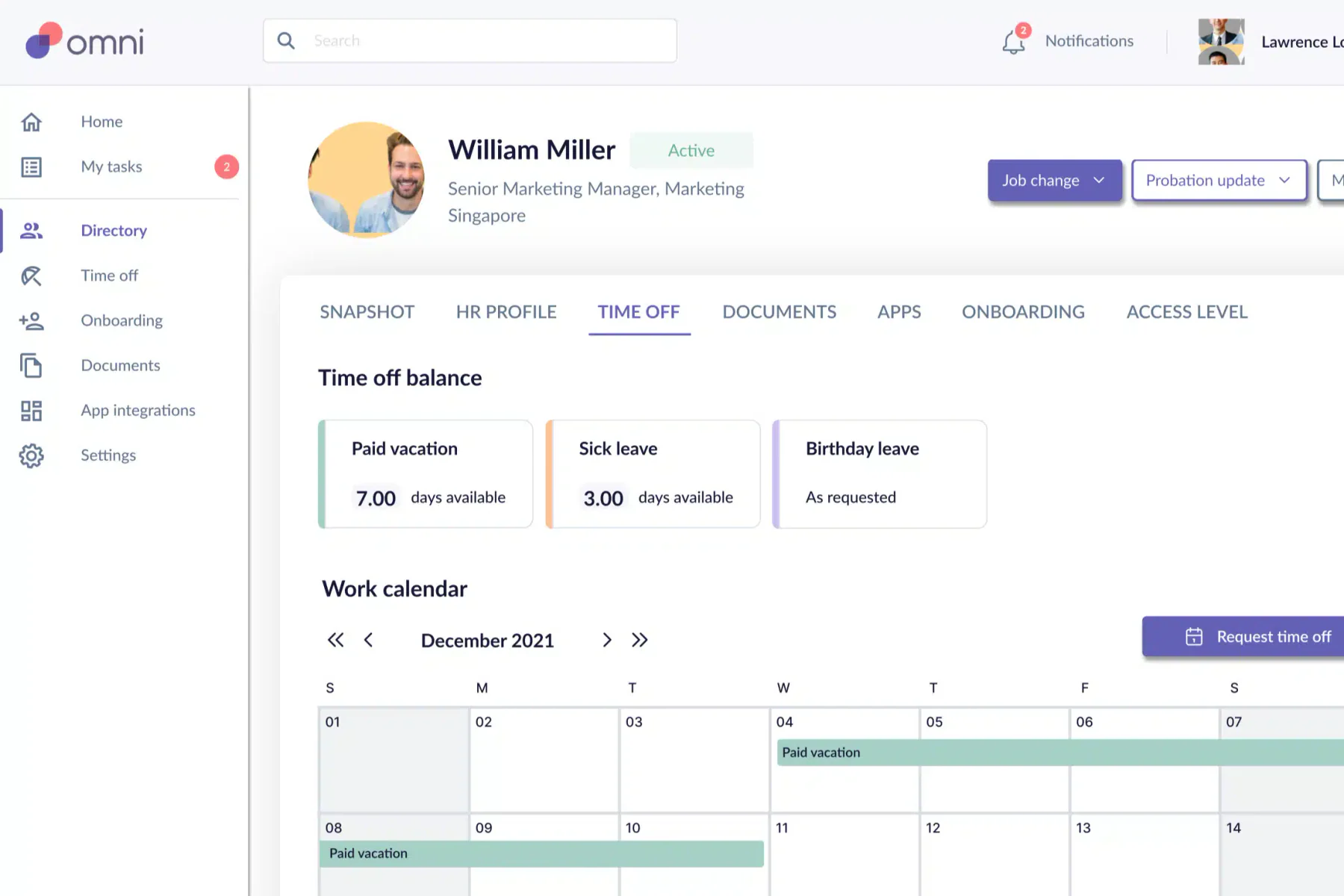 Omni HRIS software Philippines is built for small and medium-sized businesses that need a straightforward, easy-to-use platform to manage core HR tasks. With a clean interface and smooth HRIS systems integration, Omni helps HR teams save time while keeping employee data organized.
Omni stands out for its simplicity and speed, which is ideal for lean HR teams that want essential functions without the complexity of enterprise-level systems. It’s a great fit for growing businesses that need structure without sacrificing agility.
As a lightweight human resources software, Omni provides the essential features SMBs need to handle employee data, leave management, onboarding, and more, all in one centralized platform.
Omni key features:
- Simplified onboarding tools to assign tasks, send documents, and track progress for new hires
- A centralized employee database with role details, documents, and job history in one place
- Time off and attendance tracking with built-in approval flows and calendar syncing
- Basic performance management tools, including review cycles and goal tracking
- Payroll integration that syncs HR data with popular payroll systems for error-free processing
| Pros | Cons |
|
|
Best Suited For:
- SMEs
- Lean HR teams
- Businesses that want simple core HR management
Pricing: Omni Core Platform starts at ₱185 per employee per month, with extra add-ons billed on top of the base subscription.
5. peopleHum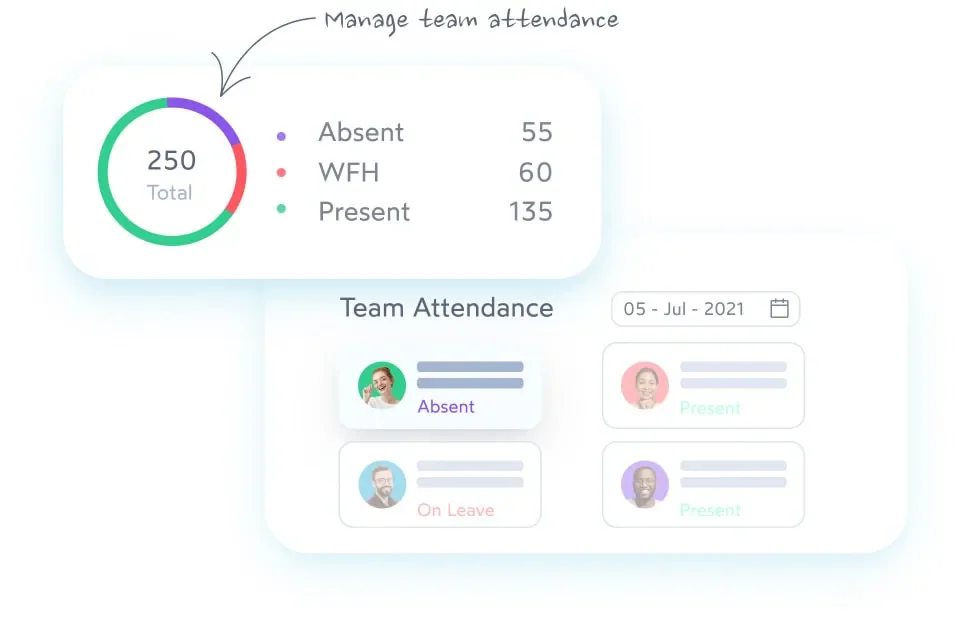
peopleHum is a cloud-based HRIS software in the Philippines built to manage every stage of the employee journey from recruitment to retirement. Combining core HR information system functions with AI-powered tools helps companies improve HR workflows.
peopleHum is especially useful for companies that value employee development and engagement alongside HRIS systems automation. Its AI in HR capabilities help reduce manual input and offer insights into workforce trends.
As a next-generation human resources software, peopleHum supports strategic HR initiatives by aligning talent management, analytics, and automation within one intelligent platform.
peopleHum key features:
- Smart employee scheduling to manage shifts, rotations, and work hours across teams
- Applicant tracking and recruitment pipeline management to streamline hiring
- Onboarding workflows to get new hires up to speed quickly with task checklists and automated document handling
- Performance reviews and goal tracking with feedback tools and progress dashboards
- Employee engagement modules, including surveys and recognition features
- Integrated learning management system (LMS) to assign courses, track completion, and support continuous development
| Pros | Cons |
|
|
Best Suited For:
- People-first companies
- HR teams focused on engagement and development
- Businesses wanting broader talent tools
Pricing: peopleHum starts at ₱123 per employee per month, while Mid-Market and Enterprise tiers require a custom quote based on your company size and specific feature needs.
6. Gusto
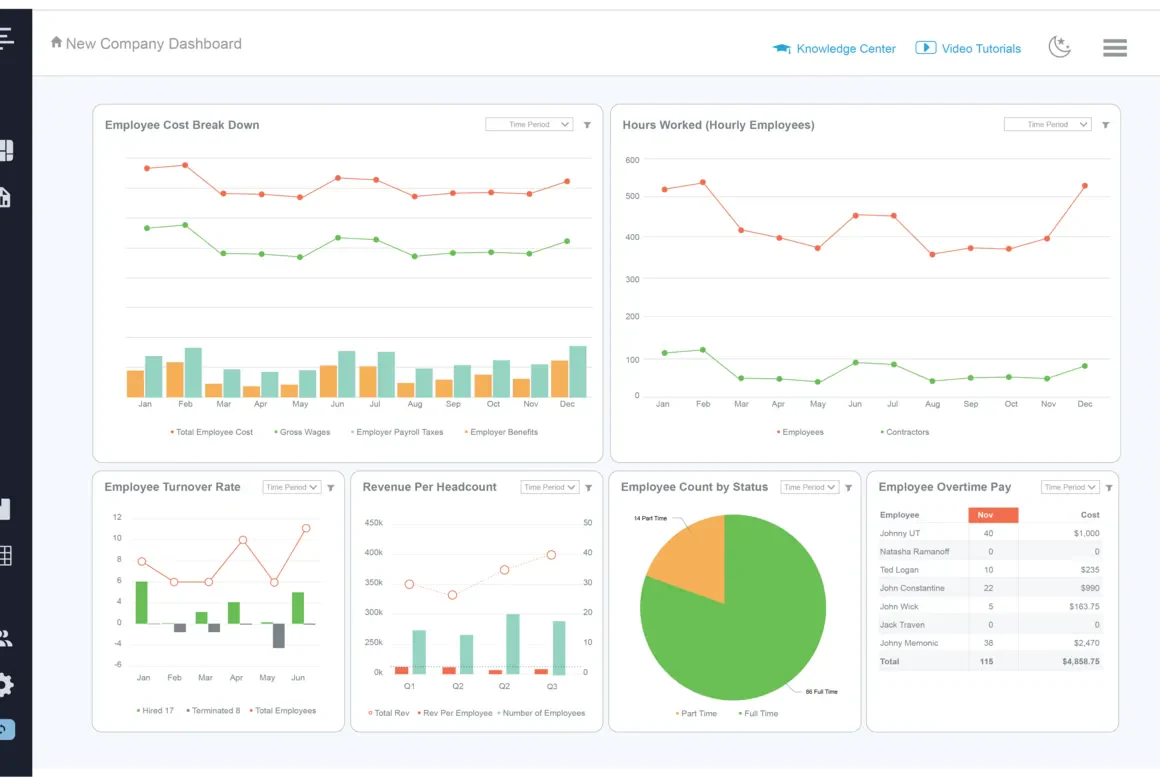 Gusto HRIS payroll system in the Philippines is designed to simplify payroll, benefits, and employee management for growing businesses. With tools built for both local and global teams, Gusto helps with HR tasks while keeping everything organized in one place.
Gusto is especially valuable for startups and SMEs with remote or distributed teams. Its simple interface and strong automation tools make it easier to stay compliant, keep employees engaged, and manage cross-border HR tasks with minimal manual effort.
As a reliable human resources software, Gusto combines essential HR and payroll functions into one platform, making it ideal for businesses that need an all-in-one solution for team and compliance management.
Gusto key features:
- Anonymous feedback surveys to gather honest employee insights and support culture improvements
- International payroll support for teams operating across multiple countries, including automated tax calculations
- Applicant tracking system (ATS) that centralizes candidate information and hiring stages in one dashboard
- Time tracking integrations that sync with attendance and payroll for accurate compensation
- End-to-end hiring and onboarding tools to send offer letters, assign onboarding tasks, and manage documents digitally
| Pros | Cons |
|
|
Best Suited For:
- Startups and SMEs
- Remote or global teams
- Businesses wanting transparent subscription pricing
Pricing: Simple starts at ₱3,020 per month plus ₱370 per person, Plus at ₱4,930 per month plus ₱740 per person, and Premium at ₱11,100 per month plus ₱1,360 per person.
7. BambooHR
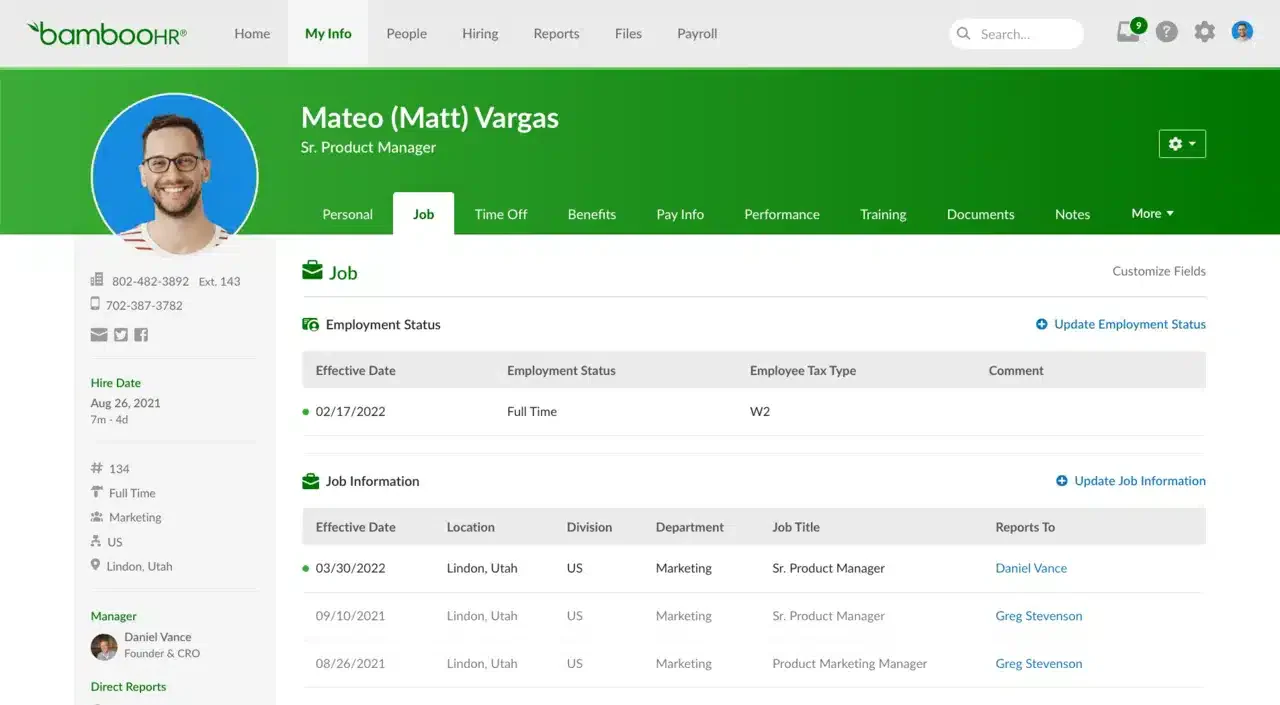 BambooHR is a popular HRIS software solution in the Philippines, especially among small to medium-sized businesses looking for a simple yet powerful way to manage HR tasks. Known for its clean, intuitive interface, BambooHR brings key HR functions together in one centralized platform.
BambooHR is ideal for businesses that want to digitize HR without a steep learning curve. Moreover, the flexibility and focus on ease of use make it a strong option for HR teams that need structure, transparency, and better visibility over workforce data.
Consequently, organizations can streamline everything from hiring and onboarding to performance tracking and employee recordkeeping, all within one user-friendly system.
BambooHR key features:
- A unified employee database that stores job details, personal info, and employment history
- Employee self-service portal where employees can update profiles
- Performance management tools with customizable review cycles and goal tracking
- HR reporting and analytics to monitor trends like turnover, headcount, and engagement
- Tools for managing payroll, time-off balances, and employee benefits in one place
| Pros | Cons |
|
|
Best Suited For:
- SMEs and mid-sized businesses
- HR teams prioritizing usability
- Companies that want structured HR records and reporting
Pricing: BambooHR starts at ₱620 per employee per month for Core, ₱1,050 per employee per month for Pro, and ₱1,540 per employee per month for Elite.
8. PayrollHero
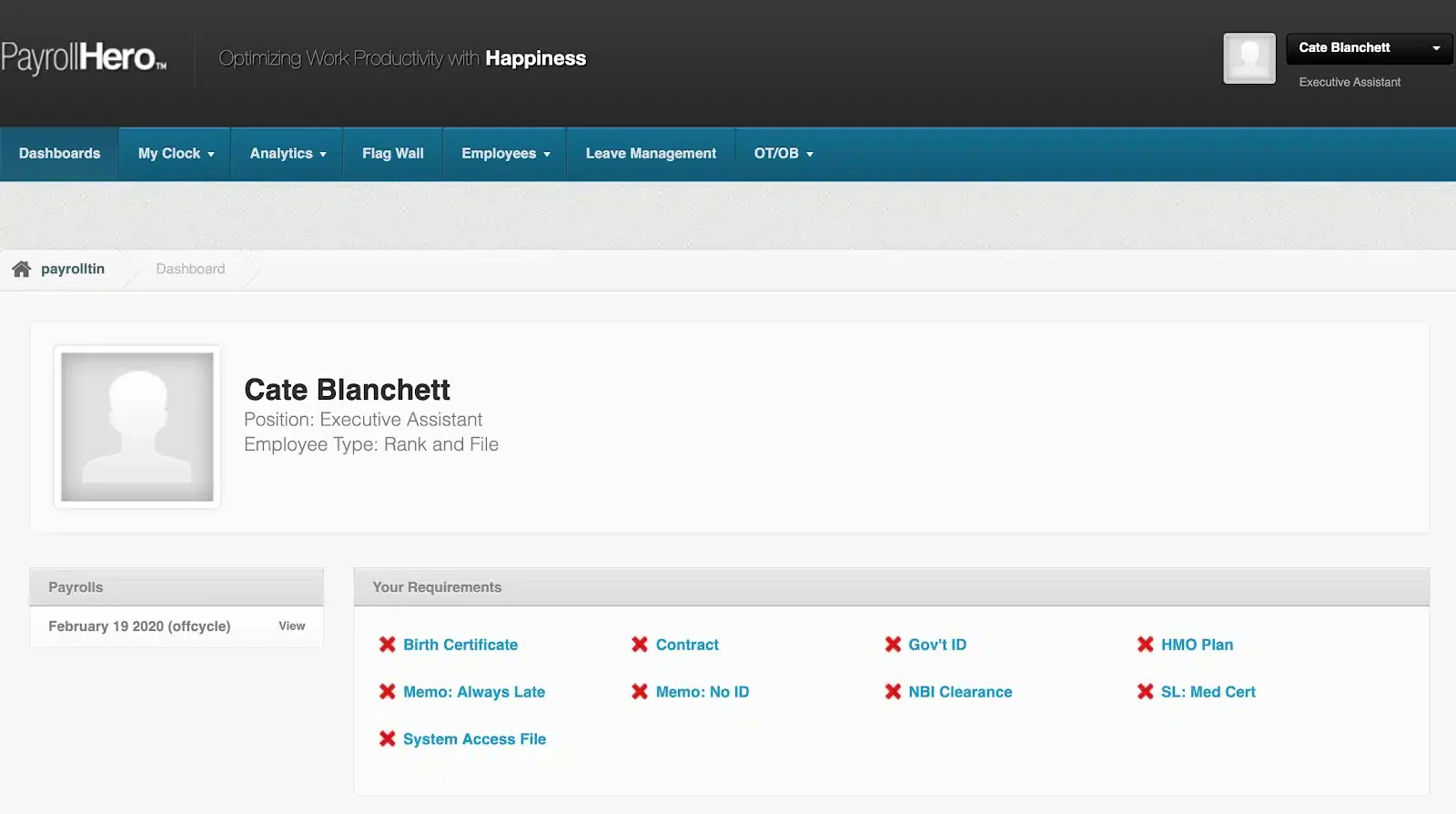 PayrollHero is a cloud-based HRIS software in the Philippines that focuses on time, attendance, and workforce accountability. With its signature facial recognition feature, it helps businesses improve punctuality, reduce buddy punching, and manage employee schedules more accurately.
PayrollHero is especially useful for retail, food service, and field-based teams that rely on shift work and require high attendance accuracy. In particular, the focus on biometric validation adds an extra layer of accountability that traditional timekeeping tools cannot match.
Therefore, businesses that prioritize workforce discipline and operational efficiency will find the platform well-suited for streamlining employee tracking, shift coordination, and attendance data management.
PayrollHero key features:
- Real-time time tracking using facial recognition technology to verify employee check-ins
- Leave management with digital requests, approvals, and automated balance tracking
- Attendance monitoring with visual reports and schedule comparisons
- Centralized employee management with profiles, roles, and work history
- Customizable dashboard for tracking key workforce metrics at a glance
| Pros | Cons |
|
|
Best Suited For:
- Retail and F&B
- Shift-based teams
- Companies prioritizing attendance accuracy
Pricing: Starts at ₱216 per employee per month, with the Payroll add-on at ₱185 per employee per month and the Leave Management add-on at ₱123 per employee per month.
9. GreatDay HR
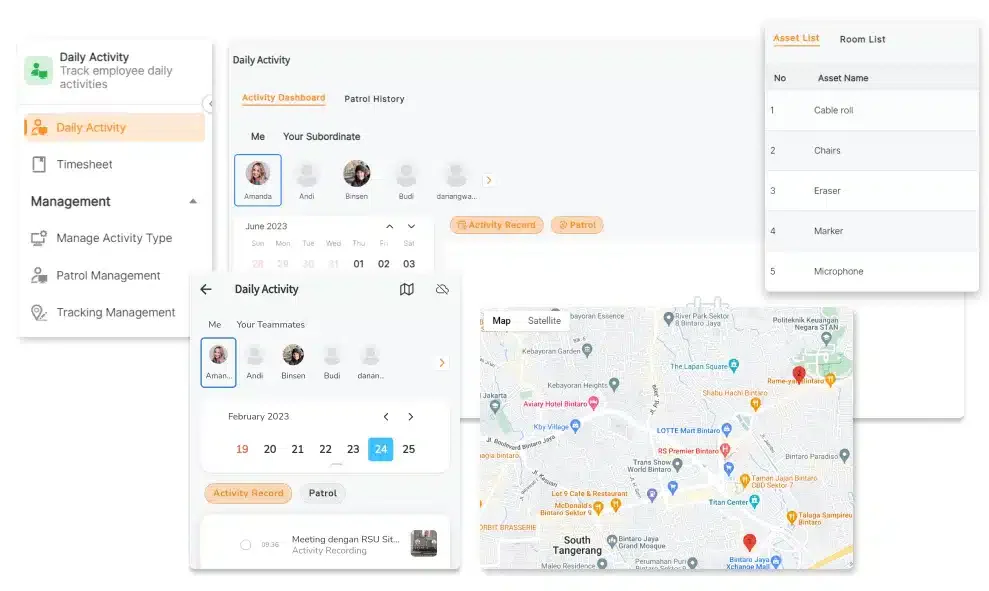 GreatDay HRIS software Philippines is a modern HRIS payroll system designed to help businesses manage their workforce more efficiently. It brings together essential tools for hiring, attendance tracking, payroll, and performance.
GreatDay is ideal for businesses that want a complete, mobile-friendly system to manage people, pay, and performance in one place, whether in the office or on the field. Furthermore, the integrated design means HR teams do not need to rely on separate tools for different functions.
As a result, businesses can streamline HR, payroll, and employee management processes more consistently, which in turn supports both operational efficiency and long-term growth.
GreatDay key features:
- Recruitment management to create job listings, manage applicants, and monitor hiring progress
- Time tracking tools to log working hours, monitor attendance, and prevent inconsistencies
- Payroll processing with automated salary computation, tax deductions, and government contributions
- Leave and vacation tracking with digital requests, real-time balances, and approval workflows
- Setting employee goals, tracking progress, and conducting structured evaluations with performance management
| Pros | Cons |
|
|
Best Suited For:
- Growing Philippine businesses
- Mobile or field-enabled workforces
- Companies wanting one app for HR, payroll, and employee access
Pricing: Starts at ₱77 per employee per month.
10. factoHR
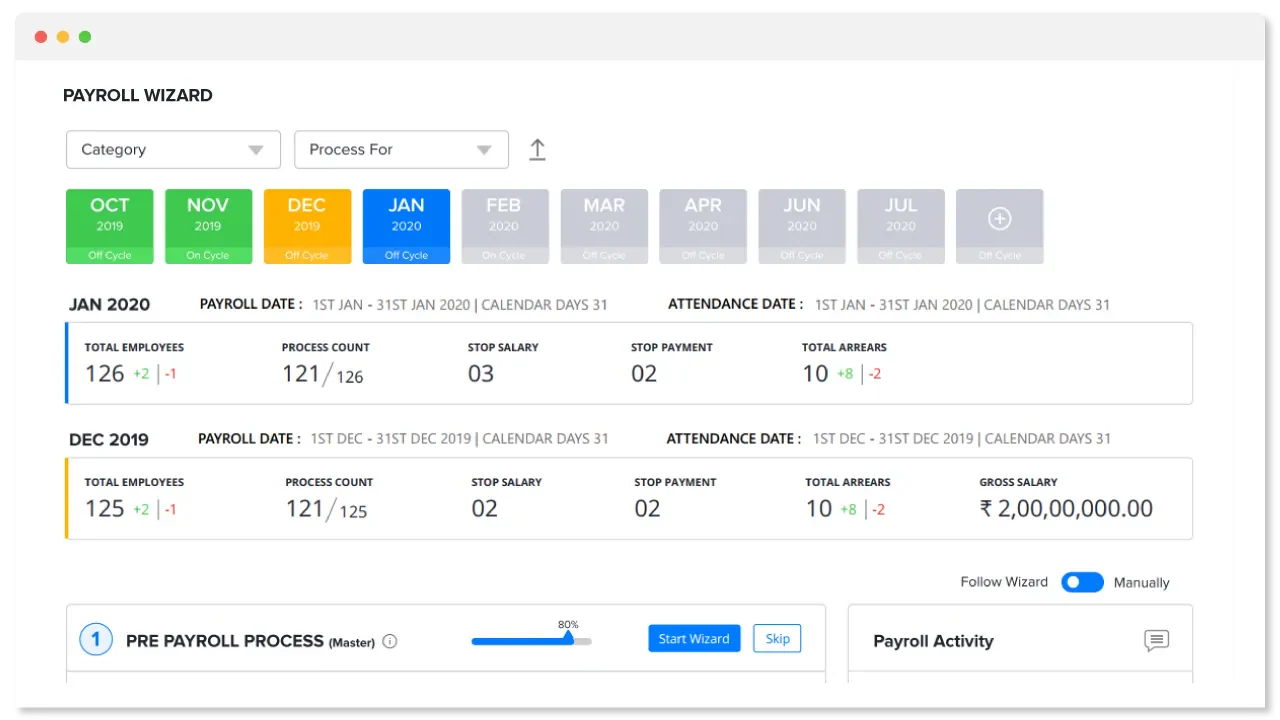 factoHR Philippines is a cloud-based HRIS software built to simplify everything from payroll to performance tracking. Designed to support businesses of any size, it takes the hassle out of managing everyday HR tasks by automating key processes.
factoHR HRIS system is ideal for businesses that want a single system to manage their workforce, from hiring to retirement, while saving time on repetitive admin tasks and keeping everything in sync with Philippine compliance standards.
As an efficient human resource information system, factoHR offers comprehensive automation and integration to help HR teams focus on strategic priorities while ensuring compliance and accuracy in all workforce-related processes.
factoHR key features:
- Core HR management to centralize employee data, job history, and documents
- Payroll automation with built-in tax, SSS, PhilHealth, and Pag-IBIG compliance support
- Compliance tools to handle statutory requirements and generate government-ready reports
- Employee self-service portal for updating info, checking payslips, and applying for leave
- Performance management with appraisal cycles, goal tracking, and feedback modules
- Attendance and leave tracking integrated with biometric or mobile check-ins
- Mobile app to boost workforce engagement and provide real-time HR access
| Pros | Cons |
|
|
Best Suited For:
- Growing businesses
- Companies wanting full HR automation in one platform
- Teams needing payroll and compliance support together
Pricing: Core starts at ₱7,710 per month plus ₱123 per user, Premium at ₱10,790 per month plus ₱185 per user, and Ultimate at ₱13,880 per month plus ₱247 per user.
11. UltiPro
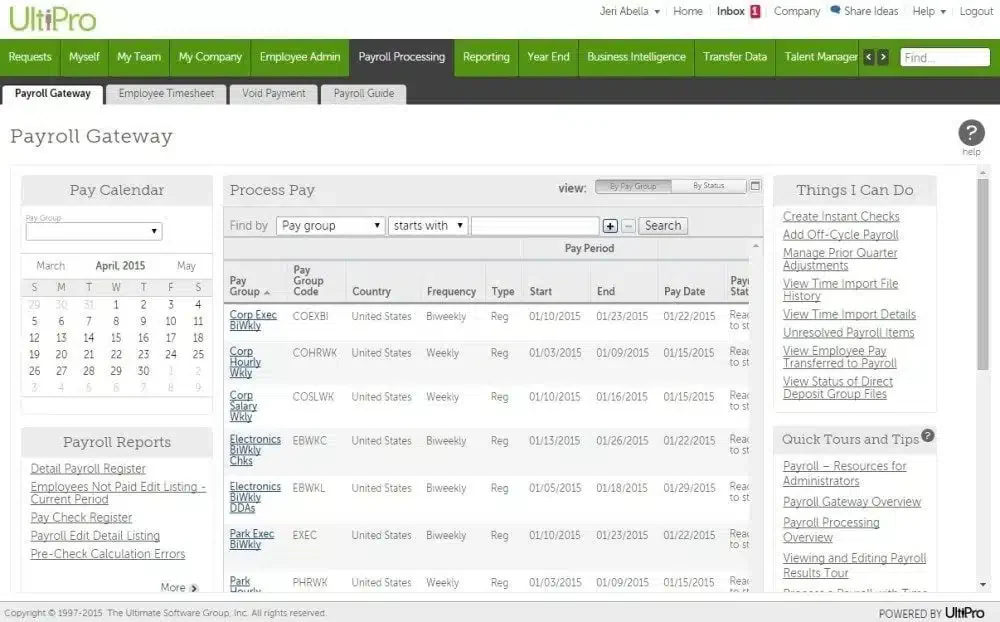 UltiPro (now part of UKG Pro) is a flexible HRIS software in the Philippines that offers a complete set of tools for managing HR, payroll, and employee-related tasks. Designed for companies of all sizes, it helps simplify complex HR workflows while allowing teams to tailor the HRIS system to their unique needs.
UltiPro is a strong fit for growing organizations that want customizable HRIS systems with enterprise-grade capabilities. Its scalability makes it suitable for businesses in industries like retail, finance, healthcare, and professional services.
UltiPro key features:
- Employee management tools to handle job roles, work history, and organizational structure
- Time and attendance tracking with clock-in/out functionality and automated schedule syncing
- Automated payroll processing with tax calculations and compliance support
- Centralized employee database to keep all records, contracts, and updates in one secure place
- Self-service portal where employees can view payslips, update personal details, and request time off
- Mobile access for employees and HR managers
| Pros | Cons |
|
|
Best Suited For:
- Enterprises
- Organizations needing customizable HCM
- Businesses with complex workforce management requirements
Pricing: Custom quote.
12. Workday
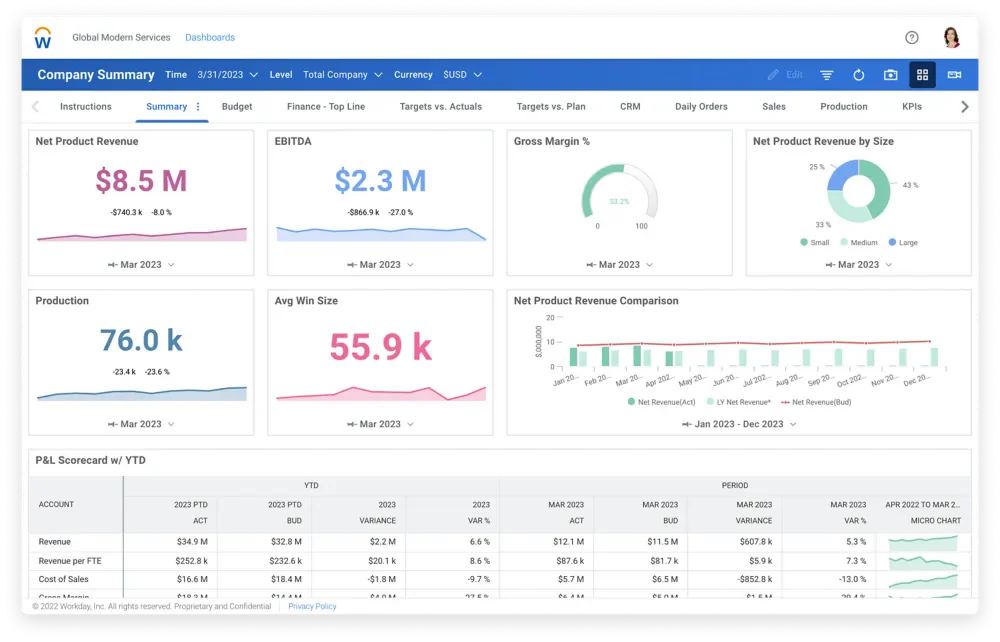 Workday is a cloud-based HRIS software in the Philippines that brings together key HR functions like hiring, payroll, performance tracking, and workforce planning into one seamless system. It’s built for mid- to large-sized companies that want deep visibility into their workforce.
Workday is best suited for organizations that need robust analytics and enterprise-level control over HR data. In particular, the platform excels in data-driven decision-making, strategic planning, and managing large or globally distributed teams from a single system.
Because of this depth, enterprises aiming to optimize HR operations will find the advanced tools for workforce management, analytics, and compliance especially valuable.
Workday key features:
- Human capital management to oversee employee lifecycles—from onboarding to promotions and offboarding
- Advanced reporting and analytics to monitor headcount, track KPIs, and generate real-time insights for strategic planning
- Payroll and workforce management with automated calculations, compliance checks, and payroll processing across regions
- Time tracking tools that support both hourly and salaried employees with customizable scheduling and approvals
- Workday Adaptive Planning to create workforce budgets, forecast staffing needs, and align HR planning with financial goals
| Pros | Cons |
|
|
Best Suited For:
- Mid-sized to large enterprises
- Organizations prioritizing analytics and workforce planning
- Businesses with complex HR structures
Pricing: Two planning pricing options, including Workday Adaptive Planning and Workday Adaptive Planning & Consolidation, with varying prices depending on the custom quote.
13. Deel
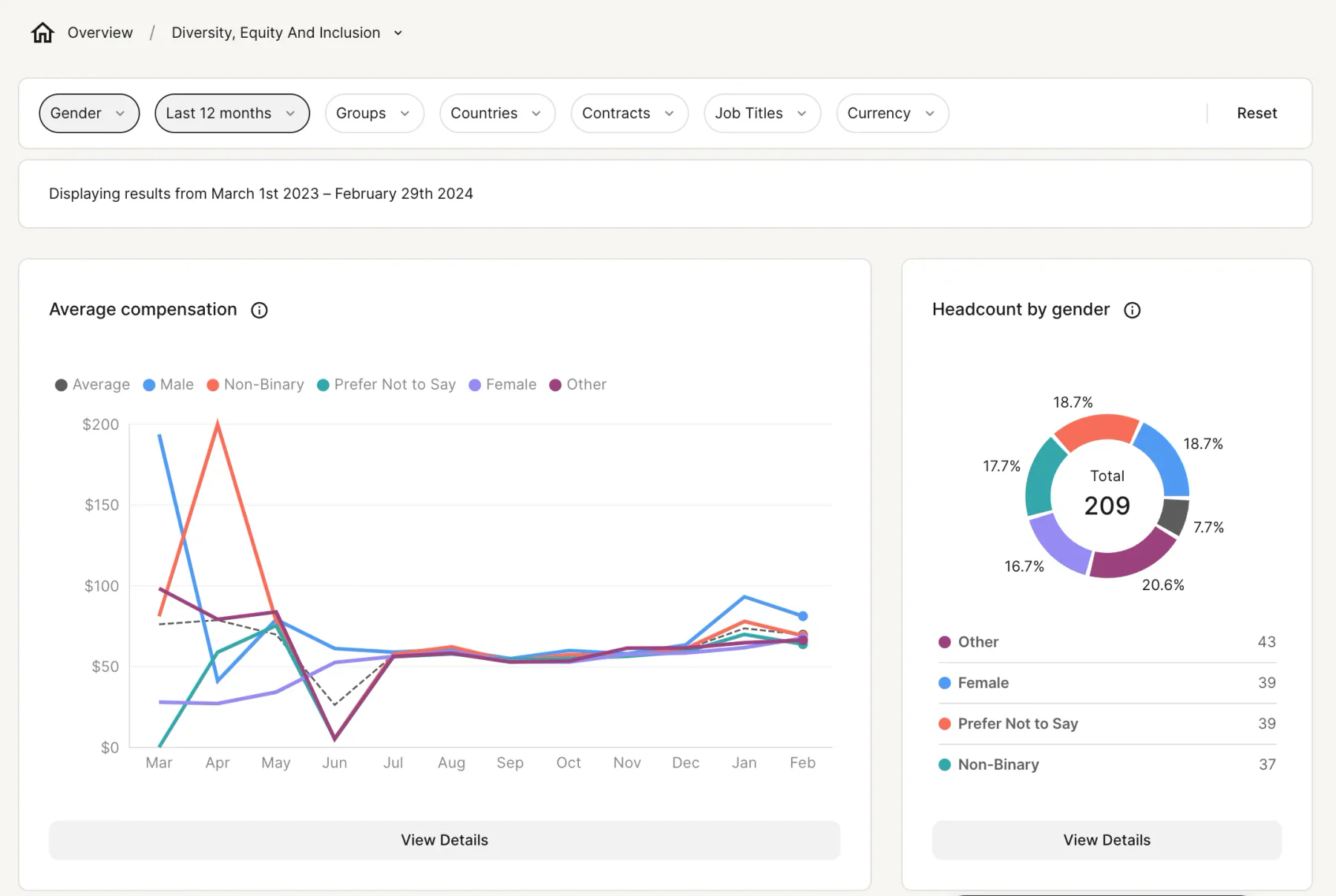 Deel is a global HRIS software designed to simplify hiring, paying, and managing remote teams across multiple countries. Built for companies with international or distributed workforces, Deel helps navigate complex cross-border payroll, contracts, and compliance requirements with ease.
Deel is best suited for businesses hiring talent in multiple countries, especially startups and enterprises with remote-first or hybrid teams. In particular, the platform’s core strength lies in handling international HR compliance and payroll logistics across different jurisdictions. As a result, companies no longer need separate tools or local vendors for each country they operate in.
Deel key features:
- Global payroll management with automated tax calculations, currency conversion, and country-specific payslips
- Compensation insights to benchmark salaries and offer competitive packages across regions
- Compliance tools to manage local labor laws, employment agreements, and regulatory documentation
- Analytics and reporting for tracking workforce trends, expenses, and performance across global teams
- Streamlined onboarding and offboarding with digital contracts, identity verification, and localized documentation
| Pros | Cons |
|
|
Best Suited For:
- Remote-first companies
- Businesses hiring across multiple countries
- Teams needing cross-border payroll and compliance support
Pricing: Deel HR is free for teams under 200 employees and starts at ₱308 per employee per month for larger teams. Contractor Management starts at ₱3,020 per contractor per month, EOR in the Philippines at ₱36,940 per employee per month, and Global Payroll at ₱1,790 per employee per month.
14. Zoho People
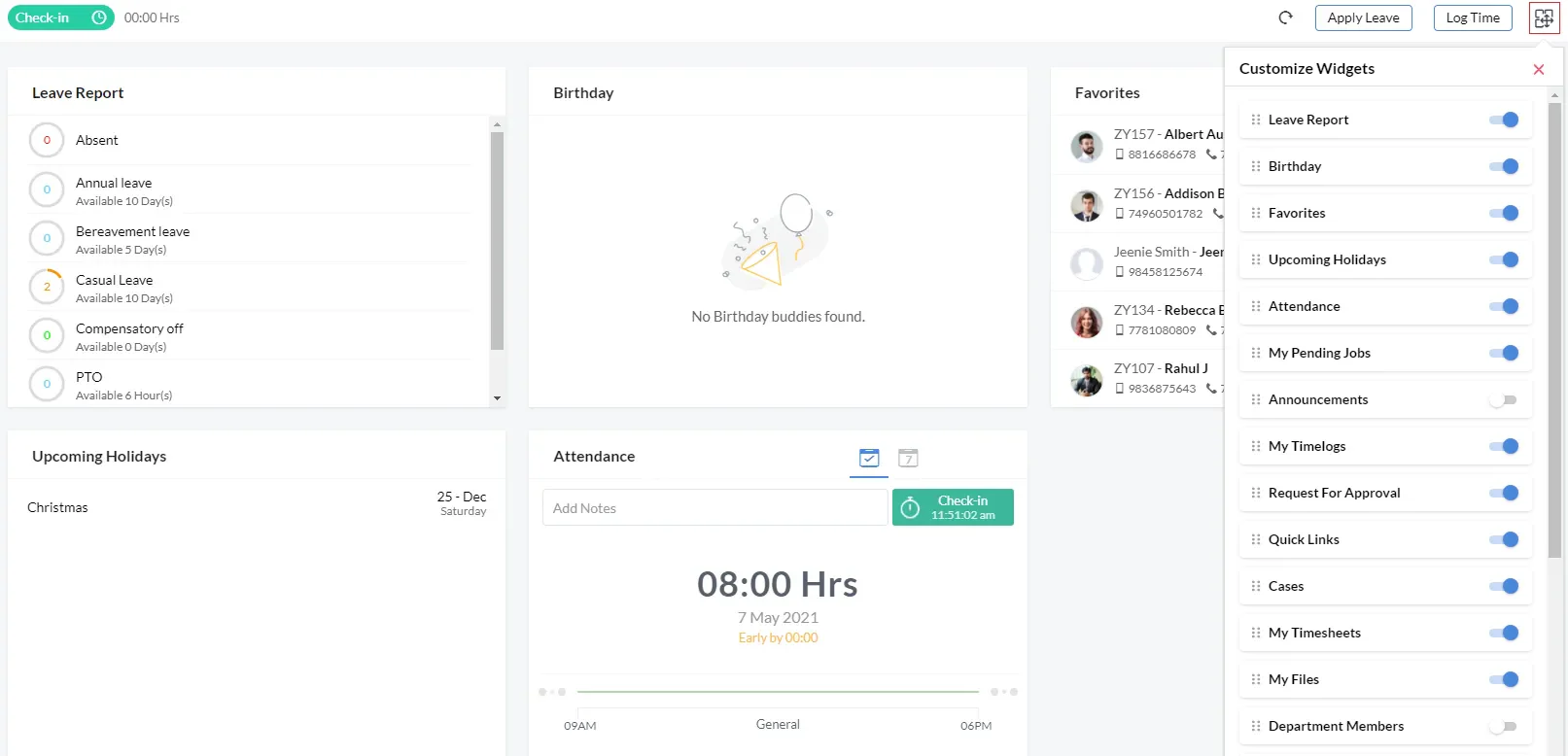 Zoho HRIS Philippines is part of the larger Zoho ecosystem, offering integrated HRIS systems and payroll tools designed to help businesses automate routine processes and manage employee data more effectively.
Built for growing teams, the platform combines payroll automation with employee lifecycle management in one user-friendly interface. In addition, Zoho People is ideal for SMEs already using other Zoho tools, since it offers seamless integration across CRM, accounting, and productivity platforms. Consequently, teams can manage HR data without switching between disconnected systems.
Zoho key features:
- Employee self-service portal where staff can access payslips, request time off, and update personal details independently
- Automated payroll processing that calculates salaries, deductions, and benefits
- Benefits administration tools to manage employee perks, allowances, and reimbursements
- Comprehensive reporting with customizable dashboards for tracking payroll, attendance, and leave trends
- Hiring and onboarding modules to manage job postings, screen applicants, and guide new hires through structured onboarding steps
| Pros | Cons |
|
|
Best Suited For:
- SMEs and growing businesses
- Companies already using Zoho apps
- Teams wanting scalable HR software with a low entry barrier
Pricing: Essential HR starts at ₱93 per user per month, Professional at ₱154, Premium at ₱216, and Enterprise at ₱308 per user per month, while Zoho People Plus is available on a custom quote.
15. HReasily
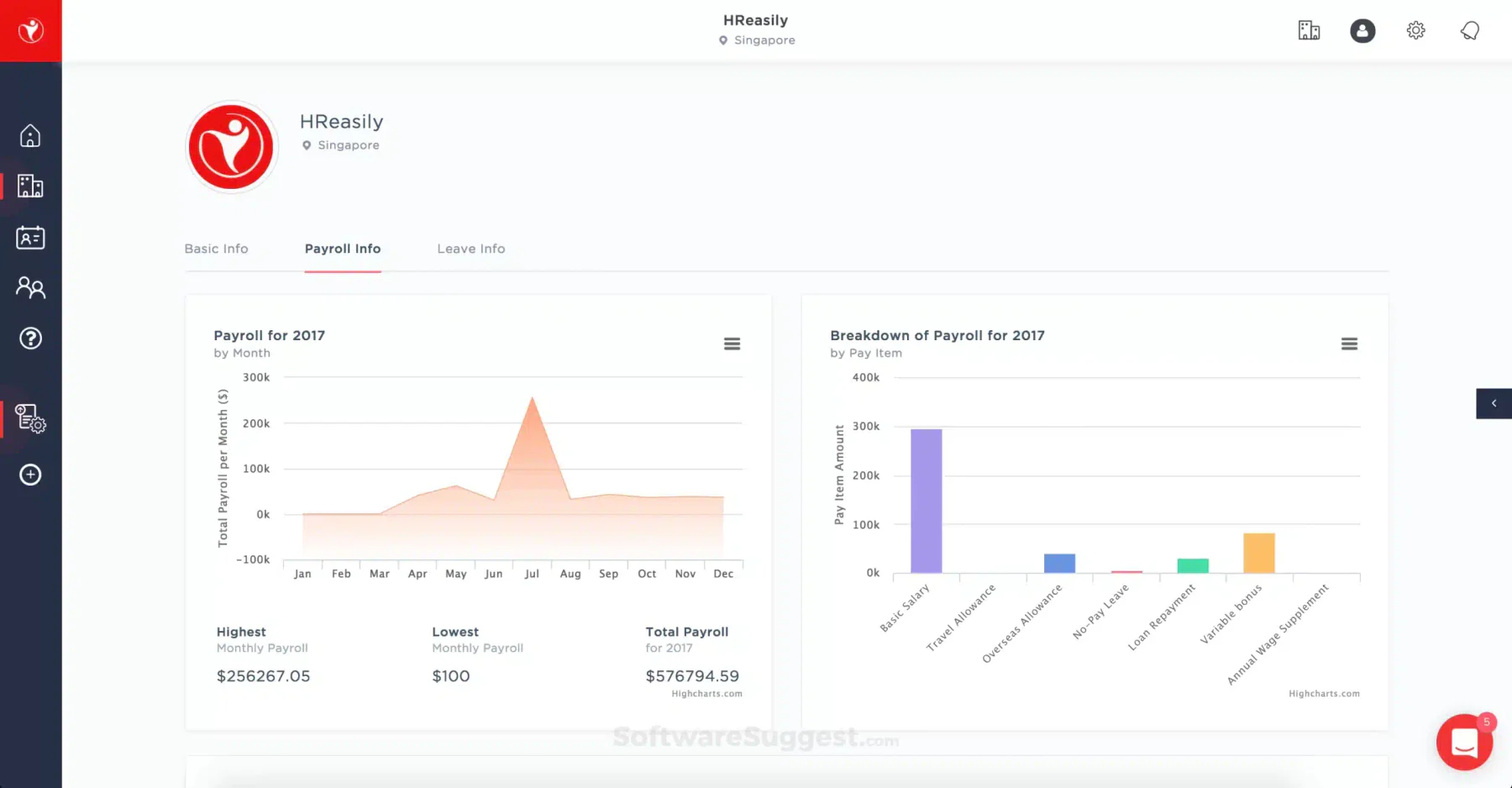 HReasily is a cloud-based HRIS software built to simplify core HR tasks for small to mid-sized businesses in the Philippines.
Known for its easy setup and local payroll compliance, HReasily helps HR teams reduce manual work by automating day-to-day processes like salary disbursement, leave tracking, and employee data management.
HReasily key features:
- Employee self-service portal for accessing payslips, updating profiles, and submitting leave requests
- Payroll processing with automated salary calculations, government contributions (SSS, PhilHealth, Pag-IBIG), and e-payslip generation
- Mobile access so employees and HR managers can log in, track attendance, and approve requests anytime
- Digital payslip distribution that ensures the timely and secure delivery of monthly salary summaries
- Leave and attendance management with real-time balance tracking and approval workflows
- Statutory compliance reporting for generating reports like BIR forms and contribution summaries with minimal manual input
| Pros | Cons |
|
|
Best Suited For:
- Small to mid-sized businesses
- Teams wanting simple payroll and HR admin
- Companies prioritizing leave, attendance, and statutory reporting
Pricing: HReasily charges per module, with Payroll at ₱265 per employee per month, Leave, Claims, and Time Attendance at ₱93 each, and Facial Recognition at ₱265 as an add-on to Time Attendance. Final cost also depends on your total employee count.
Why Filipino Companies Are Using HRIS Systems
More and more companies in the Philippines are turning to an HRIS system to make HR work easier, faster, and less stressful. Here’s why having the right HR tech matters today:
- Save time and cut down costs: An HRIS takes care of repetitive tasks like calculating SSS, PhilHealth, and Pag-IBIG contributions. That means less paperwork, fewer manual errors, and lower HR overhead.
- Keep up with growth: Whether you have a single office or multiple branches, a good human resource management information system can support you. It helps HR teams manage employee data, create monthly HR report templates, and leave balances across locations. No need to keep hiring extra staff just to stay on top of admin work.
- Make things easier for employees: Staff can log in anytime to view payslips, apply for government loans, or request leave, with no more waiting or chasing HR for updates. Everything moves faster and feels more convenient. HRIS also lets HR configure and enforce a clear WFH allowance policy, so remote-work subsidies are tracked, approved, and reported without manual spreadsheets.
- Avoid mistakes and stay compliant: Filing government reports like BIR Form 2316 or SSS R5 manually can be risky. With the HRIS system in the Philippines, these tasks are automated, so the submissions are more accurate and on time.
- Get insights that help you lead better: HRIS systems come with useful analytics. You can spot issues like high turnover or frequent absences early on and take action to improve team performance and retention.
- Protect employee data: These systems follow the Philippines’ Data Privacy Act and come with built-in security features, including audit trails and digital recordkeeping, so you are covered for DOLE checks as well.
As more businesses move toward digital HR tools, understanding how an HRIS fits into daily operations becomes more relevant. For teams also managing recruitment separately, it helps to know how HR software differs from candidate tracking tools before choosing a platform.
Types of HRIS Systems
HRIS platforms come in a few types, and knowing them helps businesses match the right HR software Philippine businesses use to handle their operations and compliance needs. Here are the five main types of HRIS and what each one is for:
| Type of HRIS | Focus | Best for |
| Operational HRIS | Handles payroll, leave, attendance, and records. | Businesses automating daily HR work. |
| Tactical HRIS | Supports hiring, training, reviews, and pay planning. | Companies aiming to improve team performance. |
| Strategic HRIS | Focuses on talent growth, succession, and analytics. | Businesses planning for long-term growth. |
| Comprehensive HRIS | Combines all HR functions in one system. | Mid to large companies with complex needs. |
| Limited Function HRIS | Covers core tasks like payslip and time tracking. | Small businesses with basic HR needs. |
Both comprehensive and limited-function HRIS software can store different types of HR data, whether for daily tasks, people planning, or future strategy. The difference is in how much each system can do and how many HR areas it covers.
Choosing the right type depends on where your business is now, and where you want your HR operations to go next.
How to Choose the Best HRIS System

Choosing the right HRIS system is a critical decision that impacts HR efficiency, compliance, and employee experience. Because every business has different needs, it is important to focus on solutions that align with both current priorities and long-term growth.
1. Evaluate Core HR Requirements
Start by identifying the HR functions your business truly needs, such as payroll, attendance, leave, performance tracking, or recruitment. This helps you choose a system that fits your operations without paying for unnecessary features. A good HRIS also surfaces early signs of quiet quitting through engagement surveys and productivity analytics, so managers can act before disengagement spreads.
2. Consider Compliance and Localization
Make sure the HRIS supports Philippine compliance requirements, including SSS, PhilHealth, Pag-IBIG, BIR reporting, and statutory payroll rules. This reduces compliance risks and makes HR administration easier to manage.
3. Check Integration and Scalability
An effective HRIS should integrate smoothly with other ERP HR modules like accounting, finance, and other business systems. It should also scale as your company grows and HR processes become more complex.
4. Assess Usability, Support, and Vendor Reliability
Choose an HRIS that is easy to use, backed by reliable support, and offered by a trustworthy vendor. Demos or consultations can also help you evaluate whether the system is a good long-term fit.
Ultimately, selecting an HRIS is not just about automation. It is about building a solid foundation for efficient workforce management and sustainable business growth.
"Choosing the right HRIS goes beyond automating HR tasks; it establishes a reliable framework for workforce efficiency, compliance readiness, and sustained organizational growth."
Conclusion
Choosing the right HRIS software ultimately comes down to understanding what your team needs day to day. Some platforms are built for compliance-heavy environments, while others are designed for scalability or global payroll management. Consequently, there is no single best answer; the right fit depends on business size, industry, and the complexity of existing HR workflows.
With that in mind, the 15 options covered in this guide represent a broad range of use cases, from small businesses handling basic HR tasks to enterprises managing distributed teams across regions. For teams that want to go deeper before deciding, understanding how an HRIS works and what it covers can help your team find the right system.
FAQ About HRIS
An HRIS system is a digital platform that centralizes HR functions such as payroll, attendance, leave management, and employee records. It helps businesses improve efficiency, reduce manual errors, and ensure compliance with labor regulations.
HRIS systems automate statutory calculations, maintain accurate employee records, and generate compliance-ready reports, making it easier for companies to meet local labor, tax, and regulatory requirements.
Yes, most modern HRIS systems are designed to scale, allowing businesses to add users, modules, and advanced features as workforce size and operational complexity increase.
Yes, many HRIS systems in the Philippines support integration with major local banks such as BDO, BPI, Metrobank, and UnionBank for automated payroll disbursement. This integration allows businesses to upload payroll files directly to their banking portal, eliminating manual data entry and ensuring employees receive salaries on time with minimal administrative effort.>