Food service management is the backbone of the food industry. Without it, nothing can function. It ties procurement, inventory, labor, compliance, and customer experience all together to make the business operation efficient. However, with the complexity and scale of modern markets, doing it manually is simply not feasible. That is why this guide will show you the best way to digitize your food service management. From the core systems to the strategic framework for an operation that is efficient, compliant, and built to scale.
Key Takeaways
|
Table of Contents
Understanding the Complexity of Food Service Management

Food service management coordinates daily operations, inventory, compliance, and workforce needs to keep the business running smoothly. Since food businesses handle perishable stock, strict safety standards, and frequent staff changes, managers must balance service quality with efficient planning. Effective management in this sector balances the artistic and hospitality elements of food service with the rigorous, data-driven demands of business administration. This requires a holistic understanding of how front-of-house (FOH) operations interact seamlessly with back-of-house (BOH) logistics.
1. The Convergence of Hospitality and Logistics
Hospitality is the foundation of the food industry. Delivering exceptional experiences, maintaining high standards of food quality, and fostering customer loyalty are a must for any food business. However, behind every seamless dining experience is a complex web of logistical operations. Managers must forecast demand accurately to prevent both stockouts and excessive food waste.
They must engineer menus that are not only appealing to the target demographic but also financially viable based on fluctuating commodity prices. The convergence of these two realms means that modern managers can no longer rely solely on intuition; they require actionable data to make informed decisions regarding portion control, vendor negotiations, and pricing strategies.
2. Regulatory Compliance and Risk Mitigation
Regulatory compliance adds another major challenge in food service management. Businesses must prevent foodborne illness, cross-contamination, and unsafe storage to protect public health, revenue, and brand reputation. To stay compliant, they need strong HACCP protocols, continuous monitoring, accurate record-keeping, and full ingredient traceability. Since manual documentation takes too much time, many businesses now use digital compliance and auditing tools.
3. The Impact of Multi-Unit Scalability
Consistency becomes the ultimate hurdle when a business expands exponentially. Ensuring that a signature dish tastes identical in New York and London, while simultaneously managing localized supply chains and disparate labor regulations, requires a centralized approach to data management.
Therefore, multi-unit operators must implement standardized operating procedures (SOPs) that are easily accessible and enforceable across all locations. This scalability demands enterprise-level architecture capable of aggregating data from various localized point-of-sale systems into a single, comprehensive dashboard for executive oversight.
The Core Pillars of a Food Service Management System

The industry has turned to specialized Food Service Management Software (FSMS) to navigate the complexities outlined above. These platforms are composed of several interconnected modules, each designed to address a specific operational challenge. Understanding these core pillars is essential for evaluating the capabilities of different software competitors and determining which combination of features will best serve a specific operational model.
1. Advanced Inventory and Recipe Management
Inventory control plays the most critical role in BOH operations. Manual counting and spreadsheets often create errors and only show costs after issues happen. A modern system tracks inventory in real time and connects BOH data with the FOH POS. As staff sell each dish, the system deducts ingredients automatically and helps managers compare actual versus expected stock to detect theft, over-portioning, or spoilage.
Furthermore, robust recipe management tools allow operators to digitize their entire culinary repertoire. Each recipe is broken down into its constituent ingredients, with assigned costs updated in real-time based on the latest vendor invoices. This dynamic recipe costing enables dynamic menu engineering, allowing managers to adjust pricing or swap ingredients swiftly in response to supply chain volatility, thereby protecting profit margins.
2. Procurement and Supply Chain Automation
Food procurement takes time and constant coordination because restaurants deal with many suppliers, changing prices, and tight delivery schedules. A comprehensive modern management platform simplifies the process by integrating electronic data interchange (EDI) capabilities. It allows restaurants to place orders, track deliveries, and match invoices with received goods in one system. It also helps managers compare supplier prices and use demand forecasts, reservations, and weather data to avoid over-ordering.
3. Labor Optimization and Workforce Management
Labor costs are one of the largest expenses for any food business. Creating a weekly schedule is not enough to create an efficient workforce management system. Advanced systems with integrated labor forecasting tools are needed to analyze historical traffic patterns and determine the optimal shift schedules. This prevents both understaffing and overstaffing. Moreover, modern platforms include features for shift swapping, legal compliance tracking, and performance analytics.
4. Customer Relationship Management (CRM) in Food Service
Customer satisfaction drives revenue in FOH operations. As a result, more food businesses now use CRM tools to capture reservation history, spending patterns, and preferences so staff can create more personal and memorable guest experiences. This approach helps restaurants build stronger loyalty and improve repeat visits. It also supports targeted promotions and rewards that raise customer lifetime value.
Food Service Management Across Different Operational Environments
The operational demands of food service management vary significantly across different sectors. Understanding how these systems apply to your specific industry ensures the technology you adopt is configured to address your unique challenges.
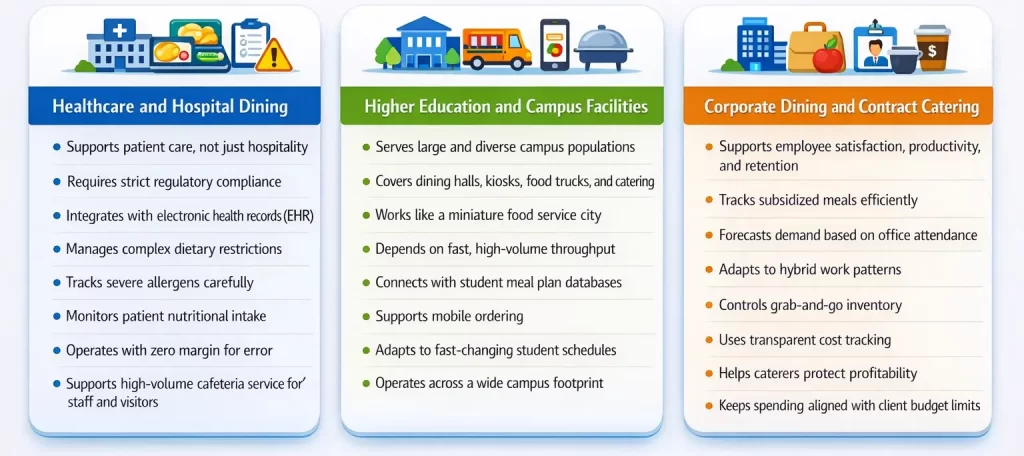
Understanding the different operational needs will better prepare you on choosing the right food service management system.
Comprehensive Competitor Analysis: Top Software Solutions
The market for food service management technology is highly fragmented, with hundreds of vendors offering solutions ranging from niche, single-function applications to comprehensive, all-in-one enterprise resource planning (ERP) systems. When evaluating alternatives, it is crucial to categorize these competitors based on their primary operational focus. A thorough analysis reveals distinct categories of software, each with its own strengths and ideal use cases.
1. Audit, Safety, and Compliance Specialists
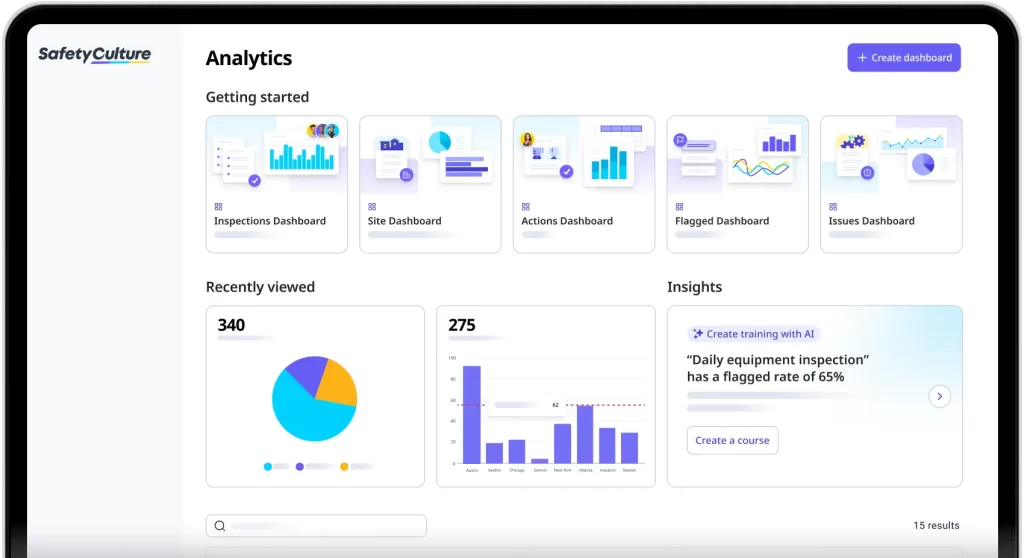
Audit-focused applications are essential for operations where strict adherence to safety protocols and brand standards is paramount. Competitors in this space, such as SafetyCulture (formerly iAuditor) and Safefood 360°, specialize in digitizing inspection processes. These platforms replace paper checklists with dynamic, mobile-friendly forms that guide staff through rigorous HACCP compliance checks, temperature logging, and facility inspections.
These systems help businesses enforce standard operating procedures across multiple locations. For example, when refrigerator temperatures move outside the safe range, the software can trigger alerts and require corrective action. These platforms handle compliance and risk control well, but they usually lack advanced financial analytics, recipe costing, and complex inventory features. Many businesses pair them with other BOH systems.
2. Comprehensive Back-of-House (BOH) Platforms
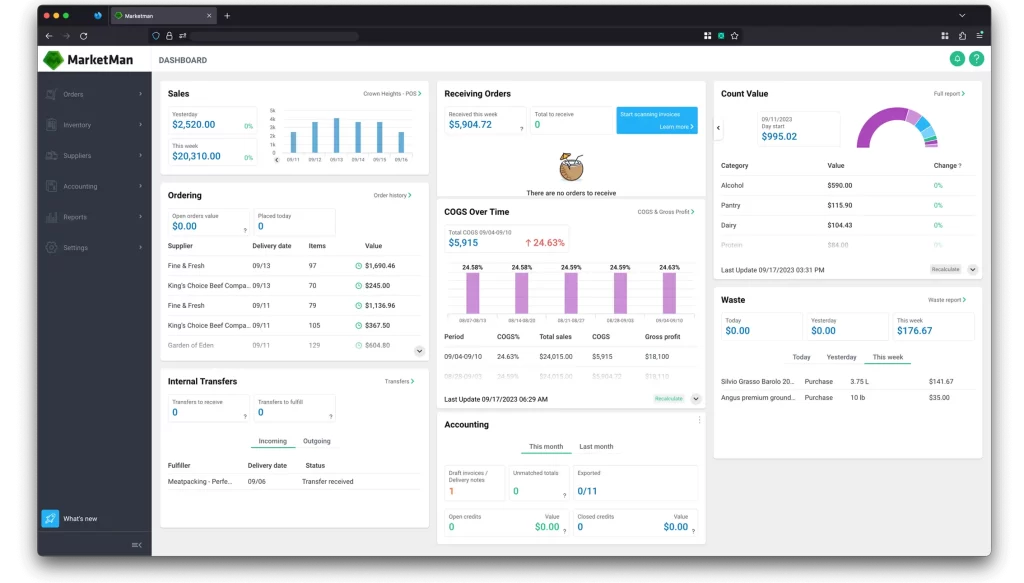
The core of modern food service management often lies in dedicated BOH software designed to control the flow of goods and money. Solutions like MarketMan, ChefMod, SynergySuite, and Rosnet dominate this sector. These platforms are engineered to handle the heavy lifting of inventory valuation, vendor management, and dynamic recipe costing.
MarketMan stands out for its user-friendly interface and strong vendor integration, helping small to mid-sized restaurant groups automate procurement and accounts payable. Meanwhile, SynergySuite takes a broader approach with modules for HR, scheduling, inventory, and cash management, making it suitable for larger operations. Both platforms rely on seamless POS integration to deliver accurate, real-time sales data.
3. Point of Sale (POS) Centric Ecosystems
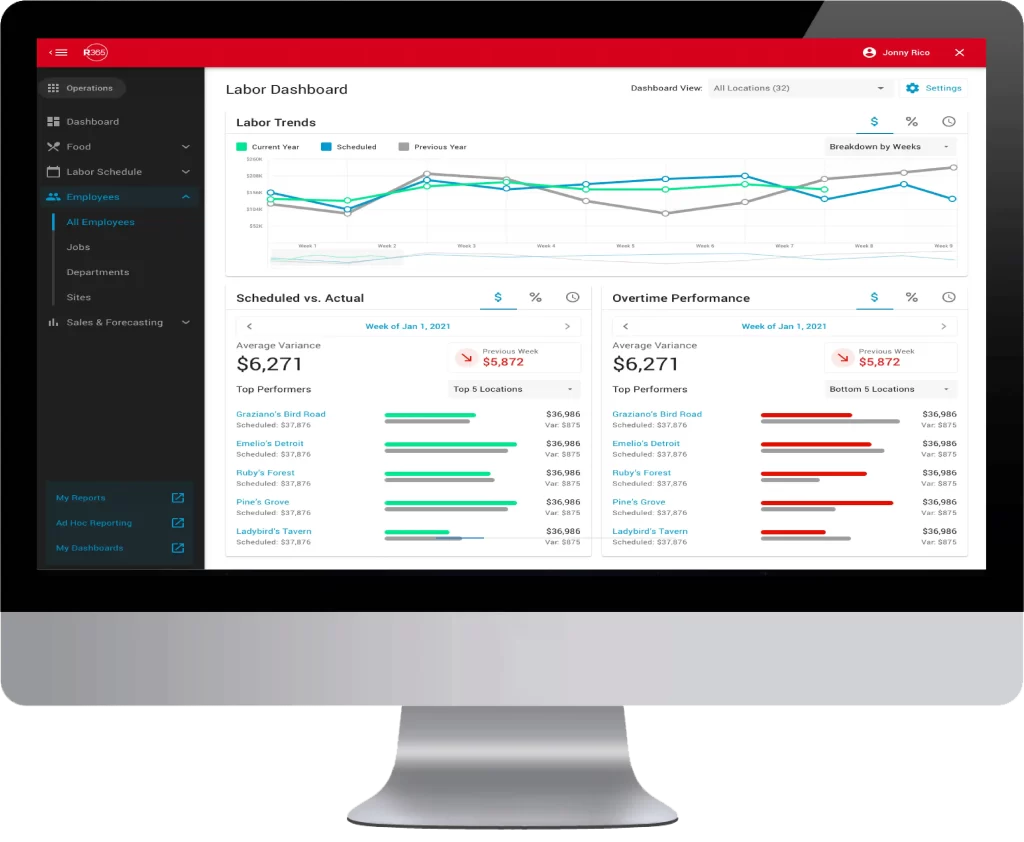
Historically, the POS system was merely a sophisticated cash register. Today, industry giants like Toast and Lightspeed have transformed their POS offerings into expansive management ecosystems. These platforms attempt to provide an all-in-one solution by building proprietary BOH and labor management modules directly into their architecture.
A POS-centric approach reduces integration friction by keeping inventory, labor, and sales data in one system, which makes reporting more unified. Toast supports this model well with restaurant-specific features for quick-service and fine dining. Still, larger multi-concept businesses may outgrow built-in BOH tools and need standalone BOH platforms or ERP systems for deeper control and forecasting.
4. CRM and Labor-Focused Alternatives
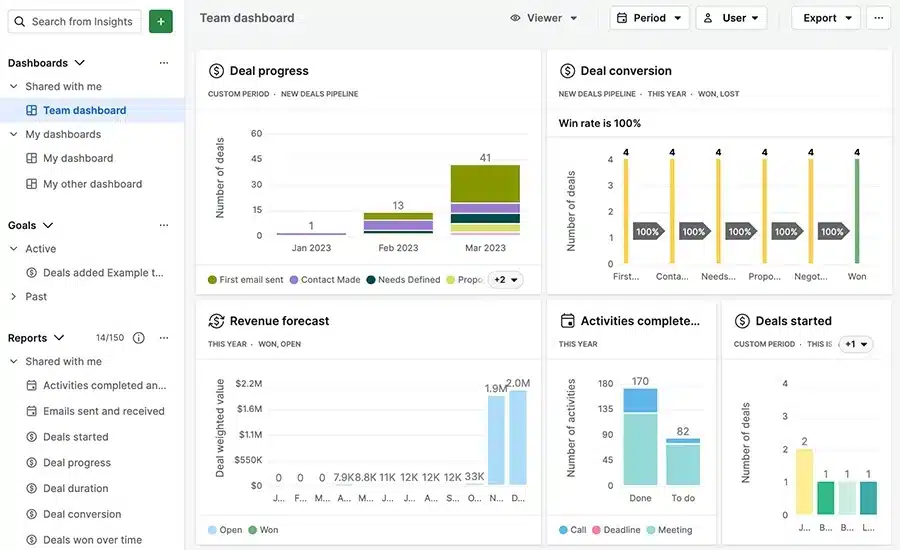
Another critical segment of the market focuses on managing both the customers and the staff. While traditional CRM platforms like Pipedrive are generally associated with B2B sales, they are increasingly being adapted for the food industry, particularly for catering businesses, event spaces, and large-scale reservation management. These systems excel at tracking the customer journey, managing event pipelines, and automating follow-up communications.
On the labor side, tools like 7shifts help restaurants manage workforce needs more effectively. They connect with POS systems to track labor-to-sales performance in real time, improve team communication, support labor law compliance, and simplify onboarding. Often, businesses will utilize a best-of-breed approach, integrating a specialized labor tool like 7shifts with a dedicated BOH system and a robust POS to create a customized technology stack.
5. Enterprise-Grade Solutions
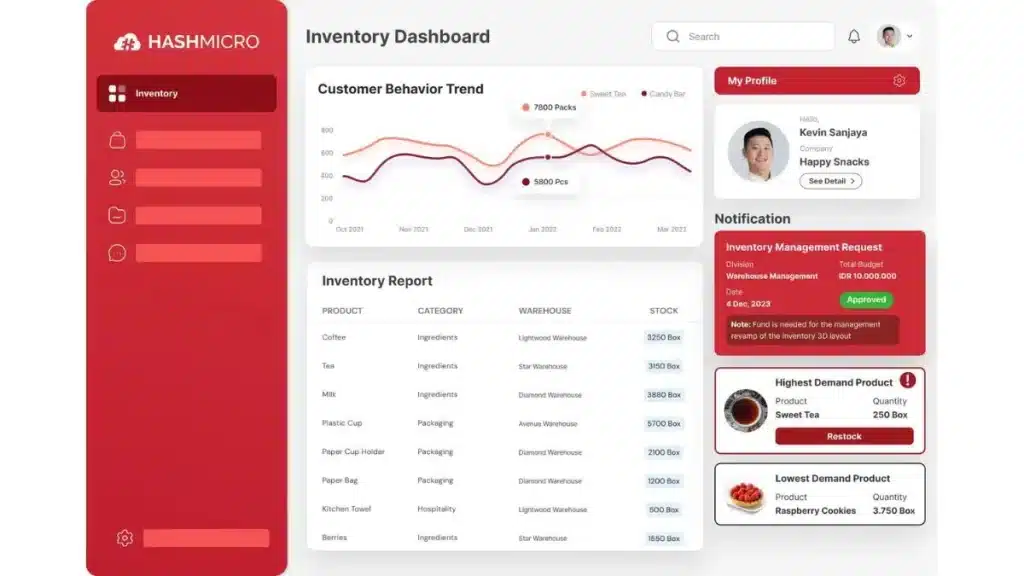
For large-scale operations, organizations often turn to comprehensive Enterprise Resource Planning systems. Enterprise-grade solutions like Oracle NetSuite or HashMicro provide comprehensive frameworks that unify financial accounting, supply chain logistics, human resources, and customer relationship management into a single, cohesive database. These systems are designed to handle immense volumes of data and provide C-suite executives with macro-level insights across all global operations, ensuring that strategic decisions are backed by real-time, enterprise-wide analytics.
Strategic Criteria for Evaluating Software Alternatives
With such a diverse array of competitors in the market, selecting the optimal food service management system requires a highly strategic evaluation process.
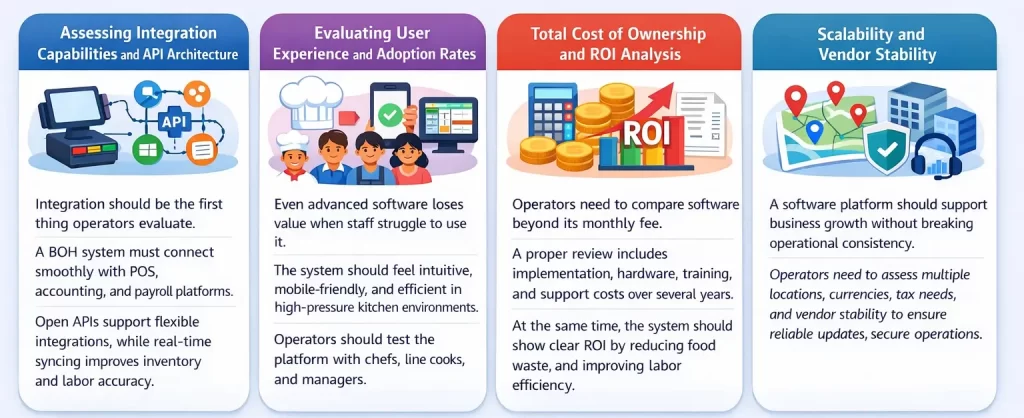
Decision-makers must look beyond flashy features and marketing promises to assess how a platform will fundamentally align with their specific operational workflows, budget constraints, and long-term growth objectives.
Implementation Roadmap for Food Service Software
The decision to procure a new food service management system is only the first step; the true challenge lies in the implementation process. Transitioning from legacy systems or manual processes to a sophisticated digital platform carries significant operational risk if not managed meticulously. A structured, phased implementation roadmap is critical to minimizing disruption and ensuring a successful rollout.
Phase 1: Comprehensive Data Auditing and Cleansing
Conduct a rigorous audit of any existing data before deploying the new system. Standardize the naming conventions, update recipe yields, and verify the accuracy of current vendor pricing. It is vital to clean the data as migrating outdated, duplicated, or inaccurate data into a new system will immediately compromise its reporting capabilities and erode staff trust in the new technology.
Phase 2: System Configuration and Workflow Mapping
After cleaning the data, businesses need to configure the system based on their actual workflows. Administrators must set user roles carefully, map physical processes into digital steps, and match access with each responsibility. This stage also helps identify weak legacy processes, so companies can improve operations instead of simply transferring old inefficiencies into new software.
Phase 3: Strategic Change Management and Training
The introduction of new technology often meets with resistance from staff accustomed to established routines. Effective change management requires transparent communication regarding why the new system is being implemented and how it will specifically benefit the employees. To best train staff, operators should utilize a “train-the-trainer” approach. Empower key shift leaders and kitchen managers to become system experts who can provide continuous on-the-floor support to their peers.
Phase 4: Phased Rollout and Continuous Optimization
For multi-unit businesses, a phased rollout is safer than launching the system across all locations at once. Starting with one pilot site helps teams fix technical issues and workflow gaps before wider deployment. After go-live, managers must keep reviewing analytics, adoption rates, and training needs. This continuous optimization helps turn projected ROI into measurable financial results.
Common Pitfalls to Avoid
Even with the right software and a solid implementation plan, operators frequently encounter self-inflicted roadblocks undermining their return on investment. These are the four most damaging and preventable pitfalls:
| Common Pitfalls | Solution |
| Over-Customization | Use built-in best-practice workflows whenever possible and only customize features that directly support critical operational needs. |
| Neglecting Data Hygiene | Set clear data entry standards, train staff consistently, and review inventory, waste, and pricing records regularly for accuracy. |
| Weak Staff Training | Provide hands-on training, create simple SOPs, and monitor usage after go-live to ensure staff follow the system correctly. |
| Lack of Management Buy-In | Make managers actively use dashboards, enforce system processes, and hold teams accountable for proper adoption. |
Knowing the way to solve common pitfalls is vital knowledge for the implementation process for food service management software.
Conclusion
The discipline of food service management has transcended the boundaries of traditional hospitality, evolving into a highly complex, data-driven science. Only advanced technological solutions can satisfy the demands for precision, efficiency, and adaptability of the modern landscape. From the supply chain logistics to the optimization of labor forces and the cultivation of deep customer relationships, software systems have become the central nervous system of successful food operations.
Navigating the diverse market of competitors requires a meticulous and strategic approach. Picking from specialized audit applications and dedicated back-of-house platforms to expansive POS ecosystems and enterprise-grade ERPs can be difficult for those who aren’t tech-savvy. Do rigorous evaluations based on their integration capabilities, user experience, total cost of ownership, and long-term scalability to find the right food service management system.
Ultimately, the goal of food service management technology is not to replace the human element of hospitality, but rather to eliminate operational friction. By automating administrative burdens and providing actionable, real-time insights, these systems empower culinary professionals and business leaders to focus their energy on what truly matters: delivering exceptional food, fostering memorable guest experiences, and driving sustainable, long-term profitability in a profoundly competitive marketplace.
FAQ for Food Service Management
-
What are the 5S in HACCP?
Strictly speaking, 5S is not part of HACCP’s official principles. HACCP formally uses seven principles, while 5S is a separate workplace-organization method often used to support cleanliness and consistency. The 5S are Sort, Set in order, Shine, Standardize, and Sustain.
-
What is the main goal of food service management?
The main goal is to deliver food safely and efficiently while meeting nutritional needs and complying with health regulations. In practice, that also includes managing quality, workflow, and service so operations stay consistent.
-
What are the 7 types of table service?
The 7 commonly recognized types of table service are French service, Russian service, English service, American service, buffet service, self-service, and gueridon service. Each type uses a different serving style, ranging from formal tableside presentation to faster, more practical service for high-volume dining.
-
What are the 7 steps in food service?
This varies by curriculum, but a common simplified flow is purchasing, receiving, storing, preparing, cooking, holding, and serving. More detailed food-safety models break that flow out further by adding cooling and reheating as separate steps.