







Audit preparation often feels overwhelming because documents are scattered, deadlines pile up, and small errors can trigger long back-and-forth with auditors. Without a clear system, the process can drain time and disrupt daily operations.
The impact is bigger than stress because delays and inconsistencies can slow closing and weaken confidence in your numbers. Using accounting software helps centralize data, automate approvals, and maintain audit trails, making every transaction easier to verify.
If you want to make audits smoother and more predictable, continue reading the full guide and checklist. You’ll find practical steps you can apply right away to prepare with more control and less friction.
Table of Contents

Key Takeaways
|
What Is Audit Preparation?
Audit preparation is the proactive process of gathering, reviewing, and organizing financial records and supporting documents before an audit. It also includes reconciling accounts, checking internal controls, and aligning teams to ensure accurate, compliant, and transparent reporting.
Internal audits are run by in-house teams to improve controls, risk management, and governance, while external audits are performed by independent auditors to validate financial statements for stakeholders. Even with different goals, both require the same disciplined audit preparation for credible results.
Why Is Audit Preparation Crucial for Your Company?
Viewing audit preparation as merely an administrative chore is a significant misjudgment. Below are several key reasons why every business, regardless of size, should prioritize a serious, structured approach to preparing for an audit.
- Enhances credibility and trust
A smooth audit process resulting from good preparation signals to investors, lenders, and other stakeholders that the company’s financial reporting is reliable. This builds a strong foundation of trust, which is invaluable for securing funding, attracting partnerships, and maintaining a positive public image. - Ensures regulatory compliance
Audits are often required by law or regulation. Proper preparation ensures that the company meets all its obligations under relevant laws and standards, such as those set by tax authorities or industry regulators. This proactive approach helps avoid costly penalties, legal disputes, and reputational damage associated with non-compliance. - Identifies weaknesses in internal controls
The preparation process involves a deep dive into financial procedures, which naturally exposes weaknesses in internal controls. Identifying these vulnerabilities before the auditor does allows the company to implement corrective actions, thereby strengthening its defenses against fraud, errors, and operational inefficiencies. - Improves operational efficiency and decision-making
Organizing financial data for an audit forces a company to clean up its records and streamline its accounting processes. This leads to more accurate and readily available financial information throughout the year, empowering management to make better-informed strategic decisions based on reliable data.
The Complete Audit Preparation Checklist

To ensure no detail is overlooked, the most effective approach to audit preparation is to use a structured checklist. Let’s break down each step in these three crucial phases to ensure your company is fully prepared for an audit at any time.
1. The pre-audit phase: Building a foundation for success
This initial phase is the most critical, as the work done here sets the stage for the entire audit. It involves planning, communication, and intensive data gathering.
- Hold an initial planning meeting
Assemble key personnel from finance, accounting, and management to discuss the audit scope, timeline, and responsibilities. Review findings from previous audits to identify recurring issues that need special attention. - Confirm the audit timeline and logistics
Coordinate with the external audit firm to establish clear start and end dates. Arrange a dedicated, private workspace for the auditors with access to necessary resources, such as internet, printers, and relevant personnel. - Gather all necessary financial documents
This is the core of the preparation. Systematically collect and organize key documents, including:- Financial Statements (Balance Sheet, Income Statement, Cash Flow Statement, Statement of Retained Earnings).
- General Ledger and Trial Balance for the audit period.
- Bank statements and bank reconciliation reports for all accounts.
- Records of significant assets and liabilities, including fixed asset schedules and depreciation calculations.
- Accounts receivable and accounts payable aging reports.
- Payroll records, including employee salaries, tax filings, and benefits information.
- Loan agreements, lease contracts, and other significant financial agreements.
- Collect legal and corporate documents
Auditors will also need to review non-financial documents to understand the company’s structure and governance. This includes:- Articles of incorporation and bylaws.
- Minutes from the board of directors and shareholder meetings.
- Major contracts with suppliers, customers, and partners.
- Organizational charts and lists of key management personnel.
- Review and reconcile all accounts
Before the auditors arrive, conduct your own internal review. Reconcile all balance sheet accounts, investigate any significant or unusual variances, and ensure that all journal entries have proper supporting documentation. - Evaluate internal controls
Assess the effectiveness of your internal control systems. Document key financial reporting processes and ensure they are followed consistently. This proactive review can help you address control weaknesses before the auditor flags them.
2. The audit execution phase: Supporting a smooth process
Once the auditors are on-site, the focus shifts to facilitating their work as efficiently as possible. Clear communication and prompt responses are essential during this phase. The goal is to provide the auditors with everything they need to complete their testing without delays or misunderstandings.
- Appoint a single point of contact: Designate one person, typically from the finance or accounting department, to be the primary liaison with the audit team. This centralizes communication and ensures that all requests are managed and tracked effectively.
- Respond to auditor requests promptly: Auditors will make numerous requests for documentation and explanations. Have a system in place to track these requests and provide the required information in a timely manner. Delays in providing data can prolong the audit and may be interpreted as a sign of poor organization.
- Be transparent and honest: If issues or discrepancies are discovered, it is best to address them openly with the auditors. Attempting to hide problems will only damage your credibility and could lead to more significant findings down the line.
- Schedule regular check-in meetings: Hold brief daily or weekly meetings with the lead auditor to discuss progress, address any emerging issues, and clarify questions. This ensures that both parties remain aligned throughout the process.
3. The post-audit phase: Follow-up and improvement
The work is not over once the auditors leave. The post-audit phase is crucial for understanding the audit results and using them to drive meaningful improvements within the organization. This phase is about learning and taking action to strengthen your financial processes for the future.
- Review the draft audit report: The auditors will provide a draft report for your review. Carefully read through the findings, management letter comments, and proposed adjustments. If you disagree with any findings, prepare a well-documented response to discuss with the audit team.
- Develop a corrective action plan: For any weaknesses or deficiencies identified in the audit report, create a detailed action plan. Assign responsibility for each corrective action, set clear deadlines, and establish a process for monitoring implementation.
- Implement the necessary changes: Execute the action plan to address the identified issues. This might involve revising internal control procedures, providing additional staff training, or upgrading your financial systems.
- Prepare for the next audit cycle: The end of one audit is the beginning of the preparation for the next. Use the lessons learned to refine your audit preparation process and maintain accurate, well-organized records throughout the year.
The Role of Technology in Streamlining Audit Preparation
In today’s digital age, relying on manual processes for audit preparation is no longer efficient and is highly susceptible to errors, especially when financial compliance is on the line. Here is how technology can become an invaluable asset in your audit preparation process.
- Centralization of documents and data
Modern accounting systems act as a single source of truth for all financial data. Instead of searching through disparate spreadsheets, folders, and filing cabinets, all invoices, receipts, bank statements, and ledgers are stored in one secure, centralized database. - Automation of financial reconciliation
One of the most time-consuming tasks in audit preparation is reconciling bank statements, accounts receivable, and accounts payable. An integrated accounting system can automate these processes, continuously matching transactions and flagging discrepancies in real-time. - Providing a clear and complete audit trail
Auditors need to be able to trace transactions from their origin to the financial statements. An ERP system can automatically create a detailed audit trail for every transaction, recording who made the entry, when it was made, and any subsequent modifications. - Fast and accurate financial reporting
Instead of manually compiling financial reports, an accounting system can generate them instantly with just a few clicks. This includes standard reports like the balance sheet and income statement, as well as custom reports tailored to the auditor’s specific requests.
Common Mistakes to Avoid During Audit Preparation
Despite good intentions, many companies fall into common traps that can hinder the audit process and even lead to negative findings. By identifying and avoiding these common mistakes, you can ensure your audit preparation process runs smoothly and that the audit results reflect the fair state of your company.
- Incomplete or disorganized documentation
When records are missing or scattered, auditors spend more time chasing evidence, which slows the audit and raises the risk of deeper scrutiny. Prevent this by using a standardized document checklist, clear naming conventions, and a centralized folder or system with controlled access. - Neglecting internal controls
Focusing only on financial statements while ignoring the processes behind them can expose control gaps that auditors will flag. Fix this by reviewing key controls early, documenting workflows and approvals, and addressing weaknesses before fieldwork begins. - Poor communication with the auditor
Delayed responses and unclear ownership create friction, missed deadlines, and repeated requests for the same information. Assign one audit coordinator, agree on timelines and request formats, and provide quick updates on any issues to keep the process collaborative. - Lack of preparation and training for the internal team
If non-finance teams are unprepared, they may give inconsistent answers or incomplete data, triggering follow-up testing and unnecessary confusion. Run a short audit briefing, clarify each department’s responsibilities, and provide ready-to-use templates so everyone knows what to deliver and when.
Optimize Your Financial Audit Management with HashMicro’s Solution
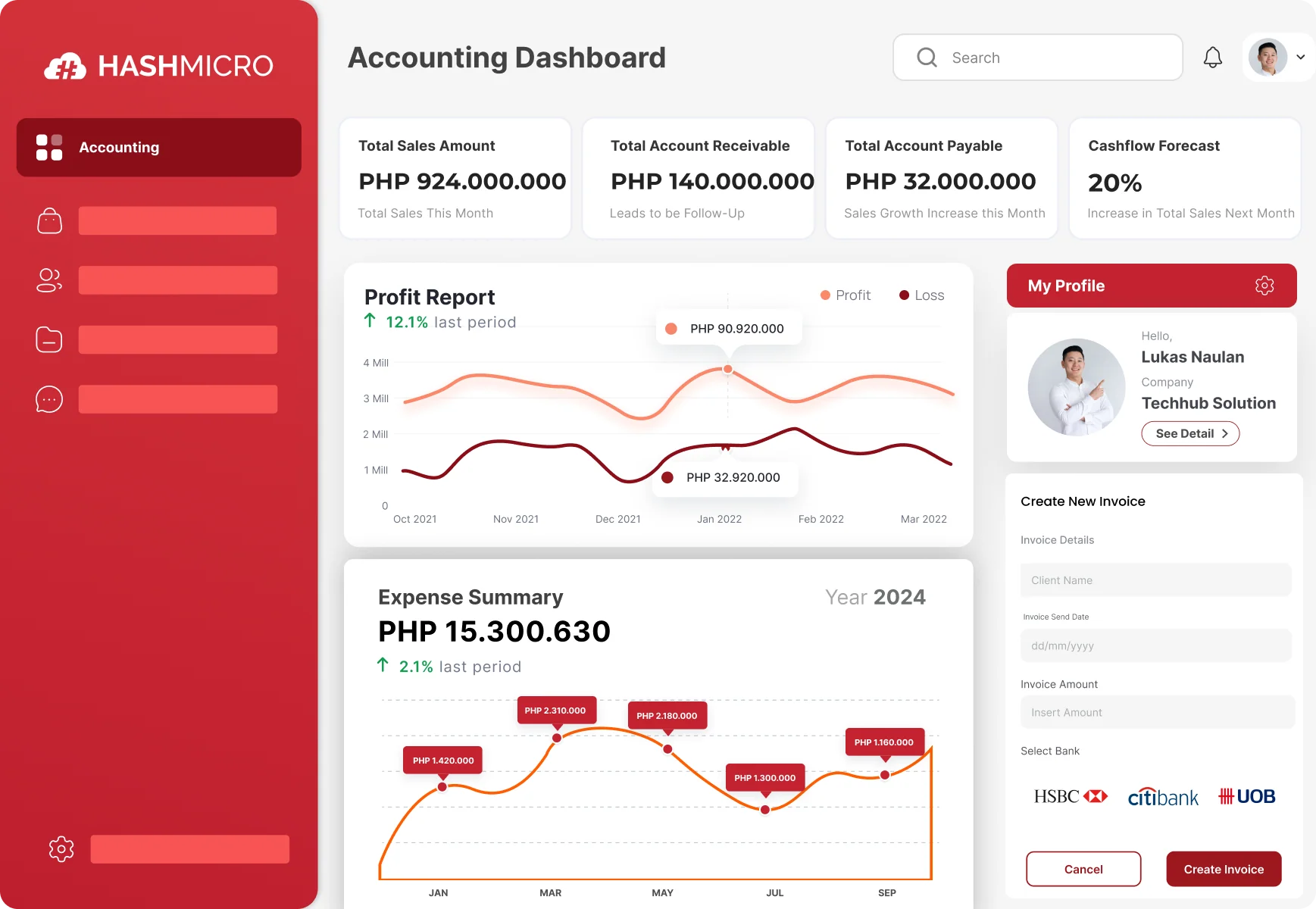
HashMicro Accounting Software speeds up transaction processing, reduces human error, and delivers accurate real-time data. It also supports automated approvals, clear audit trails, and seamless module integration for transparent recording.
With full integration across accounting, inventory, purchasing, and sales, data flows smoothly between teams. This gives end-to-end visibility and helps you stay audit-ready by backing decisions with up-to-date information.
Key Features of HashMicro’s Accounting Software:
- Centralized Document Management: Securely stores all financial documents like invoices, receipts, and contracts in a single, easily accessible digital repository, eliminating lost paperwork and speeding up data retrieval for auditors.
- Automated Bank Reconciliation: Automatically matches transactions from bank statements with entries in your general ledger, drastically reducing manual effort and ensuring your financial records are consistently accurate and reconciled.
- Real-Time Financial Reporting: Generates comprehensive financial reports, including balance sheets, income statements, and cash flow statements, in real-time, providing management and auditors with an accurate snapshot of the company’s financial health at any moment.
- Comprehensive Audit Trail: Captures a detailed, unalterable log of every transaction, including user actions, timestamps, and modifications, ensuring full transparency and traceability to meet stringent compliance requirements.
- Integration with Other Modules: Seamlessly connects with inventory, purchasing, sales, and HR systems to ensure data consistency across the organization, eliminating data silos and providing a holistic view of business operations.
With HashMicro, your company can significantly improve operational efficiency, data transparency, and business process automation. To see how our solution can concretely help your business, do not hesitate to try the free demo now.
Conclusion
Effective audit preparation is the backbone of transparent governance and reliable reporting. With a structured checklist and consistent routines, you can reduce last-minute stress and close with confidence.
To make the process even smoother, HashMicro Accounting Software centralizes your financial data, automates key workflows, and keeps an audit-ready trail of transactions. This helps your team minimize errors, speed up reconciliations, and stay compliant without extra manual effort.
If you want to simplify your next close and walk into an audit fully prepared, explore the full guide and checklist. Try a free demo of HashMicro Accounting Software to see how it supports faster, cleaner, audit-ready financials.
FAQ About Audit Preparation
-
How long does audit preparation take?
The time required for audit preparation varies by business size and complexity, but it typically ranges from a few weeks to several months. Starting the process at least one quarter before the audit is a common best practice.
-
What is the main difference between internal and external audits?
Internal audits are conducted by a company’s own employees to improve internal processes and controls, with reports intended for management. External audits are conducted by an independent firm to provide an objective opinion on financial statements for external stakeholders such as investors and regulators.
-
What are the consequences of a failed audit?
The consequences can be severe, ranging from a loss of investor confidence and difficulty securing loans to regulatory penalties and legal action. A failed audit can also damage a company’s reputation and may indicate significant internal control failures or financial misstatements.
-
Do small businesses need to prepare for an audit?
Yes, absolutely. Even if not legally required, preparing for an audit helps small businesses maintain accurate financial records, identify operational weaknesses, and build credibility with lenders and potential investors. It establishes good financial hygiene early on.