










 Limited to 100 registrants

An attendance management system is a digital tool that automates time tracking, reduces manual errors, and improves payroll accuracy. Still using manual attendance? It can cause payroll losses of up to 7% each year.
Manual attendance processes often lead to discrepancies, miscalculations, and unnecessary administrative work. Inaccurate time data can create payroll disputes, require frequent corrections, and reduce overall operational efficiency across departments.
With automated tracking, real-time reporting, and payroll integration, businesses can streamline HR operations while maintaining accurate and transparent records. A structured digital system allows teams to work faster and more efficiently.
Key Takeaways
An AMS system could help companies to accurately track work hours, ensuring fairness, saving time and money, and contributing to employee satisfaction.
Switching to an attendance management system presents significant benefits despite the initial challenges of adaptation, data security, and system integration.
HR Management software solution is the one-stop solution to solve your employee attendance management issues.
What is Attendance Management System
Attendance management system is a smart tool that tracks employee work hours, records attendance, manages time tracking, and streamlines payroll. Using technologies like fingerprint scans ensures accurate timekeeping and prevents payroll errors.
This system helps businesses by automating overtime calculations, monitoring breaks, and ensuring compliance with labor laws. It reduces administrative workload and provides a clear view of employee schedules, improving workforce planning and efficiency.
With attendance management system, companies can ensure fair treatment for all employees. Without it, businesses risk payroll mistakes, overpaying for unworked hours, and even legal issues due to labor law violations.
Benefits of Attendance Management System

Using an employee attendance management system is like having a super-smart assistant who never forgets who showed up for work and when. This HRM software is a big help for businesses because it keeps track of everyone’s hours accurately.
Here’s why it’s such a good idea:
- Save money: By being so accurate, these systems help businesses save money. They only pay for the hours that were worked, which means no extra costs because of mistakes.
- No more guesswork: With this system, businesses don’t have to guess or spend a lot of time figuring out how many hours everyone worked. It’s all recorded automatically, which means the numbers are always right.
- Saves time: Think about all the time spent writing down when people come and go and then adding it all up at the end of the month. An attendance management system does all that in a snap, so there is no more wasting hours.
- Fair play: When a machine keeps track of time, it’s fair for everyone. No one can say they worked more or less because the system treats everyone the same.
- Law compliance: Non-compliance with labor laws due to inaccurate attendance tracking can lead to legal issues and penalties. An automated system helps you stay compliant and audit-ready.
- Happy workers: When employees see that their time and hard work are being counted right, they feel better about their jobs. Happy workers are usually better workers.
When Should Businesses Implement an Attendance Management System?
Businesses should consider adopting an attendance management system when manual tracking begins to cause delays and errors, if you’re spending too much time correcting timesheets or struggling to monitor employee presence.
As your business grows, attendance tracking naturally becomes more complex. HRIS software can manage larger teams and ensure accurate time records. This not only saves money but also frees up hours that managers can use for more critical tasks.
If managing attendance disrupts daily operations, switching to an automated system is a practical solution. To learn more about the advantages it offers, you can read our article on the key benefits of an workforce attendance solution.
Types of Attendance Management System
When it comes to tracking employee work hours, businesses have several different types of attendance management systems to choose from. Each type has its perks and can fit different kinds of companies.
- Manual system: This is the old-school way, where people sign in on paper sheets or punch in with time cards. It’s simple, but it can be a lot of work to keep up with and easy to mess up.
- Biometric systems: These use things like an employee’s fingerprint or face to check them in. For example, the face recognition feature in HashMicro’s HRM software makes it super hard for someone to clock in for someone else.
- RFID systems: This system uses radio waves to detect personal tags when employees pass by a reader, automatically recording their entry and exit times for accurate attendance tracking.
- Online systems: They let you clock in from a computer or phone, which is perfect for people who work from different places.
- GPS-based system: This one uses your phone’s GPS to see where you’re working from, which is great for people who are always on the move.
- Software-based systems: These are the modern choices and use cool tech to make everything automatic. They can use digital clocks, fingerprint scans, or even apps on your phone.
Key Elements of Attendance Management
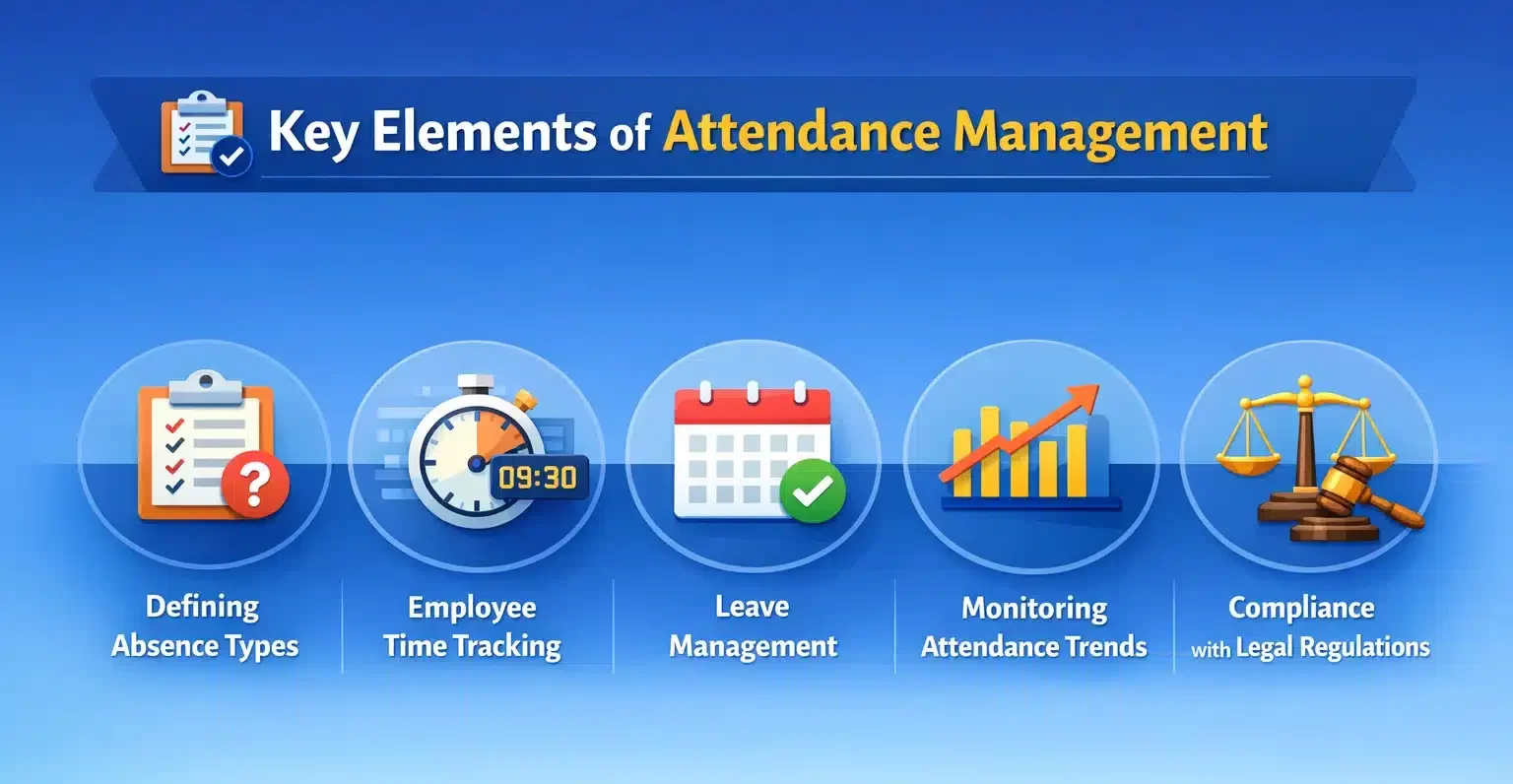
Effective attendance management is crucial for any organization looking to streamline operations and maintain productivity. By keeping track of employees’ work hours, absences, and time off, businesses can ensure smooth functioning.
Here are the key elements that contribute to a well-structured attendance management system:
-
Defining Absence Types
Attendance management begins with clearly defining various absence categories such as sick leave, vacation days, and other types of leave. This helps categorize and manage employee absences more efficiently.
-
Employee Time Tracking
Monitoring and recording employee working hours, punctuality, overtime, and absences is a critical element. This data helps ensure accurate payroll processing and adherence to work schedules.
-
Leave Management
An effective system should streamline the management of different leave types like sick leave, personal leave, and annual leave, making sure employees follow organizational policies and keeping the business running smoothly.
-
Monitoring Attendance Trends
Monitoring attendance trends helps identify patterns such as habitual lateness or absenteeism. This insight can be used to address issues proactively and improve overall workforce performance.
-
Compliance with Legal Regulations
Adhering to local labor laws and regulations is crucial. A good attendance management system ensures that the company complies with timekeeping requirements and other legal obligations related to employee attendance.
Challenges in Implementing the Attendance Management System
When businesses decide to switch to an attendance management system or automated rostering software for complex shift scheduling, they’re making a smart move, but it’s not always easy. Here are some challenges they might face:
- Adapting to new technology: One of the biggest hurdles is getting everyone on board with the new system. People are creatures of habit, and switching from a familiar manual process to a digital one can be daunting.
- Cost investment: While an attendance management system can save money in the long run. Businesses need to budget for the software, hardware, and any other tech needed for the system to work smoothly.
- Data security: With attendance records digitizing, safeguarding sensitive employee data becomes a priority. Companies must ensure that their systems are secure against breaches and unauthorized access.
- Integration with existing systems: The new attendance management software needs to work well with the company’s current HR and payroll systems. If it doesn’t, it can create more problems than it solves.
- Training and support: Employees need to be trained on how to use the new system, and ongoing support should address any issues that come up. This requires time and resources.
- Compliance with regulations: Businesses must make sure that their attendance management system complies with local labor laws and regulations. Non-compliance can lead to legal issues and fines.
Even with these hurdles, the benefits of an attendance management system are huge. It can save time, reduce mistakes, and ensure everyone gets paid correctly. So, while it might be a bit of a bumpy road to get there, it’s worth it in the end.
HRM Software As Your Comprehensive Attendance Management System
An attendance management system helps businesses track working hours accurately, reduce manual errors, and support payroll processes more efficiently. With automation and system integration, HR teams gain better visibility without relying on manual follow-ups.
Modern attendance software is also designed to be flexible. It can adapt to different work patterns, integrate with existing HR or payroll systems, and scale as operational needs grow.
In practice, HRIS attendance management from HashMicro is used by companies across manufacturing, retail, and services to centralize attendance data, generate real-time reports, and pass accurate records directly into payroll, helping reduce corrections and disputes.
"Implementing an attendance management system strengthens accuracy, transparency, and compliance, key factors that directly improve workforce productivity and organizational efficiency."
Conclusion
An attendance management system automates time tracking, reduces errors, and keeps payroll accurate. It also helps prevent time theft, minimize administrative workload, and support compliance through more organized and reliable records.
Although implementation may require initial training and system integration, the long-term benefits outweigh the adjustment period. Businesses can reduce payroll disputes and gain clearer workforce visibility through real-time attendance reports.
If you need guidance in choosing the right setup or planning the rollout, you can consult with our team for free, with no commitment. Proper planning ensures a smoother transition and faster results for your HR operations.
FAQ about Attendance Management System
Geotagging helps ensure employees mark their attendance only within specified locations. This feature allows employees to clock in and out from designated areas such as the office, remote sites, or client locations, enhancing the accuracy and authenticity of attendance records.
Yes, many attendance management systems offer seamless integration with payroll software. This integration ensures that attendance data is automatically synced with payroll, reducing the risk of errors and manual data entry.
Mobile attendance apps let remote employees clock in and out on their smartphones, offering flexibility and convenience. These apps often include features such as geofencing, which ensures employees are within a designated area when marking their attendance. Additionally, mobile apps can offer real-time updates, shift scheduling, and leave management.
Common attendance issues include absenteeism, tardiness, and unauthorized absences. Employers can address these issues by clearly communicating attendance policies, implementing robust tracking systems, and identifying patterns through detailed analytics. Offering incentives for good attendance, providing support for personal issues, and using progressive discipline for repeat offenders can also help manage attendance problems effectively.
Biometric attendance systems provide features such as fingerprint and face recognition to accurately track employee attendance. These systems eliminate the need for manual entry, reducing errors and fraud. They also offer real-time data access, cloud storage, and integration with other HR functions.