














Month-end closing is often the toughest time for finance teams because so many tasks must be finished fast and accurately. Without a structured process, reconciliations drag on, errors slip in, and deadlines create unnecessary pressure.
When the close is delayed or inaccurate, reporting becomes unreliable and decision-making suffers. A modern accounting software solution helps standardize workflows, automate routine steps, and keep financial data consistent across the cycle.
In this guide, you’ll learn how month-end closing works and how to run it with a practical checklist and best practices. Keep reading to streamline your close and turn it into a more strategic, insight-driven process.
Table of Contents

Key Takeaways
|
What Is Month-End Closing?
Month-end closing is a set of accounting procedures done at the end of each month to review, verify, and reconcile all transactions. The goal is to close the books by ensuring records are accurate, complete, and compliant before financial reporting.
It acts as a checkpoint to protect the integrity of your general ledger and produce reliable monthly financial statements. With accurate reports like the income statement, balance sheet, and cash flow statement, management can evaluate performance and make better decisions for the next period.
Why Is an Accurate Month-End Closing Process Crucial for Business?
Having an accurate and efficient month-end closing process is a strategic pillar supporting the business’s overall health and growth. Here are some of the primary reasons why an accurate month-end closing process is crucial for your business’s success.
- For strategic decision-making
Accurate month-end reports give leaders a clear view of profitability, costs, and cash position, enabling them to make decisions based on facts. Without reliable numbers, resource allocation and investment choices become slower, riskier, and more complex to justify. - To maintain investor and stakeholder trust
Consistent, timely financial statements show the business is well-managed and financially controlled. Inaccurate or frequently revised reports can damage credibility and make fundraising, credit approval, or board alignment more difficult. - For regulatory compliance and audit readiness
A disciplined close supports strong financial compliance by ensuring taxes and financial reporting are calculated correctly, reducing the risk of penalties. It also keeps documentation audit-ready, so audits become faster and less disruptive. - To improve budget management and forecasting
Month-end actuals enable variance analysis, helping teams understand where performance deviates from the plan and why. With clean historical data, forecasts become more accurate, and budgets can be adjusted with confidence. - To identify financial issues early
Regular reconciliation and review help identify warning signs such as margin erosion, unusual expense spikes, or tightening cash flow before they escalate. Early detection gives management time to act quickly and protect financial stability.
The Month-End Closing Checklist

To ensure the month-end closing process runs smoothly, is structured, and is comprehensive, it is essential to have a clear checklist that is followed consistently every month. Here is a step-by-step guide that can be adapted to fit the needs and complexity of your business.
Phase 1: Preparation Before Month-End
This phase sets the close-up for success by collecting key documents early and reducing last-minute surprises. The goal is to lock in timely inputs, align deadlines across teams, and make the first week of closing faster and cleaner.
- Preliminary data collection: Gather outstanding invoices, purchase orders, expense claims, and supporting documents from all departments before the cutoff date.
- Early transaction recording: Record routine and high-value transactions throughout the month and run early checks on low-activity accounts to spread the workload.
Phase 2: The Closing Process During the First Week
This is the core execution phase, where finance finalizes entries, reconciles key accounts, and posts adjustments to ensure the books accurately reflect the prior month. The focus is on completeness and accuracy in the general ledger before any reporting is finalized.
- Record all transactions AP and AR: Ensure all prior-month sales invoices and vendor bills are posted correctly with no missing or duplicate entries.
- Bank and credit card reconciliation: Match ledger cash and card activity to statements, then investigate and resolve any discrepancies.
- Fixed asset management depreciation: Post depreciation and record any asset additions, disposals, and related gains or losses for the month.
- Inventory review: Validate ending inventory quantity and valuation, then adjust for obsolescence, damage, shrinkage, or count variances.
- Accruals and prepayments adjustments: Post accruals, deferrals, and prepaid allocations, ensuring proper period recognition and accurate tax deduction treatment where applicable.
Phase 3: Review and Reporting After Closing
This phase converts finalized numbers into decision-ready insights through reviews, comparisons, and clear reporting. The goal is to validate quality, explain performance drivers, and distribute reports that stakeholders can act on.
- Financial statement review: Generate draft statements and review them for anomalies, unusual movements, and consistency versus prior periods or the budget.
- Variance analysis: Compare actuals to budget and prior months to explain material differences and identify root causes.
- Final report generation and distribution: Finalize statements, add an executive summary with key insights, then distribute them to relevant stakeholders.
Common Challenges in the Month-End Closing Process
Although month-end closing is a routine process, many companies, especially those still relying on manual methods, face the same set of challenges every month. Here are some of the most prevalent challenges companies face during the month-end closing process.
- Manual data entry and human error
Manual re-entry across spreadsheets increases the risk of typos, formula errors, and missing transactions, which delay the close. The solution is to automate postings and validations with accounting software, plus use standardized templates and approval checks to catch errors early. - Disconnected systems and data silos
When sales, inventory, and finance systems don’t connect, teams waste time exporting data and reconciling mismatched numbers across departments. The solution is to integrate systems through an ERP or a unified platform so that data flows in real time and reports pull from a single, consistent source. - Lack of a standardized process
Without clear SOPs, month-end tasks become inconsistent, leading to duplicated work, missed steps, and difficulty onboarding new team members. The solution is to document a repeatable closing checklist with clear owners, deadlines, and controls so every close follows the same workflow. - Time pressure and tight deadlines
Tight closing windows force teams to rush reconciliations and approvals, which increases errors, rework, and burnout. The solution is to shift work earlier with a close calendar, automate routine tasks, and set pre-close milestones to reduce last-minute bottlenecks.
How Automation Streamlines the Month-End Closing Process
Facing the numerous challenges in the month-end closing process, many modern companies are turning to automation as a strategic solution to enhance efficiency, accuracy, and speed. Here is how automation can directly address the key challenges of month-end closing.
- Centralized data and a single source of truth
Automation streamlines month-end closing by centralizing sales, inventory, and finance data into one system, eliminating data silos and duplicate entries. With a single source of truth, transactions flow automatically across modules, so reports are built on consistent, up-to-date numbers. - Automated reconciliation and journal entries
Automation speeds up reconciliation by matching bank transactions to ledger records and flagging only exceptions for review. It also automates recurring journal entries like depreciation and prepaid amortization, reducing manual work and keeping postings consistent every month. - Real-time reporting and analytics
With real-time data updates, teams don’t need to wait until month-end to understand performance or chase missing numbers. When closing starts, financial statements and dashboards can be generated quickly, allowing more time for analysis instead of spreadsheet consolidation. - Enhanced compliance and audit trails
Automated workflows create a complete audit trail that records who did what, when, and why, making reviews more transparent and controlled. This improves compliance readiness and simplifies audits because supporting documents, approvals, and changes are tracked in one place.
Best Practices for an Efficient Month-End Closing
An efficient month-end closing process requires disciplined best practices focused on standardization, clear communication, and continuous improvement. When applied consistently, these habits reduce stress, minimize errors, and speed up the delivery of reliable financial insights.
The goal isn’t just to close faster, but to close smarter and more accurately with defined roles, a clear schedule, and regular process reviews. Over time, this creates a repeatable framework that strengthens financial control and supports better decision-making.
Optimize Your Month-End Closing with HashMicro’s Accounting Software
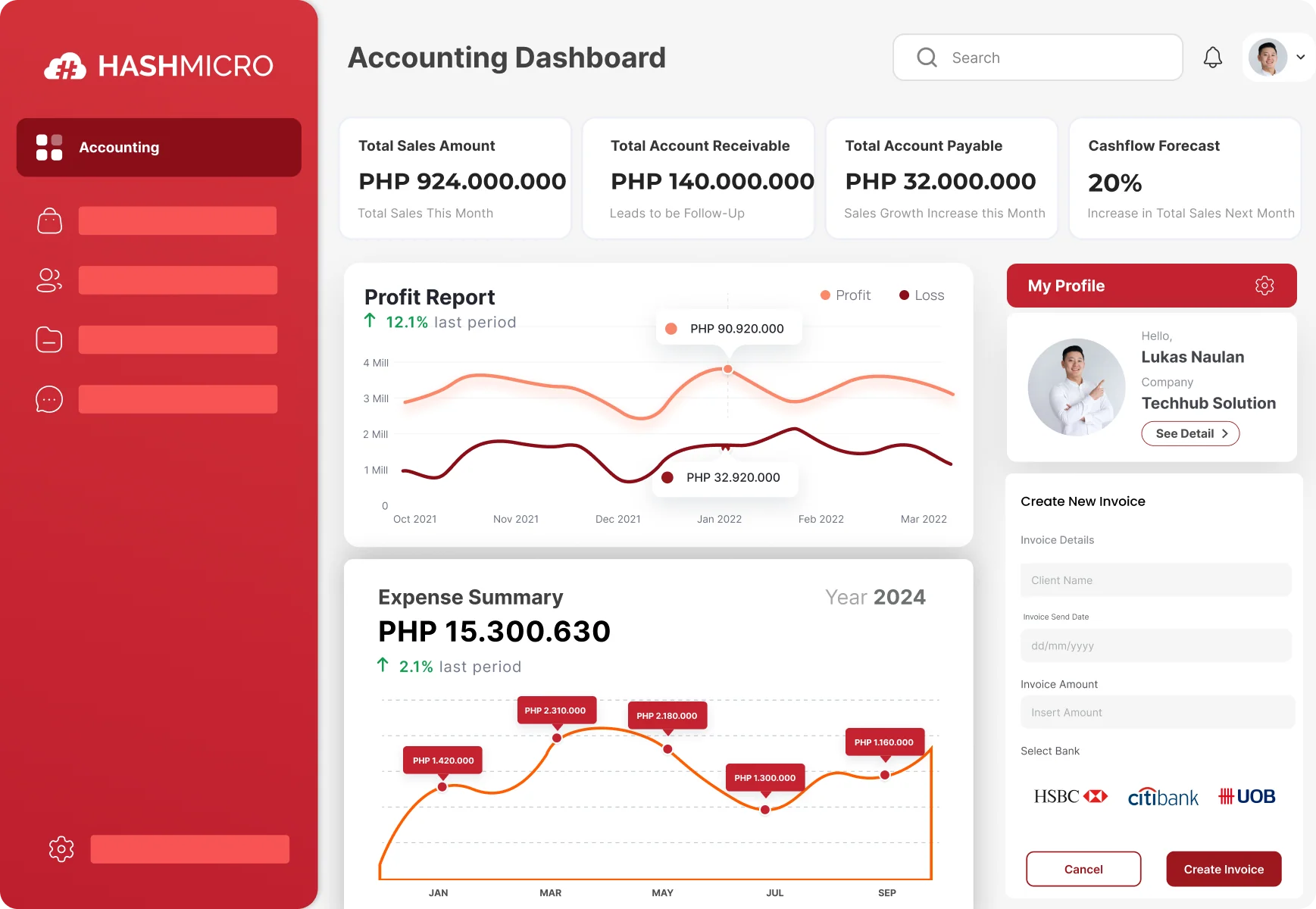
HashMicro Accounting Software processes transactions faster, reduces human error, and obtains accurate data in real-time. The system is equipped with features like automated bank reconciliation, recurring journal entries, and instant financial statement generation.
HashMicro’s system is designed with full integration between modules, allowing data from various departments such as accounting, inventory, purchasing, and sales to connect seamlessly. This provides enhanced visibility into the entire business operation and ensures that every decision is based on accurate and up-to-date information.
Key Features of HashMicro’s Accounting Software:
- Automated Bank Reconciliation: Automatically imports bank statements and matches transactions with general ledger entries, drastically reducing the time and effort required for reconciliation.
- Multi-Level Analytical Reporting: Generates in-depth financial reports at the project or branch level, providing granular insights to support better performance tracking and strategic planning.
- Real-Time Financial Dashboards: Offers customizable dashboards that provide a real-time, visual overview of key financial metrics, enabling quick and informed decision-making.
- Accrual & Amortization Management: Automates the creation and posting of adjusting entries for accrued expenses and prepaid assets, ensuring compliance with accounting principles and improving accuracy.
- Budget and Forecast Management: Facilitates the creation, management, and tracking of budgets, allowing for real-time variance analysis to control spending and improve financial planning.
With HashMicro, your company can enhance operational efficiency, data transparency, and business process automation. To see how our solutions can concretely help your business, do not hesitate to try the free demo now.
Conclusion
Month-end closing is more than a routine accounting task; it’s the backbone of reliable financial reporting. When the process is accurate and on time, leaders can make better decisions and stay compliant with confidence.
HashMicro Accounting Software helps standardize month-end workflows with automation, clearer approvals, and real-time financial visibility. This reduces errors, shortens close cycles, and lets your finance team focus on analysis instead of repetitive admin work.
If you want to simplify your next close and improve reporting quality, explore the complete guide above. Request a free demo of HashMicro Accounting Software to see how it fits your month-end process.
FAQ About Month-End Closing
-
What is the first step in the month-end closing process?
The first step is preparation, which involves gathering all financial documents and recording as many transactions as possible before the month ends to streamline the core closing activities.
-
How long should the month-end closing take?
The timeframe varies by company size and complexity, but a best practice is to aim for completion within 3 to 5 business days. Automation can significantly shorten this cycle.
-
What is a closing checklist?
A closing checklist is a step-by-step list of tasks to complete, such as reconciliation, recording adjustments, and reviewing statements, to ensure a standardized, thorough process.