






Many businesses still rely on traditional supply chain methods that struggle to keep up with today’s operational complexity. Outdated systems often create delays and infrastructure bottlenecks that slow down decision-making and disrupt workflows.
Cloud logistics helps address these challenges by improving coordination and real-time data visibility across supply chain activities. With more connected and flexible systems, companies can respond faster to demand changes and manage operations more efficiently.
By adopting cloud-based supply chain solutions, businesses can reduce operational hurdles, improve efficiency, and stay competitive in an increasingly connected global market.
Key Takeaways
|
Table of Contents
What Is Cloud Logistics?
Cloud logistics is a supply chain management approach that utilizes internet-based computing to track and optimize logistical activities. It centralizes data storage, allowing for real-time access and collaboration without physical servers.
This solution is vital for businesses seeking flexibility and scalability without heavy upfront hardware investments. It suits organizations of all sizes that aim to streamline operations and enhance visibility.
The Future Trends of Cloud Logistics
Cloud technology serves as the foundation for innovations that will redefine supply chain efficiency. These emerging trends promise to create operations that are more autonomous and resilient.
- Artificial Intelligence (AI) and Machine Learning: AI algorithms analyze vast datasets to optimize demand forecasting and route planning autonomously. Machine learning models predict potential disruptions to enable proactive operational adjustments.
- Internet of Things (IoT) for real-time tracking: IoT sensors connect physical assets to the cloud to transmit real-time location and condition data. This technology allows for granular monitoring of final products throughout the entire shipping journey.
- Blockchain technology for transparency and security: Blockchain creates a decentralized ledger that ensures all supply chain records are transparent. It verifies the authenticity of transactions and enhances trust among multiple stakeholders.
- Sustainable logistics: Cloud platforms provide the data needed to measure and reduce the environmental impact of operations. Analytics tools help companies track carbon footprints and optimize routes to minimize emissions.
Types of Systems in the Cloud Logistics Ecosystem
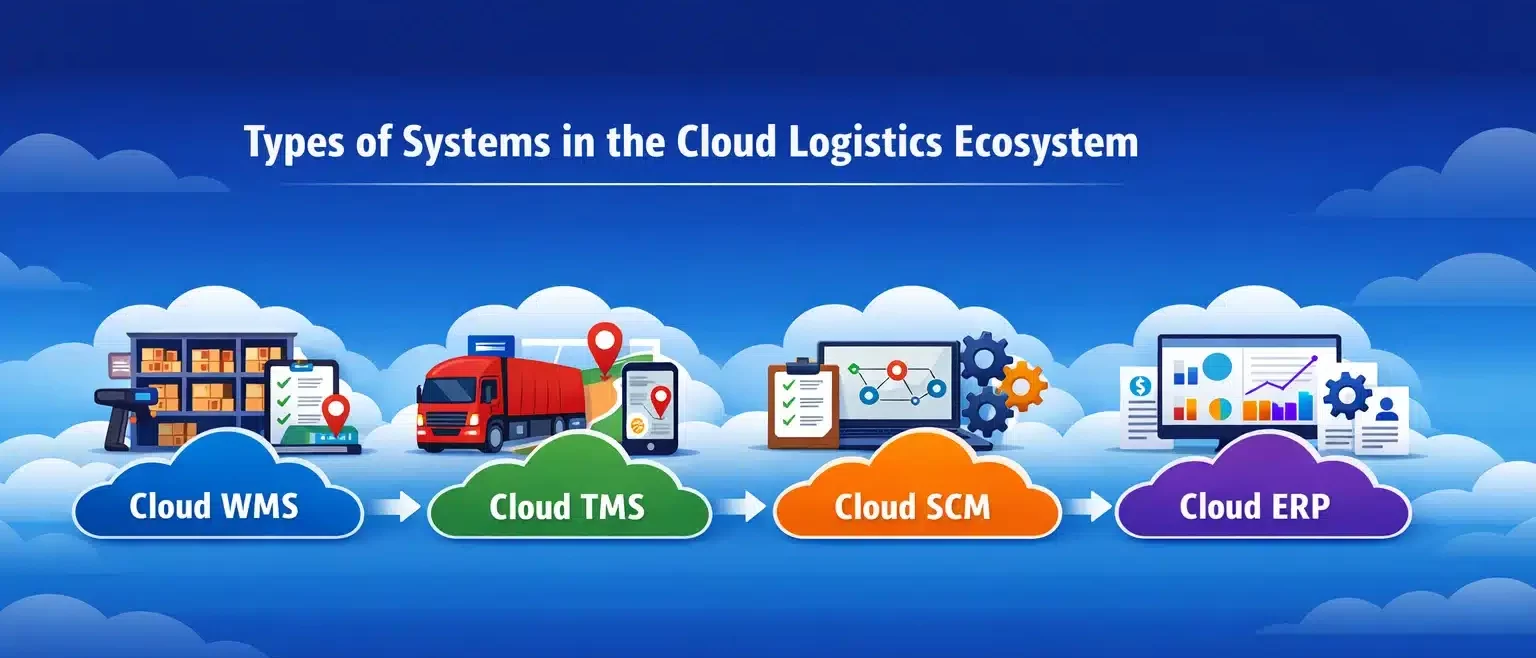
Cloud logistics is an ecosystem composed of interconnected software systems designed to manage specific supply chain functions. Understanding these components helps businesses build a customized infrastructure that fits their needs.
- Cloud Warehouse Management System (WMS): This solution optimizes warehouse operations by tracking inventory levels and locations in real-time via the internet. It digitizes processes from receiving to shipping to ensure accurate stock management.
- Cloud Transportation Management System (TMS): A TMS focuses on automating the physical movement of goods through optimized route planning algorithms. It manages carrier selection and provides real-time tracking for both inbound and outbound shipments.
- Cloud Supply Chain Management (SCM): SCM integrates processes beyond storage and transport, covering demand planning and procurement workflows. It creates a unified platform for managing the end-to-end flow of goods and information.
- Cloud-based Enterprise Resource Planning (ERP): This system connects logistics functions with core business areas like finance and human resources. It acts as a central hub where all operational data flows to ensure organizational alignment.
Why Is Cloud Logistics Important for Modern Business?
Adapting to market changes instantly is crucial for maintaining a competitive edge in today’s digital era. Migrating to the cloud offers the strategic agility required to achieve this efficiency.
- Enhanced end-to-end visibility: Centralized platforms enable stakeholders to monitor every aspect of the logistics software process in real time. This view eliminates information silos and provides a single source of truth for all inventory data.
- Flexible scalability with business growth: Cloud systems allow companies to adjust resource usage quickly based on fluctuating market demands. This agility ensures infrastructure grows with the business without requiring massive capital expenditures.
- Reduction of operational and capital costs: The subscription-based model converts large capital expenditures into predictable retail operational costs. It lowers entry barriers and reduces costs associated with maintenance and physical hardware.
- Improved collaboration between teams and partners: A unified cloud platform acts as a hub where internal teams and external partners share real-time information. This environment ensures everyone aligns with common operational goals.
- Strategic decision-making based on data: These platforms collect vast amounts of information to generate actionable insights through advanced analytics. Managers can analyze trends and forecast demand to make informed decisions that reduce risks.
Challenges and Solutions for Cloud Logistics Implementation

Transitioning to a cloud-based platform involves technical and organizational hurdles that require careful planning. Identifying potential issues early allows companies to prepare effective mitigation strategies for success.
- Data security and privacy: Entrusting sensitive data to a third party raises valid concerns regarding breaches and unauthorized access. Businesses must partner with vendors that adhere to international security standards and offer encryption.
- Integration with legacy systems: Connecting new cloud platforms with existing older software can cause data synchronization errors. Using systems with flexible APIs ensures seamless connectivity and maintains data integrity during the transition.
- Change management and user adoption: Employees accustomed to legacy workflows may resist adopting new digital tools and processes. Comprehensive training programs and clear communication are essential to foster a positive attitude toward the change.
- Choosing the right solution provider: Selecting a vendor without thorough evaluation can lead to implementing a system that lacks necessary features. Companies should assess vendor experience and request demonstrations to ensure the solution aligns with goals.

Effective Steps for Cloud Logistics Implementation
A successful implementation demands a clear roadmap that guides the process from analysis to execution. Following a structured approach minimizes operational disruptions and accelerates the realization of benefits.
- Evaluate business needs and objectives: Analyze current processes to identify inefficiencies and define clear goals for the new system. This step ensures the selected solution directly addresses your specific operational challenges.
- Research and select a vendor: Create a shortlist of providers with industry experience and evaluate their solutions through live demonstrations. Checking customer references helps verify the vendor’s reliability and support standards compliance.
- Plan data migration: Develop a plan to cleanse and transfer existing data to the new platform without loss. Performing trial migrations helps identify potential issues before the full-scale transfer occurs.
- Train the team and manage change: Implement comprehensive training programs tailored to different user roles to ensure proficiency. A strong change management strategy helps employees understand the benefits and adapt to new workflows.
- Test and launch in phases: Conduct thorough testing in a controlled environment to ensure all functionalities work as expected. A phased rollout allows for gathering feedback and refining processes before full deployment.
- Evaluate and optimize continuously: Monitor system performance against defined key performance indicators after the launch to measure success. Regular user feedback drives continuous improvement and helps explore new features for optimization.
Conclusion
Cloud logistics has become a fundamental pillar for modern companies aiming to achieve supply chain excellence. By transforming isolated traditional systems into a connected ecosystem, businesses can improve efficiency and collaboration across operations.
Implementing an integrated digital solution helps centralize critical supply chain functions on a single platform, providing better visibility and control over daily processes. This unified approach allows companies to manage operations more effectively.
Take the next step toward optimizing your business processes by exploring solutions that support cloud-based supply chain management. Schedule a free consultation to discover how cloud logistics can help strengthen your operations.
Frequently Asked Questions
-
What is the main advantage of cloud logistics?
The main advantage is real-time, end-to-end visibility across the entire supply chain. This allows for proactive decision-making, improved efficiency, and enhanced collaboration between all stakeholders.
-
Is cloud logistics secure?
Yes, reputable cloud providers offer robust security measures, including data encryption, multi-factor authentication, and regular security audits, often exceeding the security of on-premise systems.
-
How does cloud logistics differ from traditional logistics?
Traditional logistics relies on on-premise servers with high upfront costs and limited access. Cloud logistics is a subscription-based model hosted online, offering global access, scalability, and lower capital expenditure.