














Ever feel like your inventory just disappeared into thin air? Stocktake could be the answer, revealing where your stock is going and how to keep it in check.
This straightforward process can uncover inventory issues, boost profits, and make it easier to manage your stock. Wondering why stocktake is so important? Keep reading to see how it can transform your business!
Key Takeaways
|
Table of Contents
What is Stocktake?

Stocktake is about making sure what you think you have matches what you actually have. Businesses use it to detect gaps in their inventory records, whether caused by data entry errors, misplacements, damage, or theft. When these discrepancies are caught early, they are far easier to address and far less costly to correct.
Beyond error detection, stocktake also gives businesses a clearer view of product performance. Slow-moving items that tie up shelf space and capital become visible during a count, allowing teams to make smarter stock replenishment decisions rather than relying on guesswork.
Why is Stocktake Important?
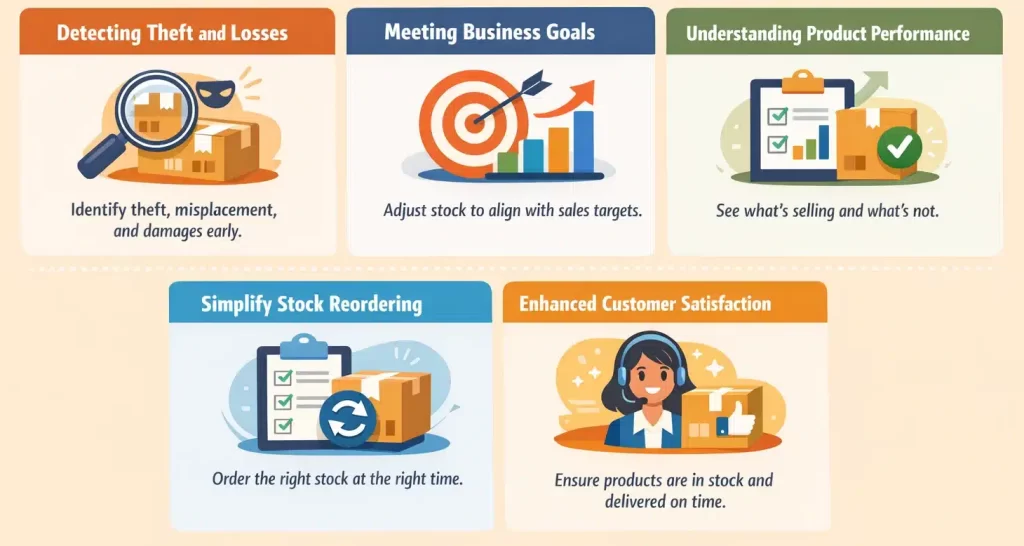
Regular stocktake does more than confirm numbers, it actively supports business performance across several areas.
One of the best things about regular stocktake is that it puts you in control. By tracking your stock accurately, you can prevent overstocking, understocking, and even customer dissatisfaction. Using inventory software will make managing inventory even easier for your business.
Let’s look at the main benefits that make stocktake so useful for staying organized and boosting profits!
1. Detecting Theft and Losses
When inventory counts do not match system records, it is often a sign of theft, misplacement, or damage. Regular checks make discrepancies harder to hide and signal that stock is being closely monitored. Understanding where losses occur also helps businesses strengthen security measures or improve their warehouse tracking processes.
2. Meeting Business Goals
Stock levels that fall short of expectations can indicate underperforming sales or ordering miscalculations. Stocktake surfaces these gaps early, giving teams the information they need to adjust purchasing plans, align stock with sales targets, and keep operations on course.
3. Understanding Product Performance
Stocktake reveals which products move quickly and which sit idle. This visibility helps businesses make informed ordering decisions either stocking more of what sells and scaling back on items that are slow to move, keeping inventory aligned with actual customer demand.
4. Simplify Stock Reordering
With accurate stock data in hand, reordering becomes a data-driven decision rather than an estimate. Businesses can order the right quantities at the right time, avoiding both excess stock that ties up capital and shortages that lead to missed sales or delayed fulfillment.
5. Enhanced Customer Satisfaction
A well-managed inventory means fewer out-of-stock situations and more reliable fulfillment. When customers consistently receive what they ordered without delays, it builds trust and encourages repeat business and making stocktake an indirect but meaningful driver of customer retention.
How Often Should Stocktake be Done?

Finding the right stocktake frequency depends on your business type, the products you sell, and how often your stock moves. If you handle fast-selling or seasonal items, stocktaking every 1–3 months helps you stay on top of demand.
For smaller businesses or those with slower-selling products, an annual or semi-annual check may be enough. Frequent stocktakes give you more control over changing inventory, while less frequent checks work for businesses with stable stock.
The key to effective stocktake isn’t just frequency but also consistency. Making it a regular routine keeps your inventory accurate, showing you exactly what’s in stock and helping you spot trends over time. This consistency means fewer surprises, better planning, and a well-organized inventory that aligns with your goals.
Conclusion
Stocktake is a straightforward but high-impact practice that helps businesses stay in control of their inventory, protect against losses, and make better operational decisions. When done consistently and with the right process in place, it supports everything from accurate financial reporting to day-to-day customer satisfaction.
For businesses looking to build on that foundation, exploring purpose-built tools can make a significant difference. A good place to start is reviewing the available inventory management software options designed to automate stock counts, flag discrepancies in real time, and keep records consistently accurate.
FAQ Around stocktake
-
What is stocktake and what does it mean?
Stocktake is the process of physically counting and verifying inventory against recorded data. It helps businesses identify discrepancies, prevent losses, and maintain accurate stock records, making it a critical routine for operational and financial control.
-
What does a stocktake assistant do?
A stocktake assistant supports the counting and recording process during inventory checks. Their role typically includes physically counting items, logging quantities, flagging discrepancies, and ensuring the count runs efficiently either manually or using a stocktake app or scanning tool.
-
What is a stocktake app and how does it help?
A stocktake app is a digital tool that streamlines the inventory counting process by replacing manual tallies with barcode or QR code scanning. It reduces human error, speeds up the count, and syncs data directly with inventory records making the entire process faster and more accurate.
-
What is a stocktake audit?
A stocktake audit is a formal review that compares physical inventory counts against system records to verify accuracy and compliance. It is often conducted at the end of a financial period and helps businesses identify losses, correct discrepancies, and ensure their inventory reporting meets internal or regulatory standards.