












Profit loss and delayed launches usually stem from a simple disconnect between departments. In the Malaysian market these errors do more than just waste cash they kill the competitive edge built over years.
Unified data gives leadership the clarity to move faster. Based on LDHN statement, digital tools simplify tax duties for Lembaga Hasil Dalam Negeri Malaysia and ensure total compliance. This setup removes the silos that often slow down production.
Ignoring these operational gaps only gives rivals an opening to take the lead. Adopting a integrated supply chain management system is the most direct way to scale up without losing quality. Finish this guide to learn how to fix the broken links in the chain.
Key Takeaways
|
Connect design to delivery with advanced logistics tools for total transparency in Malaysia. Eliminate silos and scale your business with expert guidance.
What is Product Lifecycle Management?

Product Lifecycle Management (PLM) is a strategic framework that tracks a product from the initial concept to the final warehouse floor. It centralizes all technical development data to ensure information flows accurately across the entire business, eliminating the risks of vital details getting lost in manual spreadsheets or disconnected folders.
Implementing an advanced digital management platform provides the total transparency required to scale an enterprise, as product details directly impact everything from procurement to final sales. This centralized approach allows every department to access live information, preventing costly operational mistakes while ensuring strict compliance with SST and LHDN MyInvois requirements in Malaysia.
The Five Essential Stages of Product Lifecycle Management
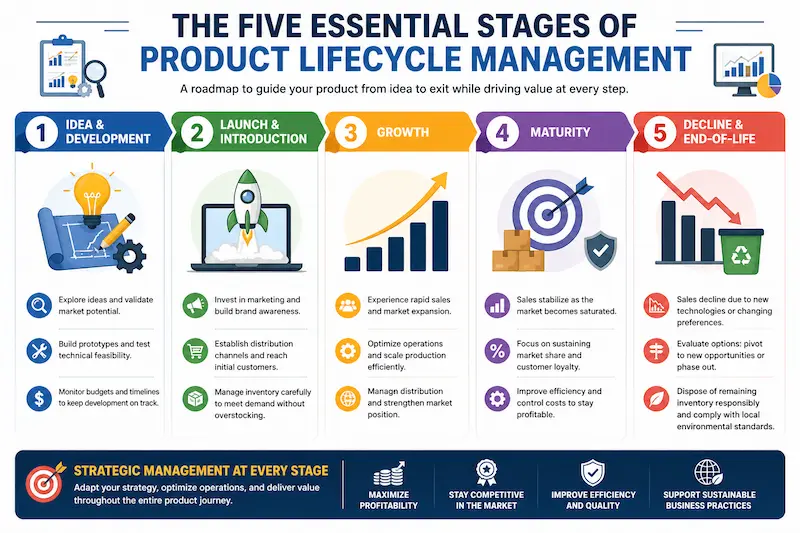
Maximizing profitability requires a deep understanding of the specific stages a product moves through. Every phase brings different obstacles that need tailored leadership strategies to keep the output relevant in a shifting market.
1. Concept and Development
This initial stage focuses on testing new ideas to make sure the market actually wants the product. During this phase designers build prototypes while the leadership team maintains strict oversight of development costs to keep the timeline on track.
2. Introduction to Market
Launching the product involves heavy investment in distribution and brand awareness. The primary goal is establishing a solid market presence while ensuring the supply chain delivers the right inventory levels without overstocking.
3. Growth Phase
Successful launches lead to a rapid increase in sales and consumer awareness. The focus now turns to refining manufacturing processes and expanding distribution to maintain a competitive edge as new rivals enter the field.
4. Maturity Phase
As the market becomes saturated sales growth naturally levels off. At this point the objective shifts to protecting market share and improving supply chain efficiency to offset price competition.
5. Decline and End-of-Life
Technological shifts or changing consumer tastes eventually lead to a drop in sales. The organization must then decide to either pivot to new markets or manage the final inventory responsibly to meet local environmental standards in Malaysia.
Why PLM Matters for Supply Chain Efficiency
Connecting the design phase directly to delivery allows a business to move with a speed that manual systems cannot match. This alignment across the organization removes the friction that usually slows down production and helps the company outpace rivals.
Enhanced Time to Market
Centralizing data and automating everyday tasks removes the slow handovers between different departments. When engineering and manufacturing teams work together in real time the product reaches the market much faster. This approach helps the business seize new sales opportunities while the competition is still stuck in planning.
Improved Product Quality and Compliance
Fragmented data often leads to inconsistent quality and missed safety standards. Keeping every version of a design documented ensures the final item meets Malaysian regulatory requirements such as SST or SIRIM guidelines. A clear audit trail proves that the company follows strict safety protocols which is essential for industries like electronics or food production.
Cost Reduction and Resource Optimization
Spotting waste early in the cycle prevents expensive mistakes once the factory line starts moving. Teams can use live data to select materials that are high quality yet cost effective and available from local suppliers. By fixing the parts list early on, the company avoids the high cost of redesigns or expensive last minute parts sourcing.
Technical Components of PLM Systems
A functional system uses several modules to keep the product data moving. Selecting the right mix of these tools is the best way to support the specific goals of the business.
Product Data Management (PDM)
PDM acts as the main storage for every blueprint and technical drawing. It handles version control so the team always works on the latest design preventing expensive mistakes on the factory floor caused by using the wrong files.
Bill of Materials (BOM) Management
The BOM serves as the master recipe for the product listing every raw material and part needed. Using an accurate digital parts tracking system helps sync procurement with production while staying compliant with SST requirements in Malaysia.
Change Management and Workflow Automation
Products change often and these modules track every revision along with who signed off on them. Digitized task sequences route these requests to the right people for approval so the office stays organized without constant manual follow ups.
Quality and Compliance Modules
These tools build safety standards directly into the development cycle. The business can track local regulatory filings and quality reports moving from fixing problems after they happen to preventing them during the design phase.
The Difference Between PLM and ERP
Leadership teams often struggle to distinguish these systems despite their separate roles in the production cycle. Understanding how each platform operates is the most effective way to guide a product from the initial sketch to the final warehouse floor.
To clarify their specific roles, here is a direct look at what each system actually does:
- PLM (Product Lifecycle Management) is the platform that handles the specific technical design and innovation. Its main function is to define the exact product blueprint. The cycle for PLM starts long before mass production, serving as the dedicated workspace where engineering and creative teams finalize the product details.
- ERP (Enterprise Resource Planning) system is the platform that manages the broader financial costs and logistics in Malaysia. Once the design moves toward order fulfillment, the ERP takes over. Its main function is to track the actual purchase of materials to keep the business running and ensure that all financial transactions stay compliant with LHDN MyInvois requirements.
Connecting these stages is vital for maintaining an accurate parts list. By linking these systems through an advanced digital management platform, businesses prevent information gaps between the creative teams and the operational staff. A unified setup ensures that every design update translates directly into a production order without any manual data entry errors.
Implementation Strategies for PLM
Moving to a digital system is a major step that goes beyond a basic software setup. Following an effective digital transformation roadmap ensures the transition stays on track while meeting Malaysian business standards for operational transparency:
-
Review Current Operations: Locate the manual silos and slow processes that block the current development cycle.
-
Determine Key Targets: Decide if the main goal is to lower production costs or to improve the quality of the final output.
-
Choose a Gradual Release: Starting with a small pilot project allows the team to fix minor issues before a full scale launch.
-
Clean and Organize Data: Standardizing information before the migration is the only way to maintain high accuracy.
-
Focus on Staff Readiness: Providing constant support helps the entire office embrace these new tools for long term success.
Key Challenges in Product Lifecycle Management
Many leadership teams struggle when digital tools fail to meet expectations because they overlook the human side of change. Identifying these hurdles early helps the business avoid wasted investment and keeps the factory moving.
Prioritizing Strategy over IT Setup
The biggest error is seeing this setup as a simple software install instead of a core business move. Automating a messy process only makes mistakes happen faster and costs more in the long run. Real success requires fixing the way the team works before turning on the new tools to ensure a smooth digital business transformation in Malaysia.
Over-Customization
Platforms today are flexible but forcing them to copy old manual habits creates a messy interface. This makes future updates harder and ruins the user experience. It is usually smarter to follow standard best practices and adjust internal workflows to match the system.
Neglecting the Supply Chain
Most products involve outside vendors so keeping the system behind the office walls is only half effective. Failing to share data with suppliers leads to version errors and production delays. A true centralized supply chain network connects the whole value chain to a single source of truth.
Underestimating Data Security
Moving to the cloud makes intellectual property a target for digital theft. Ignoring secure data access protocols in Malaysia can put the most valuable designs at risk. Leadership must prioritize high level cybersecurity measures like multi factor authentication to protect company assets.

Sustainability and the Circular Economy
Modern business leadership now includes a heavy focus on environmental impact to meet both consumer and regulatory demands. Managing the green lifecycle means choosing sustainable materials and designing for energy efficiency to simplify a product final disposal.
A sustainable system needs accurate data to help companies recycle and reuse old stock effectively. Having a transparent material tracking system acts as a digital passport for every item making it easier to reclaim value from old stock while reducing the overall environmental footprint in Malaysia. This strategic move helps the planet while opening new ways to earn revenue through service based business models.
Conclusion
Digital product strategy is now vital for every business regardless of size. Connecting the team from design to delivery ensures agility in the competitive Malaysian market. This setup removes the friction that blocks growth and long term profit.
Future proofing requires syncing these tools with ERP systems to maintain total visibility. This helps the business stay compliant with LHDN MyInvois while building a foundation for growth. Leaders who adopt this digital thread today will define future industrial excellence.
Starting this shift often feels complex without the right path. Consulting an expert can help you build a customized digital business strategy for your specific needs. Get a free consultation today to turn these gaps into a lasting competitive edge.
FAQ About Product Lifecycle Management (PLM)
-
How can businesses manage legacy data without full digital integration?
A phased approach using middleware is often the most effective strategy. This allows older systems to connect with modern platforms, ensuring data accuracy while the company gradually transitions to fully digital processes and reporting standards.
-
Is PLM suitable for businesses with limited budgets?
Yes, many providers offer subscription-based models that reduce upfront investment. Companies can start with critical modules first, ensuring operational stability while gradually expanding capabilities as the business grows.
-
What is product lifecycle management (PLM)?
Product Lifecycle Management (PLM) is the process of managing a product throughout its entire lifecycle, from initial concept and design to production, distribution, maintenance, and retirement. PLM helps businesses organize product data, improve collaboration between teams, and streamline workflows to increase efficiency and reduce errors.
-
What is an example of PLM?
An example of PLM is a manufacturing company using a centralized system to manage product designs, engineering changes, production information, and product updates throughout the product’s lifecycle. By keeping all product-related information in one place, teams can collaborate more effectively and maintain consistency across departments.
-
What are the 5 stages of a product life cycle?
The five stages of a product life cycle are Development, Introduction, Growth, Maturity, and Decline. During development, the product is created and tested. The introduction stage focuses on launching the product to the market. In the growth stage, sales increase as customer awareness grows. Maturity occurs when sales stabilize and competition becomes stronger. Finally, the decline stage happens when demand decreases due to changing market conditions or newer alternatives.