












Urban farming has evolved from a small community activity into a more advanced and productive part of modern agriculture. As urban populations grow, traditional food supply chains face increasing pressure, making urban agriculture a practical solution for providing fresh, locally sourced produce within city environments.
By turning underutilized spaces like rooftops, warehouses, and vacant land into farming areas, individuals and businesses are bringing food production closer to consumers. This approach improves accessibility while reducing dependence on long-distance supply chains.
Today, urban farming also integrates technology and sustainable practices to address challenges such as carbon emissions, urban heat, and resource conservation, which will be explored further in the following sections.
Key Takeaways
|
What Is Urban Farming?
Urban farming refers to the practice of growing food within city environments, where space is limited but the need for fresh produce continues to increase. It enables individuals and communities to cultivate vegetables, fruits, and herbs, as well as raise fish or bees, using spaces like rooftops, balconies, backyards, and even indoor areas.
In recent years, this approach has gained popularity as cities seek more sustainable ways to produce food locally. Driven by factors such as urbanization, climate change, and growing demand for healthier options, urban farming not only improves food security and accessibility but also reduces transportation costs while making efficient use of limited urban space.
Core Methods and Technologies in Urban Agriculture
The success of farming in a dense urban environment relies heavily on specialized cultivation methods that bypass the need for expansive tracts of fertile soil. These methods are designed to optimize space, conserve water, and accelerate plant growth cycles.
1. Hydroponics: Soil-less Cultivation
Hydroponics grows plants without soil by using nutrient-rich water solutions, allowing faster growth and higher yields. Common systems include NFT, DWC, and Ebb and Flow, each suited for different types of crops. This method is highly water-efficient due to its recirculation system and reduces the risk of soil-related pests and diseases, making it a cleaner and more controlled farming option.
2. Aeroponics: The Power of Mist
Aeroponics suspends plant roots in the air and feeds them with a fine mist of nutrients, increasing oxygen exposure and accelerating growth. Its lightweight setup makes it suitable for limited urban spaces like rooftops. Although it requires precise system control, aeroponics offers high efficiency and strong yield potential, making it ideal for advanced urban farming.
3. Aquaponics: Creating Closed-Loop Ecosystems
Aquaponics combines fish farming and plant cultivation in a closed-loop system, where fish waste provides nutrients for plants. Beneficial bacteria help convert waste into usable nutrients. In return, plants filter the water before it is reused, creating a sustainable system that produces both crops and fish with minimal waste and low fertilizer needs.
4. Vertical Farming Systems
Vertical farming is the practice of growing crops in stacked layers within controlled indoor environments, allowing farmers to maximize space and increase yields. Using LED lighting with adjustable intensity and spectrum, this method creates optimal conditions for plant growth, improving crop quality, nutrition, and growth speed.
For those looking to optimize their operations and monitor various environmental variables, implementing smart farming techniques is essential. By utilizing sensor networks and automated systems, urban farmers can ensure that their hydroponic, aeroponic, or vertical setups operate at peak efficiency.
Implementation Steps for Urban Farming Initiatives

Transitioning an urban farming concept into a functional, profitable reality requires a meticulous, phased approach. Whether launching a neighborhood cooperative garden or a commercial indoor vertical farm, following structured implementation steps is crucial for long-term viability.
Step 1: Site Assessment and Regulatory Review
Before getting started, it is important to evaluate your location carefully. Rooftop farms, for instance, require structural assessments to ensure the building can support the added weight of soil and water. In addition, reviewing local zoning laws, building codes, and water regulations is essential, as urban farming activities are often subject to specific legal requirements.
Step 2: Selecting the Agricultural Method
Once the site and budget are clear, the next step is selecting the most suitable farming method. Soil-based systems work well for open spaces like vacant lots, while indoor areas with limited space are better suited for controlled environment methods such as hydroponics, aeroponics, or aquaponics.
Step 3: Financial Planning and Crop Selection
Building a strong financial plan is key to long-term success. Urban farmers should focus on crops with fast growth cycles, high yields, and strong market demand, such as herbs, microgreens, and specialty produce. To secure funding from grants, government programs, or investors, it is important to present a clear plan supported by realistic production estimates and market pricing.
The Environmental and Economic Impact
Urban agriculture has a significant influence on both environmental sustainability and local economies. By producing food closer to where it is consumed, it helps reduce inefficiencies found in traditional farming systems and supports modern agriculture within urban areas.
- Reducing Food Miles and Carbon Footprint
One major benefit of urban farming is the reduction of “food miles,” or the distance food travels before reaching consumers. In conventional systems, food often moves across long distances using transportation that relies on fossil fuels, contributing to high carbon emissions.With urban agriculture, produce can move from farm to market within a much shorter time. This local distribution model lowers emissions from transportation and reduces food waste, as products are less likely to spoil or be damaged during long shipping processes. - Water Conservation and Resource Efficiency
Agriculture is one of the largest consumers of freshwater globally, making water efficiency increasingly important. Urban farming methods like hydroponics and aeroponics use significantly less water by recycling it within closed systems.In addition, indoor urban farms are not affected by changing weather conditions and avoid issues like agricultural runoff. Since nutrients are contained within the system, there is no leakage into nearby water sources, helping protect surrounding ecosystems. - Economic Opportunities and Job Creation
Urban agriculture also contributes to economic growth by turning unused city spaces into productive areas. This can increase property value, encourage investment, and support the development of local businesses.The sector also creates a wide range of job opportunities, from basic operational roles to specialized positions in technology, data analysis, and farm management. As a growing industry, urban farming supports workforce development while promoting environmentally friendly practices.
Urban Farming Challenges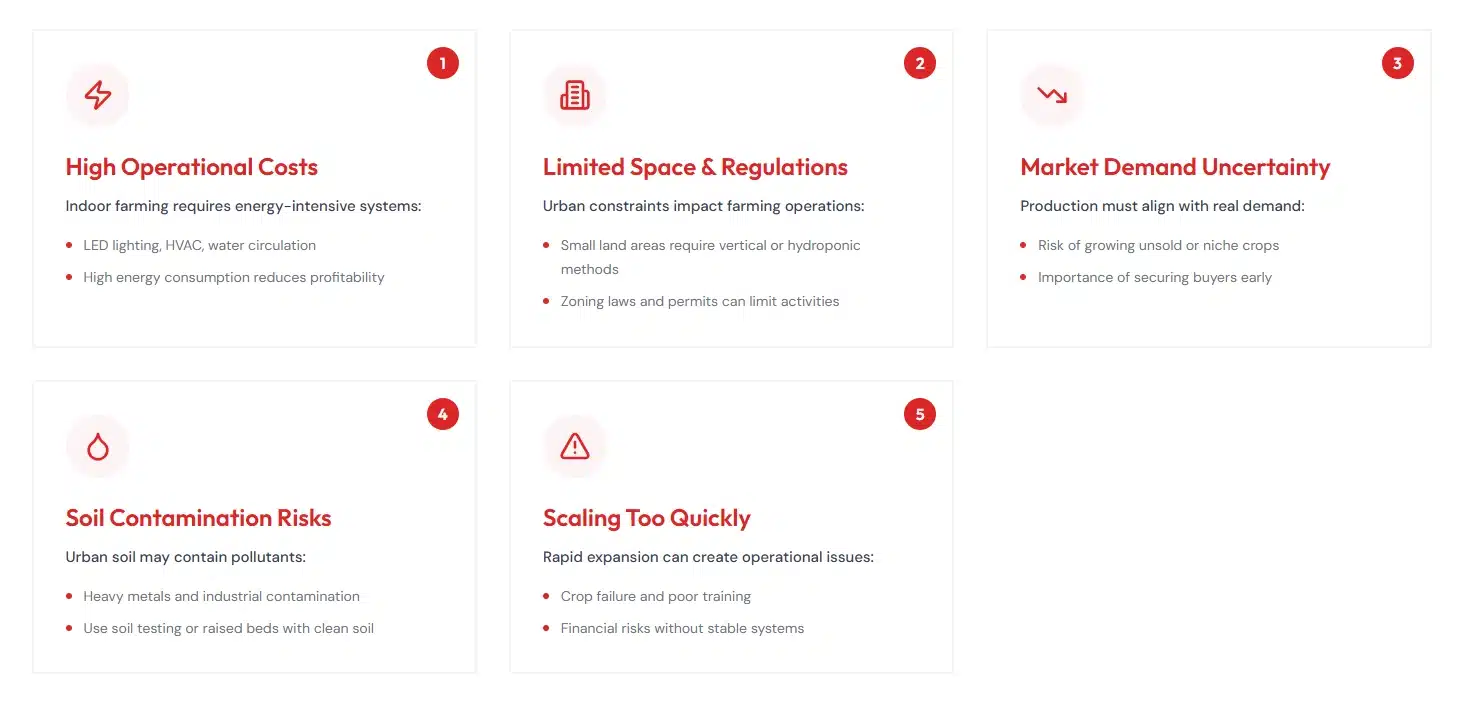
Urban farming offers many benefits, but it also comes with challenges that can affect long-term success.
- High operational cost especially for indoor farms that rely on LED lighting, HVAC systems, and water circulation. Without strong energy efficiency or access to renewable energy, these costs can quickly reduce profitability.
- Limited space and zoning regulations. Since urban land is expensive, farmers must maximize productivity in small areas, which is why methods like vertical farming and hydroponics are becoming more common. On top of that, many cities still have zoning rules that make agricultural activities difficult to run legally, so permits and regulatory compliance can become a major hurdle.
- Market demand. Growing niche or exotic crops without confirmed buyers is a common mistake. To stay sustainable, farmers should first secure demand from restaurants, grocers, or community-supported agriculture programs before starting production.
- Soil contamination is another serious concern. Urban soil may contain heavy metals or industrial pollutants that can make crops unsafe. Because of this, soil testing is essential, and in some cases farmers need to use raised beds with clean soil instead of planting directly in the ground.
- Scale too quickly. Expanding before the system is stable can lead to crop failure, poor staff training, and financial losses. A more effective approach is to grow gradually while improving operations, controlling costs, and building a reliable customer base.
Handling these complex challenges requires reliable management tools. Using advanced agriculture ERP system helps urban farm operators manage finances, track inventory, and coordinate daily operations more effectively, supporting long-term business sustainability.
Supply Chain and Logistics in Urban Food Systems
Producing food within urban areas changes how traditional supply chains operate. While it shortens the distance between farms and consumers, it also creates new challenges related to storage, packaging, and distribution in busy city environments.
- Storage and Distribution Challenges
Even with shorter delivery distances, proper handling after harvest remains essential to maintain product quality and shelf life. Fresh produce needs to be cooled quickly to preserve freshness, which requires access to reliable cold storage facilities either on-site or nearby.
Urban distribution also comes with logistical hurdles such as traffic congestion, limited parking, and strict delivery schedules. To address this, many farms rely on smaller and more flexible transport options like electric vehicles or cargo bikes. Efficient inventory tracking and warehouse management systems are crucial to prevent delays, reduce waste, and ensure fresh products reach local markets and restaurants.
- Direct-to-Consumer Models
Urban farming supports direct-to-consumer models, allowing producers to sell directly to customers without relying on traditional distributors. This can include subscription programs, online sales, or on-site markets, helping farmers increase profit margins.
In addition, many urban farms work closely with local restaurants and chefs. By growing specific crops based on demand, such as microgreens or specialty produce, they can offer fresher and more customized options compared to conventional suppliers, strengthening the local food ecosystem.
Conclusion
Urban farming has proven to be a practical solution to modern challenges such as food security, limited land availability, and environmental sustainability. By utilizing unused urban spaces and adopting innovative cultivation techniques, cities can produce fresh food more efficiently while reducing reliance on traditional supply chains.
As the industry continues to grow, success in urban farming depends on the ability to balance technology, operational planning, and market demand. From choosing the right farming method to managing logistics and ensuring consistent production, every aspect plays a critical role in building a sustainable and profitable operation.
With the right strategy and tools in place, urban farming can become a scalable and future-ready business model. If you’re looking to optimize your operations and improve overall efficiency, join a free demo today to explore how the right solution can support your urban farming goals.
FAQ about Urban Farming
-
How to calculate ROI for commercial urban farming projects?
Compare initial costs (hydroponics setup, LED lights) to revenue from crop sales. A Rp500 million vertical farm investment can break even in 18-24 months with 10 tons annual microgreens yield at Rp50,000/kg, minus 40% operating costs (energy, nutrients). Use 3-year cash flow projections to attract investors.
-
Key KPIs for measuring urban farming business success?
Track yield per m² (20-50 kg/year for hydroponics), water retention (90%+ recirculation), carbon reduction (80% vs. traditional farming), and CAC under Rp10,000 per CSA subscriber. Aim for 95%+ IoT system uptime.
-
Impact of urban farming on commercial property values?
Boosts property value 15-20% by attracting premium tenants and green certifications. Converting empty warehouses to aquaponics raises rental yields 25% for F&B supply chains.
-
Best scalability strategies for expanding urban farms from pilot to full scale?
Start with a 100 m² pilot to test market fit, then add vertical modules gradually. Integrate agriculture ERP for inventory tracking and demand forecasting. Expand via franchises or mall partnerships, targeting 20-30% yearly growth with aquaponics fish for extra revenue.