




People have become the most valuable asset in today’s competitive economy. A company’s success depends on the skills, ideas, and drive of its workforce. Businesses now recognise employees as key drivers of growth, innovation, and long-term success.
This shift has changed how companies manage their people. Instead of focusing only on basic HR tasks, many businesses now take a strategic approach to developing talent. The goal is to support employees throughout their entire journey with the company.
A clear talent strategy helps businesses attract skilled professionals, develop existing staff, and prepare future leaders. When companies invest in their people, they build a motivated workforce that can handle changing market demands.
Key Takeaways
Learn what talent management means and how it helps businesses attract, develop, and retain skilled employees.
Understand how talent management improves retention, productivity, and long-term business growth.
See how talent acquisition focuses on hiring while talent management develops employees throughout their lifecycle.
Explore the essential components including hiring, onboarding, learning, performance management, and workforce planning.
What Is Talent Management?
Talent management is a strategic process businesses use to attract, develop, engage, and retain skilled employees. It focuses on managing people throughout their entire journey with the company, often supported by a structured system for managing talent. The goal is to build a strong workforce that supports long-term business success.
At its core, talent management places the right people in the right roles at the right time. Companies plan ahead by hiring new talent while also developing existing staff. This approach builds a steady pipeline of future leaders and specialists.
Strong talent management also requires support from leadership. Managers must coach teams, give regular feedback, and support career growth. When leaders actively develop their people, the whole business benefits.
The Importance of Talent Management for Businesses
Talent management plays a key role in helping businesses stay competitive. Skilled and engaged employees drive innovation, productivity, and long-term growth. A clear strategy ensures the workforce can adapt to changing market demands.
It also improves employee retention. When companies invest in career development and recognise contributions, employees feel valued. This reduces turnover and keeps valuable knowledge within the business.
Strong talent management also boosts productivity. Employees perform better when their skills match their roles and they receive proper training. Clear goals and regular feedback help teams stay focused on business priorities.
Succession planning is another major benefit. Developing future leaders prepares businesses for leadership changes. This keeps operations stable and shows employees that growth opportunities exist within the company.
Talent Management vs. Talent Acquisition
Talent management and talent acquisition are often confused, but they serve different purposes. Talent acquisition focuses on finding and hiring the right candidates. Talent management focuses on developing and supporting those employees after they join the company.
Talent acquisition covers sourcing, interviewing, and hiring new staff. Teams focus on employer branding, candidate experience, and filling roles quickly with the right people. Once a candidate is hired and onboarded, this process is mostly complete.
Talent management covers the full employee journey inside the business. It includes onboarding, training, performance reviews, engagement, and succession planning. Companies need both functions working together to build and retain a strong workforce.
Key Components of Talent Management
A strong talent strategy relies on several connected elements. Each component helps businesses attract, develop, and retain skilled employees. When these areas work together, companies build a capable and engaged workforce.
Talent Acquisition and Hiring
Hiring the right people is the first step in building a strong workforce. Businesses must actively search for candidates who have the right skills and fit the company culture. A clear employer brand helps attract quality talent.
The hiring process should also be structured and fair. Clear interviews, consistent evaluations, and efficient communication improve decisions. A smooth candidate experience also protects the company’s reputation.
Onboarding and Integration
Onboarding helps new employees settle into their roles and understand how the business operates. A strong onboarding program improves retention and helps employees become productive faster. It should go beyond simple paperwork.
Clear expectations, early goals, and proper tools help new hires succeed. Introducing them to teams and key stakeholders builds confidence. Mentors or buddy systems also help employees adjust quickly.
Learning, Development, and Career Growth
Continuous learning helps employees stay relevant in a changing business environment. Companies should offer training, coaching, and opportunities to build new skills. This supports long-term proficiency management and prepares teams for future challenges.
Career development should also be personalised. Managers can work with employees to plan growth paths that match business needs. When staff see clear progress opportunities, engagement increases.
Performance Management and Succession Planning
Performance management ensures employees stay aligned with company goals. Regular feedback and check-ins help teams improve and stay focused. Progress is often tracked using primary performance indicators rather than relying only on annual reviews.
Succession planning prepares the next generation of leaders. Businesses identify high-potential employees and develop their leadership skills. This ensures stability when key roles become vacant.
Workforce Planning and Talent Lifecycle
Workforce planning helps businesses understand future talent needs. Companies analyse growth plans, industry trends, and skill gaps to prepare their workforce. This keeps the business ready for change.
It also covers the full employee lifecycle from hiring to offboarding. Monitoring each stage helps identify issues and improve processes. Strong planning keeps the workforce balanced and productive.
Talent Management Strategies and Best Practices
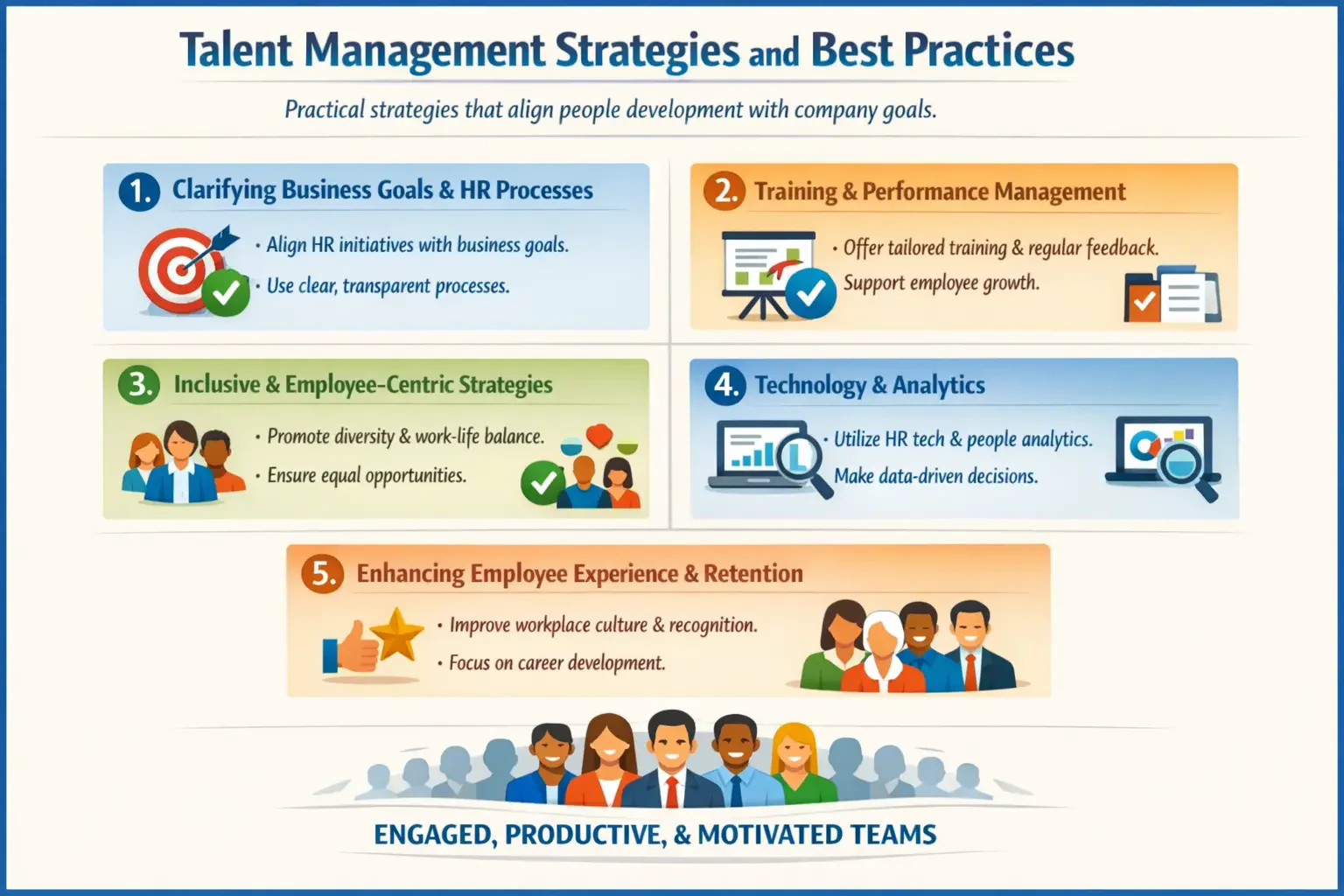
Strong talent management requires more than theory. Businesses need clear strategies that align people development with company goals. Practical and adaptable approaches help teams stay engaged and productive.
1. Clarifying Business Goals and HR Processes
A successful strategy starts with clear business goals. HR initiatives should always support the company’s mission and long-term objectives. When teams understand this link, their work becomes more meaningful.
Processes must also be simple and transparent. Clear rules for promotions, reviews, and feedback reduce confusion. Well-documented processes improve trust and keep operations running smoothly.
2. Training, Development, and Performance Management
Training should match the needs of each employee rather than follow a generic program. Companies can combine workshops, online learning, and coaching to build stronger skills. This approach helps employees grow in practical ways.
Performance management also benefits from regular feedback. Frequent check-ins allow managers to guide employees and remove obstacles. Continuous feedback keeps teams aligned with company goals.
3. Inclusive and Employee-Centric Strategies
Modern talent strategies must support diversity and inclusion. Businesses should create fair hiring practices and ensure equal opportunities for development. A supportive culture helps employees feel respected and valued.
Employee-focused strategies also support work-life balance. Flexible work options, supportive policies, and open communication prevent burnout. When employees feel heard, engagement improves.
4. Leveraging Technology and Analytics
Technology helps businesses manage talent more effectively. HR systems can store employee data, track performance, and automate routine processes. This allows HR teams to focus on strategic tasks.
People analytics provides deeper insights into workforce trends. Data on engagement, turnover, and productivity helps leaders make better decisions. These insights allow companies to solve problems early.






5. Enhancing Employee Experience and Retention
A strong employee experience keeps people motivated and committed. It covers workplace culture, tools, communication, and daily interactions within the company. Positive experiences encourage employees to stay longer.
Recognition also plays a major role in retention. Celebrating achievements and offering career growth opportunities shows employees they are valued. Clear development paths help staff see a future within the business.
Measuring Talent Management Success
Measuring talent management helps organizations understand whether their strategies are working. Clear metrics and feedback reveal how well employees are performing and developing. This insight allows businesses to improve their workforce strategies over time.
Key Performance Indicators (KPIs)
Key Performance Indicators help organizations track the effectiveness of talent programs. Metrics like employee retention and turnover rates show how well companies keep valuable staff. High voluntary turnover may signal deeper issues in management or culture.
Other important KPIs measure recruitment and onboarding success. Time-to-fill and cost-per-hire evaluate hiring efficiency. Metrics like time-to-productivity and Employee Net Promoter Score help measure engagement and satisfaction.
Talent Management Metrics and Dashboards
HR teams rely on dashboards to organize workforce data clearly. These tools combine information from payroll, performance reviews, and engagement surveys. A centralized view helps leaders understand workforce trends quickly.
Dashboards also allow deeper analysis of departments or teams. HR leaders can detect patterns such as rising turnover in specific roles. This insight enables faster and more targeted solutions.
Reviewing and Refining Strategies
Talent strategies should evolve with changing business needs. Regular reviews help organizations assess whether current programs still deliver results. Continuous evaluation ensures strategies remain relevant and effective.
Feedback from employees and managers is also essential. Surveys, performance data, and HR audits reveal areas that need improvement. By refining strategies regularly, organizations maintain a strong and adaptable workforce.
Future Trends in Talent Management

Talent management will continue evolving as technology and workplace expectations change. Organizations must adapt quickly to remain competitive and attract top talent. Understanding future trends helps companies build stronger, more agile teams.
AI-Driven Talent Management
Artificial intelligence is transforming recruitment and employee management. AI tools can screen resumes, support candidate communication, and analyze workforce data. These technologies help HR teams make faster and more informed decisions.
Personalized Learning and Development
Future learning programs will focus on personalization. Intelligent platforms can recommend training based on an employee’s skills, goals, and learning style. This approach improves engagement and helps employees develop relevant capabilities.
Employee Well-Being and Mental Health Support
Organizations are increasingly prioritizing employee well-being and mental health. Supportive policies, flexible work options, and wellness programs help employees maintain balance. A healthy workforce leads to stronger engagement and long-term productivity.
Industry Use Cases for Talent Management
Talent management strategies vary across industries depending on workforce needs and market conditions. Each sector focuses on different priorities to attract, develop, and retain employees effectively.
- Healthcare: Focuses on reducing burnout through flexible schedules, mental health support, and continuous medical training. Clear career pathways also help retain skilled professionals.
- Technology: Emphasizes continuous learning, innovation programs, and internal mobility. Engineers and developers are encouraged to move between projects to maintain engagement.
- Manufacturing: Prioritizes upskilling workers for automation and Industry 4.0. Training programs and apprenticeships help employees transition into tech-enabled roles.
Steps to Implement a Talent Management Strategy
Transitioning from traditional HR administration to a strategic talent management framework requires deliberate, phased action. Follow these core implementation steps to build a robust and scalable system:
1. Conduct a Talent Audit, Assess current workforce skills and identify gaps compared to future business needs.
2. Align with Business Objectives, Ensure recruitment, development, and performance goals support company strategy.
3. Integrate Technology, Adopt a talent management system to centralize data and automate HR processes.
4. Train Leadership, Prepare managers to coach employees, manage performance, and support team growth.
5. Monitor and Improve, Track key metrics like hiring speed, retention, and engagement to refine the strategy.
Common Pitfalls to Avoid
Organizations often struggle when talent strategies are handled in isolated processes. Recruitment, training, and performance management should work together as part of a continuous employee lifecycle.
Another common issue is the lack of executive support. Without strong backing from leadership, talent initiatives may lack funding and clear direction.
Companies also risk losing top performers when they ignore everyday employee experiences. Rigid policies and poor flexibility can push skilled employees to seek better opportunities elsewhere.
Advanced Practices in Talent Management
Forward-thinking organizations are adopting innovative approaches to manage talent. One example is internal talent marketplaces that match employees with projects or mentorships based on their skills and interests.
Predictive analytics also helps HR teams make smarter decisions. By analyzing workforce data, companies can identify turnover risks, leadership gaps, and training opportunities early.
Another emerging practice is skills-based hiring and promotion. Instead of focusing only on degrees, organizations prioritize practical competencies and learning ability.
"Talent management turns a workforce into a strategic advantage by developing the right people, skills, and leadership for long-term business growth."
Conclusion
Talent management has become a critical strategy for organizations that want to stay competitive in a rapidly changing business environment. By aligning employee development with business goals, companies can build a workforce that is skilled, motivated, and ready for future challenges.
When businesses invest in hiring, development, and employee experience, they create stronger teams and long-term stability. If you want to build a smarter talent strategy for your organization, consider scheduling a free consultation to explore the best solutions for your workforce.
Frequently Asked Questions About Talent Management
Talent management is the strategic process of attracting, developing, engaging, and retaining employees to support long-term business success.
It helps organizations improve employee performance, increase retention, and ensure the workforce can adapt to changing business needs.
Talent acquisition focuses on hiring new employees, while talent management covers the entire employee lifecycle including development, engagement, and retention.
Major components include talent acquisition, onboarding, learning and development, performance management, succession planning, and workforce planning.
Businesses can improve by aligning HR strategies with company goals, investing in employee development, using HR technology, and monitoring workforce data.