







In today’s fast-paced business environment, customer experience is paramount. Long queues, complex payment processes, and inefficient operations can significantly impact customer satisfaction and loyalty. Businesses are constantly seeking innovative solutions to streamline their services and create seamless interactions.
This is where Near Field Communication, or NFC, emerges as a transformative technology, offering a powerful tool to enhance operational efficiency and redefine the customer journey. By enabling quick, secure, and contactless interactions, NFC integrated with a POS system is rapidly becoming an indispensable asset for modern enterprises.
Understanding the potential of NFC is the first step toward leveraging it for strategic growth. This technology goes far beyond simple tap-to-pay transactions; it opens up a world of possibilities for marketing, inventory management, access control, and customer engagement.
For business leaders, grasping the fundamentals of NFC is crucial for making informed decisions that can lead to a significant competitive advantage. This article will provide a comprehensive overview of NFC technology and its practical applications across various industries.
Table of Contents

Key Takeaways
|
Understanding the Basics of NFC (Near Field Communication)
Before exploring its diverse business applications, it is essential to build a solid understanding of what NFC technology truly is. At its core, Near Field Communication is a short-range wireless technology that facilitates communication between two electronic devices when they are brought within close proximity, typically no more than a few centimeters apart.
This proximity requirement is a key feature, as it ensures that data transfers are intentional and secure. The technology operates on the principle of radio frequency identification (RFID), allowing devices like smartphones, payment terminals, and smart cards to exchange small amounts of data effortlessly.
The simplicity of its use, often just a tap, belies the sophisticated processes happening behind the scenes. One device, known as the initiator (such as a smartphone), generates a radio-frequency field that powers and communicates with a passive target, such as an NFC tag or a contactless card.
This interaction enables a wide range of applications, from mobile payments to smart advertising. Gaining a foundational knowledge of how NFC works and how it differs from other wireless technologies is the first step for business leaders to strategically harness its full potential for operational excellence and customer engagement.
A. Simple definition of NFC
Near Field Communication (NFC) is a wireless communication technology that enables data exchange between two devices when they are brought close together, typically within a 4-centimeter range. It enables simple and secure interactions, such as making contactless payments, sharing information, or pairing devices with just a tap.
Unlike other wireless technologies that have broader ranges, NFC’s short range makes it ideal for transactions that require high security and user intent. This technology is commonly found in smartphones, smartwatches, credit cards, and public transport cards, making everyday tasks faster and more convenient.
B. How does NFC technology work?
NFC technology uses radio waves to transmit data over very short distances. It operates through two main device types: an active device (the initiator) and a passive device (the target). An active device, such as a smartphone, has its own power source and can generate a radio frequency (RF) field to communicate.
When an active device comes near a passive device, like an NFC tag or a contactless credit card which has no power of its own, the RF field from the active device induces a current in the passive device, powering it up just enough to transmit its stored data.
C. Key differences: NFC vs. RFID, Bluetooth, and QR Code
While NFC, RFID, Bluetooth, and QR Codes all facilitate data exchange, they differ significantly in their operation and use cases. RFID (Radio Frequency Identification) is the parent technology of NFC. Still, it can operate over much longer distances, from several meters to kilometers, making it suitable for logistics and supply chain tracking.
Bluetooth requires manual pairing between devices and has a wider range (around 10 meters), making it ideal for continuous connections such as wireless headphones or speakers. QR Codes are visual codes that must be scanned by a camera, often requiring an app and a clear line of sight, and the process can be slower than a simple NFC tap.
NFC stands out for its unique combination of short-range, security, and ease of use, making it the superior choice for quick, secure transactions like contactless payments and access control.
Why NFC is a Crucial Technology for Business Growth
In the competitive landscape of 2025, adopting NFC is no longer just an option for convenience but a strategic imperative for business growth. This technology serves as a critical enabler for enhancing the customer experience, a key differentiator in today’s market.
By facilitating frictionless transactions and interactions, businesses can significantly reduce friction points in the customer journey. This leads not only to higher customer satisfaction but also to increased throughput, especially in high-volume environments like retail and food services.
Furthermore, the strategic implementation of NFC unlocks new avenues for marketing and data-driven decision-making. NFC tags embedded in posters, products, or store shelves can create a dynamic bridge between the physical and digital worlds, offering customers interactive content, exclusive promotions, or seamless access to information.
This level of engagement fosters a deeper brand connection and provides businesses with valuable data on customer behavior. Ultimately, investing in NFC is about future-proofing a business, ensuring it remains relevant and aligned with the evolving expectations of the modern consumer.
A. Drastically increasing transaction speed and efficiency
One of the most significant advantages of NFC technology is its ability to dramatically reduce transaction times. Traditional payment methods, such as chip-and-PIN cards or cash, involve multiple steps that can create bottlenecks at the checkout counter.
In contrast, an NFC transaction is completed with a simple tap of a smartphone or contactless card, taking only a matter of seconds. This speed is invaluable in high-traffic business environments like coffee shops, fast-food restaurants, and public transit systems.
By minimizing wait times, businesses can improve customer flow, serve more people efficiently, and ultimately enhance overall customer satisfaction, which directly contributes to increased sales and loyalty.
B. Creating a modern and superior customer experience
The contemporary consumer values speed, convenience, and a seamless experience above all else. NFC technology directly addresses these expectations by offering a frictionless way to interact with businesses.
Whether it is making a quick payment, accessing a hotel room with a digital key, or tapping a product for more information, NFC eliminates unnecessary steps and simplifies the customer journey.
This creates a perception of a modern, tech-savvy brand that values its customers’ time. A superior customer experience built on such convenience fosters positive brand associations and encourages repeat business, turning one-time buyers into loyal advocates for the brand.
C. More secure transactions through tokenization
Security is a primary concern for both businesses and consumers, and NFC technology offers robust protection through tokenization. During an NFC payment, the actual credit card number is not transmitted. Instead, a unique, one-time code, or “token,” is generated for that specific transaction.
This token is useless to fraudsters if intercepted because it cannot be used for any other purchase. This method is significantly more secure than magnetic stripe cards, where the static card data is vulnerable to skimming.
By adopting NFC, businesses can provide customers with peace of mind, demonstrating a commitment to protecting sensitive financial information and building trust. For more details on secure transactions, you can explore guides on credit card processing standards.
D. Opening up innovative marketing and engagement opportunities
Beyond payments, NFC unlocks a vast array of creative opportunities for marketing and customer engagement. Businesses can embed inexpensive NFC tags into physical marketing materials like posters, business cards, product packaging, or even restaurant tables.
When a customer taps their smartphone on one of these tags, they can be instantly directed to a specific webpage, a promotional video, a discount coupon, or a social media page. This creates an interactive and memorable brand experience that bridges the gap between the physical and digital worlds.
Such innovative campaigns not only capture customer attention but also provide valuable analytics on engagement, allowing businesses to refine their marketing strategies for greater impact.
Practical Implementations of NFC in Various Industry Sectors

The versatility of NFC technology enables its application across a wide spectrum of industries, each benefiting from its unique capabilities to address specific operational challenges. Its adaptability means that the value of NFC extends far beyond the retail counter.
In hospitality, it revolutionizes the guest experience by turning a smartphone into a room key, while in logistics, it enhances supply chain visibility through efficient asset tracking. This widespread applicability demonstrates that NFC is not a niche technology but a foundational tool for digital transformation across the board.
By examining real-world examples, business leaders can gain a clearer understanding of how NFC can be tailored to their specific needs. Whether it is improving security through advanced access control systems or streamlining maintenance schedules with tagged equipment, the technology offers tangible returns on investment.
The following examples illustrate how different sectors are leveraging NFC to boost efficiency, enhance security, and create more engaging experiences for both customers and employees, showcasing its transformative potential.
A. Retail and F&B: Accelerating checkout and loyalty programs
In the retail and food and beverage sectors, speed is a critical component of customer satisfaction. NFC-enabled payment terminals are instrumental in accelerating the checkout process, reducing queue times, and improving overall store throughput.
Customers can simply tap their smartphone or card to pay, completing transactions in seconds. Beyond payments, NFC can also streamline loyalty programs. Instead of carrying a physical card, customers can tap their phone to identify themselves, collect points, and redeem rewards instantly.
B. Hospitality and Tourism: Digital room keys and facility access
The hospitality industry is leveraging NFC to create a seamless and modern guest experience from check-in to check-out. Hotels are replacing traditional key cards with digital keys stored in a guest’s smartphone.
Upon arrival, a guest can bypass the front desk and go straight to their room, unlocking the door with a simple tap of their phone. This same technology can be used to grant access to other hotel facilities, such as the gym, pool, or executive lounge.
This not only enhances convenience for the guest but also reduces operational costs for the hotel by minimizing physical key card management and streamlining front desk operations.
C. Asset and Inventory Management: Stock tracking and asset maintenance
For businesses with significant physical assets, NFC provides a highly efficient solution for monitoring and management. By placing NFC tags on equipment, tools, or inventory items, employees can quickly access important information with a tap of their device.
This can include maintenance history, user manuals, warranty details, or current location. This process drastically speeds up asset audits and inventory counts compared to manual methods or barcode scanning.
For instance, a maintenance technician can tap a piece of machinery to instantly pull up its service log and report a new task, ensuring accurate record-keeping and proactive upkeep, which ultimately extends the lifespan of valuable assets.
D. Access Control and Security: Employee identification and restricted area access
NFC technology offers a secure and convenient method for managing physical access within a corporate environment. Traditional ID badges can be replaced with NFC-enabled cards or even digital credentials stored on an employee’s smartphone.
Employees can gain access to the building, specific floors, or restricted areas like server rooms with a simple tap. This system provides a higher level of security, as access rights can be instantly granted or revoked remotely.
Furthermore, it creates a detailed digital log of all access events, which is invaluable for security audits and monitoring of movement within the facility, as detailed by security standards bodies such as the NFC Forum.
E. Transportation and Logistics: Electronic ticketing and shipment tracking
In public transportation, NFC has revolutionized ticketing systems. Commuters can use an NFC-enabled card or their smartphone to tap in and out of stations, with fares automatically calculated and deducted.
This eliminates the need for paper tickets and reduces queues at ticket machines, creating a more efficient and pleasant travel experience. In the logistics sector, NFC tags can be applied to packages or pallets to track their movement through the supply chain.
At each checkpoint, a worker can tap the tag to update its status, providing real-time visibility and ensuring accurate tracking from the warehouse to the final destination. This enhances transparency and helps identify any bottlenecks in the delivery process.
Step-by-Step Guide to Adopting NFC Payments
Transitioning to an NFC-enabled payment system may seem like a significant undertaking, but with a structured approach, businesses of any size can make the switch smoothly. The process is more about strategic integration than a complete overhaul of your existing infrastructure.
The primary goal is to upgrade your point-of-sale capabilities to meet modern customer expectations for speed and security. A successful implementation hinges on careful planning, selecting the right hardware and software partners, and ensuring your team is well-prepared for the change.
This guide breaks down the adoption process into four manageable steps, designed to help you navigate the transition with confidence. From evaluating your current setup to educating your customers, each step is crucial for a seamless integration.
By following this roadmap, you can effectively introduce contactless payments, enhance your operational efficiency, and position your business as a modern and customer-centric enterprise ready for the demands of 2025.
A. Step 1: Evaluate your current Point of Sale (POS) system
The first step in adopting NFC is to assess your existing POS system. Many modern POS systems already include built-in NFC capabilities, and you may only need to enable the feature in your software settings. Check your hardware specifications or contact your POS provider to confirm if your current terminals support contactless payments.
If your system is outdated, this is an excellent opportunity to consider upgrading to a more comprehensive solution that not only supports NFC but also offers integrated features such as inventory management, customer relationship management, and advanced analytics.
B. Step 2: Choose an NFC-enabled payment terminal
If your current hardware does not support NFC, you will need to invest in new payment terminals. There is a wide range of devices available. When selecting a terminal, consider factors such as transaction speed, reliability, and compatibility with your existing POS software and payment processor.
It is also important to choose a device that is certified to meet industry security standards, such as EMV and PCI compliance, to ensure the protection of your customers’ payment data. Leading hardware providers offer a range of models to suit different business needs and budgets.
C. Step 3: Integrate with your payment processing system
Once you have the necessary hardware, you need to ensure it is properly integrated with your payment processor. Your payment processor is the company that handles the authorization and settlement of credit and debit card transactions.
Most major processors fully support NFC payments from services like Apple Pay, Google Pay, and contactless cards. You will need to work with your processor to configure your new terminals and link them to your merchant account.
This step is critical for ensuring that transactions are processed securely and that funds are correctly deposited into your business account. Your POS provider or payment processor can typically guide you through this setup process.
D. Step 4: Train your staff and educate your customers
The final step is to prepare your team and your customers for the new payment option. Train your staff on how to process NFC transactions, troubleshoot common issues, and answer customer questions about security and usage.
Proper training ensures a smooth and confident checkout experience. At the same time, educate your customers that you now accept contactless payments. Display clear signage, such as the universal contactless symbol, at your checkout counters.
A simple verbal prompt from your cashier, such as “Feel free to tap to pay,” can also encourage adoption and highlight your business’s commitment to providing a convenient and modern payment experience.
NFC Security Analysis: What Business Owners Need to Know
For any business owner, adopting a new payment technology inevitably raises questions about security. The protection of customer data and the integrity of financial transactions are non-negotiable priorities. Fortunately, NFC technology was designed with security as a fundamental principle.
Its architecture incorporates multiple layers of protection, making it one of the most secure payment methods available today. Understanding these security features is essential for business owners to confidently implement NFC and effectively communicate its safety to their customers.
The security of NFC relies on two core pillars: its inherent physical limitations and its advanced data protection protocols. The short transmission range means a transaction can only occur with deliberate action from the customer, minimizing the risk of accidental or unauthorized charges.
More importantly, the use of sophisticated technologies like encryption and tokenization ensures that sensitive card information is never exposed during the transaction. By familiarizing yourself with these mechanisms and adhering to industry compliance standards, you can ensure compliance.
A. How encryption and tokenization work to protect data
The primary security mechanism in NFC payments is tokenization. When a customer adds their credit card to a mobile wallet like Apple Pay or Google Pay, the service replaces the actual 16-digit card number with a unique digital identifier called a token.
During a transaction, it is this token, not the real card number, that is transmitted to the payment terminal. This token is specific to that device and cannot be used elsewhere. Additionally, each transaction is authorized with a one-time dynamic security code.
This dual-layered approach means that even if a fraudster were to intercept the transaction data, it would be completely useless, as they would have neither the actual card number nor a valid security code for future use, a principle highlighted by financial technology experts at Forbes.
B. Potential security risks and how to mitigate them
While NFC is highly secure, no technology is entirely immune to risks. The most commonly cited theoretical risks are eavesdropping and data interception. However, these are extremely difficult to execute in a real-world scenario due to the very short transmission range of NFC (a few centimeters).
A potential attacker would need to be physically very close with specialized equipment without being noticed. The best mitigation strategy for businesses is to use certified and up-to-date hardware and software that adhere to the latest security protocols.
Ensuring your POS system and payment terminals receive regular security updates from the provider will protect against emerging threats and maintain the integrity of your payment ecosystem.
C. Compliance with industry security standards (PCI DSS)
Adherence to industry security standards is crucial for any business that accepts card payments. The Payment Card Industry Data Security Standard (PCI DSS) is a set of security requirements designed to ensure that all companies that process, store, or transmit credit card information maintain a secure environment.
Using NFC payment solutions from reputable providers helps businesses achieve and maintain PCI DSS compliance. These solutions are designed to ensure that sensitive cardholder data is never stored on the POS system, which significantly reduces the scope and complexity of compliance.
By partnering with compliant hardware and software vendors, you not only protect your customers but also protect your business from the severe financial and reputational penalties associated with data breaches.
The Future of NFC and Its Impact on the Global Business Landscape
The role of NFC in the business world is poised for significant expansion, moving far beyond its current primary function as a payment technology. As the digital and physical realms continue to merge, NFC will serve as a key enabler of seamless connectivity and intelligent interactions.
Its integration into the broader Internet of Things (IoT) ecosystem will unlock unprecedented levels of automation and efficiency. Imagine smart shelves that automatically reorder stock when an NFC-tagged product is removed, or conference room equipment that configures itself with a simple tap of a smartphone.
Furthermore, the evolution of NFC will play a pivotal role in shaping digital identity and enhancing customer engagement in ways we are only beginning to explore. The technology is set to become a standard for secure identity verification, replacing physical IDs with digital credentials stored securely on a mobile device.
For businesses, this opens new possibilities for creating highly personalized, context-aware experiences. The continued innovation in NFC technology signals a future in which simple, intuitive interactions drive complex, powerful business outcomes, making it essential for forward-thinking leaders to stay ahead of these trends.
A. Deeper integration with the Internet of Things (IoT)
The future of NFC is deeply intertwined with the growth of the Internet of Things (IoT). NFC’s ability to facilitate simple and secure commissioning of devices makes it an ideal technology for setting up and connecting smart devices.
For example, a user could tap their smartphone to a new smart appliance to securely transfer Wi-Fi credentials and configuration settings, eliminating complex setup processes. In a commercial setting, this could be used to configure digital signage, smart lighting, or environmental sensors with ease.
This seamless integration will lower the barrier to IoT adoption and enable a more interconnected, intelligent business environment, where data flows effortlessly between devices to optimize operations.
B. The role of NFC in digital identity verification
NFC is set to become a cornerstone of digital identity management. Governments and organizations worldwide are exploring the use of NFC-enabled smartphones to store and present official identification documents, such as driver’s licenses, passports, and national ID cards.
For businesses, this offers a highly secure and efficient way to verify a customer’s identity or age for regulated purchases or services. Instead of a manual inspection, a customer could tap their phone on a terminal to securely transmit their verified credentials.
C. Untapped potential for innovative customer engagement
While marketing applications of NFC exist today, their full potential is far from realized. In the future, we can expect to see more sophisticated and personalized customer engagement strategies powered by NFC. Imagine a customer tapping their phone on a product in-store to see an augmented reality (AR) overlay showing how it would look in their home.
Alternatively, a tap could add an item to a personalized digital wish list or unlock exclusive content tailored to their purchase history. These hyper-personalized interactions will enable brands to create unique, memorable experiences that drive deeper engagement, foster loyalty, and differentiate themselves in a crowded marketplace.
Optimize Your Business Management with a Solution from HashMicro
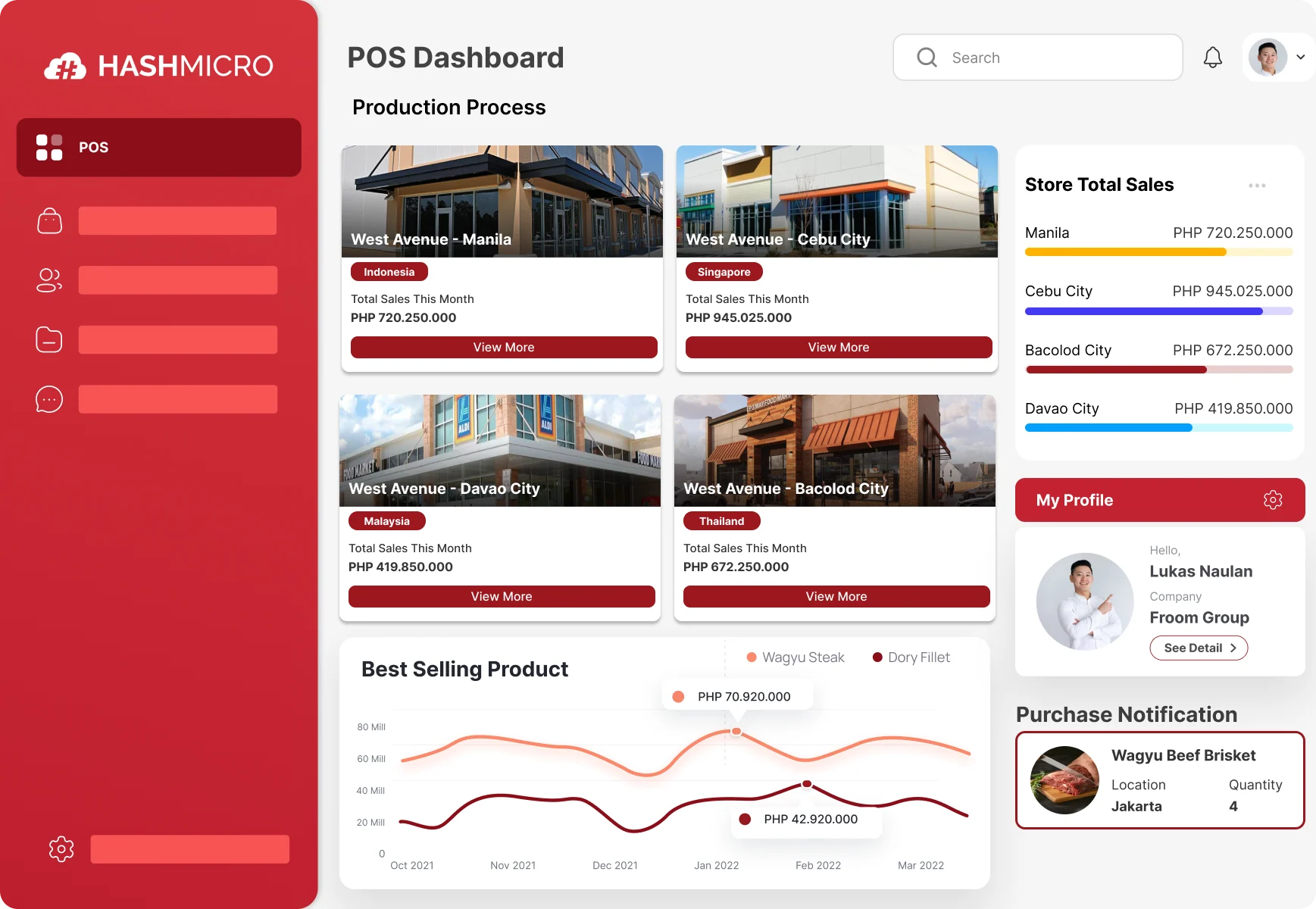
HashMicro provides an integrated ERP system specifically designed to automate and simplify business processes, including payment and transaction management. With a comprehensive solution, companies can overcome challenges such as manual data entry errors and the difficulty of tracking sales performance in real-time.
By leveraging a modern system, businesses can enhance operational efficiency and improve strategic decision-making. Through its advanced POS System module, companies can process transactions faster, reduce human error, and obtain accurate data in real-time.
The system is equipped with features to support various payment methods, including contactless NFC, manage loyalty programs, and integrate directly with inventory and accounting modules. This ensures that every transaction is recorded accurately.
The HashMicro system is designed with full integration between modules, allowing data from departments such as accounting, inventory, purchasing, and sales to be interconnected.
This provides better visibility into the entire business operation and ensures that every decision is based on accurate and up-to-date information. The seamless flow of data empowers businesses to operate more cohesively and respond more quickly to market changes.
Features of HashMicro’s POS System:
- Omni-Channel Integration: Manages sales and inventory consistently across multiple channels, including physical stores and e-commerce platforms like Tokopedia and Shopee, for a unified customer experience.
- Loyalty Point Management: Automates the tracking and redemption of customer loyalty points, encouraging repeat business and fostering stronger customer relationships without manual effort.
- Centralized Multi-branch POS: Allows for centralized management and monitoring of sales, inventory, and promotions across all store branches from a single, intuitive dashboard.
- Automated Promotion Management: Simplifies the creation and application of complex promotions and discounts based on cart contents, time, or customer type, effectively driving sales.
- Real-Time Reporting for All POS Sales: Generates comprehensive sales reports in real-time, providing immediate insights into business performance to support agile and data-driven decision-making.
With HashMicro, your company can significantly improve operational efficiency, data transparency, and business process automation. To see how our solutions can concretely help your business, do not hesitate to try the free demo right now.

Conclusion
In conclusion, Near Field Communication (NFC) has firmly established itself as more than just a convenient payment method; it is a versatile and strategic technology essential for modern business success.
From accelerating transactions and enhancing security with tokenization to unlocking innovative marketing and asset management opportunities, NFC offers a wide range of benefits that drive both operational efficiency and a superior customer experience.
Its practical applications across sectors such as retail, hospitality, and logistics demonstrate its adaptability in solving real-world business challenges. As the technology continues to evolve and integrate more deeply with IoT and digital identity, its importance in the business landscape will only grow.
For business leaders in 2025, HashMicro’s POS Software is a forward-thinking decision that prepares their organization for the future. The step-by-step process of adoption, from evaluating existing systems to training staff, is a manageable investment that yields significant returns in customer satisfaction, security, and competitive advantage.
By understanding and strategically implementing NFC, businesses can not only meet their customers’ current expectations but also build a resilient, innovative foundation for sustained growth in an increasingly digital world. Get a free demo today!

Frequently Asked Questions about NFC
-
Is implementing NFC expensive for small businesses?
The cost has decreased significantly. Many modern POS terminals come with NFC built-in, and affordable mobile card readers are available, making it accessible for small businesses.
-
Do all smartphones support NFC technology?
Most mid-to-high-end smartphones manufactured in recent years include NFC. However, it is not yet a standard feature on all budget models, so it’s important to check device specifications.
-
Besides payments, what is the most creative way to use NFC for marketing?
A creative marketing use is embedding NFC tags in product packaging. When a customer taps it, they can unlock exclusive content, such as a video tutorial, a special recipe, or entry into a contest, creating an interactive post-purchase experience.
-
What is the main difference between NFC and QR Code payments from a business perspective?
From a business perspective, NFC offers a faster and more seamless user experience as it only requires a tap. QR Codes require the customer to open an app, scan the code, and sometimes confirm, which involves more steps and can be slower at a busy checkout.
-
How secure is paying with NFC compared to a regular credit card?
NFC payments are significantly more secure. They use tokenization to create a one-time code for each transaction, meaning your actual card number is never exposed to the merchant, which prevents data theft.