





Warehouse management keeps business operations running, but it often brings challenges that hurt efficiency and profitability. A study published in Management Science A study published in Management Science found that 65% of inventory records at one retailer were inaccurate. Errors like these quickly disrupt the supply chain.
As businesses grow, these challenges multiply and become harder to control. More SKUs, more staff, and more orders expose every weak process. So, what are the most common warehouse obstacles, and how can you solve them?
This article highlights 10 key warehouse management challenges and the practical ways to overcome them. You will see what causes each problem and which fixes work best. Apply them to improve efficiency and support long-term growth.
Key Takeaways
Addressing warehouse challenges cuts costs, improves efficiency, supports scalability, and gives managers accurate data for faster decisions.
Poor layout, weak inventory visibility, manual processes, limited technology, and labor gaps cause most warehouse problems today.
Ten common warehouse problems, from inventory loss to workforce shortages, each paired with practical solutions you can apply.
Why is Addressing Warehouse Challenges Important?
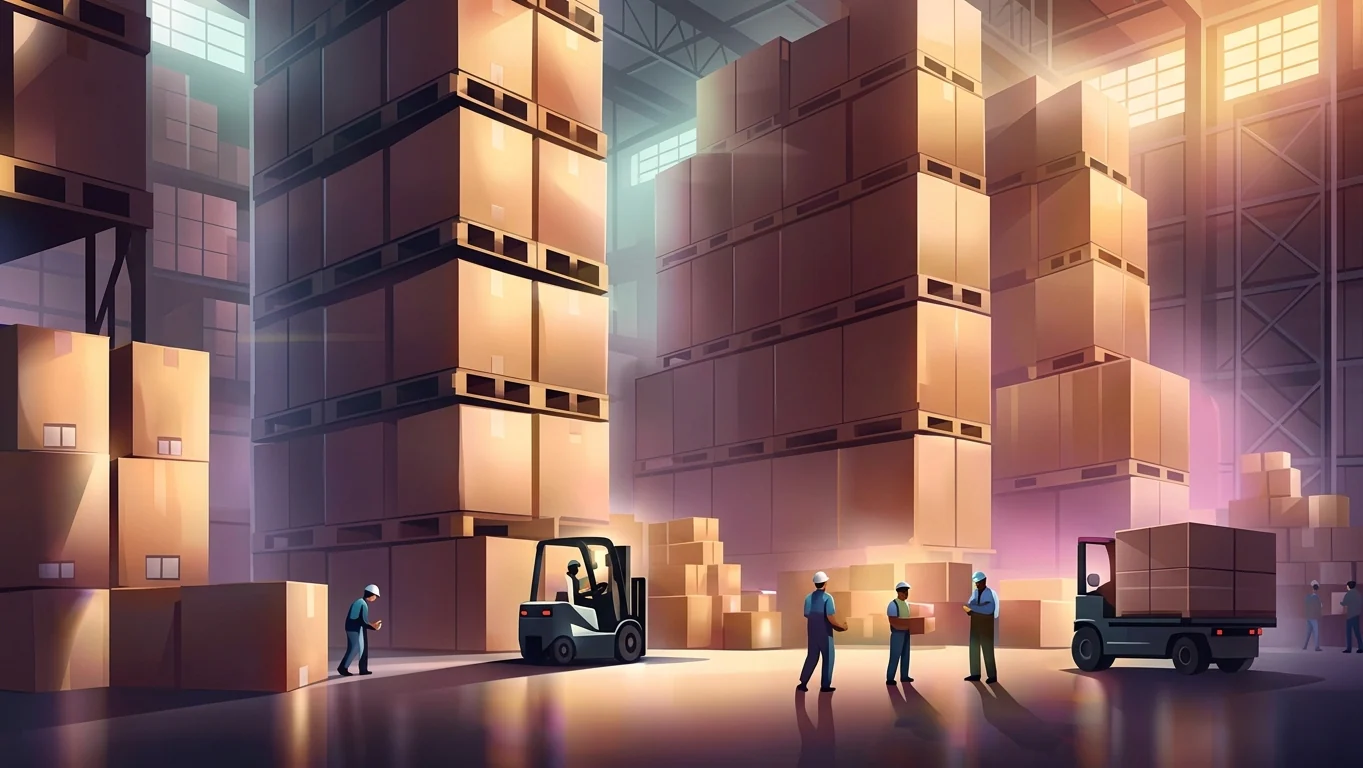
Warehouse challenges refer to the operational difficulties businesses encounter in managing inventory, layouts, staffing, and technology adoption. These obstacles can disrupt supply chain efficiency and delay order fulfillment significantly. Addressing them early is essential for maintaining efficient, competitive warehouse operations.
Resolving these challenges delivers measurable benefits across key areas:
- Cost reduction: Optimizing inventory management lowers holding costs and prevents overstocking and stockouts.
- Improved efficiency: Fixing inaccurate processes streamlines order fulfillment and boosts overall productivity.
- Increased scalability: Streamlined operations allow businesses to expand without major disruptions.
- Better data management: Technology adoption improves inventory tracking and supports smarter decision-making.
Companies that understand and address warehouse challenges achieve greater resilience across their supply chains. A well-managed warehouse connects receiving, storage, and fulfillment into one efficient operation. Targeted improvements allow businesses to adapt quickly and maintain a competitive edge in the logistics industry.
Common Causes of Warehouse Challenges
Warehouse challenges often arise from underlying inefficiencies in daily operations. Identifying these root causes helps businesses prevent recurring disruptions, reduce costs, and build stronger warehouse performance. Teams that act on these drivers early are better equipped to scale operations efficiently.
1. Inefficient warehouse layout
A poor warehouse layout forces workers to take longer routes between storage zones and workstations rather than taking an optimized route. This increases travel time, creates bottlenecks during peak hours, and slows down picking, packing, and shipping. Even small layout improvements can reduce movement time and raise throughput significantly.
2. Lack of real-time inventory visibility
When businesses cannot track inventory in real time, stock discrepancies go undetected until they cause fulfillment failures. Overstocking ties up capital and storage space, while stockouts lead to delayed orders and lost revenue. Accurate, live inventory data is the foundation of reliable warehouse operations.
3. Manual and outdated processes
Manual processes like paper-based picking lists and spreadsheet tracking are prone to human error. A single miscounted item or misfiled record can trigger downstream mistakes across order fulfillment, shipping, and billing. Scaling these processes as order volumes grow is difficult and further increases error rates.
4. Limited technology adoption
Warehouses that rely on outdated software or avoid automation tools often struggle with slow workflows and inconsistent output. Without systems like a WMS, barcode scanners, or automated sorting, teams spend more time on repetitive tasks. This limits productivity and makes it harder to meet growing customer demand.
5. Labor management difficulties
High turnover, training gaps, and labor shortages make it hard to maintain consistent warehouse output. When teams are understaffed or undertrained, picking and receiving tasks take longer and produce more errors. Effective workforce planning and onboarding help teams stay productive during demand spikes.
6. Poor communication and coordination
Warehouse operations depend on clear communication between receiving, storage, and fulfillment teams. When information does not flow freely between departments or shifts, duplicate work, missed updates, and fulfillment errors become more frequent. Shared digital systems and standardized handoff procedures can close these gaps.
7. Demand variability and seasonal peaks
Unexpected spikes in order volume can overwhelm warehouse teams that rely on static staffing and fixed processes. During peak seasons, the pressure on storage space, labor, and equipment intensifies quickly. Warehouses without flexible capacity plans often struggle to meet delivery commitments during high-demand periods.
10 Warehouse Management Problems and Their Solutions
In this section, 10 common warehouse management problems will be explored, along with practical solutions to address each issue. By understanding these challenges and the strategies to overcome them, businesses can improve warehouse operations and achieve greater efficiency and success.
1. Inventory shrinkage due to theft and damage
Theft and mishandling can cause inventory loss with serious financial setbacks. Employee theft, security breaches, and careless handling all create inventory discrepancies that disrupt the supply chain and lower customer satisfaction.
Solutions:
- Install surveillance and access control: Cameras and restricted zones deter theft and limit who reaches high-value stock.
- Run regular audits: Frequent cycle counts verify recorded data and let teams correct discrepancies early.
- Train staff on proper handling: Correct lifting, stacking, and storage techniques cut product damage during daily operations.
- Adopt RFID tracking: Tagged items show exactly where stock moves, making unexplained losses easier to trace.
2. Bottlenecks in the receiving and storage processes
Bottlenecks in receiving and storage slow down the entire warehouse. Inefficient workflows, poor coordination, and limited space delay inventory processing and push back order fulfillment across every shift.
Solutions:
- Schedule inbound shipments: Staggered delivery windows prevent dock congestion and keep receiving teams working at a steady pace.
- Use a WMS to manage storage locations: The system directs each item to the best available slot automatically.
- Standardize putaway rules: Clear storage logic helps staff place goods correctly the first time, reducing rework.
- Cross-train receiving staff: Flexible teams shift between receiving, inspection, and putaway when volume spikes.
3. Lack of flexibility in managing seasonal fluctuations
A lack of flexibility in seasonal demand causes overstocking during slow periods and shortages during peaks. Businesses without adaptive strategies absorb higher carrying costs and miss revenue when orders spike unexpectedly.
Solutions:
- Apply demand forecasting: Historical sales data shows which products sell faster in each season, guiding smarter purchasing.
- Use flexible staffing models: Temporary workers and shift adjustments match labor capacity to actual order volume.
- Secure scalable storage: Short-term overflow space absorbs peak inventory without a permanent lease commitment.
- Review slow-moving stock regularly: Clearing dead inventory frees space and capital before the next peak season.
4. Variations in order fulfillment accuracy
Errors in picking, packing, and shipping send customers the wrong items or quantities. These mistakes increase returns, raise operational costs, and damage business reputation over time. Recovering a lost customer costs far more than preventing the error.
Solutions:
- Implement barcode scanning: Scanners verify every item at pick and pack, catching errors before orders ship.
- Group orders with batch picking: Combining similar orders into one trip cuts travel time and picking mistakes.
- Add a final quality check: A short verification step before sealing cartons stops incorrect shipments from leaving.
- Standardize picking procedures: Documented steps keep output consistent across shifts and new hires.
5. Workforce shortages and elevated employee turnover
Workforce shortages and high turnover reduce efficiency, increase errors, and raise recruitment and training costs. Faster fulfillment demands make a stable, skilled team harder to keep, and understaffed shifts fall behind quickly.
Solutions:
- Invest in structured training: Clear sessions on safety, equipment, and picking steps shorten the ramp-up for new hires.
- Improve the work environment: Better ergonomics, breaks, and recognition programs raise engagement and lower turnover.
- Use workforce management software: Scheduling and performance tools help managers assign tasks and balance workloads.
- Build a cross-trained bench: Staff who handle multiple roles keep operations running when absences occur.
Training and scheduling only deliver results when the right system supports them. A warehouse management system assigns tasks automatically, tracks picker performance, and guides new hires through every step. Your team stays productive even when shifts run short.

6. Challenges in managing multiple channels
Online stores, marketplaces, and physical outlets each carry different fulfillment requirements. Without proper coordination, multichannel operations create delays, duplicated effort, and inventory discrepancies across locations.
Solutions:
- Centralize orders in one system: An integrated order management platform pulls every channel into a single fulfillment queue.
- Sync inventory in real time: Live stock levels across channels prevent overselling and unexpected cancellations.
- Set channel-specific packing rules: Documented requirements per marketplace keep compliance consistent and avoid chargebacks.
- Prioritize orders by service level: Sorting by promised delivery date protects your fastest shipping commitments first.
7. Adjusting to technological developments
Rapid technology advances push warehouses toward automation and digital systems. This shift often disrupts existing workflows and temporarily reduces productivity while teams adapt to new tools and processes.
Solutions:
- Roll out changes in phases: Piloting one zone or process first limits disruption and surfaces issues early.
- Plan integration with legacy systems: Checking compatibility before purchase prevents costly data transfer problems later.
- Run continuous training sessions: Ongoing refreshers help staff build confidence with new equipment and software.
- Measure results after each phase: Tracking accuracy and throughput proves the value and guides the next step.
8. Inefficient returns processing
E-commerce growth has pushed return rates higher across most industries. Without a structured process, returned goods pile up, delay restocking, and block sales opportunities that competitors capture instead.
Solutions:
- Create a dedicated returns area: A separate zone keeps returned stock from mixing with sellable inventory.
- Publish clear return guidelines: Simple rules help staff decide quickly whether to restock, repair, or dispose of items.
- Track returns in your system: Recording reasons and volumes reveals recurring product or packaging problems worth fixing.
- Set restocking time targets: Deadlines push returned goods back into sellable inventory faster.
9. Lack of sustainability
Regulations and environmentally conscious customers now push sustainability up the priority list. Companies that ignore this risk falling behind competitors while absorbing higher long-term operating costs across their facilities.
Solutions:
- Upgrade to energy efficient systems: LED lighting and motion sensors cut electricity costs across large warehouse floors.
- Right-size your packaging: Smaller boxes and less filler reduce material spend and lower shipping weight.
- Set up recycling streams: Separating cardboard, plastic, and pallets diverts waste and can generate recovery revenue.
- Optimize outbound routes: Consolidated shipments cut fuel use and emissions per order delivered.
10. Obstacles in handling hazardous materials
Hazardous materials demand tighter operational control under strict safety and regulatory standards. Small errors can escalate into serious incidents that threaten employees and interrupt business continuity for weeks.
Solutions:
- Train staff on hazard protocols: Regular sessions cover handling, spill response, and emergency procedures for every material class.
- Label and segregate correctly: Clear labeling and separate storage zones prevent dangerous chemical interactions.
- Provide specialized equipment: Proper containment units and protective gear keep workers safe during routine handling.
- Audit compliance regularly: Scheduled checks confirm documentation and storage still meet current regulations.
Addressing these warehouse challenges requires more than quick fixes. It demands a strategic, consistent approach to improving operations. Businesses that understand root causes and apply the right solutions can boost efficiency, reduce risks, and build a resilient supply chain that supports long-term growth.
Conclusion
Warehouse challenges are a natural part of growing operations, but they can significantly impact efficiency if not managed properly. By understanding these issues and applying the right strategies, businesses can improve performance and streamline their warehouse processes.
For businesses who want to optimize operations and stay competitive, adopting the right technology is key. Read more to discover how a warehouse management system can help improve efficiency and support long-term growth.
FAQ About Warehouse Challenges
Lack of visibility into inventory levels and storage locations is a common challenge in warehouse receiving that can lead to shortages, overstock issues, missing or misplaced inventory, and wasted steps, all of which affect a company’s bottom line.
Technology plays a crucial role in addressing warehouse challenges by automating processes, improving accuracy, and providing real-time data insights. Solutions like warehouse management systems (WMS), barcode scanning, and inventory tracking software can enhance operational efficiency and reduce errors.
Enhancing order fulfillment speed can be achieved by streamlining picking and packing processes, implementing automation technologies, and optimizing the layout for efficient movement. Regular performance reviews and adopting best practices also contribute to faster fulfillment.