






As the retail sector in the Philippines grows, businesses encounter increasing complexities in management and operations. Are you struggling with managing multiple store locations, fluctuating inventory, or dynamic pricing strategies? A retail Enterprise Resource Planning (ERP) system may be the solution to unlock efficiency and scalability for your business.
By integrating various business functions, retail ERP systems provide a unified solution that can streamline your operations and enhance decision-making. Read on to discover how ERP can help your retail business!
Key Takeaways
|
What is Retail ERP?

A Retail ERP system is more than just a software solution, it is the backbone of modern retail operations, specifically designed to meet the fast-paced demands of the industry. This comprehensive platform integrates all essential retail functions from inventory management, customer relationships, point of sale (POS), and more into a single, streamlined interface.
By harmonizing these core areas, Retail ERP ensures that information flows effortlessly across all levels of the business, enabling real-time decisions and consistent operational efficiency.
The Advantages of Implementing Retail ERP Software
For businesses in the Philippines, Retail ERP is a game-changer for growth. This system gather data from all over your business and brings everything together in one place, giving you instant access to vital information. This helps you make quick, accurate decisions that keep you ahead, automating workflow in your retail business. Implementing a retail ERP system offers numerous benefits:
- Enhanced POS Systems: This system plays a pivotal role in retail by managing transactions efficiently and reducing human errors through automated data entry. When integrated with modern ERP systems, POS functionalities provide real-time transaction data, enhancing both inventory accuracy and customer service.
- Informed Sales Decisions: ERP systems analyze customer dynamics and sales history, helping businesses optimize their sales strategies by deciding which products to promote based on their performance.
- Superior Inventory Control: Given the fast-moving nature of goods in retail, maintaining optimal stock levels is crucial. ERP systems offer detailed inventory insights and predictive analytics, enabling businesses to adjust stock levels proactively and efficiently, ensuring smooth operations.
- Streamlined Employee Management: Managing a diverse workforce across multiple locations can be daunting. Retail ERP systems simplify this through integrated HR modules that help manage staffing, shifts, and payroll.
- E-Commerce Integration: As e-commerce becomes increasingly significant in the retail landscape, ERP systems that include e-commerce integrations are vital. They ensure that online sales and customer interactions seamlessly connect with brick-and-mortar operations.
- Financial Oversight: ERP system’s financial management capabilities allow retailers to monitor their finances closely, integrate retail accounting software functions, and provide insights into profitability.
Must-Have Retail ERP Features
To get the most out of a Retail ERP system, several key features must be included. These features streamline operations and enhance a retail business’s overall efficiency.
- Point of Sale (POS) Integration: This feature efficiently manages sales transactions and customer data. It’s crucial for keeping sales operations smooth and tracking customer interactions.
- Inventory Management: This department monitors stock levels and manages the reordering process. This helps ensure that you never run out of popular items and don’t overstock on slow-moving products.
- CRM Tool: This tool enhances your relationship with your customers by keeping track of their preferences and purchase history, leading to improved customer satisfaction.
- Procurement and Supplier Management: This feature optimizes the procurement process and manages relationships with suppliers, making negotiating better terms easier and maintaining a steady supply chain.
- Financial Management: This department streamlines all financial operations, from tracking expenditures to generating accurate financial reports, which is essential for maintaining the business’s financial health.
Including these features in retail software can transform a retail business’s operations, making processes more efficient and improving customer satisfaction and profitability.
How to Choose Retail ERP Software
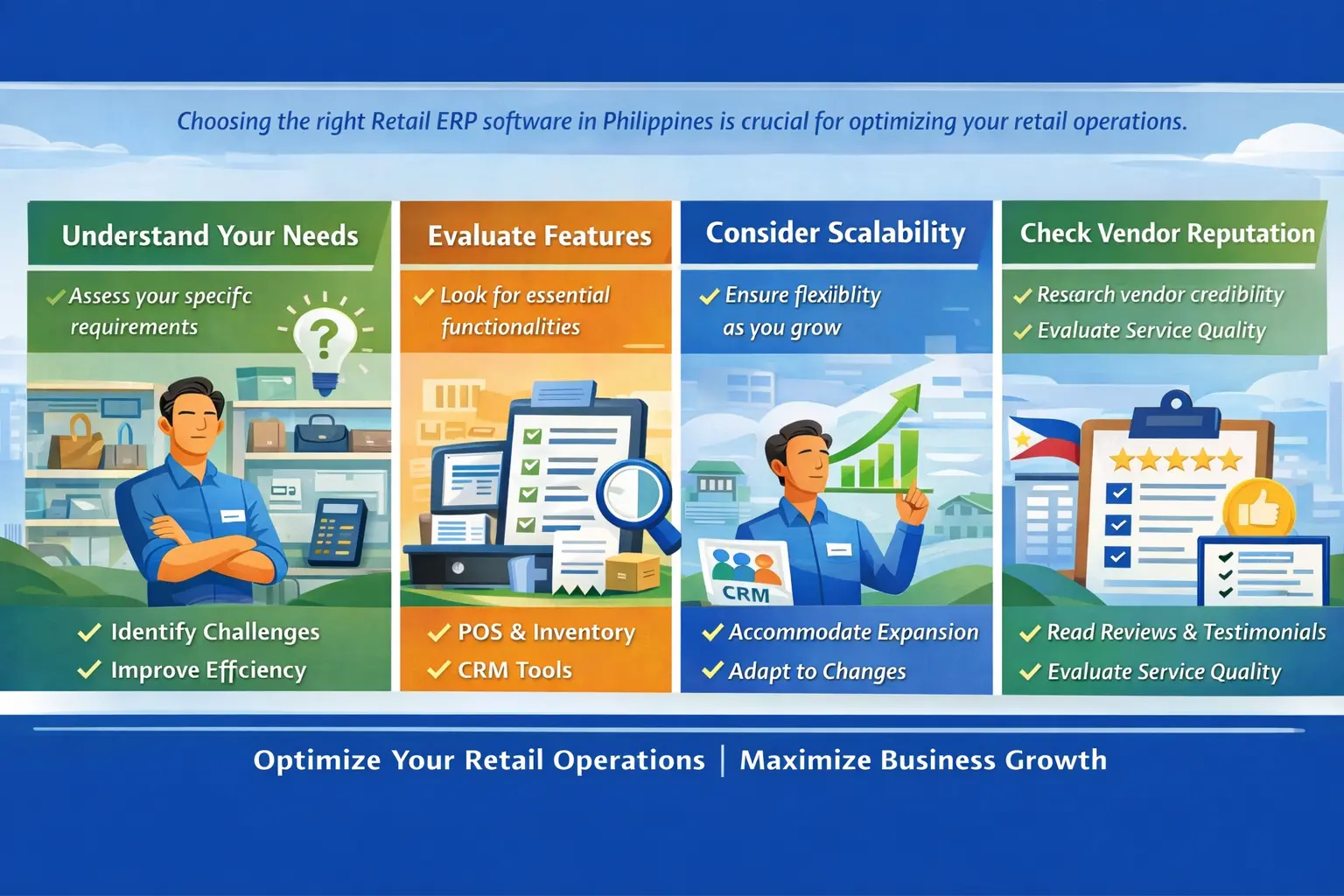
Choosing the right Retail ERP software in Philippines is crucial for optimizing your retail operations. Moreover, this decision should be guided by several key considerations to ensure the system aligns with your business needs.
- Understand Your Needs: Begin by assessing your business’s specific requirements. What challenges are you facing? What processes could be more efficient?
- Evaluate Features: Look for systems that offer the essential features we discussed earlier, like POS integration, inventory management, and CRM tools.
- Consider Scalability: Ensure the ERP system can scale with your business growth. It should be flexible enough to accommodate new stores, products, and changes in business size.
- Check Vendor Reputation: Research the ERP vendor’s reputation. Look for user reviews, case studies, and testimonials to understand their service quality and reliability.
Once you have a shortlist, you may consider some Retail ERP solutions where they offer a comprehensive suite of tools designed specifically for retail operations. You can gain a partner who understands the intricacies of retail and provides continuous support to help you maximize your investment.
Retail ERP vs. Traditional POS: Why an Integrated Setup is the Top Choice
| Feature | Traditional POS | Retail ERP |
| Primary Goal | Fast checkout and basic sales recording. | End-to-end management of all core business functions. |
| Data Scope | Sales tracking, basic inventory, and simple receipts. | Real-time integrated data across finance, HR, procurement, and CRM. |
| Inventory | Manual updates, typically limited to a single branch. | Multi-branch synchronization with automated replenishment. |
| Compliance | Basic receipts and potential manual BIR filing. | Accredited automated journals, Z-reads, and EIS-ready reporting. |
| Accounting | Manual posting into a separate ledger. | Fully integrated accounting with labor accruals and real-time P&L sync. |
| Growth Potential | Suitable for kiosks and small standalone stores. | Built for scaling franchises and omnichannel retail expansion. |
Conclusion
Investing in a robust ERP system is a strategic decision for Filipino retailers looking to achieve sustainable growth. These systems centralize data, streamline inventory and process reengineering, and improve decision-making across the board, ultimately fostering collaboration and increasing overall business agility.
Considering implementing an ERP system? Explore some Retail ERP out there that designed specifically for the retail industry. It should offers integrated POS, advanced inventory management, comprehensive CRM capabilities, and much more, all tailored to streamline your retail operations.
Frequently Asked Questions
-
What is an ERP in retail?
ERP in retail is a software solution that integrates various business processes, such as inventory management, sales, and customer relationships. Streamlining operations, it improves decision-making and enhances efficiency across multiple locations, making retail management smoother and more effective.
-
What is the retail inventory method in ERP?
The retail inventory method in ERP enables businesses to track stock levels, automate reordering, and forecast demand using real-time data. This approach helps retailers manage inventory efficiently, reducing overstock and preventing stockouts, ultimately improving overall operational performance.
-
What is a retail management system?
A retail management system is a software tool designed to oversee and streamline day-to-day retail operations. It manages inventory, sales, customer data, and financials to improve overall business efficiency.
-
Does an ERP-integrated POS system allow me to continue selling if my internet goes down?
Yes, most top-tier integrated systems include an offline mode that processes transactions locally and automatically syncs all sales, inventory updates, and BIR-mandated logs once your connection is restored.