






Payroll compliance is no longer just about paying people on time. It is about ensuring every paycheck follows the rules so your business stays protected and your employees stay confident.
Do you know which payroll rules apply to your team right now, and how often they change? Payroll compliance typically covers areas such as minimum wage, overtime, statutory deductions, tax withholding, and mandatory reporting, and the details can vary by location and employee type.
In this guide, we will break down the key parts of payroll compliance, the risks of getting it wrong, and the practical steps to stay accurate as regulations evolve.
Key Takeaways
|

Table of Contents
What Is Payroll Compliance?
Payroll compliance is making sure every payroll task follows the rules, from paying wages to handling tax deductions and required reports. It covers key areas like classifying workers correctly, calculating minimum wage and overtime accurately, and keeping clean payroll records for audits.
Because regulations can change, HR and finance teams need to stay alert and update their process regularly. If payroll is handled manually, mistakes are more likely to happen, and they can lead to fines, audits, disputes, and reputational damage.
Why Is Payroll Compliance Crucial for Your Business?
Payroll compliance matters because it protects your business from issues that can escalate fast. Small mistakes in overtime, deductions, or reporting can lead to fines, back-pay, interest charges, or audits that drain HR and finance time. In more serious cases, it can turn into disputes or legal action that hurts cash flow and reputation.
It also affects employee trust. When payroll is accurate and on time across the end-to-end payroll cycle, people feel treated fairly and stay engaged. But repeated errors can frustrate employees and push good talent to leave. A solid compliance process strengthens internal credibility and supports a more reliable employer brand.
The Core Pillars of Payroll Compliance
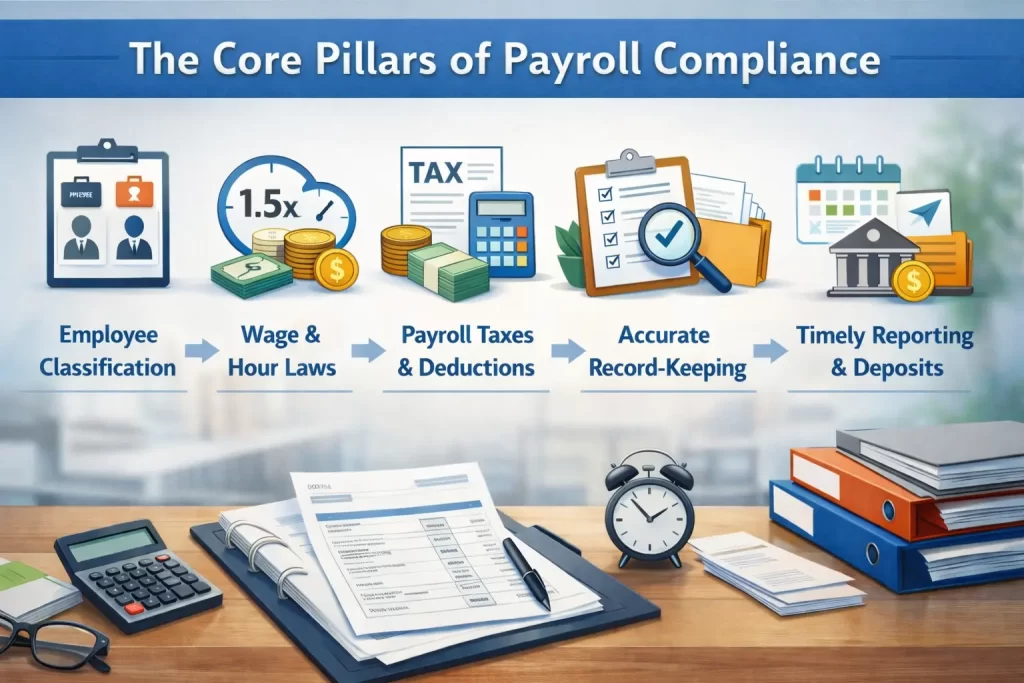
Payroll compliance feels heavy when it is treated as one big task. It is much easier when you break it into a few pillars, because each part connects, and a mistake in one area often creates problems in another.
1. Employee classification
2. Wage and hour laws
This covers minimum wage, overtime, and accurate time tracking. Overtime is commonly paid at 1.5 times the regular hourly rate for hours beyond a standard threshold (for example, over 40 hours per week), so clean attendance data is critical. Deloitte also notes that payroll is getting more complex as regulations and workforce setups keep changing.
3. Payroll taxes and deductions
You must calculate, withhold, and remit required taxes and contributions correctly, including employer-side obligations. Voluntary deductions like insurance or loans also need clear approval and proper documentation.
4. Accurate record-keeping
Payroll records are your proof during audits or disputes. Keep clear details on hours, gross pay, deductions, and net pay, and store them for the required period in your region.
5. Timely reporting and deposits
Payroll is only complete when filings and deposits are submitted on time. Late payments or late reports can trigger penalties and interest, even if salary payments were correct.
Common Payroll Compliance Risks and How to Avoid Them
Payroll issues usually happen for the same reasons: unclear rules, manual work, and inconsistent documentation. Knowing the common risk points helps you prevent costly mistakes before they turn into penalties, audits, or employee disputes.
1. Misclassifying employees
Mixing up employees and independent contractors is one of the most expensive mistakes. To avoid it, follow legal classification criteria (especially around how much control the company has over the work), document your decision, and review contractor status regularly.
2. Errors in overtime calculation
Overtime errors often happen when teams miscalculate the “regular rate of pay,” for example, by not including certain bonuses or commissions. Use a payroll setup that calculates overtime correctly across pay components, and make sure managers record working hours consistently.
3. Late or incorrect tax filings
Missing filing or deposit deadlines almost always leads to penalties and interest. Build a clear compliance calendar, set reminders, and standardize who is responsible for each deadline, so tasks do not fall through the cracks.
4. Poor record retention
Incomplete records become a serious problem during audits or disputes because you cannot prove compliance. Set a retention policy, store payroll documents in a centralized and secure system, and keep them for at least the legally required period in your region.
Best Practices for Maintaining Payroll Compliance

To keep payroll compliance under control, you need a few repeatable habits that reduce errors and make updates easier as rules change.
- Standardized payroll process: Create an SOP from attendance collection to approvals and payments so every cycle runs the same way.
- Regulatory updates tracking: Monitor labor and tax updates regularly, and assign a clear owner to update internal policies.
- Regular internal audits: Check classification, overtime, records, and tax deposits on a set schedule, then fix gaps fast.
- Technology and automation: Use payroll tools to reduce manual calculations, improve accuracy, and simplify reporting.
The Role of Payroll Software in Ensuring Compliance
Payroll software helps reduce compliance risk by replacing manual calculations with consistent rules, automated updates, and cleaner documentation.
- Automated tax calculations and filings: Calculates withholdings and contributions using updated rules, and helps keep filings on time.
- Centralized record-keeping: Stores payroll history and employee data in one secure place for easier audits and access control.
- Real-time reporting and analytics: Generates compliance and payroll reports quickly for audits, reporting, and monitoring.
- Integration with HR and accounting systems: Syncs attendance, leave, and overtime to payroll, and posts payroll entries to the ledger automatically.
Mitsubishi Case Study on Modern Payroll Software
Modern payroll or HR software helps businesses run payroll faster, reduce manual errors, and keep employee data consistent across teams. It also supports clearer approval flows and more reliable documentation, which makes compliance checks less stressful.
When payroll is integrated with finance and operations, the benefits multiply. Attendance, overtime, deductions, and payroll journals can flow into accounting automatically, so reporting stays accurate and teams spend less time reconciling data.
Mitsubishi is a global industrial and mobility group with large, structured workforces across multiple entities. Using HashMicro’s HR and payroll system, the company streamlined payroll approvals, reduced repetitive data entry, and improved payroll-to-accounting accuracy, making monthly closing and compliance reporting easier.

Conclusion
Payroll compliance is not just about paying on time. It is making sure wages, overtime, deductions, and reporting follow the rules so your business stays protected and employees stay confident.
Because regulations change and vary by worker type and location, you need a clear process and regular checks. When you understand the core pillars and risks, payroll becomes more consistent and less stressful.
If you want to reduce mistakes and tighten compliance, book a consultation with a payroll or HR compliance expert. A quick review can highlight gaps early and help you improve your workflow.
Frequently Asked Questions
-
What is the biggest risk of payroll non-compliance?
The biggest risk is financial penalties from tax authorities and legal action from employees. Misclassifying employees and errors in overtime calculation can lead to significant back-pay liabilities and fines, damaging both finances and reputation.
-
How often should a company audit its payroll?
It is recommended to conduct an internal payroll audit at least once a year. However, quarterly audits are even better for proactively identifying and correcting issues before they become major problems, especially if regulations change frequently.
-
Can small businesses benefit from payroll software?
Absolutely. Small businesses can benefit greatly from payroll software as it automates complex calculations, ensures tax compliance, and reduces the administrative burden, freeing up valuable time for owners to focus on growing the business.