





Running out of stock at the worst possible moment is every business owner’s nightmare, right? It’s like you’re always playing catch up, and that stress doesn’t have to be part of the game. When you nail inventory replenishment, you can keep your shelves stocked just right, so you’re ready when customers come calling.
Getting the hang of replenishing inventory isn’t just about avoiding headaches, it’s about saving time, cutting unnecessary costs, and keeping your customers coming back. Let’s dive into how you can take control of your stock and make sure your business stays on track.
Key Takeaways
Inventory replenishment is the process of restocking products to maintain sufficient supply for customer demand, helping businesses avoid stockouts, reduce missed sales, and prevent overstocking that ties up storage space and capital.
Using different methods like demand forecasting or reorder points helps businesses keep inventory levels balanced. Each method addresses specific business needs, helping prevent shortages or excess stock.
The three main factors that impact inventory replenishment are fluctuating demand, limited warehouse capacity, and end to end supply chain visibility, all of which directly affect how accurately and consistently businesses can maintain optimal stock levels.
What is Inventory Replenishment?
Inventory replenishment is the process of restocking products to maintain sufficient supply for customer demand, helping businesses avoid stockouts and excess inventory while ensuring smooth sales operations.
By effectively replenishing inventory, businesses can keep shelves stocked with the right amount of products at the right time, reducing missed sales and preventing overstocking that ties up storage space without generating value. For companies managing complex stock movements, accurate replenishment becomes even more critical when supported by reliable tools for tracking inventory levels in real time.
Importance of Inventory Replenishment

Inventory replenishment is important because it ensures businesses always have the right amount of stock to meet customer demand without the stress of stockouts or the waste of overstocking. Getting this right directly affects operational efficiency, storage costs, and overall customer satisfaction.
1. Helps Avoid Stockouts
Stockouts cause missed sales and disappointed customers. By maintaining consistent replenishment, businesses can ensure products are always available when customers need them, protecting both revenue and brand reputation.
2. Prevents Overstocking
Holding too much stock ties up capital and increases storage costs. Proper replenishment keeps inventory levels balanced, freeing up resources that can be redirected toward business growth.
3. Boosts Operational Efficiency
When stock levels are managed proactively, operations run faster and more smoothly. Teams spend less time firefighting supply issues and more time focusing on higher value tasks. Many businesses strengthen this further by pairing replenishment practices with effective inventory forecasting approaches that help anticipate demand before shortages occur.
How Does Inventory Replenishment Work?
Inventory replenishment works by continuously monitoring stock levels and triggering orders when inventory gets low. This process ensures that businesses always have the products needed to meet demand without delays or disruptions.
An effective replenishment strategy involves tracking sales patterns, analyzing lead times, and adjusting stock levels accordingly. The more accurately a business can anticipate when stock will run low, the more smoothly the replenishment cycle operates.
Automation and technology tools can greatly simplify and speed up this process, ensuring that stock is always replenished in a timely manner and that businesses stay ahead of sudden shifts in stock demand before they cause operational disruptions.
Common Inventory Replenishment Methods
Businesses use different replenishment methods depending on their sales patterns, storage capacity, and demand predictability. The table below outlines the four most common approaches:
| Methods | Description |
|---|---|
| Demand Method | Forecasts future demand based on past sales data to determine how much stock to order. |
| Top Off Method | Replenishes inventory when it falls below a set maximum level, ensuring stock stays balanced without overloading storage. |
| Periodic Method | Restocks inventory at regular intervals, regardless of stock levels, making it ideal for predictable or seasonal demand. |
| Reorder Point Method | Triggers restocking when inventory hits a predetermined level, ensuring timely replenishment without overstocking. |
Factors That Impact Inventory Replenishment
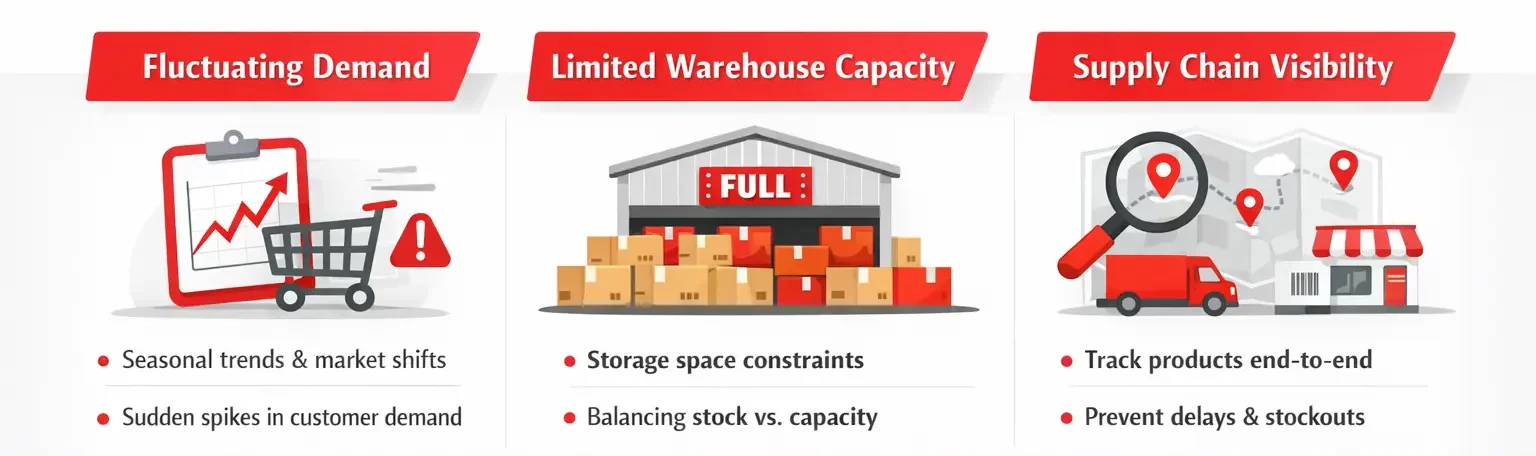
Several factors can make inventory replenishment more challenging to manage. Understanding these factors helps businesses build more resilient replenishment strategies that adapt to changing conditions.
1. Fluctuating Demand
Seasonal trends, unexpected market shifts, or sudden spikes in customer demand can all affect how much stock needs to be reordered. Businesses that monitor demand patterns regularly are better positioned to adjust replenishment schedules before shortages occur.
2. Limited Warehouse Capacity
Available storage space directly influences how much stock a business can hold at any given time. Balancing replenishment quantities against warehouse capacity helps prevent overloading storage while still keeping enough stock on hand to meet demand.
3. End to End Supply Chain Visibility
Having a clear view of where products are at every stage, from the warehouse to the store shelf, is essential for timely and accurate replenishment. Without this visibility, businesses risk delayed orders and unexpected stockouts. Many Philippine businesses address this by investing in cloud based inventory management solutions that provide real time data across their entire supply chain.
Conclusion
Inventory replenishment is the process of restocking products to keep businesses in sync with customer demand, preventing stockouts and avoiding overstocking at the same time. When managed well, it improves operational efficiency, reduces unnecessary costs, and keeps customers satisfied with consistent product availability.
Businesses looking to strengthen their replenishment process can start by exploring the top inventory management software options available in the Philippines to find a solution that fits their operational needs.
Frequently Asked Questions
An example of replenishment is restocking shelves when inventory runs low after customer purchases. This ensures your store always has the products needed to meet customer demand.
To calculate replenishment, track sales data, lead times, and inventory levels. Use this info to determine when and how much stock to reorder before running out.
An inventory replenishment point is the stock level at which new orders should be placed. This ensures timely restocking before running out of products, maintaining smooth operations.