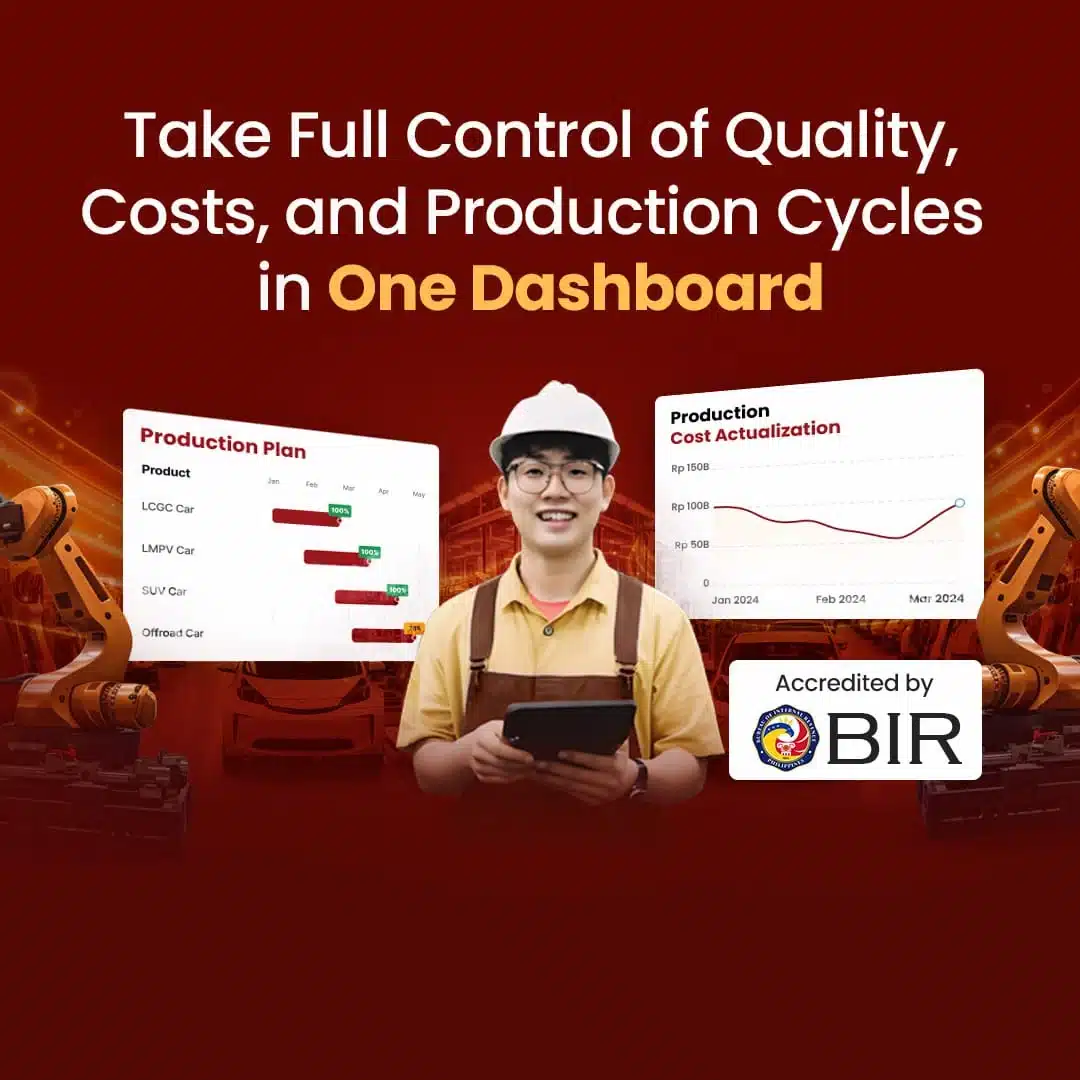




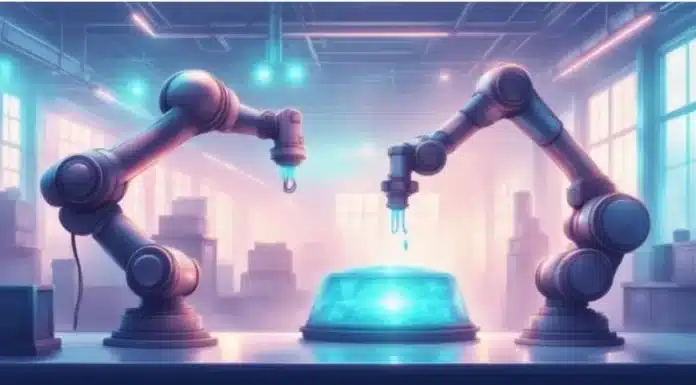
Many companies rush into industrial automation but end up facing disconnected systems, unclear KPIs, and costly downtime. Without a structured plan, industrial automation can create more complexity than efficiency.
The impact shows up fast in delayed production, inaccurate reporting, and slow decision-making across departments. An integrated manufacturing software helps unify data, standardize workflows, and deliver real-time visibility so automation investments actually pay off.
Keep reading for the complete roadmap and best practices of industrial automation with fewer risks and more precise results. You will also find practical steps to evaluate technology options and prepare your team for change.
Table of Contents

Key Takeaways
|
What Is Industrial Automation?
Industrial automation is the use of control systems, such as computers and robots, and information technologies to run industrial processes with minimal human intervention. Its goal is to improve efficiency, reduce costs, and increase quality and safety across the production flow.
It is built on sensors that collect operational data, controllers like PLCs or DCS that process logic, and actuators that execute physical actions. Operators monitor and manage the system through HMI/SCADA platforms that provide real-time visibility and control.
Industrial automation is broader and covers process industries such as oil and gas, chemicals, and utilities, including continuous and batch operations beyond a single plant floor. Factory automation, on the other hand, is a subset of industrial automation that focuses on discrete processes inside factories, such as assembly, packaging, and material handling.
The Main Benefits of Industrial Automation for Your Business
Adopting industrial automation helps businesses compete in faster markets where customers expect consistent quality and shorter lead times. Beyond operational agility, industrial automation offers the following benefits for businesses.
- Increased productivity and efficiency
Industrial automation keeps production running at a stable speed and with minimal downtime, including shift-to-shift consistency. It also reduces bottlenecks by standardizing workflows and optimizing resource usage across the line. - Higher product quality and consistency
Automated processes deliver repeatable precision, so every unit is produced to the same standard. This reduces defects, rework, and material waste while improving customer satisfaction. - Reduced operational costs
While the upfront investment can be significant, automation lowers long-term costs through reduced scrap, fewer errors, and better energy and material efficiency. Predictive and scheduled maintenance also helps prevent expensive breakdowns and unplanned stoppages. - Improved workplace safety
Industrial automation moves hazardous, heavy, or repetitive tasks away from employees and into controlled machine operations. This lowers accident risk, reduces lost time incidents, and helps teams focus on higher-value work. - Flexibility and production scalability
Programmable systems make it easier to switch product variants and adjust production capacity without rebuilding the entire line. Businesses can scale output by extending run time or adding automation cells without a proportional increase in labor costs.
Understanding the Levels of Industrial Automation
Industrial automation is applied in stages, ranging from fully manual work to systems that can operate with near-total autonomy. Understanding these levels helps you set a realistic roadmap, prioritize investments, and upgrade processes without disrupting production.
- Level 0: Manual operation
All production tasks and decisions are handled by humans, with no automated assistance. This offers flexibility for custom work but is highly dependent on operator skill and is more prone to inconsistency and errors. - Level 1: Driver assistance (basic automation)
Simple machines or tools support operators with isolated tasks, such as moving items via conveyors or triggering alerts from sensors. Humans still control the workflow and make all decisions, while automation mainly reduces effort and improves speed. - Level 2: Partial automation
Multiple functions are automated and run according to preset programs, but operators must supervise and intervene when issues arise. This is common in systems like CNC machines, where the process executes automatically, yet humans manage setup, loading, and exceptions. - Level 3: Conditional automation
The system can make limited decisions and run most tasks independently under defined conditions. Operators stay on standby to take over when the system detects scenarios outside its rules or requests human intervention. - Level 4: High automation
Within a defined operating scope, the system runs autonomously with minimal oversight and can handle many unexpected events through self-correction. Humans mainly set targets, review performance, and intervene only in rare situations outside the system’s design limits. - Level 5: Full automation (autonomous)
The entire operation is fully autonomous, with systems capable of planning, deciding, and executing end-to-end processes without human involvement. This level is still largely aspirational for most industries and represents the long-term vision of AI-driven smart factories.
Types of Industrial Automation Systems

Industrial automation systems come in different types because production needs vary by volume, product variety, and changeover frequency. Below are the types of industrial automation systems.
- Fixed automation (Hard automation)
Fixed automation uses equipment configured for a single product or a minimal range, making it ideal for high-volume, repetitive production. Common examples include automotive assembly lines and machining transfer lines, where speed and unit-cost efficiency are the priorities. - Programmable automation
Programmable automation supports batch production by allowing the operation sequence to be reprogrammed, though changeovers can take time. Examples include CNC machines, industrial robots, and PLC-controlled equipment used for medium-volume production with product variations. - Flexible automation (Soft automation)
Flexible automation is built for high product variety with minimal changeover time, enabling mixed-model production without significant downtime. Examples include robotic work cells with computer-controlled tooling and flexible material-handling systems that automatically adapt to different parts.
Real-World Examples of Industrial Automation
Industrial automation becomes easier to understand when you see how different industries apply it to solve real operational challenges. Each sector uses a unique mix of robotics, sensors, and software to meet goals like speed, hygiene, precision, and compliance.
- Automotive manufacturing industry
Automotive plants use industrial robots for welding, painting, and heavy assembly to maintain high speed and consistent quality. They also rely on AGVs to move parts across the floor and on cobots to support tasks such as final assembly and quality checks. - Food and beverage (F&B) industry
F&B manufacturers automate sorting, mixing, cooking control, and packaging to reduce contamination risk and ensure consistent output. Robotic pick-and-place systems and vision inspection tools help maintain hygiene standards while catching defects at high throughput. - Pharmaceutical industry
Pharmaceutical production uses automation for precise filling, packaging, and sterile handling to meet strict regulatory and quality requirements. Systems also track every step with detailed records and traceability, supporting audits and compliance controls. - Electronics industry
Electronics manufacturers use robotics and vision systems to place tiny components, solder boards, and assemble devices with extreme accuracy. Automated testing equipment then validates performance on each unit to prevent faulty products from reaching customers.
Key Challenges in Implementing Industrial Automation
Implementing industrial automation can deliver significant gains, but it also introduces financial, operational, and organizational risks if not managed carefully. A realistic plan that includes budgeting, skills development, change management, and security controls will make adoption smoother and ROI faster.
- High initial investment costs
Industrial automation often requires significant upfront investment in machines, sensors, software, and integration. Reduce the burden by starting with a phased rollout, prioritizing quick-win processes, and building a clear ROI model before scaling. - Lack of skilled experts
Many companies struggle to find talent for robotics, programming, data analysis, and maintenance. Close the gap with structured training, vendor-led onboarding, and standardized documentation so knowledge is transferable across teams. - Resistance to change from employees
Employees may fear job loss or feel automation will disrupt their routines, which can slow adoption. Address this with transparent communication, involving key users early, and reskilling programs that shift roles toward supervision, analysis, and continuous improvement. - Cybersecurity issues
Connected automation systems increase exposure to cyber risks that can disrupt production and compromise safety. Mitigate this by implementing network segmentation, strict access control, regular patching, and continuous monitoring aligned with OT security practices.
How to Start Implementing Industrial Automation?
Starting industrial automation is easier when you treat it as a phased transformation, not a one-time project. A structured rollout helps you reduce risk, control costs, and prove value before scaling across the plant.
- Evaluate current processes
Audit your workflows and identify tasks that are repetitive, error-prone, slow, or unsafe. Use baseline metrics like cycle time, defect rate, downtime, and labor hours to prioritize the best automation targets. - Define clear goals and KPIs
Set clear outcomes such as faster throughput, lower scrap, or improved safety, then translate them into measurable KPIs. These KPIs keep teams aligned and make it easier to justify ROI to stakeholders. - Start small with a pilot project
Run a pilot on one process or work cell with high impact and manageable complexity. Use the results to refine the production workflow, quantify benefits, and build internal buy-in for broader adoption. - Choose the right technology and partners
Match the technology to your use case, whether it is robotics, PLC-based controls, SCADA monitoring, or vision inspection. Select partners who can support design, integration, training, and long-term maintenance, not just installation. - Integrate systems with a central ERP
Connect production data with inventory, purchasing, and finance to avoid silos and manual reconciliation. A central ERP enables end-to-end visibility, so decisions are based on real-time operational and cost data. - Train your workforce
Upskill operators and supervisors so they can run, monitor, and troubleshoot automated systems confidently. Training reduces resistance to change and ensures that automation improves performance rather than creating new bottlenecks.
The Future Trends of Industrial Automation
Industrial automation is moving toward more intelligent, connected, and self-optimizing systems. Tracking these trends helps you plan investments that stay relevant and scalable as operations grow.
- Artificial intelligence (AI) and machine learning
AI and machine learning turn automation into decision-making systems that can optimize processes based on real-time data. For example, predictive maintenance models can detect early signs of failure from vibration or temperature patterns and schedule repairs before downtime happens. - Industrial internet of things (IIoT)
IIoT connects machines, sensors, and software, enabling production data to be captured and shared instantly across the plant. For example, sensor-enabled equipment can feed live performance metrics into dashboards to track OEE, energy usage, and bottlenecks in real time. - Digital twins
Digital twins create a virtual replica of a production line or machine, allowing teams to test changes before applying them on the floor. For example, manufacturers can simulate a new layout or cycle-time adjustment to validate throughput gains without disrupting live operations. - Collaborative robots (Cobots)
Cobots are designed to work safely next to humans, making automation more practical for mixed, hands-on tasks. For example, a cobot can handle repetitive pick-and-place or screwdriving while operators focus on inspection, setup, and exception handling.
Optimize Your Business Management with Solutions from HashMicro
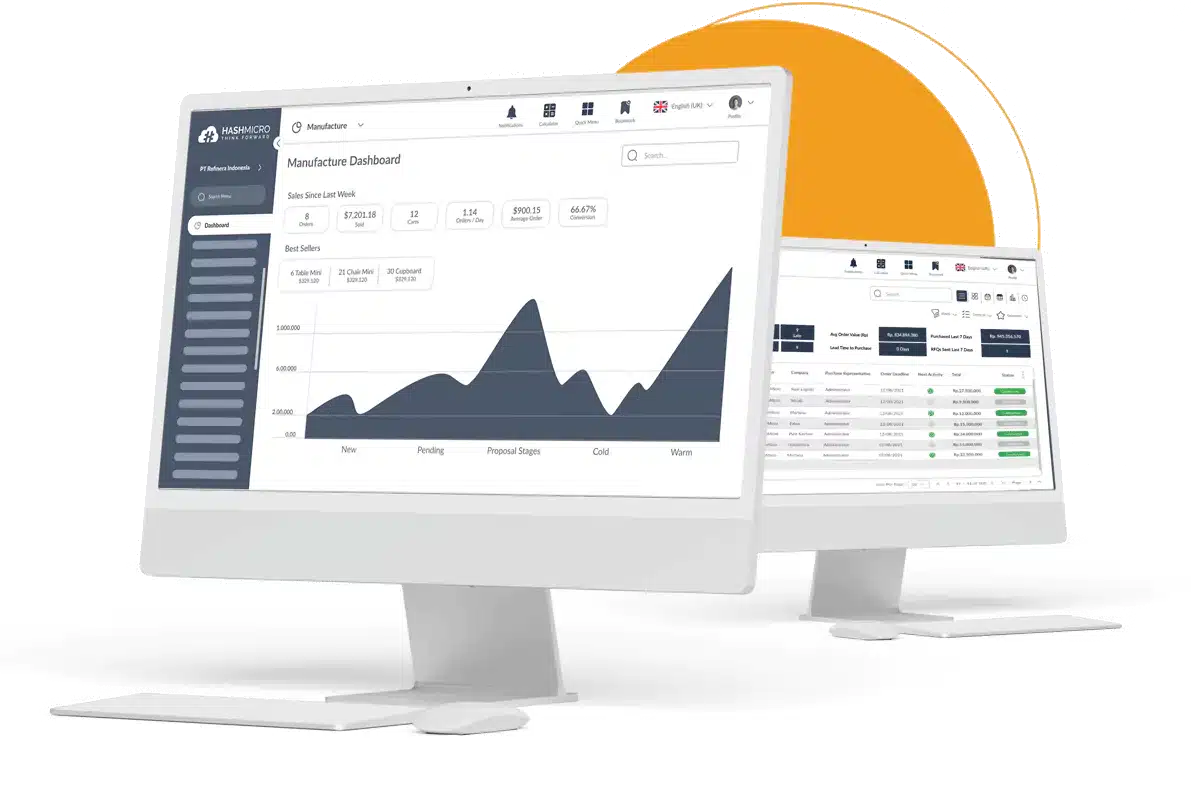
HashMicro Manufacturing Software speeds up transactions, reduces human error, and delivers accurate real-time data. It also supports approval automation, shipment tracking, and accounting integration to keep every transaction recorded.
The system connects modules across accounting, inventory, purchasing, and sales into a single workflow. This improves end-to-end visibility and keeps decisions based on up-to-date data.
HashMicro Manufacturing Software Features:
- Manufacturing Production Scheduling: Helps create production schedules based on demand data and factory capacity, making the production process more organized and efficient.
- Secret Recipe/BoM (Bill of Materials): Manages recipes or material compositions secretly and in a structured manner, ensuring product quality standards are maintained in every production batch.
- Manufacturing Quality Control: Provides a comprehensive quality control system at every stage, ensuring the resulting products meet safety and quality standards.
- Machine Maintenance Management: Automatically schedules machine maintenance to prevent downtime and maintain high productivity.
- Real-Time Production Dashboard: Provides a visual display and real-time data to help managers make faster, more accurate decisions.
With HashMicro, your company can improve operational efficiency, data transparency, and business process automation. To see how our solutions can concretely help your business, do not hesitate to try our free demo now.
Conclusion
Industrial automation has grown into an innovative digital ecosystem that boosts efficiency, quality, and innovation in modern factories. By understanding its levels, types, and challenges, leaders can plan a realistic roadmap for long-term transformation.
HashMicro Manufacturing Software helps connect production planning, inventory, procurement, and costing into a single integrated workflow. This visibility reduces manual bottlenecks, improves decision-making, and supports scalable process standardization.
If you want to explore industrial automation with a clearer operational foundation, start by mapping quick-win processes and measurable KPIs. Request a free demo of HashMicro Manufacturing Software to see how the system can support your factory’s next step.
FAQ About Industrial Automation
-
What is the main purpose of industrial automation?
The main purpose of industrial automation is to increase productivity, improve product quality and consistency, reduce operational costs, and enhance workplace safety by using technology to control industrial processes with minimal human intervention.
-
What are the 4 main types of automation systems?
The four main types are: 1. Fixed (Hard) Automation for high-volume, single-product manufacturing. 2. Programmable Automation for batch production with different product configurations. 3. Flexible (Soft) Automation for high-variety, low-volume production with minimal changeover time. 4. Integrated Automation, which combines these systems under a central control.
-
Is industrial automation a good career choice in 2025?
Yes, industrial automation is an excellent career choice. There is a high demand for skilled professionals in robotics, data analysis, system integration, and automation maintenance, offering strong job security and growth opportunities.