










 Limited to 100 registrants

As businesses grow, managing payroll, recruitment, employee benefits, and compliance becomes increasingly complex. Rapid regulatory changes, evolving workforce expectations, and the rise of remote work have added new layers of administrative pressure. For many organizations, maintaining a fully in house HR structure can strain both resources and efficiency.
To address these challenges, companies are exploring more flexible workforce management strategies that allow them to streamline operations while maintaining compliance and employee satisfaction. One approach that continues to gain traction is Human Resource Outsourcing.
This article will explain what Human Resource Outsourcing (HRO) is, the core services typically offered, its key benefits and potential drawbacks, and how businesses can implement it effectively within their overall HR strategy.
Key Takeaways
HRO lets businesses outsource HR tasks, ensuring payroll, hiring, and compliance are handled efficiently. This allows companies to focus on growth while experts manage essential HR functions.
Outsourcing HR reduces costs, improves compliance, and enhances employee satisfaction with expert support. It provides flexible solutions that help businesses scale and manage workforce needs effectively.
Businesses should assess needs, choose the right provider, and track performance for success. Clear communication, smooth integration, and regular reviews ensure outsourcing runs efficiently.
What is Human Resource Outsourcing?

Human Resource Outsourcing (HRO) is when businesses hire external professionals to manage HR tasks more efficiently and systematically. Instead of handling payroll, recruitment, benefits administration, and compliance internally, companies collaborate with specialized providers that use structured processes and digital systems to ensure accuracy and consistency.
This approach allows organizations to focus on strategic growth initiatives while experts oversee essential HR operations. In many cases, outsourcing also works alongside internal systems such as a human resources information system to improve data management and reporting accuracy.
Many businesses turn to HRO not only to reduce operational costs but also to enhance overall HR performance and regulatory compliance. As digital transformation and remote work continue reshaping workforce structures, administrative demands become more complex and time-sensitive. Therefore, outsourcing HR functions has become a practical strategy for companies seeking operational flexibility, improved workforce oversight, and stronger compliance management without expanding their in-house HR department.
Core Services Provided by HRO Companies
Some businesses tend to use one or more services that were provided by HRO companies in order to make their life easier. Here are some of the common services you could find in HRO providers:
1. Payroll Administration and Tax Management
HRO providers ensure employees receive accurate salaries on time, reducing payroll errors and administrative burdens. They take care of tax deductions, bonuses, and mandatory contributions so businesses remain compliant with labor laws.
By outsourcing payroll, companies avoid the complexities of tax regulations and potential penalties. HRO providers efficiently manage tax filings, employee benefits contributions, and government-mandated requirements to keep operations running smoothly.
2. Employee Benefits Coordination
HRO services include managing healthcare, insurance, and retirement plans to support employee well-being. Providers ensure that benefits comply with company policies and government regulations, reducing administrative headaches.
They also oversee the entire benefits process, from enrollment and eligibility verification to claims processing. This ensures employees receive the support they need while businesses can focus on growth instead of paperwork.
3. Time and Attendance Management
HRO providers implement digital systems that track employee work hours and leave requests in real-time. These automated solutions reduce errors and improve payroll accuracy by ensuring attendance records are always up-to-date.
With automated tracking, businesses minimize manual errors and enhance workforce planning. Comprehensive reports provide insights into employee productivity, helping businesses make informed decisions about staffing and scheduling.
4. Policy Development and Workplace Safety
HRO firms assist in creating HR policies that fit a company’s needs while ensuring compliance with labor laws. These policies help businesses set clear expectations and prevent workplace disputes.
Additionally, they develop safety programs to protect employees from potential hazards. A well-structured safety plan not only keeps employees safe but also reduces legal risks and improves workplace efficiency.
5. Talent Acquisition and Onboarding Support
HRO providers help businesses recruit top talent by managing job postings, screening candidates, and conducting interviews. This ensures that companies hire the best people without spending excessive time on the process.
They also handle onboarding to help new hires integrate smoothly. Structured training and orientation programs improve employee retention and ensure they start their roles with confidence and clarity.
6. Regulatory Compliance and Risk Management
HRO firms stay updated on changing labor laws and employment regulations, ensuring businesses remain compliant. This reduces legal risks and prevents costly fines or lawsuits.
They also conduct training sessions to educate employees on workplace policies and legal responsibilities. Keeping employees informed reduces compliance risks and promotes a culture of accountability.
7. Learning and Development Initiatives
HRO providers design training programs that help employees enhance their skills and boost overall productivity. These programs cover areas such as leadership, technical skills, and career development.
Regular performance evaluations also help assess employee growth and identify areas for improvement. Investing in employee development leads to a stronger, more capable workforce that contributes to business success.
Benefits of Human Resource Outsourcing

Outsourcing HR functions helps businesses improve efficiency while reducing costs. By leveraging external expertise, companies can focus on their core operations while HR professionals handle administrative tasks.
Here are some key benefits of HRO:
- Cost Efficiency: Businesses save money by reducing the need for a full in-house HR team. HRO providers use advanced systems that cut overhead expenses and simplify operations.
- Access to Specialized Expertise: External HR firms bring extensive industry knowledge and ensure compliance with local labor laws. They also utilize the latest HRIS technologies for efficient management.
- Enhanced Employee Services and Satisfaction: Outsourcing improves efficiency in handling employee concerns and benefits, creating a smoother experience that leads to greater job satisfaction.
- Scalability and Flexibility: Companies can easily scale HR functions up or down as needed. HRO providers offer tailored solutions that adjust to business growth and changing needs.
HRO allows businesses to optimize their HR processes without investing heavily in in house resources. By outsourcing HR tasks, companies can improve compliance, employee satisfaction, and operational efficiency.
Potential Drawbacks of Human Resource Outsourcing

One challenge of HRO is the loss of direct control over HR functions. Businesses must depend on external providers to handle essential HR operations, which may not always align with the company’s specific needs or culture. This can sometimes lead to inefficiencies or communication gaps.
Another concern is the potential for cultural misalignment between the company and the HRO provider. Differences in work ethics, company values, or business approaches can affect employee engagement and overall satisfaction.
Additionally, outsourcing means sharing sensitive employee and company data with a third party, raising concerns about security and confidentiality. To mitigate these risks, businesses must establish clear agreements, conduct regular audits, and ensure their HRO provider follows strict data protection measures.
Implementing Human Resource Outsourcing
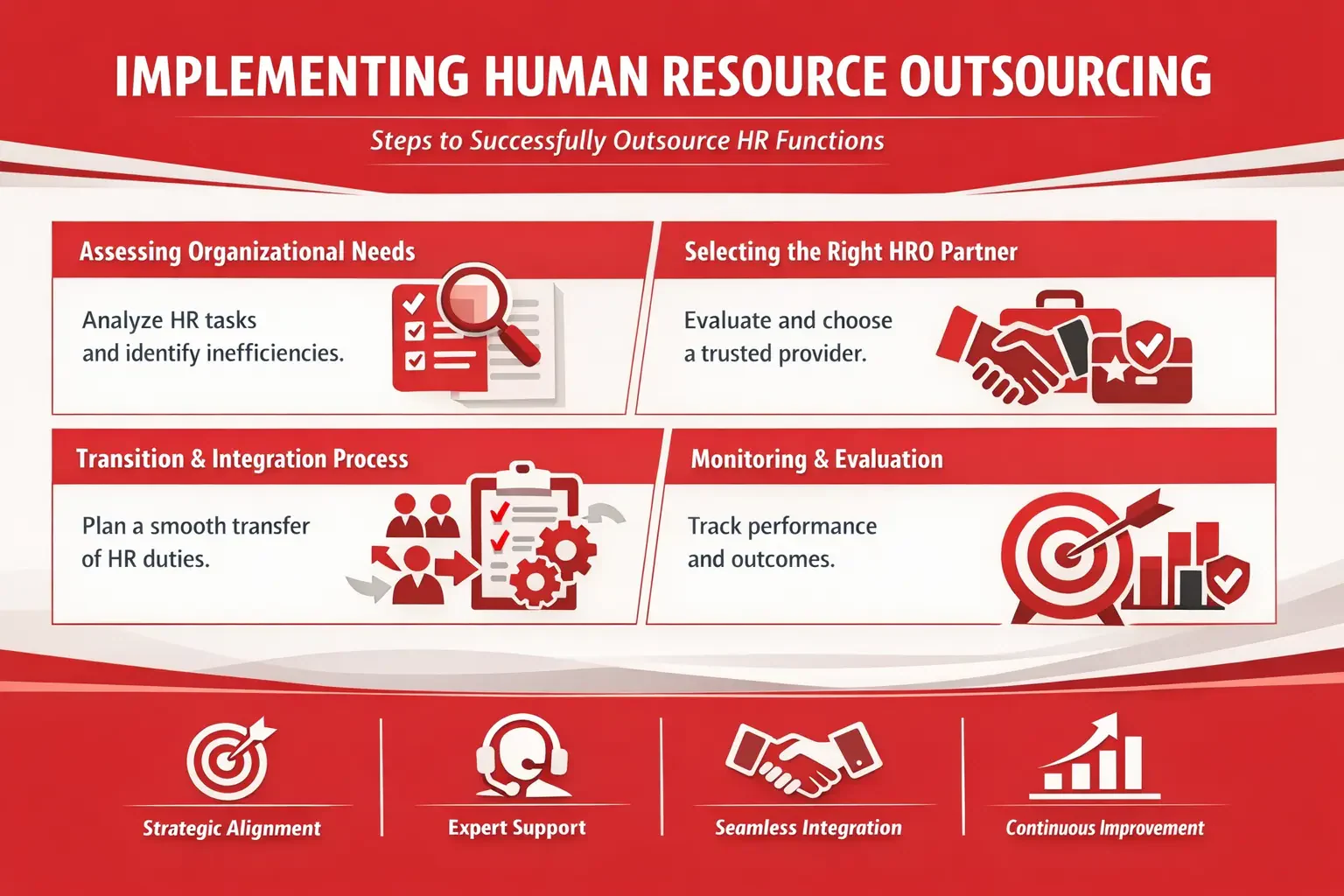
Businesses must first determine which HR functions are best suited for outsourcing. This ensures outsourcing decisions align with overall business strategies and long-term goals. Evaluating internal capabilities helps identify HR gaps and inefficiencies. Companies can then select an HRO provider to enhance these areas and optimize HR functions.
To ensure a successful transition, businesses should take these steps:
- Assessing Organizational Needs: Carefully analyze which HR tasks can be outsourced without disrupting daily operations. Identify inefficiencies and determine which functions would benefit most from expert support.
- Selecting the Right HRO Partner: Evaluate providers based on industry expertise, experience, and service offerings. Conduct background checks and review client feedback to find a reliable partner.
- Transition and Integration Process: Plan a structured transfer of HR responsibilities. Maintain clear communication between all stakeholders to ensure minimal disruptions and smooth integration.
- Monitoring and Evaluation: Establish performance metrics to measure the effectiveness of outsourced HR services. Regular evaluations help refine strategies and make necessary improvements for long-term success.
By following these steps, businesses can maximize the benefits of HRO while ensuring seamless operations. Proper planning and monitoring allow companies to maintain efficiency and improve HR performance without major disruptions.
Conclusion
Human Resource Outsourcing (HRO) allows businesses to delegate HR tasks to external experts for efficiency and compliance. This strategic approach helps companies focus on their core operations while professionals handle payroll, recruitment, and regulations. Proper HRIS implementation ensures smooth integration and minimizes risks associated with outsourcing.
Choosing the right HRO provider and continuously evaluating their performance can maximize business benefits. Companies can achieve cost savings, improved employee satisfaction, and legal compliance with an optimized HR strategy and HR tools. For organizations that want to explore structured digital solutions supporting outsourced HR processes, reviewing insights on human resources information systems can provide a broader understanding of how technology strengthens workforce management.
FAQ Around Human Resource Outsourcing
Outsourcing in human resources means hiring external providers to handle HR tasks like payroll, hiring, and compliance. This helps businesses reduce costs, improve efficiency, and focus on growth while experts manage essential HR operations.
BPO (Business Process Outsourcing) covers various business functions like IT, customer service, and finance. HRO (Human Resource Outsourcing) focuses only on HR-related tasks like payroll, benefits management, and recruitment.
An example of HRO is a company outsourcing payroll processing to an external provider. The provider manages salary calculations, tax deductions, and compliance, ensuring accurate and timely payments.